dna-sequencing
(9)
The $4.3 Billion Toll Road Beneath the Genome Era
Illumina put DNA sequencing on a repeatable industrial workflow. Now it is trying to turn the machines, chemistry and software already embedded in laboratories into an operating system for multiomic medicine.
Life Technologies
Life Technologies vanished as an independent company in 2014. Its brands did not - they became the quiet infrastructure behind experiments in genomics, cell biology, medicine and forensics.
Complete Genomics
Complete Genomics is a San Jose-based life-science technology company and the Americas arm of MGI. Founded in 2005 as a pioneer of affordable whole-human-genome sequencing, it develops and sells next-generation sequencing instruments, reagents, and analysis software built on its proprietary PCR-free DNBSEQ (DNA nanoball) technology. The company aims to drive down the cost of sequencing - from the landmark $5,000 genome to sub-$100 - and supplies researchers, clinical labs, and biotech companies with a full workflow spanning sample prep, library construction, sequencing, and data analysis.

Sentieon
Sentieon builds ultra-fast, highly accurate software for analyzing DNA and RNA sequencing data. Its pipelines - DNAseq, DNAscope, TNseq, and TNscope - replace the open-source GATK workflow with matching or better accuracy while running many times faster on ordinary CPUs, no specialized hardware required. Founded in 2014 and based in the Bay Area, the company has won top honors in multiple precisionFDA and DREAM challenges, and its tools are used by pharma, clinical labs, sequencing platform makers, and genomics researchers worldwide to turn raw reads into trustworthy variant calls quickly and cheaply.
James Lu
James Lu is the co-founder and CEO of Helix, a population genomics company he helped launch in 2015 with Justin Kao and Scott Burke. An MD/PhD trained at Baylor College of Medicine with chemical engineering degrees from Stanford, Lu built his career at the intersection of machine learning, electronic health records, and genetics. He argues that the genome should sit alongside blood pressure and cholesterol as a core clinical input - the difference being that your genome never changes. Under his leadership Helix runs one of the largest clinical sequencing labs in the US and the Helix Research Network, and its GenoSphere dataset links more than 500,000 clinico-genomic records.

Jun Ye
Jun Ye is the co-founder, president and CEO of Sentieon, a Mountain View bioinformatics company whose variant-calling software has swept the precisionFDA Truth and Consistency Challenges. A Stanford-trained electrical engineer with more than 50 U.S. patents, he previously co-founded Brion Technologies (acquired by ASML in 2006) and Founton Technologies (acquired into Alibaba in 2012), and taught at Stanford as a consulting professor for fourteen years.

Dave Mullarkey
Dave Mullarkey is the CEO of ClearNote Health, a San Diego company that reads the chemical edits on your DNA to catch deadly cancers before symptoms show. A life-sciences operator who has shepherded three diagnostics and sequencing companies through scale-ups and acquisitions - Ariosa to Roche, Omniome to PacBio - he now leads the team behind the Avantect epigenomic blood tests for pancreatic and multi-cancer detection.
Helix
Helix is a San Mateo-based population genomics company that helps health systems, life sciences companies, and public health organizations weave genomic data into everyday patient care. Built around its proprietary Exome+ assay and the first FDA-authorized whole exome sequencing platform, Helix powers large-scale precision health programs at partners like Mayo Clinic and Renown Health, with a research network spanning hundreds of thousands of sequenced participants.
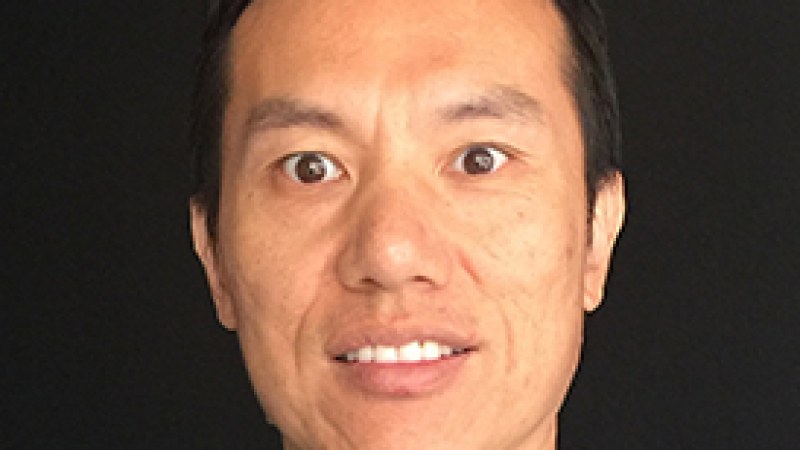
Yongwei Zhang
Yongwei Zhang is the CEO of Complete Genomics and MGI Americas, leading one of the most ambitious efforts to make whole-genome sequencing fast, accurate, and affordable at scale. With a PhD in Mechanical Engineering from Johns Hopkins and dual bachelor's degrees from Tsinghua University, Zhang brings a rare blend of optics precision, software fluency, and entrepreneurial grit to the genomics frontier. He architected the DNBSEQ sequencing platform series now used by over 2,600 researchers in 100 countries, and has positioned Complete Genomics as a formidable challenger to Illumina's market dominance - at a fraction of the cost.