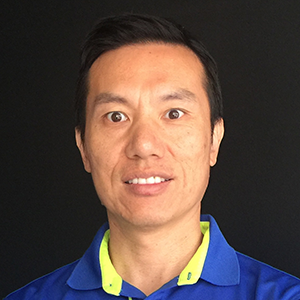
The precision instrument engineer who decided the most interesting instrument of all was the human genome - and then set about making it readable for $150.
Yongwei Zhang did not arrive in genomics through the usual door. He came through optics. Hard drives. Telecom. Flow cytometry instruments. The path was indirect by design - or at least in retrospect it reads that way. Each stop added a layer: precision measurement at Seagate, venture scale at iolon Inc. (which raised $100 million in VC before the telecom bubble burst), life sciences product discipline at Guava Technologies and then Millipore. By the time BGI acquired Complete Genomics in March 2013, Zhang was ready to step into the role the acquisition demanded.
He joined that same month. The timing was not coincidental. BGI needed someone who understood both the engineering complexity of a sequencing platform and the commercial discipline of bringing scientific instruments to market at scale. Zhang had both. Within a decade, he would build that platform into the DNBSEQ series - a technology used today in over 100 countries by more than 2,600 research teams.
"Our goal is to make whole-genome sequencing accessible to every researcher and clinician who needs it."
- Yongwei Zhang, CEO, Complete GenomicsWhat Zhang built at Complete Genomics is not merely fast - though it is extraordinarily fast. The DNBSEQ-T7 generates more than 14 terabytes of data in a single run and can sequence 35,000 whole human genomes per day. That figure requires a moment to absorb. In all of 2000, 2001, and 2002 combined, fewer than a dozen human genomes had been fully sequenced. Zhang's machine does that before lunch, every day, as a commercial offering priced at $150 per genome in the United States.
The underlying technology - DNA Nanoball sequencing (DNBseq) - achieves one error per 100,000 bases, competitive with and in many contexts superior to established incumbents. Complete Genomics under Zhang has pursued not just sequencing speed but sequencing breadth: spatial transcriptomics, multi-omics integration, single-cell RNA sequencing, subcellular resolution analysis. The 2024 partnership with NVIDIA to integrate Parabricks for faster computational analysis reflects a consistent pattern: Zhang sees sequencing not as an endpoint but as a data pipeline problem.
In 2024, he made a significant strategic move: opening Complete Genomics' first dedicated U.S. manufacturing facility at the company's San Jose headquarters. The decision was deliberate. Customers had voiced concerns about supply chain reliability. The new facility - paired with a new East Coast Customer Experience Center in Framingham, Massachusetts - was Zhang's answer: a fully domestic supply chain for an industry where continuity of supply is a research dependency.
Data per single DNBSEQ-T7 run
DNBSEQ platforms worldwide
Bases per sequencing error - industry leading
BGI's 2013 purchase of Complete Genomics
Designed and oversaw the development of the DNBSEQ sequencing platform family - now the backbone of more than 3,100 installations across 100 countries.
Drove per-genome costs to $150 for U.S. customers - announced at AGBT - making whole-genome sequencing economically viable for routine research use.
Opened Complete Genomics' first American manufacturing plant at San Jose HQ in 2024, establishing a domestic supply chain for U.S. sequencing customers.
Secured integration of NVIDIA Parabricks for faster and more accurate genomic data analysis - connecting DNA sequencing output to the most powerful GPU computing platform available.
Established Complete Genomics as exclusive U.S. distributor for STOmics' Stereo-seq technology - the platform offering decimeter-scale capture area for spatial gene expression analysis.
Achieved first Nationally Recognized Testing Laboratory (NRTL) certification for DNBSEQ-G99 production in North America, validating quality systems for U.S. regulatory compliance.
Beijing, China
B.Eng in Precision Instruments
Engineering & InstrumentationB.Sc. in Applied Mathematics
Quantitative & Computational FoundationsBaltimore, Maryland • 1992-1997
M.S. in Computer Sciences
Software & AlgorithmsM.S. in Mechanical Engineering
Systems & DynamicsPh.D. in Mechanical Engineering
Doctoral Research, 1992-1997Zhang's academic trajectory tells you something about how he thinks. Most people who end up running biotech companies studied biology. Zhang studied precision instruments, applied mathematics, computer science, and mechanical engineering - four disciplines that share almost nothing except rigor. When you look at what DNBSEQ technology does - using DNA nanoballs for high-density patterned arrays, combining rolling circle replication with combinatorial probe anchor synthesis - you see all four disciplines at work simultaneously. It is instrumentation. It is mathematics. It is software. It is mechanical engineering applied at molecular scale.
The telecom chapter is usually omitted from the official biography, but it matters. iolon Inc. raised $100 million and built tunable components for optical networks during the late-1990s boom. When the bubble collapsed, Zhang had already learned the difference between technology that is impressive and technology that is needed. That lesson went directly into his later work: at Guava Technologies, at Millipore, and then at Complete Genomics, he consistently focused on commercialization and product reliability over raw technical novelty.
The Muse Cell Analyzer, which he helped develop at Millipore, won industry awards for making flow cytometry compact and accessible. The pattern repeated at Complete Genomics: take a powerful, expensive, laboratory-only technology and engineer it into something that works reliably at scale, in more hands, at lower cost.
The pricing decision - announcing $150-per-genome sequencing for U.S. customers at the AGBT conference - was not a feature announcement. It was a market signal. At that price point, whole-genome sequencing stops being an occasional research event and becomes a routine assay. Zhang understood this shift the same way his earlier colleagues at Guava understood what compact flow cytometry would do to cell analysis: the cost curve is the product roadmap.
Complete Genomics' 2024 moves were operationally sophisticated in a way that pure scientists rarely manage. Opening a U.S. manufacturing facility in the same year as opening an East Coast Customer Experience Center reflects a supply chain and commercial strategy working in parallel. The NVIDIA partnership reflects an understanding that genomic data analysis is now a compute problem as much as a biology problem. The Stereo-seq distribution agreement reflects a recognition that spatial transcriptomics is the next frontier - the ability to read not just what genes are expressed, but where in the tissue they are expressed.
Zhang's appointment as a school board trustee in 2012 - chosen from 12 candidates for Saratoga Union School District - is one of those data points that resists easy categorization. Silicon Valley executives serve on many boards. School boards are different: they are local, specific, and politically nuanced in ways that corporate boards are not. It suggests a person who thinks in terms of communities, not just markets.
Ultra-high throughput. 14+ TB data per run. Up to 35,000 whole genomes per day.
High throughput. Designed for volume sequencing applications across research and clinical use.
Mid-throughput. Fastest in its class. First NRTL-certified production in North America.
Portable sequencing. Mobile solution for field research and distributed lab environments.
Spatial transcriptomics. Decimeter-scale capture area. Subcellular resolution gene expression.
In December 2012, Yongwei Zhang was sworn in as a Trustee of the Saratoga Union School District Board of Education. He had been selected from a field of 12 candidates - an unusual choice for a Silicon Valley engineering executive who was about to join a pre-IPO genomics company in one of the most consequential years for that company's history.
The appointment reflected something that appears consistently in Zhang's career: an interest in systems that work, not just technology that impresses. School districts are deeply operational institutions. They have budgets, constituencies, politics, and performance metrics that bear little resemblance to engineering design reviews. Zhang served with two children enrolled in the district - which is, in the end, the most direct kind of stakeholder accountability.
He has been a speaker at the Precision Medicine World Conference (PMWC), bringing the Complete Genomics platform to the policy and clinical intersection of genomics. His presence in conferences like AGBT, ASHG, and SITC tracks a consistent message: affordable, accurate sequencing technology is not just a product category. It is infrastructure for the next phase of medicine.
The aspiration Zhang has articulated publicly is consistent and specific: make whole-genome sequencing as routine and accessible as a blood test. At $150 a genome with a machine that can run 35,000 per day, he is closer to that goal than almost anyone else in the industry.
Holds five degrees across four disciplines from universities on two continents.
Co-founded a telecom startup that raised ~$100M in VC before pivoting to life sciences.
His sequencing platform generates more than 14 terabytes of data per single run.
Selected from 12 candidates to serve on a public school district board while building genomics instruments used in 100 countries.
The DNBSEQ-T7 can sequence more genomes before lunch than were sequenced globally in all of 2000-2002 combined.
Complete Genomics publishes 2024 Year in Review, highlighting expanded U.S. manufacturing, new platform launches, and the NVIDIA Parabricks partnership for accelerated genomic analysis.
Announced Spatial Xcellerator Grant Program at the SITC conference, supporting researchers working with the Stereo-seq spatial transcriptomics platform in North America.
Opened first U.S. manufacturing facility at San Jose headquarters and launched East Coast Customer Experience Center in Framingham, Massachusetts - a major domestic supply chain milestone.
DNBSEQ-G99 achieves NRTL certification for North American production. Complete Genomics continues expanding its U.S. supply chain and certification infrastructure.