The man who bought an island to prove a point about nations
Four Stanford degrees. Two companies sold for half a billion dollars. One bestselling book arguing you should be able to opt out of your country the way you opt out of a newsletter. Somewhere in Malaysia, his proof of concept is already running.
In Silicon Valley, "exit" means selling your company. Balaji Srinivasan has a different definition. His 2013 keynote at Y Combinator Startup School - titled "Silicon Valley's Ultimate Exit" - argued that the most important move any tech community could make was to build something entirely outside the reach of legacy institutions: governments, media, and banks included.
That was the argument. The book was The Network State (2022). The proof of concept is a private island near Singapore, currently housing 550+ people who flew in from 80 countries because they believe governance should compete for customers the way software does.
Srinivasan grew up the son of Tamil Nadu physicians who immigrated to Long Island, New York. He was, by his own account, awkward and isolated as a kid - one of the only South Asian students in his school. He dealt with it the way engineers deal with everything: he identified the problem, ran the numbers, and optimized his way out. Football. Lacrosse. Four Stanford degrees. A genomics startup. A Bitcoin mining company. A venture partnership. And eventually: an island.
He is not particularly flashy about any of it. He reportedly still wears the same t-shirts he had in grad school. Owns no car. His Twitter bio is seven words: "Immutable money, infinite frontier, eternal life." He means all three, literally.
Srinivasan's early career sits at an unusual intersection: he did serious academic work in genetic circuits and systems biology (5,000+ Google Scholar citations, publications in Nature Reviews Genetics and the New England Journal of Medicine), and he also built companies while doing it. Counsyl - co-founded in 2007 - turned genetic carrier screening from a $3,000 hospital procedure into a $350 mail-order test that eventually screened over a million pregnancies. Myriad Genetics bought it for $375 million in 2018.
That same year, his Bitcoin mining startup 21 Inc - reborn as Earn.com, a service that let you pay people to read your emails in cryptocurrency - was acquired by Coinbase for $120 million. Coinbase made him their first-ever Chief Technology Officer. He helped launch USDC, Coinbase's dollar stablecoin that has since become critical infrastructure for the crypto economy.
At Andreessen Horowitz, where he served as General Partner from 2013, he recruited Vijay Pande and helped launch the firm's bio fund. He ran a Coursera course called Startup Engineering that enrolled 250,000 students. He co-founded Coin Center, now the most influential crypto policy nonprofit in the United States.
In 2020, he warned in January that a coronavirus from Wuhan was about to become a global pandemic. He was largely ignored. By March, he had been publicly acknowledged as prescient by Bloomberg, CoinDesk, and the American Enterprise Institute. It was not the first time he called something early that everyone else dismissed.
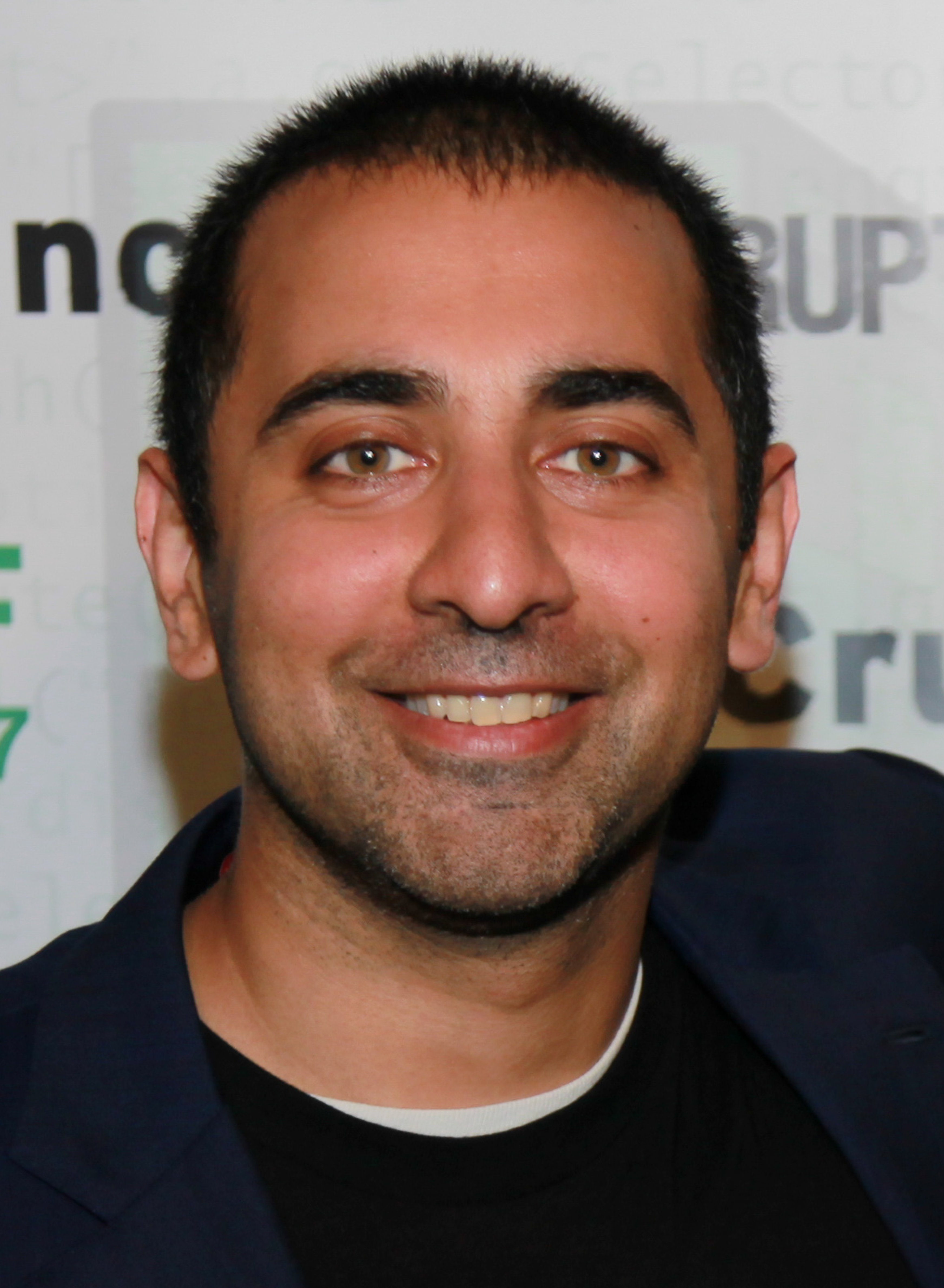
"The Internet is programmable information. The blockchain is programmable scarcity."- Balaji Srinivasan, @balajis
Stanford University, 1998-2008. Not many people leave with two master's degrees and a PhD in addition to their bachelor's. Fewer still publish in the New England Journal of Medicine along the way.
Few careers span peer-reviewed genomics research, a $120M crypto acquisition, a General Partner seat at the world's most influential VC firm, and a functioning island school. His does.
Bitcoin, to Srinivasan, is not an investment. It is an escape hatch from state-controlled monetary systems. He has called it "the balance sheet of the network state" - a reserve asset that no government can debase. The blockchain makes scarcity programmable and auditable in a way no central bank can match.
1Humanity needs an exit option from underperforming nation-states, the way startups provide exit options from monopolies. Physical territory - reclaimed islands, charter cities, seasteads - provides the frontier for governance experimentation. His Network School island is exhibit A. Mars is the longer bet.
2Longevity research is not futurism to Srinivasan - it is the most urgent engineering problem humans face. The Network School curriculum includes health optimization and longevity science alongside technology. He has stated plainly that the ultimate purpose of technology is to eliminate mortality.
3On March 17, 2023, Balaji Srinivasan publicly wagered $1 million that Bitcoin would hit $1 million per coin within 90 days. At the time, BTC was trading around $26,000. The math required an approximately 40x increase in less than three months.
He lost. Spectacularly. That was not entirely the point.
Srinivasan framed it not as a financial prediction but as a paid public warning about fragility in the U.S. banking system following the collapse of Silicon Valley Bank. He wanted the bet to generate enough media attention that people would notice the underlying concern.
He settled early on May 2, 2023 - and instead of pocketing any winnings, distributed $1.5 million in donations. His opponents had to concede: even the people who disagreed with the prediction found the gesture impossible to dismiss.
In Srinivasan's definition, a network state is not a metaphor. It is a precise technical specification for how a digital community bootstraps into a recognized sovereign entity.
"A political truth is true if everyone believes it to be true. A technical truth is true even if no human believes it."- The Network State (2022)
"Technology has allowed us to start new companies, new communities, and new currencies. Why not new countries?"
"Choose your competitors carefully, because you'll become a lot like them."
"The ultimate purpose of technology is to eliminate mortality."
"There are three ways to change the world: government, religion, and startups. We are in an era where startups can found the other two."
"A network state is a social network with a moral innovation, a sense of national consciousness, a recognized founder, a capacity for collective action."
"Don't do a startup unless you're ideologically driven to make it succeed beyond the economic motivation."