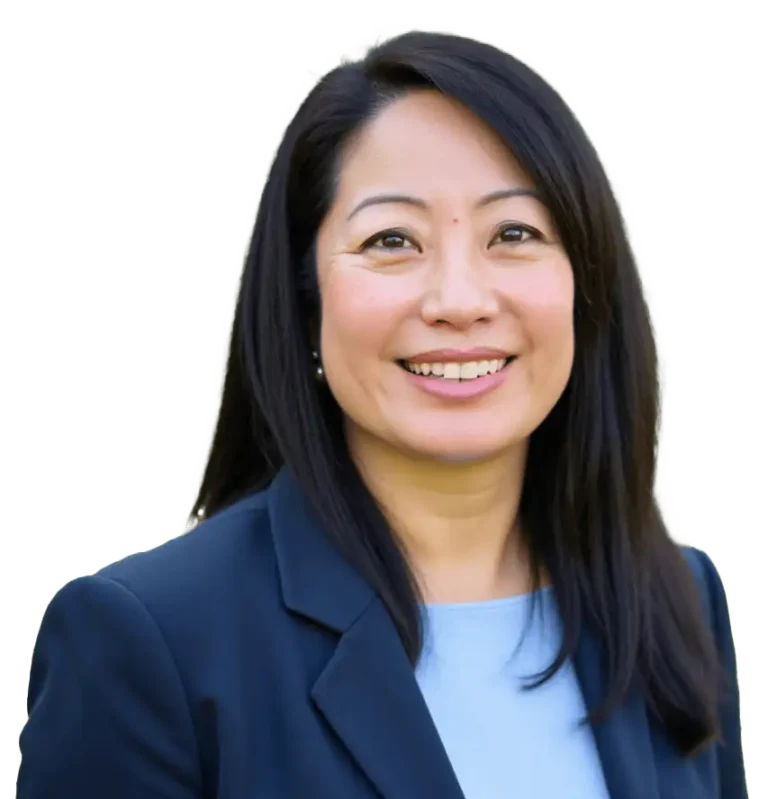
In January 2024, Elaine Cheung broke cover. After a year working quietly inside a stealth biotech in South San Francisco, she announced that the company was called Moonwalk Biosciences - co-founded by CRISPR pioneer Feng Zhang and former Illumina CTO Alex Aravanis, and backed by $57 million from some of the most respected names in life sciences investing. Her role: Chief Business Officer. Her job: turn one of the most ambitious scientific platforms in epigenetics into a real company with real deals.
It was not her first rodeo. By the time she walked into Moonwalk, Cheung had already done this - twice. At GRAIL, she was the person who ran the operational separation from Illumina, then built the partnerships that helped the liquid biopsy startup raise a $900 million-plus Series B. At Lyell Immunopharma, she shepherded the cell therapy company from private ambition to public market. The pattern is clear: Cheung shows up early, builds the infrastructure, and stays until the company reaches its next level.
The Genomics Education
Cheung studied biological sciences as an undergraduate at Stanford, then stayed for a master's degree in management science and engineering - a combination that is less common and more deliberate than it sounds. She also completed a Mayfield Fund Fellowship through Stanford's Technology Ventures Program, an elite track that puts scientists and engineers inside startups before they graduate. The fellowship is not about class time. It's about recognizing early that the distance between a scientific discovery and a viable company is not a gap - it's a design challenge.
That dual lens - biological science on one side, systems thinking and dealmaking on the other - became the through-line of her entire career. She entered the industry at Genomic Health (now Exact Sciences), where she worked on the OncoType Dx portfolio. OncoType Dx was one of the first molecular diagnostics to genuinely change clinical decision-making in cancer, helping oncologists determine whether certain breast cancer patients actually needed chemotherapy. Growing that product commercially, across multiple disease indications and into international markets, required exactly the kind of scientific fluency paired with commercial rigor that Cheung had built.
"A year ago I joined a stealth newco as Chief Business Officer and today..."
- Elaine Cheung, LinkedIn, January 2024 - on the Moonwalk Biosciences public launchFrom Illumina to GRAIL: The Spin-Out
Cheung moved to Illumina's Oncology Business Unit, where she was the business development lead. She executed partnerships with AstraZeneca, Janssen, Merck KGaA, and Sanofi Aventis - companies that used Illumina's sequencing technology as the backbone for their own oncology programs. But the most consequential thing she did at Illumina was not a deal. It was a separation.
In 2016, Illumina incubated and then spun out GRAIL, a startup built on the idea that cancer could be detected through a simple blood test - years before symptoms appeared. Cheung led the operational spin-out. She became a founding employee and the Head of Business Development. What followed was a masterclass in biotech partnership architecture. She built the clinical trial partnerships that let GRAIL run studies at massive scale. She put together the strategic pharma collaborations that formed the backbone of what became a $900 million-plus Series B - at the time, one of the largest financing rounds in biotech history.
GRAIL: A Defining Moment
GRAIL went on to be acquired by Illumina for approximately $8 billion in 2021 - a valuation that reflected both its science and the commercial infrastructure Cheung and her team helped build from zero. Cheung was a founding employee and the architect of the partnerships that made the scale of GRAIL's fundraising possible.
The Detour Through Digital Health
Between GRAIL and Lyell, Cheung made a move that looked like a detour but was more like a deliberate experiment. She joined Mindstrong Health as VP, leading operations, communications, and marketing and policy. Mindstrong was a digital mental health company with a serious scientific ambition: using smartphone data patterns to detect and monitor severe mental illness. It was a different category, a different risk profile, and a different commercial model than anything Cheung had done before.
The move reflects something important about how she approaches her career. She does not specialize by technology. She specializes by problem type: early-stage scientific companies that need someone to build the commercial and business development function from scratch, in categories where the science is genuinely novel and the market infrastructure does not yet exist.
Lyell and the IPO Play
From Mindstrong, Cheung moved to Lyell Immunopharma, a cell therapy company founded by the Nobel Prize-winning immunologist Carl June and Stanford's Crystal Mackall. She joined as SVP of Corporate Strategy and Business Development - overseeing all business development, alliance management, competitive intelligence, and new product planning. She also played a central role in Lyell's IPO.
Taking a company public is a specific kind of work. It requires translating highly technical science into a story that capital markets can price, while simultaneously managing external BD relationships, building internal strategic clarity, and keeping the organization focused on its pipeline. Cheung had done the scientific translation work since Genomic Health. The IPO work at Lyell added the public markets dimension to her toolkit.
The Moonwalk Bet
Moonwalk Biosciences was founded on an idea that is at once elegant and ambitious: the epigenome - the layer of chemical marks that sit on top of DNA and determine which genes are switched on or off - is the next great target for precision medicine. Unlike the genome itself, which is fixed, epigenetic marks can be changed. They can be reprogrammed. If you understand which epigenetic states drive disease, you can potentially reverse them without cutting DNA at all.
The company built two platforms. EpiRead provides whole-genome, single-cell resolution mapping of the methylome - a detailed atlas of the epigenetic landscape in health and disease. EpiWrite is the engineering toolkit: a modular, non-DNA-cutting system for making targeted methylation modifications, capable of performing seven simultaneous multiplexed epigenetic edits in primary human cells at greater than 85% efficiency.
February 2026: The Pivot
Moonwalk Biosciences announced a strategic shift from its original epigenetic editing focus to siRNA-based obesity therapeutics. Using epigenetic insights to identify novel adipose tissue targets, the company's pipeline (MW04, MW05, MW08, MW09) now targets adipogenesis, adipose endocrine function, and energy homeostasis - all in preclinical development.
Pipeline at a Glance
| Candidate | Target Area | Modality | Stage |
|---|---|---|---|
| MW04 | Adipogenesis | siRNA | Preclinical |
| MW05 | Adipose Endocrine Function | siRNA | Preclinical |
| MW08 | Energy Homeostasis | siRNA | Preclinical |
| MW09 | Obesity (Adipose Biology) | siRNA | Preclinical |
The pivot is not a retreat from the science. It is a refinement of the strategy. The epigenetic atlas Moonwalk built with EpiRead is precisely what identifies which genes to silence with siRNA. The machine still runs. The output has changed. And for Cheung, whose job is to build partnerships, structure deals, and raise the next round of capital, the siRNA modality arguably makes the commercial conversation easier - it's a well-understood technology class with an established regulatory pathway and a pharma landscape that already knows how to price it.
The Business of Science
Cheung's profile at Moonwalk is representative of a broader shift in how early-stage biotechs get built. The old model was: hire scientists, run experiments, raise money, then hire business people. The new model - the one that produced GRAIL, Lyell, and Moonwalk - is to hire the business infrastructure from day one, as a founding-level function. The science is necessary but not sufficient. You also need someone who can explain it to a pharma BD committee in Basel, to a sovereign wealth fund in the Gulf, and to a retail investor in a roadshow presentation.
Cheung is that person. Her career is, in many ways, the product of a specific historical moment: the convergence of genomics, digital health, cell therapy, and now epigenetics into a single, overlapping landscape where the deals are complex, the science moves fast, and the people who can sit at both ends of the table are rare.
The BIO International Convention 2025 had her on stage discussing "Next-Gen Medicine: How Gene Editing and Epigenetics are Revolutionizing Health, Longevity, and Organ Transplantation." It's the kind of session title that would get dismissed as hype in most contexts. When Cheung is in the room, it's a business meeting with a moderator.