clinical-genomics
(10)
Giordano Bottà Left Oxford to Put a Number on the Invisible
A mosquito-genomics researcher spotted a stubborn gap between scientific discovery and useful software. He packed up in Oxford, returned to Rome, and began the long work of making inherited risk legible in the clinic.

Bradley Murray Is Turning a Wild Scientific Search Into a Clinical Routine
He learned to read genomes, helped build CRISPR programs, and sat on the investor's side of the table. Now Bradley Murray is betting that the future of diagnostics depends less on inspired guessing and more on disciplined execution.
Delve Bio Built One Test for 68,000 Suspects - Now It Wants Doctors to Use It Before the Guessing Game
The UCSF spinout turned an academic pathogen-hunting assay into a 48-hour clinical service. Its next challenge is bigger than sequencing: persuading hospitals to order one broad test earlier, without pretending every strange read is the answer.

Allelica, Inc.
Allelica is a genomics software company building the tools that move polygenic risk scores (PRS) out of the research lab and into routine clinical care. Its cloud platform lets labs and health systems develop, validate, and apply PRS across multiple ancestries, and its clinical test AbsoluteDx combines rare-variant (monogenic) and genome-wide (polygenic) risk in a single report. The company's stated priority is equity - building risk scores that work for patients regardless of genetic ancestry - and its multi-ancestry coronary artery disease work was cited in the 2026 ACC/AHA cardiovascular prevention guidelines.

Cipherome, Inc.
Cipherome is a San Jose-based clinical genomics and bioinformatics company on a mission to find the drug that works for each individual. Its no-code platform COMPASS lets researchers transform, query, and analyze massive clinical and genomic datasets - like the 500,000-participant UK Biobank - without writing code, while its Xentinel platform uses explainable AI to predict and reduce adverse drug reactions. Backed by roughly $16-23M through a Series B, the 12-person team pairs Silicon Valley software with Seoul National University biomedical-informatics research.

Sentieon
Sentieon builds ultra-fast, highly accurate software for analyzing DNA and RNA sequencing data. Its pipelines - DNAseq, DNAscope, TNseq, and TNscope - replace the open-source GATK workflow with matching or better accuracy while running many times faster on ordinary CPUs, no specialized hardware required. Founded in 2014 and based in the Bay Area, the company has won top honors in multiple precisionFDA and DREAM challenges, and its tools are used by pharma, clinical labs, sequencing platform makers, and genomics researchers worldwide to turn raw reads into trustworthy variant calls quickly and cheaply.
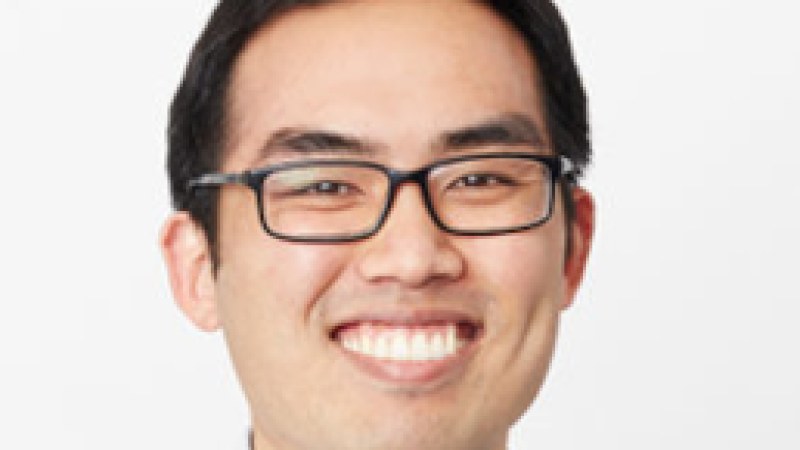
James Lu
James Lu is the co-founder and CEO of Helix, a population genomics company he helped launch in 2015 with Justin Kao and Scott Burke. An MD/PhD trained at Baylor College of Medicine with chemical engineering degrees from Stanford, Lu built his career at the intersection of machine learning, electronic health records, and genetics. He argues that the genome should sit alongside blood pressure and cholesterol as a core clinical input - the difference being that your genome never changes. Under his leadership Helix runs one of the largest clinical sequencing labs in the US and the Helix Research Network, and its GenoSphere dataset links more than 500,000 clinico-genomic records.
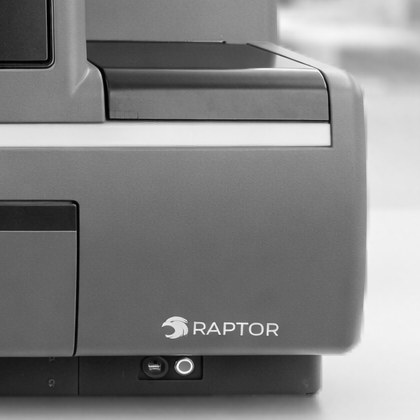
Pleno Inc.
Pleno Inc. is a San Diego multi-omic instrument company rebuilding the economics of biological target detection. Its RAPTOR platform, powered by proprietary Hypercoding technology borrowed from telecommunications signal processing, can detect up to 10,000 targets in a single sample at PCR-like speed and cost. Founded by serial entrepreneur Pieter van Rooyen, the company is moving from R&D into commercial launch with backing from Deerfield Management and Foresite Capital.

Helix
Helix is a San Mateo-based population genomics company that helps health systems, life sciences companies, and public health organizations weave genomic data into everyday patient care. Built around its proprietary Exome+ assay and the first FDA-authorized whole exome sequencing platform, Helix powers large-scale precision health programs at partners like Mayo Clinic and Renown Health, with a research network spanning hundreds of thousands of sequenced participants.

Tom Willis
Tom Willis, PhD, is a genomics entrepreneur with more than 20 years of company-building experience who became CEO of Arima Genomics in June 2025. A Yale and Stanford physicist turned biotech serial founder, he co-invented Molecular Inversion Probe technology, built two genomics companies from the ground up - ParAllele BioScience (acquired by Affymetrix) and Sequenta (whose ClonoSEQ assay became NCCN-standard for leukemia and lymphoma residual disease testing) - then spent a decade as Venture Partner at Illumina Ventures before stepping in to lead Arima, a company pioneering 3D genomics for cancer diagnostics.