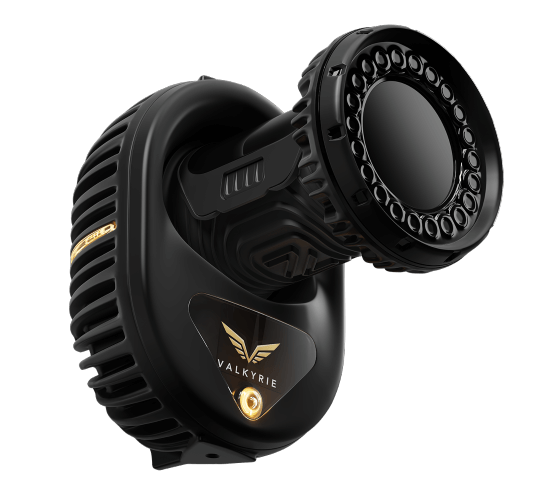
At PUBG’s Madison studio, a motion capture upgrade had an advantage that rarely makes it into a technology keynote: fewer trips up a ladder. The game developer installed 26 Vicon Valkyrie cameras where an earlier plan had called for 36 to 40 cameras from the previous generation. Better coverage meant fewer units to focus beneath the studio’s high ceilings. “It’s just less to worry about,” animation director Caleb Zart said in Vicon’s account of the installation.
That is a useful way into Oxford Metrics, Vicon’s parent company. Its equipment turns movement into data, but customers buy it to remove more ordinary irritations: a capture session that takes too long to prepare, an animation that needs extensive cleanup, a measurement that cannot be repeated with confidence. The machinery is sophisticated. The desired outcome is often wonderfully pedestrian: get the work done with less fuss.
Oxford Metrics has spent four decades taking that proposition into unlikely neighbouring markets. A hospital studies walking. A games studio records a performance. An engineer tracks a drone. A manufacturer checks a component. Now the company faces a measurement problem of its own: how to turn specialist equipment and irregular projects into steadier revenue.
Before the monsters, the movement lab
Founded in 1984 by Dr Julian Morris, Oxford Metrics grew from the business of observing human motion. Its corporate timeline records a research-system sale in 1985 and a clinical sale in 1990. A 1996 report in Times Higher Education described hospitals as its principal customers, using Vicon technology to help surgeons understand walking disorders in children with cerebral palsy. Hollywood studios were still testing the possibilities.
The underlying idea travels well. Synchronized cameras record information about a moving subject; software reconstructs and analyses that movement. In traditional optical capture, reflective markers provide identifiable points. What happens next depends on the customer. A clinician needs interpretable movement measurements. An animator needs a performance that can drive a digital character. Neither is helped much by a pretty picture alone.
Today, Nexus handles Vicon’s life-sciences capture and analysis workflow. It combines movement data with inputs such as force plates and muscle-activity measurements, supports biomechanical models, and allows repeated processing tasks to be automated. That integration matters: a laboratory needs measurements that belong to the same instant, rather than several devices telling loosely related stories.
Vicon also supplies research outside human movement. At Brown University, its cameras provide reference measurements for work on multi-robot systems. Researchers investigating drones need to know where the machines actually are while studying how they interact. Here, motion capture supplies an external spatial reference. The company’s place in the market is unusually tangible: it helps software keep contact with physical reality.
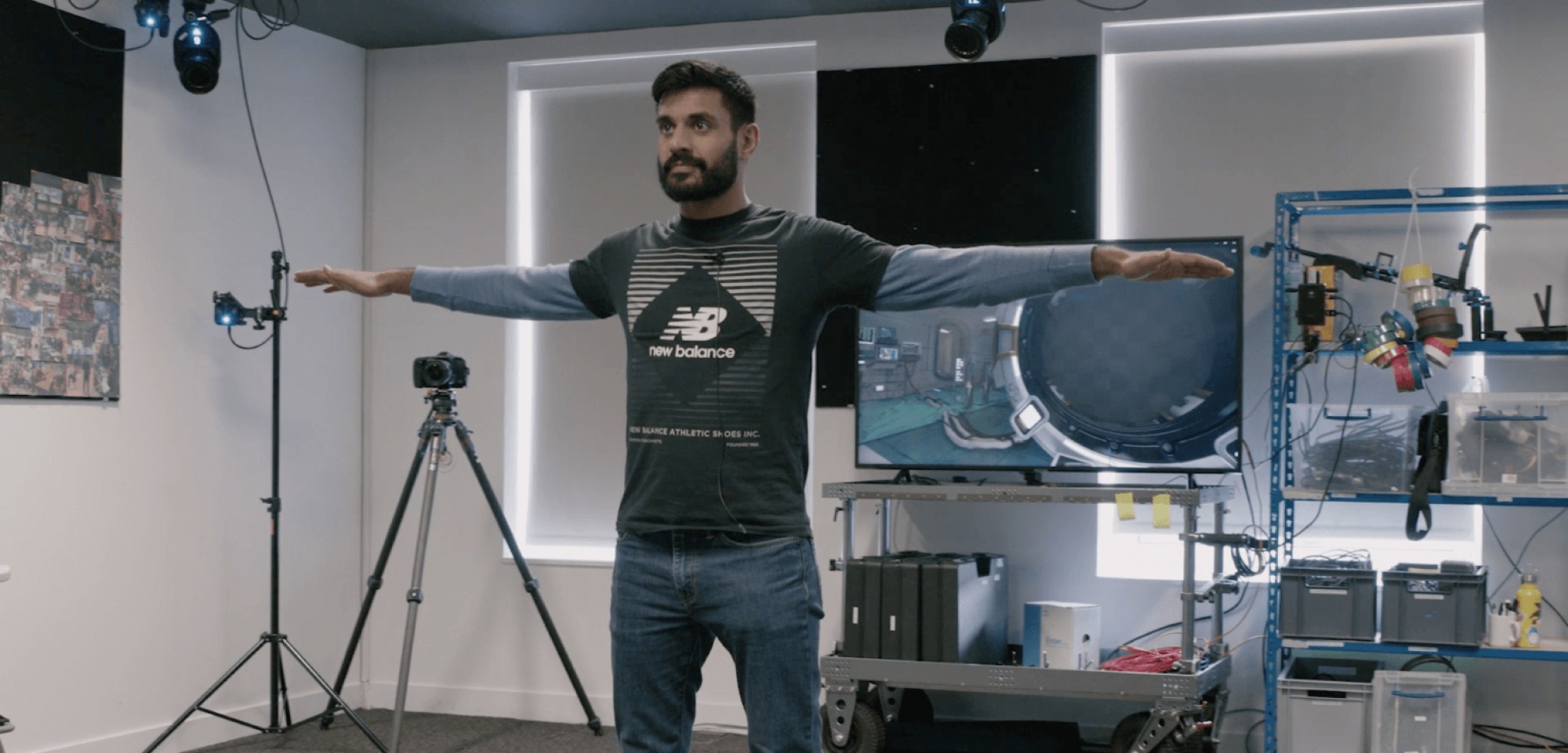
The suit comes off. The workflow stays.
The entertainment business makes that translation easier to see. Shōgun, Vicon’s production software, captures performances, helps repair gaps and retargets movement onto characters. Its tools connect capture to animation and game-engine workflows. The value lies partly in preserving those connections: replacing a studio’s established production process can be a bigger undertaking than changing a camera.
In March 2025, Vicon brought its markerless system to market for visual effects. Vanguard cameras and Shōgun Markerless use computer vision and machine learning to capture performers without body markers. The launch followed testing with customers including Industrial Light & Magic, Gearbox Entertainment and Dimension|DNEG360. A participant could enter a capture space in everyday clothes and start exploring a performance.
Why pursue this after decades of selling marker-based systems? Vicon technology chief Mark Finch described a judgment that the underlying technologies had matured enough to support a useful product. His 2024 account pointed back to discussions roughly five years earlier and the eventual SIGGRAPH 2023 demonstration. The opportunity was to make capture practical earlier in creative work, when ideas are still cheap to change.
Framestore tested the approach on an internal project called Bishop, mixing markerless body capture with marked props. Its artists could try choreography and see results inside familiar production tools. Vicon’s case study reports that subsequent full optical shoots could be up to 50% faster. That is a customer-reported outcome from this workflow, rather than a guaranteed saving for every production.
“We use Vicon Markerless as a creative sketchbook”Vincent Aupetit
Framestore Pre-Production Services
The distinction is worth preserving. Faster rehearsal can make an expensive shoot more productive because decisions arrive on set already tested. It does not establish that every final performance needs fewer cameras or no markers. Vicon’s own hybrid guidance describes markers as useful for precise contact, prop alignment and detailed movement, while markerless capture speeds exploration.
Camera angles, changing light and crowded scenes can challenge markerless tracking; hidden markers can challenge optical tracking. Combining the methods gives a studio choices. A buyer should therefore bring a difficult scene to a demonstration: interacting performers, awkward props, the movement that usually sends an animator back to the cleanup tools. An easy demo answers an easy question.
A £52 million turn toward the factory
Oxford Metrics’ corporate history contains a different kind of editing. In May 2022 it sold Yotta, its infrastructure asset management division, to Causeway Technologies for headline cash consideration of £52 million. Yotta helped organisations manage assets such as roads and streetlights. The parent said that market had become increasingly distinct from Vicon’s, and that the proceeds would support acquisitions and organic investment in sensing and analysis.
This was a choice about where expertise belonged. Oxford Metrics had developed and scaled an adjacent business, then sold it to finance the next direction. The transaction supplied financial room to act without pretending every promising application had to remain inside the group indefinitely.
The factory became a destination. In November 2023, Oxford Metrics agreed to acquire Industrial Vision Systems for £8.1 million, funded through existing cash and newly issued shares. IVS brought machine vision software and automated quality-control technology: systems that inspect, identify, measure and track products during production. The 2024 acquisition of Sempre added industrial metrology expertise.
Those capabilities now sit together in Industrial Vision and Metrology Systems, or IVMS, following the March 2026 combination. Its customer roster includes GE Healthcare, Johnson & Johnson, Safran and Rolls-Royce. The work is less cinematic than animating monsters, but its purpose is straightforward: determine whether what a factory has made meets the required specification.
Inspection and metrology belong beside one another because seeing a flaw and establishing a dimension are related manufacturing questions. IVMS combines specialist engineering with equipment and software to answer them. The business can serve demanding sectors such as medical devices and aerospace, where a measurement must support a production decision. A customer still needs to define the defect, tolerance and throughput that matter.
The cameras work. The calendar is awkward.
The financial record puts limits around the product story. In the year ended September 2024, group revenue fell to £41.5 million. Management described customers taking longer to buy, with the pattern intensifying in September, historically its busiest month. The immediate commercial weakness was purchasing timing. An interested prospect could remain interested while failing to become that year’s revenue.
Revenue recovered to £44.8 million in FY2025, an 8% increase. Adjusted operating profit was £2.2 million, while statutory profit before tax was £0.1 million. Those figures measure different things: the adjusted number excludes specified charges and is calculated before interest and tax. The gap is a reason to read past the revenue headline.
Sales recovered. Profitability remained a separate task.Reported twelve-month periods ending 30 September.
The six months to March 2026 produced £20.7 million in revenue and a £0.2 million adjusted operating loss. Motion Capture grew, while Vision Metrology was affected by project timing. The company also changed its financial year-end, making FY2026 a 15-month period. Any annual comparison needs to account for those extra three months.
Oxford Metrics’ revised strategy addresses the source of that unevenness. Vicon is to develop toward a human movement platform, adding recurring income alongside capital sales. IVMS is to move from bespoke projects toward products that can be sold repeatedly. Management’s medium-term ambitions include doubling group revenue and bringing recurring and repeatable revenue to about a quarter of the total. These are targets, not accomplished results.
Buy the useful measurement
Oxford Metrics is best understood as a specialist systems supplier with software running through its products. Its accounts describe Vicon sales as packages of hardware, software and ongoing support. Calling the whole group a subscription software business would miss both the equipment customers purchase and the transformation management still wants to achieve.
Alternatives exist. OptiTrack and Qualisys also supply optical motion capture systems. A shortlist should turn on the actual task: capture area, subject count, required precision, integration and support. A clinical laboratory, robotics researcher and animation studio may reasonably choose different configurations. The PUBG example is instructive because the benefit was measured in coverage and installation work, alongside camera capability.
Longevity also belongs in that calculation. Oxford Metrics says it supports hardware for at least seven years after the last unit is sold, and software for the life of a customer’s system. Its stated employment practices include funded professional qualifications, paid study leave and flexible working where appropriate. These are company commitments rather than an independent verdict on workplace culture, but they describe an organisation whose specialist knowledge needs to outlast a product launch.
The practical lesson is to price the complete workflow. Include preparation, calibration, software, training, maintenance and the labour needed to produce usable output. Then test the proposed system with the people who will operate it. An impressive capture that leaves hours of cleanup behind can be an expensive bargain.
For a small team recording occasional reference movement, a permanent specialist installation may be difficult to justify. For a busy laboratory or studio, repeatable measurement and less manual processing can matter every working day. Oxford Metrics has built a business around that difference. Its next task is to make the repeatability customers buy show up more reliably in its own accounts.
Inside the capture room
Explore Oxford Metrics, Vicon products and IVMS. Follow the company on LinkedIn, X and Facebook.
Watch the June 2026 results presentation, visit the Oxford Metrics YouTube channel, or see the Framestore demonstration and behind-the-scenes videos. More: company news and Vicon’s hybrid capture guide.