smart-manufacturing
(31)
The ₹52,000 Detail in Invertis’s Startup Story
At Invertis University in Bareilly, incubation connects student ideas with workshops, industrial equipment and early funding. A modest allowance for a software startup offers a useful way to understand the ambition.
StarFab Makes the Customer Pitch First
Taiwan’s corporate accelerator starts with a company’s problem, then finds a startup that can solve it. From vending machines to vehicle data, the interesting work happens after the introductions.

Oxford Metrics Knows How You Move. Now Comes the Harder Part.
Its cameras help animate game characters, study human gait and guide robot research. Oxford Metrics now wants the business of measuring the world to produce more predictable returns.
Amir Ben-Assa Has Spent 30 Years Teaching Factories to See
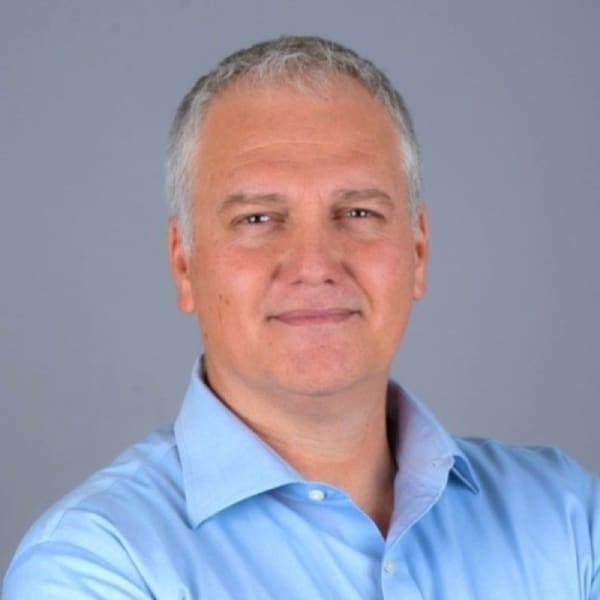
Before factories could talk about AI agents, Ben-Assa was helping them locate glass carts, mine equipment and missing minutes. His career is a study in making invisible industrial problems legible - and then useful.
Magic Software spent 43 years making old systems talk - then joined a bigger machine
The Israeli software veteran outlasted several computing eras by connecting what companies already owned. Its products carry the story, but services pay most of the bills - and a 2026 merger gives that model a larger engine.
The Quote That Ate Eight Weeks: How Tacton Turns Industrial Complexity Into a Five-Minute Sale
A turbine proposal once took eight weeks and 500 pages. Tacton's bet is that the same engineering truth can guide a salesperson, power a 3D buyer experience and reach the factory without getting mangled along the way.
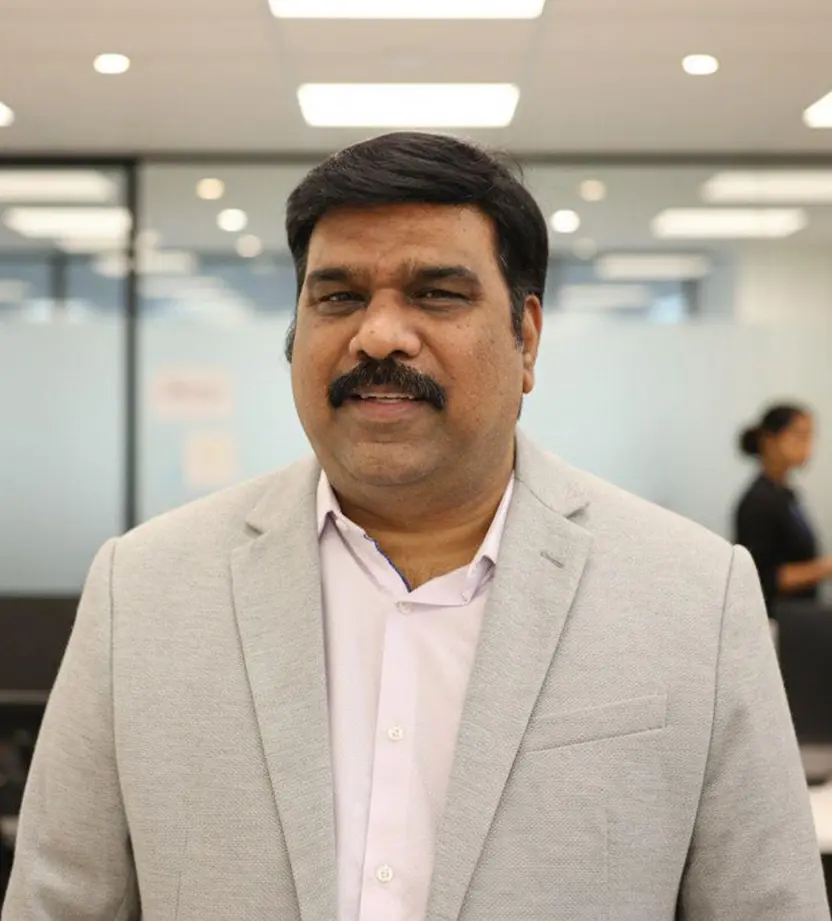
The Factory Floor Has a Memory. Senthil Ranganathan Wants It to Think.
After 25-plus years inside manufacturing systems, the Athena founder is betting that factories need fewer passive dashboards and more useful decisions.

Vinay Nathan Has Spent 13 Years Teaching Factories to Tell the Truth
Before factory AI can sound clever, someone has to connect the old machines, clean up the records and prove the software pays. Vinay Nathan built Altizon around that less glamorous - and more useful - work.

Adam Livesay Is Giving Heavy Machines a Service Desk
The Elevāt co-founder spent years listening to machines and the people who repair them. Now, with a $12 million Series A and Europe in view, he is turning industrial data into something a technician can actually use.
Toshiba Lost the Living Room. Can It Win the Infrastructure Underneath Everything?
The 150-year-old Japanese icon survived scandal, a nuclear wipeout and a rejected breakup. Now private, leaner and newly profitable, it is betting that the best place to rebuild a household name is far outside the household.
Altizon Gave the Factory Floor a Brain That Talks Back
A Princeton-and-Pune software company spent a decade wiring up shop floors. Now it is betting the most useful worker in the plant will be a piece of software you can talk to.
Invio Automation Is Building the Factory Before the Factory Exists
The modern factory has a costly problem: buying a robot is easy, but making the whole line work is not. Invio Automation sells the planning, machinery, integration, and long-haul support that connect the whiteboard to the shop floor.
Gleason Corporation
The 160-year-old Rochester manufacturer is turning the humble gear into a connected data loop - linking design software, cutting machines and metrology so factories can correct quality while production is still running.
Rockwell Automation
It started in 1903 with a $1,000 bet on a better motor controller. A century later, Rockwell Automation runs the machinery behind cars, medicine and microchips - and is quietly wiring the factory floor into the cloud.
L&T Technology Services
It is not the household name behind your car, your MRI machine, or your factory floor - but the outsourced engineering brain that helped design them just might be.
Emerson
Emerson spent a century making the machinery of modern life. Now it is assembling something harder to see: the digital nervous system for factories, power grids and process plants.

Athena Technology Solutions
Athena Technology Solutions makes the factory floor legible to the rest of the enterprise - stitching machines, manufacturing software and business systems into one working digital thread. Now the Fremont integrator is testing how far that hard-won context can carry agentic AI.
Advanced Engineering Services
AES is the engineering firm behind the engineering firm - simulating heat, stress and flow, then building the automation that makes a design work on the factory floor.
Yoochun Kim
Yoochun Kim (Kim Yoo-cheon) is the founder and CEO of YC Corporation, a Seoul-based digital transformation company he started on April 1, 2022. As an authorized Autodesk partner, YC supplies CAD, CAM, MES and PLM software plus hardware to small and mid-sized Korean manufacturers - the metal shops, tool makers and injection molders that most smart-factory programs skip. Kim built the company to over 7 billion won in annual revenue in roughly two years, taking no outside investment and funding growth entirely through solution and service work.

YC Corporation
YC Corporation is a Seoul-based digital transformation company that helps small and mid-sized Korean manufacturers go digital. As an official Autodesk partner, it supplies and consults on CAD/CAM/PLM software (Fusion 360, AutoCAD, Inventor, PowerMill), builds its own YC Smart Line MES, and sells the hardware - CNC routers, laser markers, 3D printers and IoT sensors - to run it. Founded in 2022 and bootstrapped, the company reached roughly 7 billion won in revenue by mid-2024 by focusing on shops that earlier smart-factory programs overlooked.

LE Robotics
LE Robotics is a Chengdu-founded industrial robotics company building AI-driven welding and cutting robots that combine 3D vision, SLAM autonomous navigation and welding-specific AI algorithms. Its systems locate weld seams in seconds and operate without pre-programming or manual teaching, letting robots 'think and act like workers.' Spun off from the Loyalty Enterprises industrial group in 2022 by CEO Haojie Hu, the company serves Fortune 500 manufacturers and large state-owned enterprises across nuclear, oil and gas, rail and heavy machinery, and is expanding internationally through subsidiaries in Canada, the US, Brazil and Singapore.
Averroes.ai
Averroes.ai is a San Mateo-based startup building a no-code AI visual inspection platform that helps manufacturers automatically detect, classify, segment and monitor defects on their production lines. Founded in 2021 by Tareq Aljaber and Omar Altamimi, the company targets semiconductor, electronics, pharmaceutical, food and beverage, and oil and gas producers, promising 99%+ inspection accuracy, deployment in under five days, and models trained on as few as 20-40 images per defect class without writing code or buying new hardware.
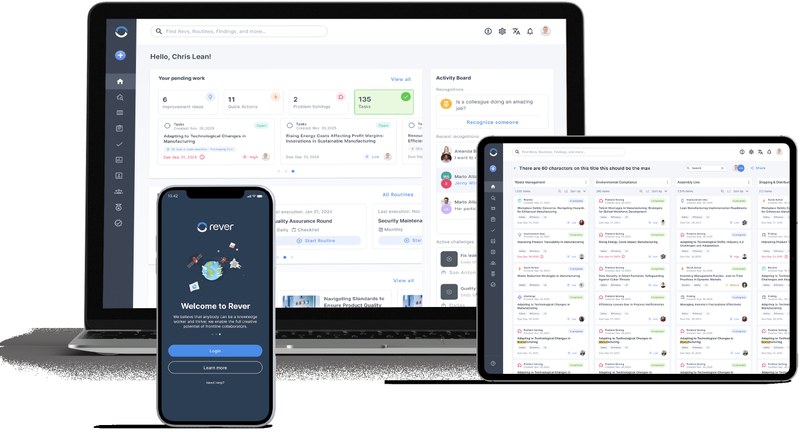
Rever, Inc
Rever is a San Francisco-based SaaS company building a Frontline Intelligence Platform that digitizes kaizen, audits, inspections and continuous improvement for industrial operators - turning everyday workers into a connected army of problem-solvers, with AI that surfaces hidden losses and replicates proven fixes across plants.
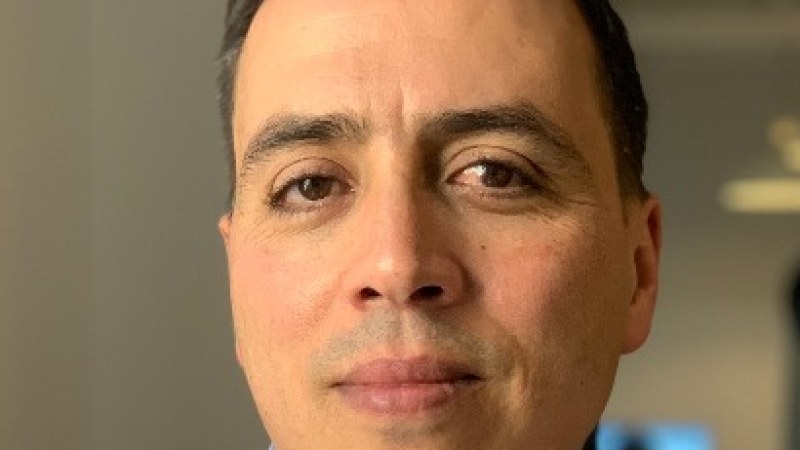
Tareq Aljaber
Tareq Aljaber is the founder and CEO of Averroes.ai, a San Mateo company building no-code AI visual inspection and virtual metrology software for semiconductor and industrial manufacturing. Before founding Averroes in 2021, he spent more than two decades shipping products used by millions at Adobe, Microsoft, Atlassian, and Samsung NEXT, including work that helped scale Adobe Flash and the launch of Microsoft's Visual Studio App Center. He now focuses on making AI-powered defect detection accessible to quality and reliability engineers who have no data science background.

PDF Solutions
PDF Solutions is a Santa Clara semiconductor analytics company that turns the firehose of chip-manufacturing and test data into decisions. Its Exensio platform connects fabs, foundries, OSATs and fabless designers, normalizing data across silos so customers can ramp yield faster, catch defects earlier and run AI/ML models on the factory floor. Founded in 1991 and public since 2001 (Nasdaq: PDFS), it serves 130+ semiconductor companies including TSMC, Intel, Qualcomm, Analog Devices and DENSO.

Augury
Augury is an industrial AI company that helps manufacturers hear what their machines are trying to say. By bolting IoT sensors onto pumps, motors and fans and feeding their vibration, temperature and magnetic data to machine-learning models, Augury predicts and prevents mechanical failures before they cause unplanned downtime. Founded in 2011 in Israel and now headquartered in New York, the company pioneered the 'Machine Health' category, expanded into 'Process Health' for production-line optimization, and serves 500+ manufacturers including PepsiCo, Colgate-Palmolive, Hershey, DuPont and Heineken. It reached unicorn status in 2021 and maintained a $1B+ valuation with a $75M Series F in 2025.
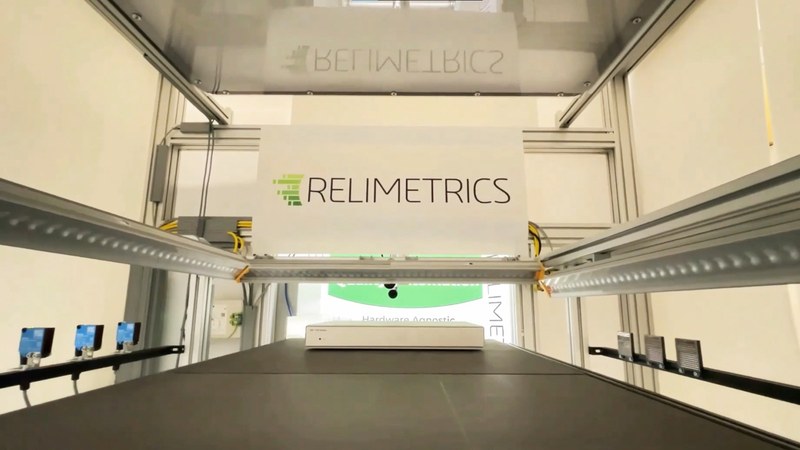
Relimetrics, Inc.
Relimetrics is an AI software company building ReliVision, a no-code visual inspection platform that lets manufacturers digitize quality assurance on the factory floor. Hardware-agnostic and self-installable, it puts model training, retraining and defect detection in the hands of plant engineers instead of data scientists - and its accuracy is unusual enough that reinsurer Munich Re will underwrite it. Founded in 2015 with offices in Silicon Valley and Berlin, the company counts HPE, Lockheed Martin, Foxconn and Siemens Gamesa among its users.

Kemal Levi
Kemal Levi is the founder and CEO of Relimetrics, an industrial AI company splitting its headquarters between Sunnyvale and Berlin. A Stanford-trained materials scientist who once measured how skin behaves under stress for the cosmetics industry, he now builds ReliVision, a no-code, GenAI-powered platform that lets factories teach machines to spot their own defects. He has spent more than fifteen years turning non-destructive testing and computer vision into shop-floor software, and counts NVIDIA's Inception program among Relimetrics' backers.

Daedalus
Daedalus is an AI-driven precision manufacturing company building software-defined factories that produce high-precision parts for defense, medtech, semiconductors and industrial customers. Founded by former OpenAI Robotics technical lead Jonas Schneider, the company pairs off-the-shelf CNC hardware with its proprietary Manufacturing AI Platform to automate the work that traditionally requires veteran machinists - quoting, process planning, machine control and quality inspection - and runs it all out of a 50,000-square-foot factory in Karlsruhe, Germany.
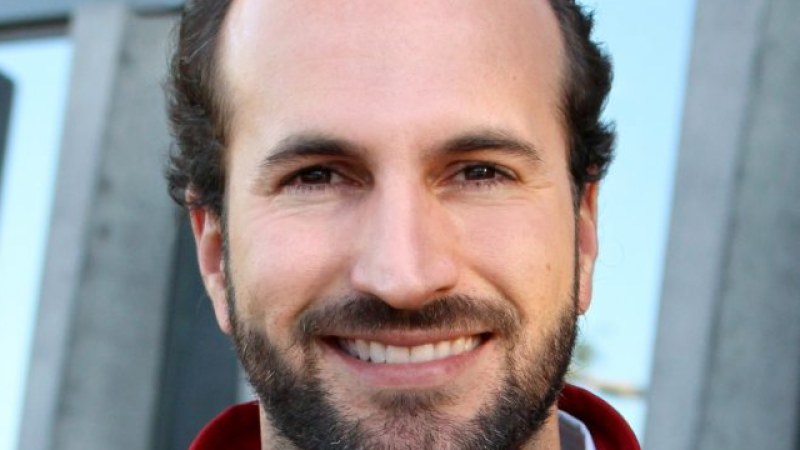
Errette Dunn
Errette Dunn is Co-Founder and CEO of Rever, a San Francisco-based frontline intelligence platform that helps global industrial companies unlock the creative potential of their deskless workers. Drawing on hands-on stints at Toyota and Airbus, he spent a decade coaching operations leaders across 17 countries before co-founding Rever in 2015. Today the company-backed by Y Combinator, Sequoia, Ulu Ventures, and Mundi Ventures-serves world-class manufacturers like Volkswagen, Grupo Bimbo, and Hyundai in more than 70 countries, giving factory floor workers an AI-powered mobile app to photograph problems, build solutions, and earn recognition in minutes.