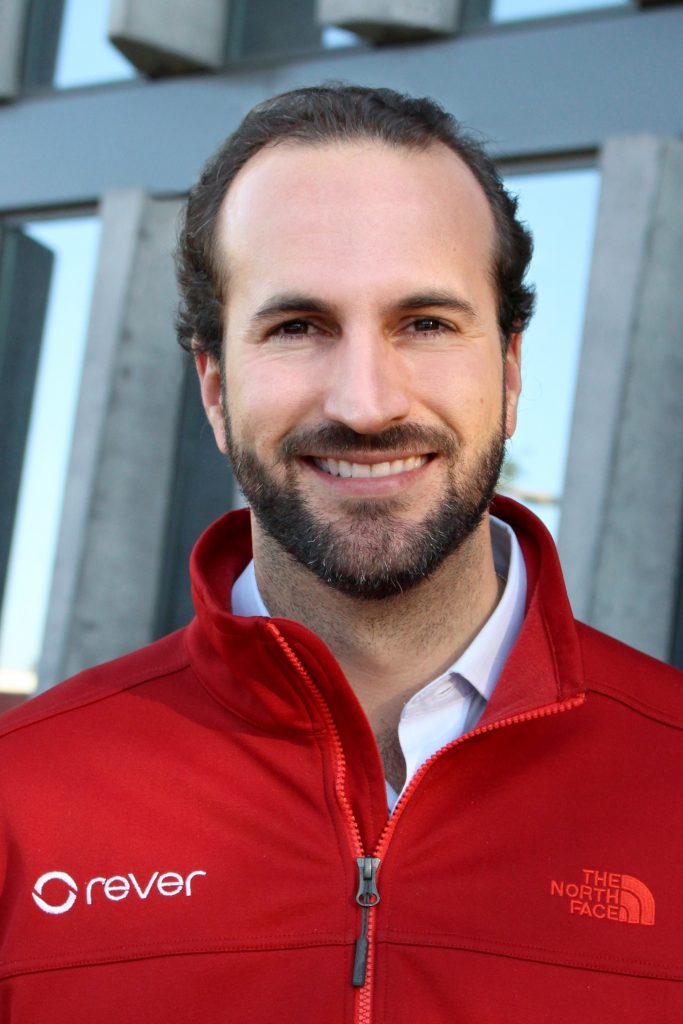
The Kaizen Whisperer of Silicon Valley
There is a factory worker in a Volkswagen plant in Germany. She spots a problem. She pulls out her phone, photographs it, describes it in three sentences, and within five days it is fixed - earning her recognition points and her manager a data point they didn't know they needed. This is Rever. And Errette Dunn built it.
Dunn didn't arrive in Silicon Valley by the usual route. He didn't drop out of Stanford or build a chat app. He arrived from Toyota, where he learned lean manufacturing in the factories that invented it, then from Airbus, where he ran lean transformation across engineering, manufacturing, sales, and maintenance functions on two continents. By the time he showed up at Wrike in 2014 as a principal consultant, he had coached operations leaders in 17 different countries. He had watched good ideas die in suggestion boxes. He had seen the gap - between the worker who knew exactly what was wrong, and the organization that never found out.
That gap became Rever.
"At Rever, we believe that anybody can be a knowledge worker and thrive in their workplace."- Errette Dunn, Co-Founder and CEO, Rever, Inc.
In 2015, Dunn co-founded Rever in San Francisco with Borja Gómez and Ignacio De Loera. The founding team blended firsthand experience from Toyota, Airbus, IBM, Procter & Gamble, SAP, and LinkedIn - a lineup that reads less like a startup bio and more like a history of modern industrial transformation. Their thesis was pointed: approximately 80% of the global workforce are deskless workers - people on factory floors, in warehouses, in the field - and most organizations waste their creative potential entirely. The trillion-dollar suggestion box problem.
From the Shop Floor to the App Store
What Rever built is deceptively simple: a mobile-first platform where any frontline worker can photograph a problem, receive step-by-step coaching through a solution workflow, build a team, implement the change, and document the business impact - all within days, not quarters. Workers earn recognition points. Managers get real-time dashboards. The organization accumulates collective intelligence it would never have otherwise captured.
The kaizen formula, modernized:
Worker spots problem → photographs it on Rever app → AI coaching guides solution workflow → team implements fix in <5 days → impact quantified → recognition earned → organization learns → repeat.
Toyota's PDCA cycle, running on a smartphone, backed by machine learning. Errette Dunn made 80 years of manufacturing wisdom fit in a pocket.
The customers are not small. Volkswagen runs on Rever. Grupo Bimbo - the world's largest baking company - runs on Rever. Hyundai runs on Rever. A 27-person team in San Francisco is quietly serving some of the largest manufacturing operations on earth across more than 70 countries. That is not a growth hack. That is product-market fit so acute it borders on embarrassing for every slower competitor.
The Pandemic That Became a Proof Point
March 2020. Factories shutting down. Investors going cold. Dunn's customers - the very manufacturers whose workers Rever depended on - were watching their floors empty out. A different founder might have panicked. Dunn, trained by years of lean thinking, ran a root-cause analysis instead.
"Conversations with investors became much scarcer and far more difficult. Investors naturally wanted to wait and see how the pandemic would affect our business."- Errette Dunn
His response was counterintuitive: stop chasing new customers, make existing ones fanatically happy. When government unemployment benefits threatened to keep workers off the floor longer than COVID itself, Rever responded by cranking up its recognition and appreciation engine - turning the platform's gamification layer into a genuine incentive during the most disorienting labor market in decades.
Ulu Ventures led a $3M Seed II round mid-pandemic. Sequoia Capital and Zetta Venture Partners had already backed the company in 2018. Y Combinator followed. The total funding reached $6.7M - not large by Silicon Valley standards, but sharp for a company that had already proven it could survive a global factory shutdown and emerge with customers intact.
The Bio That Doesn't Fit a Template
Errette Dunn holds an MBA from IESE Business School and a B.Sc. in Industrial Engineering from Universidad Panamericana. He speaks Spanish, French, and English - which, as he notes with characteristic understatement, people have told him "isn't bad." He is a father of six and divides his time between Guadalajara and California. He is also, since 2021, the host of The Next Frontline - a podcast featuring brief, dense conversations with plant managers, VPs of operations, digital transformation leaders, and investors building the future of manufacturing.
The range is part of the point. Dunn spent his formative years moving between cultures, languages, and industries - Toyota in Japan, Airbus across Europe, Wrike in Silicon Valley. Rever is what happens when someone with that particular portfolio decides to build something. Not a tool. A culture platform. A way to make kaizen a habit rather than a program.
"The transition from the corporate world to the startup world was pretty radical for me. It was a breath of fresh air."- Errette Dunn, on co-founding Rever