The number that makes Invertis Innovation and Incubation interesting is ₹52,000. That is the first tranche of sustenance allowance the centre says went to Cladbe Platforms LLP, one of its startups. It is an unshowy sum with an unshowy purpose: helping a young business keep going while it develops its product. In a field fond of enormous funding announcements, the small print deserves a turn in the spotlight.
Cladbe builds customer-relationship and business-management software for real-estate businesses, according to its startup listing. Its work concerns leads, projects, sales and paperwork. The incubator supporting it sits inside Invertis University in Bareilly, Uttar Pradesh, where the entrepreneurial proposition is similarly practical: give founders somewhere to work, people to question their plans and help finding the resources to take another step.
This is a university incubator with a broad brief. Students and researchers share its intended audience with aspiring entrepreneurs. Its services connect business training to workspace, technical facilities and funding support. The interesting question is how those pieces fit together when an idea begins making demands on its owner’s time and money.
A campus recommendation becomes a place to build
The origin runs through university administration. Invertis’s 2020-21 quality-assurance report records a suggestion from a visiting NAAC peer-review team: establish an incubation centre to expose students to innovation and skill development. The university then explored how to create it, identifying Dassault Systèmes as a suitable technology collaborator. That is a more revealing beginning than a ribbon-cutting photograph. An outside recommendation prompted an institutional response.
The foundation’s corporate history starts later. Company directories record incorporation on February 20, 2024, with Sonal Gautam and Parth Gautam appointed as directors. The incubation centre’s formal inauguration followed on September 16. Those dates mark different steps: setting up the entity and opening the centre.
By September 30, the university’s quality-assurance committee was discussing what should happen inside. Its meeting minutes record plans to invite business leaders and a suggestion to arrange funding through an Invertis Shark Tank. The ambition had acquired a schedule, an audience and a format.
First the idea. Then somebody asks questions.
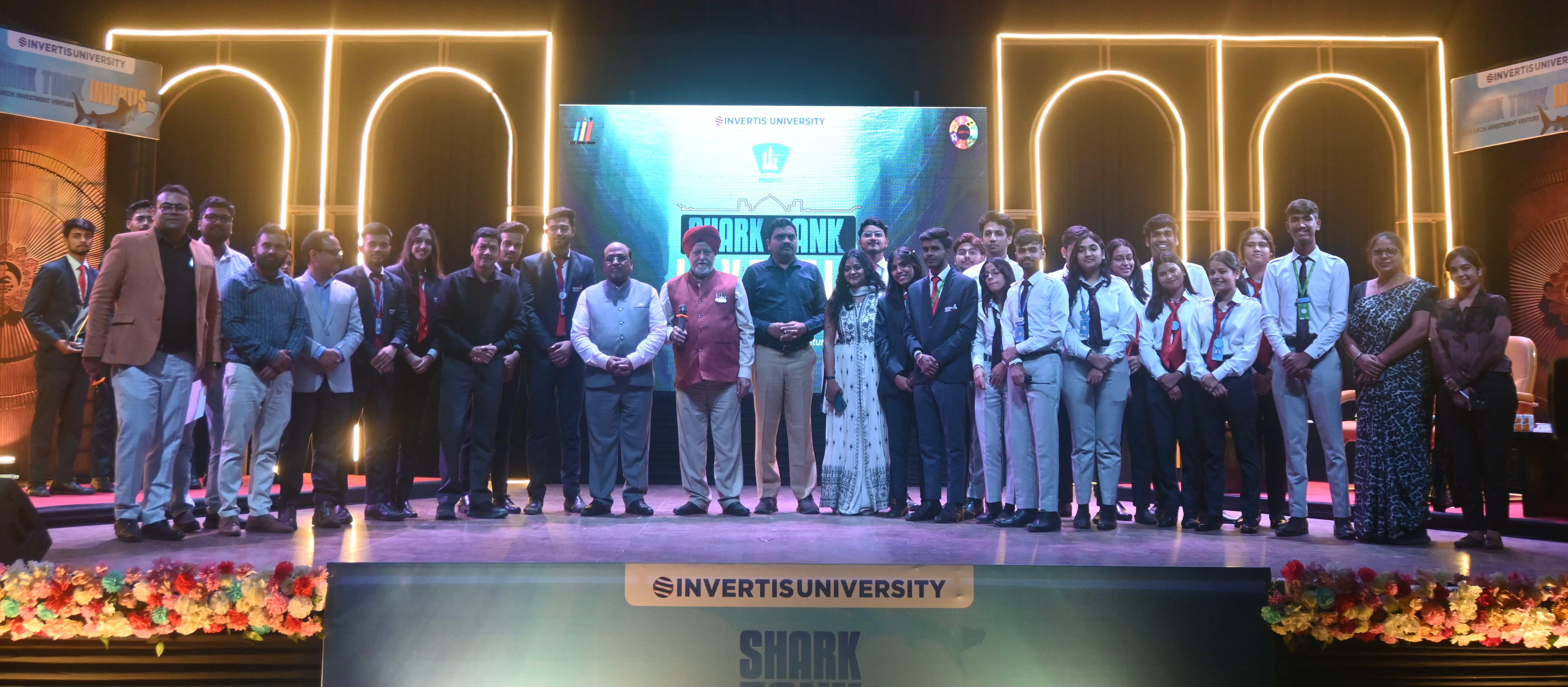
The first Shark Tank Invertis ran across three dates in October 2024. Students submitted ideas on October 1. Shortlisted participants met mentors on October 3. Final pitches followed on October 15. The published criteria included originality, feasibility and potential market or social value.
The useful feature was the space between submission and performance. Mentoring covered market research, business strategy and pitching, giving participants an opportunity to revise before presenting again. A reader organizing a campus competition can copy that sequence: collect an initial proposition, expose it to experienced questions, then judge the improved version. The learning happens between the two presentations.
Invertis describes an incubation horizon of six to twelve months. A competition can introduce a founder to the centre; continued development needs a longer rhythm. A fortnight can sharpen a presentation. Working out whether customers actually want the proposed product takes repeated contact with the market.
- 01SubmitOriginality, feasibility, impact
- 03Work with mentorsResearch, strategy, pitching
- 15Pitch againPresent the refined business idea
The campus advantage has moving parts
The university’s incubation overview lists a Virtual Manufacturing and Automation Lab, cabins, open working spaces and conference rooms. These facilities make the proposition relevant to more than laptop businesses. A founder developing a physical product has different questions from a founder building software, starting with how to turn a design into something that can be examined.
The surrounding technical infrastructure matters here. Invertis’s related Centre for Skill and Entrepreneurship Development describes work with Dysmech Competency Services and technology providers including Dassault Systèmes, PTC, Mastercam and Ansys. Its stated approach connects industrial equipment, project work and technical learning. This gives the incubator an institutional setting with manufacturing expertise close at hand.
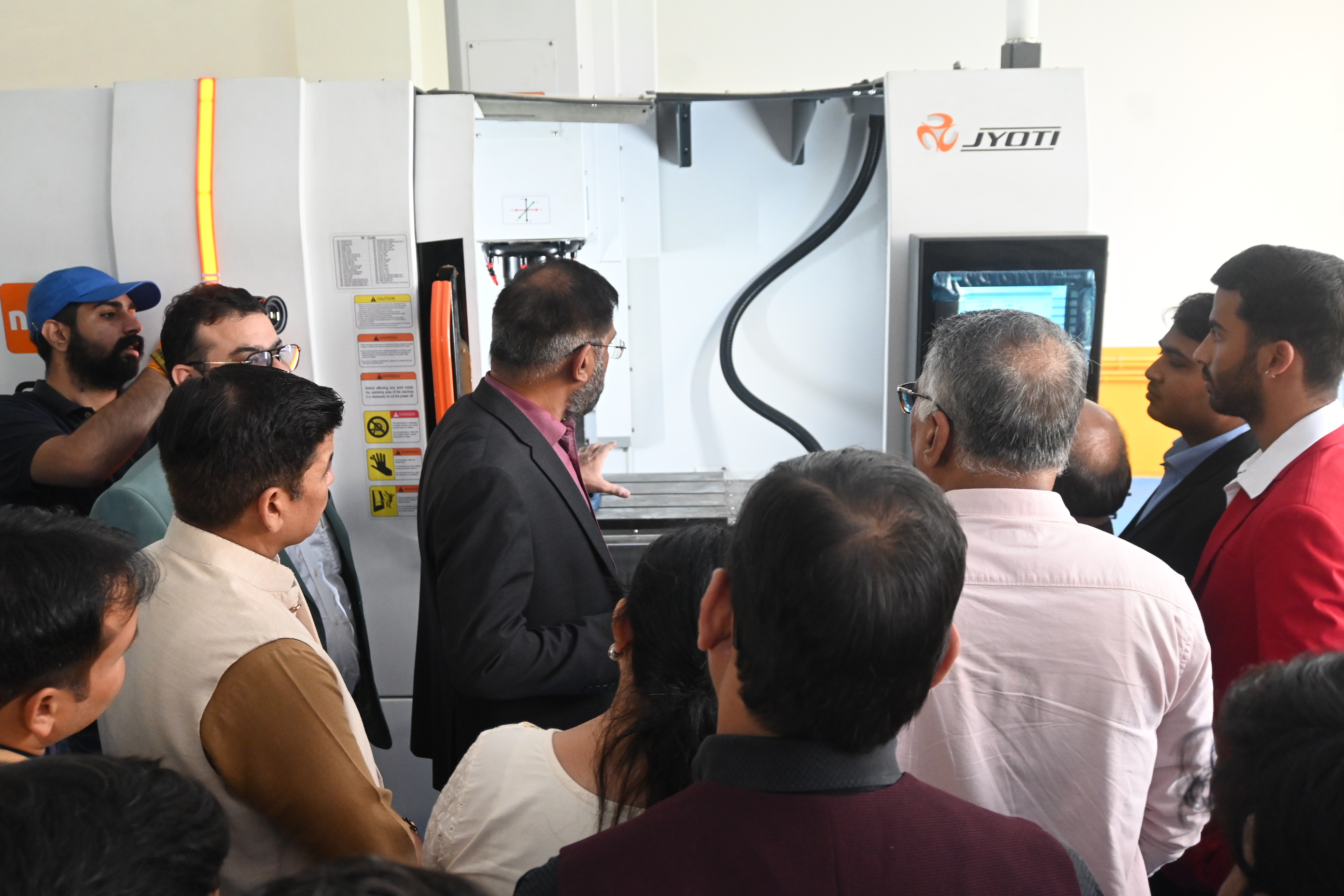
That is a plausible advantage over a workspace whose main offering is a desk. Its value depends on the actual project: equipment access, appropriate supervision and a useful manufacturing process. Software founders may care more about product feedback and introductions. A mature company needing large-scale production would have to assess a different set of facilities and suppliers.
Small cheques, different jobs
Invertis’s reported startup outcomes distinguish several types of money. Aqin Biotech received ₹3.5 lakh as a first tranche of seed capital and market assistance. SS Parts Planet received ₹3 lakh under the same description. Cladbe’s ₹52,000 was a sustenance allowance. The centre also reports a ₹2.5 lakh investment for skincare brand Atheravia.
These amounts belong to different companies and different forms of support. Keeping their labels attached makes the record useful. An allowance supports continuity; market assistance concerns taking a product outward; an investment introduces its own terms. The reported receipts show concrete support reaching particular ventures, rather than establishing the financial performance of the incubator.
Four amounts. Read the labels.
The centre also directs founders toward government funding opportunities. The published StartinUP marketing-assistance scheme describes support of up to ₹7.5 lakh for an MVP launch, subject to evaluation and milestone-based disbursement. This explains why grant guidance belongs alongside mentoring: a founder needs to understand what an application promises and what subsequent payments require.
For someone comparing incubation options, cost therefore has several parts. Workspace is advertised as subsidized. Building the product, running the business and meeting funding milestones remain distinct tasks. The sensible comparison starts with the facilities and support a particular venture will use, then the terms offered to that venture. A large scheme headline cannot do that calculation.
The less glamorous curriculum
Look down the event calendar and the subjects become refreshingly specific. A Founder’s Forum dated February 15, 2025 focused on financing, investor relations, pitch preparation and cash-flow planning. March programming included brand personality and business development. These address the work between inventing something and persuading another person to buy it.
The centre’s video gallery identifies Local Karigar founder Ravi Kumar as the business-development workshop speaker, discussing customer engagement and growth. It also records a Women’s Day workshop with entrepreneur Dr. Megha Saxena. Such sessions place founders’ operating experience within reach of students who are still forming their first business assumptions.
Then Invertis turned to the teachers. An April 10 faculty-development program focused on the Business Model Canvas and mentoring student entrepreneurs. That is an institutional choice with a practical logic: students encounter faculty repeatedly, so equipping those faculty with entrepreneurial tools can extend support beyond the occasional visiting speaker.
“guiding start-ups through every stage, from initial concept to successful execution”
Parth Gautam, in his message about the centre
One participant’s account gives that classroom-to-project connection a face. In a public post about Inverthon, Shivam Maurya described presenting XpertSwap, a student skill-exchange platform, and being recognized among the top five teams. He said he entered individually and went through presentation, code-checking and final-evaluation rounds. His account credits university mentors and ShapeMySkills for their support. The example is small but instructive: a student brought a specific learning problem, built a proposed response and put it before other people.
The practical lesson for another student is to bring something examinable. A demonstration lets a mentor ask about a particular interaction, feature or intended user. A business model makes assumptions about customers and costs visible. Invertis’s combination of coding events and business workshops offers opportunities for both conversations. Their value grows when participants use feedback to decide what to test next, then return with evidence from that test.
From sales software to railway sensors
The incubated-startup roster ranges across biotechnology, automotive parts, software and other businesses. That breadth makes Invertis a general university incubator. Its position is to assemble support around emerging founders with varied needs, drawing on the disciplines and industry relationships of its host institution.
Its published invention descriptions reach into physical systems. One outlines sensors that detect railway-track obstructions, establish their location and alert railway authorities. Another describes a drone combining pollution monitoring, filtration, thermal imaging and mapped alerts. These are descriptions of proposed inventions; the appropriate next questions concern prototypes, testing and use in the intended setting.
The distinction matters to an aspiring inventor. Documentation and patent support can help organize and protect technical work. A railway safety system also needs evidence that it behaves reliably under relevant conditions. An environmental drone needs measurements of its intended performance. Those demands make technical mentoring valuable, while keeping the next development task firmly in view.
The students are also on the team
The operating team includes incubation manager Dr. Rajeev Singh Bhandari and associate Aman Choudhary, alongside a student convenor and student roles covering media, technology, archives and events. Students therefore appear in the organization’s delivery as well as its audience. Even the archive has an assigned role, an unusually useful detail for an institution running a busy calendar.
The state startup directory lists 35 startups and 12,000 square feet for the foundation. Those figures describe a working base. The next layer of the story sits in the individual businesses: what they build, which customers they reach and how they use the support available.
The January 2026 photo archive records National Startup Day, innovation showcasing and startup launching. For an interested founder, the website’s registration route offers a starting point. Arriving with a defined problem, a clear account of the intended customer and a specific request for help would make that first conversation considerably more useful.
Other campuses can borrow the sequence visible at Invertis: connect technical resources to business mentoring, let students revise their ideas, teach faculty to help and match funding support to a concrete stage of development. Each step needs people and facilities able to deliver it. The ₹52,000 detail brings the ambition back to scale: one young company, one operating need, one piece of help.