Somewhere on the list of ventures supported by Annamalai University’s incubator is a proposition with immediate dinner-table appeal: an automated sambar-making machine. The venture is called Mr.Chef. Nearby are ideas for breaking cashew shells, monitoring aquaculture and collecting garbage with autonomous robots. Read the list long enough and a pattern appears. Entrepreneurship here begins with things that need doing.
- University tools and business support in one incubation programme.
- Open to outside entrepreneurs as well as students and researchers.
- Three main technical lanes: manufacturing, life sciences, water and environment.
Annamalai Innovation and Incubation Research Foundation, or AIIRF, is the nonprofit company behind that list. Established in 2019 in Chidambaram, it sits at an interesting junction: a university has knowledge and equipment; an aspiring founder has a problem and a possible solution. Getting those two parties into the same room is the beginning. Making their relationship productive is the work.
A company for the space between
AIIRF was formed as a Section 8 special-purpose vehicle of Annamalai University. Tamil Nadu’s Entrepreneurship Development and Innovation Institute sponsored it under a manufacturing incubation infrastructure project. Startup India’s best-practices compendium describes it as Cuddalore district’s first business incubator. Its institutional origin matters because its offer depends on resources already gathered around a university.
Consider the difference between inventing something and selling it. A research result needs testing. A device needs a repeatable design. Someone must decide who owns the intellectual property, register the business and identify a buyer. AIIRF’s services address those separate tasks. It helps with business formation, Startup India recognition, patent filing, market research and introductions to mentors and potential investors.
That gives it a particular place in the market. A coworking desk can provide somewhere to sit. A prototyping shop can help make a part. A university incubator offers the possibility of connecting technical development with the administrative work of becoming a business. The value depends on whether those connections remove the founder’s next obstacle.
Follow the equipment
The foundation’s three principal areas are smart and advanced manufacturing, life sciences, and water and environmental technologies. Its explanation is refreshingly practical: these choices reflect faculty strengths and available laboratory and testing equipment. The starting point is what the host institution can help someone do.
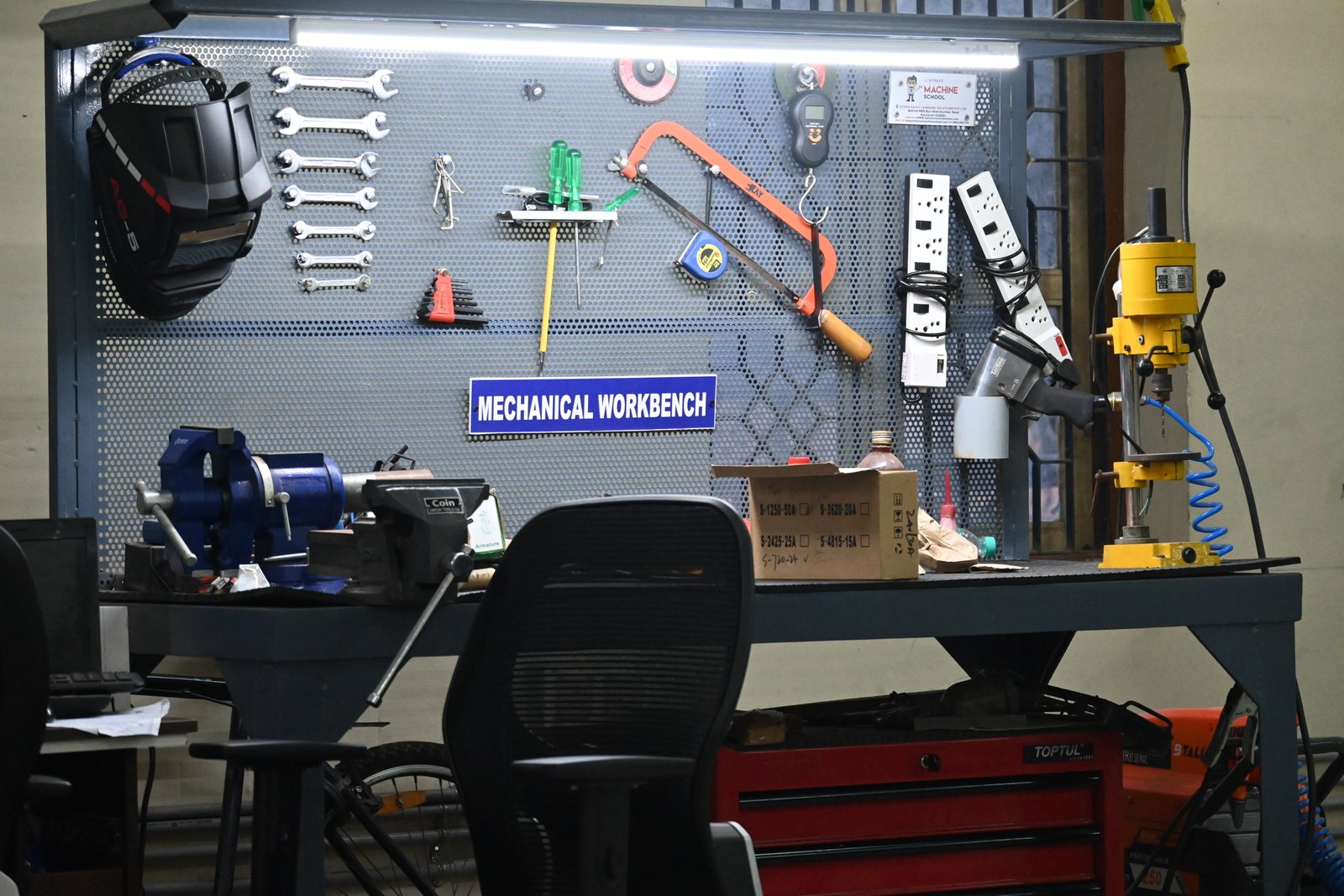
Its facilities page lists FDM and DLP 3D printers, a scanner, an AR/VR lab and electronic and mechanical workbenches. For a founder developing a physical product, access to a tool can change the next experiment. Sharing equipment can also reduce the need to buy it before the design has earned that expense. Those are potential advantages of the arrangement, rather than measured savings.
Three questions suggested by AIIRF’s service mix. A useful checklist, rather than a guaranteed sequence.
The incubatee directory makes the technical range tangible. Aishuwaryam Cashew Tech lists a cashew-shell breaking machine. Flare Innovations proposes water-testing equipment for prawn farming. SLR Energy lists biogas reactors and purification technology. These are portfolio descriptions of ideas and ventures; they establish what people are working on, without establishing sales or successful deployment.
There is a similar logic in the people around the programme. The governance list brings university academics together with representatives from industry, finance and other incubation organisations. AIIRF’s services page also offers help connecting startups with student interns. Technical knowledge and business judgment arrive through different channels; the incubator’s job is to make those channels accessible.
The price of getting started
There is an unusually concrete detail on AIIRF’s membership page: a monthly incubation or consultation fee of ₹1,000 until graduation. Registration is listed separately at ₹1,000 for students and ₹10,000 for startups or MSMEs, with a ₹500 documentation fee. The page also states consultation waivers for bootstrapped entrepreneurs and startups working toward sustainable development.
Those published figures are a starting point for a conversation about terms. They do not establish that every laboratory service, material or professional filing is included. Annamalai University’s December 2022 startup policy allows AIIRF support through fees, equity sharing or zero-payment arrangements, depending on the services. A founder should settle scope, ownership and payment before treating access as a budget.
“Start to scale”AIIRF’s description of its incubation support
The institution’s own financing belongs in a separate ledger. Annamalai University’s 2020 innovation filing records ₹23,407,000, approximately ₹2.34 crore, in EDII-TN funding for the centre. That is infrastructure support for the incubator. It should not be read as a venture round, a valuation or money automatically available to each applicant.
An introduction is not a cheque
AIIRF’s funding work includes helping founders approach innovation grants and potential seed investors. Its November 2020 newsletter records Fib Tech Enterprises and INRO Labs pitching at Innovation Voucher Programme technical evaluations. The detail is useful: incubation involves preparing for another institution’s decision, as well as making introductions.
In a 2026 announcement, AIIRF reported four incubatees sanctioned MSME Idea Hackathon 5.0 grants: three at ₹15 lakh and one at ₹11.9 lakh. Together that is ₹56.9 lakh in announced sanctions. The money concerns those startup projects. A sanction is also a different milestone from a disbursement, a shipped product or repeat customers.
The same distinction helps a founder choose an incubator. A team that needs specialist biological testing should establish which facilities it can actually use. A software venture may care more about customer introductions than fabrication tools. Distance, equipment availability and the terms of a university collaboration can outweigh a low monthly fee. Fit is a question about the work ahead.
Bring a bottleneck
The registration form asks for a business plan, founder resumes, a product profile and a pitch deck. More revealingly, it asks about faculty collaboration, specific laboratory requirements and professional support. Applicants include external entrepreneurs, small enterprises, rural self-help groups and women founders, alongside university students and researchers.
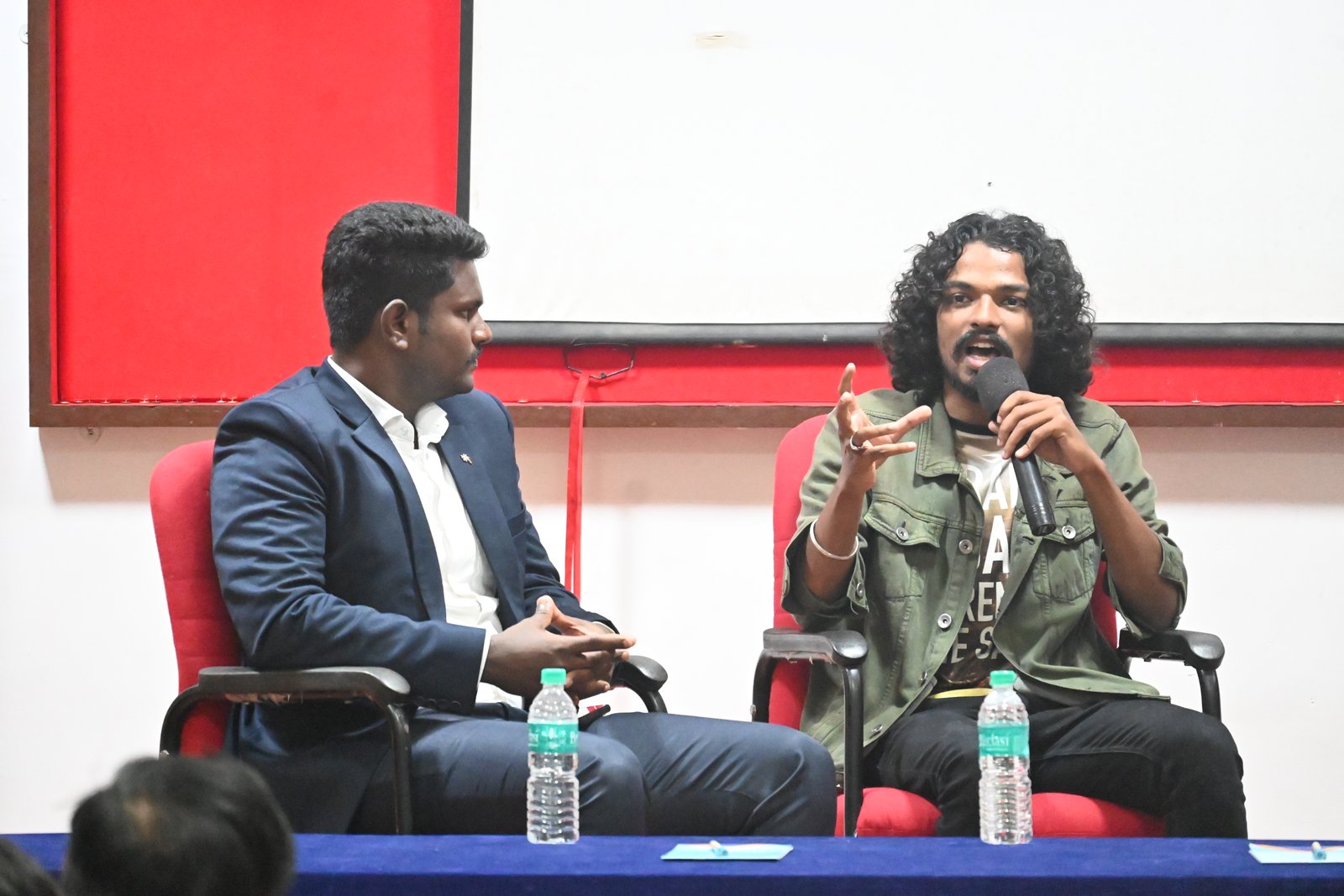
The activity continues beyond the laboratory. AIIRF reported an MBA awareness session on March 4, 2026, featuring incubated ventures, and advertised September digital-marketing training. The transferable lesson is to name the next constraint precisely. Equipment, ownership, customers and capital require different help. For the inventor with a machine to test, that distinction is where an incubator becomes useful.