In March 2020, the problem arrived faster than the product. India was entering lockdown. Hospitals needed ventilators. Noccarc, a startup incubated at IIT Kanpur, had engineering skills and an unfamiliar assignment: develop an ICU ventilator while movement across the country was restricted. The eventual machine took 90 days. Around its founders, an incubator helped assemble something less photogenic but essential: experienced people who could work through the obstacles together.
- SIIC connects technical founders with facilities, mentors, funding programmes and markets.
- Its useful territory is the difficult stretch between a working prototype and a viable business.
- The lesson for founders: choose support around your next bottleneck.
That is a revealing way into the Startup Incubation and Innovation Centre, or SIIC. The ventilator makes an appealing headline. The organisation behind it asks a more durable question: what must surround a technically capable person before that person can build a company?
The laboratory is only the beginning
IIT Kanpur established SIIC with the Small Industries Development Bank of India in 2000. In 2018, operations moved under FIRST, an institute-promoted Section 8 company. The arrangement gives commercialisation an organisational home. A promising experiment can become somebody’s product-development problem, with people responsible for helping it move forward.
The users are technology founders, including researchers and faculty entrepreneurs. A medical device, battery or drone may need specialist equipment long before sales can pay for it. SIIC connects incubation infrastructure with technical and business advice, intellectual-property guidance, government programmes and investor access. Pre-incubation helps test ideas; longer incubation supports product and business development; acceleration prepares selected ventures for deployment and scale.
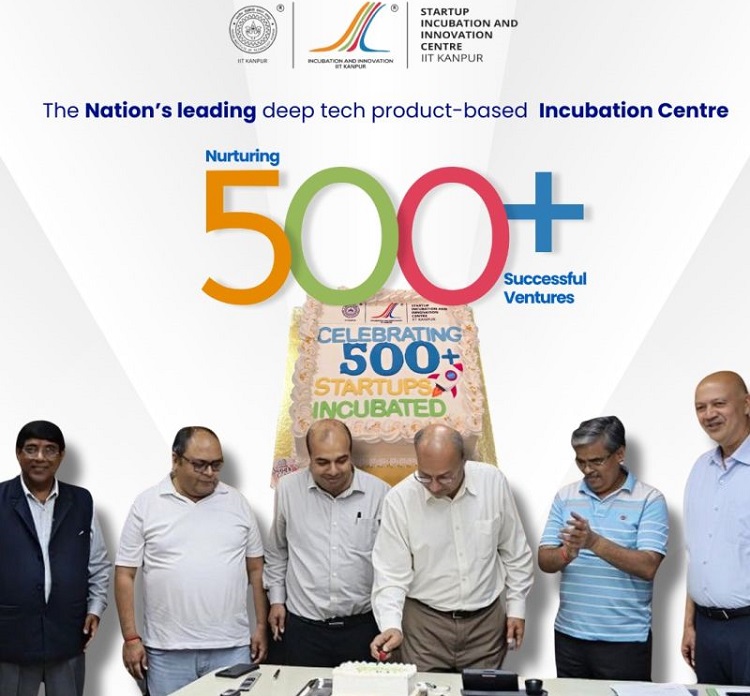
Its market position follows from those resources. A founder choosing between SIIC, another university incubator and an independent accelerator should compare the facilities and relationships each can actually supply. SIIC’s particular proposition is access to IIT Kanpur’s research environment alongside business support. That combination matters most when the company’s next question requires expertise or equipment the founders cannot easily obtain themselves.
The culture becomes visible in the work. During the ventilator effort, mentors and entrepreneurs coordinated through daily Zoom calls and WhatsApp messages. Deepu Philip, SIIC’s professor-in-charge, later described its mission as providing the right mix of support. The word mix deserves attention: a laboratory without a route to buyers can be as frustrating as investment without a finished product.
“provide the right mix of mentorship, funding, infrastructure, and networks”
DEEPU PHILIP · SIIC · SEPTEMBER 2025
A cheque needs a name on it
Startup finance is full of numbers that look interchangeable until you need to spend them. Consider two SIIC milestones. In March 2023, the SIDBI Seed Equity Support Scheme was launched with an announced ₹50 crore pilot fund for hard-tech startups. That describes intended capital. A later event supplies something more tangible: named recipients and amounts.
At FUEL 2025, SIIC reported SIDBI-backed disbursements of ₹1 crore to Lenek Technologies, ₹96 lakh to ScaNxt Scientific Technologies and ₹50 lakh to Voltworks. Together, that is ₹2.46 crore. These are investments in supported businesses. They are not SIIC’s own fundraising round, and the announced fund is not a receipt for the incubator’s operating costs.
Named disbursements reported at the event. Bars compare amounts, not company performance.
The incubator’s economics belong to a different ledger. FIRST is a nonprofit company; institutional support, government programmes and corporate partnerships help sustain its work. Historical case-study material also describes facility fees, endowment income and equity interests. A founder should establish the terms of the specific programme they are entering. Access to an incubator and entitlement to funding are separate decisions.

Let the customer set the exam
SIIC has also approached innovation from the opposite direction: begin with the problem’s owner. Its TechTalk programme invited industry and public-administration experts to describe needs engineers might address. An October 2020 session covered problems in cardiac care and anaesthesiology. Selected proposals could receive up to ₹2 lakh in product-development support. The customer’s difficulty supplied the brief.
Noccarc’s story contains a useful complication. In a later founder interview, Nikhil Kurele described obstacles raising investment and commercialising an early defence robot, especially with government as the sole customer. The pandemic then created an urgent new application for the team’s engineering capabilities. This was a portfolio company changing direction under pressure, rather than evidence that every incubated invention finds a market.
The early ventilator was reported at about ₹4.5 lakh, depending on configuration, in 2021. That is a historical selling price, not the cost of inventing it or a current quotation. The distinction matters because affordability, manufacturing expense and development finance are different problems. Solving one does not automatically settle the others.
Borrow the machinery, not the deadline
The practical move to copy is to map the missing step. If the uncertainty is technical, identify the equipment and specialist who can resolve it. If it is commercial, find a potential buyer willing to test the product. If it is financial, match the next milestone to an eligible funding route. Ask an incubator for the particular connection that changes the next decision.
For a founder, that means arriving with a sharper request than “help us grow.” Bring the test that needs running, the specification that needs checking, or the customer assumption that needs challenging. Agree on what a useful result would look like before committing time. A meeting is easier to judge when it changes a design choice or produces a credible next experiment. That gives founders a practical way to judge the support they receive. It makes an incubator easier to evaluate: the relevant measure is the obstacle removed, alongside the introductions made and workshops attended.
This approach needs a team able to absorb advice, access to relevant expertise, and customers willing to engage. It offers less value when a founder needs only office space, or when no laboratory result can overcome weak demand. Nor should 90 days become a standard promise for technologies requiring lengthy validation.
SIIC’s remit keeps expanding. In February 2026, FIRST became a knowledge partner for the agriculture ministry’s RKVY-RAFTAAR scheme, adding coordination with agri-business incubators to mentoring and funding linkages. The underlying task remains recognisable: arrange the people and institutions around an invention so its next step becomes possible. For a founder staring at a prototype, that can be a very practical kind of help.
Explore SIIC
For founders: Visit SIIC · Browse programmes · Meet the startups
Follow: LinkedIn · X · Instagram · Facebook
Keep reading: The Ventilator Project · Inside FUEL 2025 · The agritech partnership