A broken industrial machine has no patience for theater. It does not care whether the software around it is described as intelligent, connected, predictive, or transformative. Somewhere nearby, a technician wants to know what failed, what happened before it failed, which manual contains the relevant instruction, and what to do next. Adam Livesay has built much of his career around that wonderfully unforgiving moment.
Livesay is the CEO and co-founder of Elevāt, a Seattle company that connects the scattered evidence around heavy equipment: telemetry, fault codes, service records, manuals, dealer activity, and the hard-won knowledge of people in the field. Its customers operate in construction, agriculture, fire and safety, and other industries where downtime is counted in missed work rather than impatient refreshes.
In February 2026, Elevāt raised a $12 million Series A. The money arrived with a new chapter in the org chart. Co-founder Bill Hill moved from CEO to chairman, and Livesay took the top operating job. The company had raised $18.7 million in total by then and employed 25 people. Its next geographic target was Europe. The ambition sounded broad; the product test remained exact. Can a person repair a complicated machine sooner and with greater confidence?
February 2026
in Seattle
at the new round
01 / The originThe question hiding inside the factory
Livesay grew up in Marysville, Washington, about an hour north of Seattle. His father was an entrepreneur and a football coach. His mother was a high-school principal. Enterprise and education were not abstractions in the household; they were dinner-table professions. An early appetite for math and science led him to computer science at Portland State University.
After college, he went to work in the industrial world, helping manufacturing facilities update electronics and software. It was an excellent place to see two clocks running at different speeds. Consumer technology changed conspicuously. A smartphone could feel old after two or three years. In factories Livesay visited, technology might remain in service for more than a decade. Machines were durable. Their information systems could be stubbornly silent.
Then customers began asking a useful question. Could data from newly installed machines travel back to their computers over the internet? Livesay and one of the owners of the business, Western Integrated Technologies, did not declare the dawn of a category. They went around the country and interviewed prospective customers. The answer was sufficiently consistent to spin the idea into a separate company. Elevāt launched in 2015.
“Machines don't get serviced by software. They get serviced by people.”Adam Livesay
That line is more than friendly positioning. It identifies the last mile of industrial software. A machine can report a temperature, pressure, code, location, or unusual pattern. None of those facts replaces the operator, dealer, technician, or OEM team. The system earns its keep when it gives those people enough context to act.
02 / The buildHardware facts, software manners
Livesay's professional advantage is not a single specialty so much as a useful collision of them. He has worked across industrial operations, business development, product strategy, and systems architecture. Elevāt itself sits at the junction of hydraulics, electronics, cloud software, dealer networks, and service bays. A polished dashboard cannot rescue a system that misunderstands any one of those environments.
For years, Livesay was most publicly associated with revenue leadership. In 2018, as chief revenue officer, he spoke about applying IoT in the fluid-power world. He contributed to the Forbes Business Development Council, where his advice was pleasingly allergic to magic: build a quarterly written plan, specify weekly and daily activity, then execute. He also served on the platform advisory board of the Clean Energy Smart Manufacturing Innovation Institute and joined the National Fluid Power Association's Industrial IoT committee.
The industry work matters because industrial technology advances through alliances. An OEM builds the machine. A component company knows the hydraulic system. A dealer maintains the customer relationship. A cloud provider supplies infrastructure. The technician meets the consequence. Elevāt's job is to make those parties look, briefly, like one coherent service organization.
That also explains the endurance of the partnership at the center of the company. Hill brought decades inside the parent fluid-power integrator; Livesay brought a computer-science frame and responsibility for turning a technical possibility into a market. Their spinout kept one foot in industrial reality while the software business learned to stand on its own. When Hill became chairman in 2026, the change preserved that continuity instead of staging a founder exit.
Livesay has described Elevāt's work through control, cost, utilization, and productivity. Those are sturdy industrial nouns, and they discipline the newer language of artificial intelligence. A prediction is useful if it helps schedule a part before failure. Remote access is useful if it prevents a needless field visit. A service assistant is useful if the technician spends less time hunting through documents. The product does not have to appear clever. It has to remove uncertainty from an expensive hour.
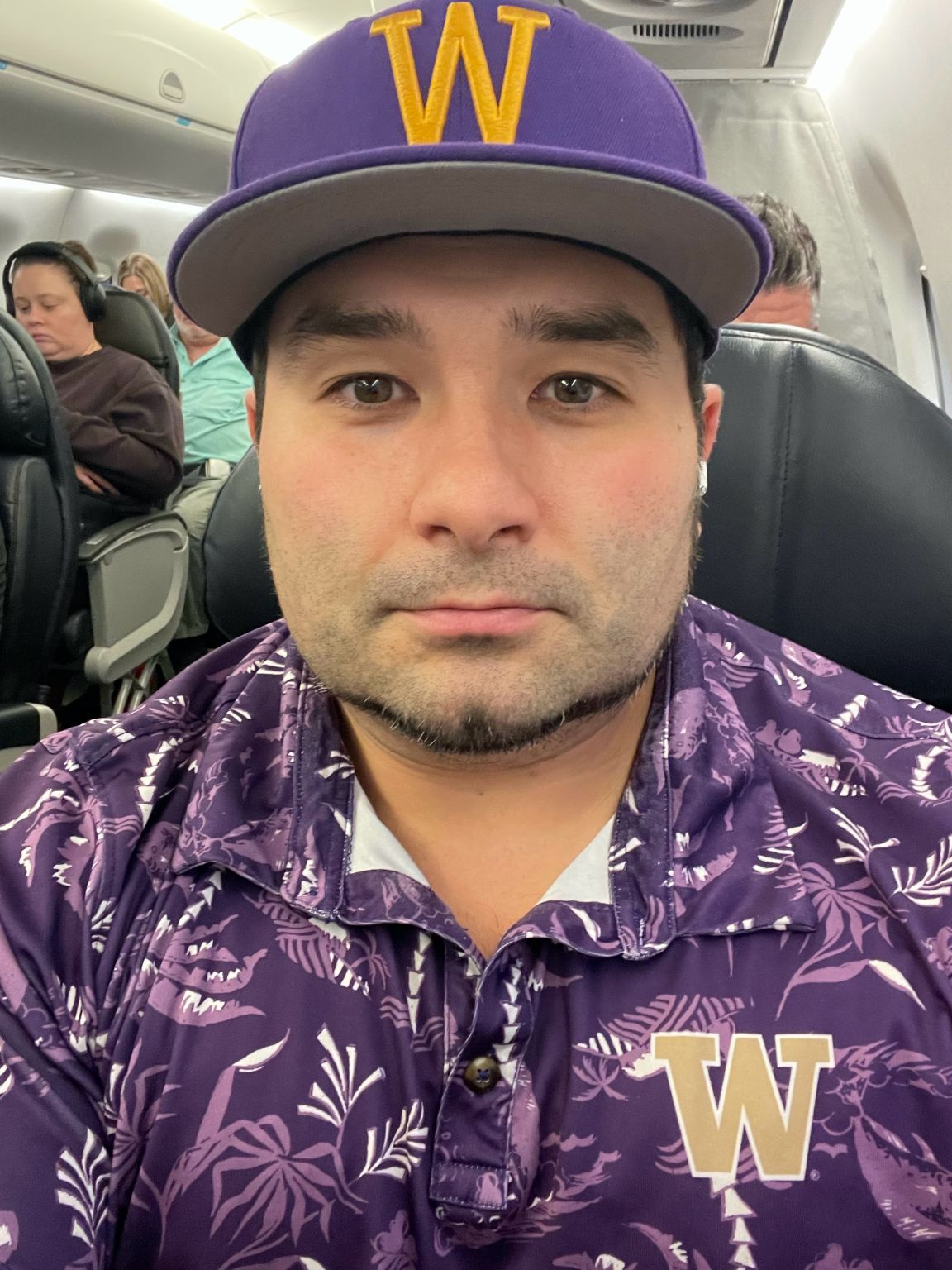
That partner visit offers a small portrait of how Livesay works. He wrote about “great work, hard problems, and laughs” shared with people he had known for 10 and 15 years. Then he veered into college football, noting the University of Washington colors he wore in Oregon State territory. Industrial partnerships last longer when their participants remain human enough to tease one another.
03 / The operatorPressure, perspective, next move
Away from machine telemetry, Livesay trains Brazilian jiu-jitsu. He describes the mat as a community that challenges him, supports him, keeps him humble, and helps him reset when work intensifies. Hard things outside work, he has written, build “resilience, perspective, and discipline.” In March 2026 he returned to the Endless Endeavor podcast for a long conversation about life, business, and jiu-jitsu. Host Greg Anderson singled out Livesay's habit of remaining positive and seeing good in difficult situations.
The parallel to company building is almost too tidy, so it is worth resisting the motivational poster. Jiu-jitsu does not make a funding round close. It does rehearse composure under resistance. You begin in a position, read pressure, protect what matters, and find the next available move. Industrial service follows a comparable grammar. A technician starts with the machine as it is, not as the slide deck promised it would be.
“Doing hard things outside of work builds resilience, perspective, and discipline.”Adam Livesay
Livesay's public posts repeatedly return to community and leadership. His view of culture is behavioral: leaders reveal their standards through what they reward, allow, and model. It complements his old operating advice about quarterly plans and daily activity. In both cases, intent counts less than repetition.
04 / The next chapterFrom connected machine to connected service
The CEO transition comes as Elevāt sharpens its story around service intelligence. The platform can combine machine signals with documentation and repair history, then use AI-guided support to help teams triage a problem remotely, prepare for a visit, or anticipate failure. The company says the result can improve first-time fix rates and shorten mean time to repair. The vocabulary is technical; the benefit is a machine returning to useful work.
The addressable world is broader than a single machine brand. Elevāt works with OEMs, their dealers, fleet operators, and end users, each of whom sees a different portion of the same equipment life. Connecting those views can turn service from a sequence of isolated calls into a record: how an asset was installed, maintained, diagnosed, repaired, and upgraded. The record becomes more valuable every time somebody closes the loop.
There is also a labor problem beneath the product. Complicated equipment depends on experienced people, and their expertise is difficult to replace or distribute. A connected service system can preserve context, move it across a dealer network, and place it beside the next technician. It cannot manufacture judgment. It can stop judgment from beginning with a blindfold.
In August, days before this profile was published, Livesay spoke at the NFPA Advanced Hydraulics Conference during iVT Expo USA. His subject was the route from machine data to AI-enabled service. It is the same route he began tracing when customers first asked whether a machine could send information home.
The stakes have changed. Elevāt now has outside capital, international plans, a growing service network, and an AI market capable of turning every practical claim into a brass band. Livesay's best defense against the noise is the constraint he started with. There is still a machine. There is still a person responsible for it. There is still a next action that is either easier to see or it is not.
Founders are often encouraged to tell the largest possible story. Livesay's is more persuasive when it stays near the repair. Give the technician the history. Bring the manual to the fault code. Let an OEM see what its dealer network sees. Make the service visit less mysterious. The heavy machine does not need a grand vision. It needs to get back to work.