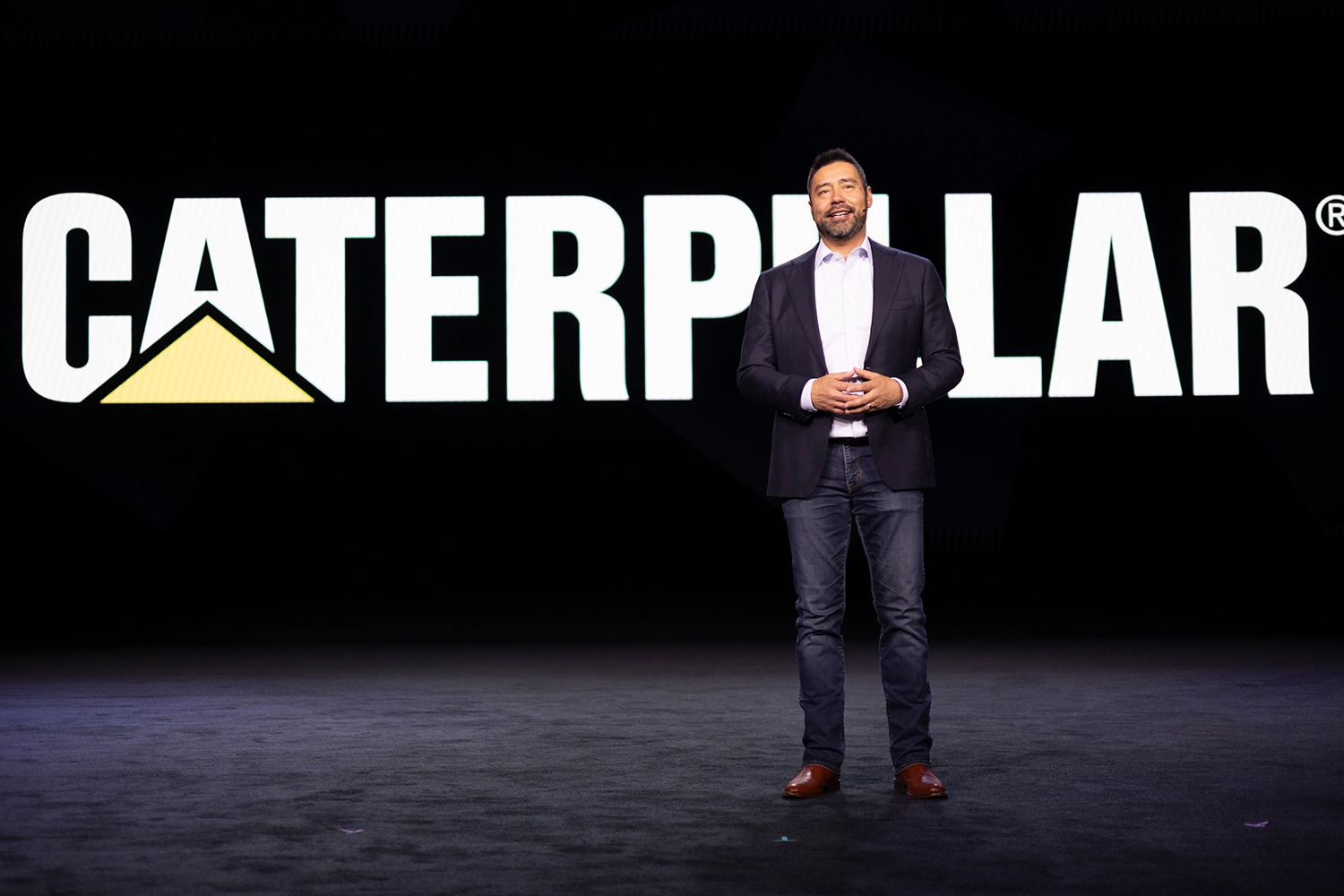
An excavator is an awkward guest at a technology show. It needs space, makes demands on the floor, and offers very little in the way of pocket portability. In January 2026, that awkwardness was useful to Joe Creed. Caterpillar’s chief executive had come to CES in Las Vegas to make a point about the digital economy: look underneath it.
At the company’s booth stood a Cat 306 CR mini excavator. A live feed brought an in-cab demonstration into the keynote, showing natural language interaction with the machine. The equipment gave the presentation something refreshingly solid. Here was a business whose relationship with the future could be measured in steel, electricity and work performed.
For Creed, who had become CEO eight months earlier, the appearance also introduced a new chapter in a much longer personal story. He had arrived at Caterpillar in 1997 with an accounting education. Now he was helping explain why a company associated with yellow machines belonged in a conversation about artificial intelligence.
The long way through the business
His route began at Western Illinois University, where he graduated from the accountancy program in 1997. He joined Caterpillar that year. An accounting degree is an unshowy opening to an industrial career, but it brings a person close to the choices that make factories and product lines viable. Every machine eventually has to make sense on a balance sheet.
By 2013, Creed was chief financial officer of the Energy & Transportation segment. Finance Services followed in 2017, then an interim spell as Caterpillar’s chief financial officer in 2018. Those appointments placed him inside the economics of a company whose products have to earn their keep over years of use.
The scope widened in 2019 with leadership of Oil & Gas and Marine and Electric Power. In 2021, he became group president of Energy & Transportation. Engines, turbines, rail and power systems belonged to that sprawling industrial territory. The work connected him to an aspect of Caterpillar less visible to anyone who mainly encounters its logo on a construction site.
During his leadership of the segment, the business recorded financial milestones, improved engine power density and established a dedicated battery and advanced power organization. Service acquisitions expanded its capabilities in oil and gas and distributed power generation. These were decisions about what customers would need after the initial equipment sale as well as what they would buy next.
Caterpillar hire.
Energy & Transportation.
from May 1.
from April 1.
His education continued through Caterpillar’s executive leadership program, conducted by Stanford University for company leaders, dealers and suppliers. By 2023, his responsibilities also included a place on Western Illinois University’s President’s National Advisory Council. The connections bring his career back to the institutions that helped prepare him. They also place a senior industrial executive in discussions that extend beyond the immediate demands of running a business.
In November 2023, Caterpillar created a chief operating officer position and appointed Creed. The group presidents responsible for construction, resources, services and the energy business would report to him. His remit now crossed the enterprise. A career that had started with financial expertise had become an education in the connections between businesses.
Jim Umpleby, then chairman and CEO, singled out Creed’s combination of financial experience and energy leadership when announcing the appointment. Growing energy demand and the energy transition were already part of the assignment. The power story did not arrive suddenly with Creed’s promotion to chief executive.
A succession with two dates
Creed became CEO and joined Caterpillar’s board on May 1, 2025, during the company’s centennial year. Umpleby moved to executive chairman. The board described the selection as the outcome of a succession process developed over several years. For a company turning one hundred, continuity was an explicit part of the decision.
There was a second handover on April 1, 2026. Umpleby retired after 45 years with Caterpillar, and Creed became chairman. Debra Reed-Klages continued as lead independent director. The two dates matter: Creed had time running the company with his predecessor still at the board before assuming both positions.
“I am honored to carry the torch forward as Chairman of the Board”
Joe Creed · January 2026
The scale of the responsibility is considerable without any need to decorate it. Caterpillar’s current executive biography places its workforce at about 118,000 people across 63 countries. That means customers, factories and dealers operating in very different conditions, with a chief executive expected to make their competing needs add up.
His first calendar year as CEO ended with Caterpillar reporting $67.6 billion in sales and revenues for 2025, a company record. The year included four months under Umpleby. On the January 2026 earnings call, Creed also reported $1.7 billion in net incremental tariff costs and a $51 billion order backlog. Growth came with complications attached.
The cloud needs an engine room
Creed’s power background gives him a direct connection to one of Caterpillar’s current opportunities. Data centers require electricity. Their construction requires equipment. The computing economy reaches outward into the same physical businesses he has spent years helping manage. A server may be remote from its user; its power requirements remain stubbornly present.
At CES, Caterpillar organized its argument around an invisible layer beneath modern technology. Mining supplies minerals for chips and batteries. Construction equipment prepares infrastructure. Engines and turbines help provide power. The phrase was a way of making these relationships visible to an audience accustomed to looking farther up the technology stack.
Conceptual diagram of the connections discussed at CES.
By September 2026, his investor conversation had moved firmly into production capacity. At a virtual headquarters visit hosted by Wells Fargo, Creed discussed plans to bring large-engine capacity to three times its 2024 level. He described the simultaneous effort to produce more from existing facilities while expanding. Demand is gratifying; delivering the machinery requires a factory schedule.
He also widened the discussion beyond the attention given to power generation. Natural gas compression and oil and gas activity mattered too. His account connected rising power requirements to the systems needed to supply fuel. It was a view of demand spreading across related businesses, with practical consequences for investment and supply chains.
Teaching the iron a new vocabulary
The technology agenda reaches into the equipment itself. At CES, Caterpillar introduced the Cat AI Assistant, designed to bring its digital applications and equipment information into a conversational interface. The company’s Helios data platform supplies the underlying context. The intended questions concern equipment, maintenance, parts and the decisions people make during a working day.
An expanded collaboration with NVIDIA covers onboard intelligence and manufacturing systems. The announced work includes using Jetson Thor for AI processing on equipment, speech technology for the assistant, and digital twins for factories. A factory simulation lets teams examine a layout or process before committing to its physical construction. The purpose is recognizably industrial, however new the vocabulary.
Caterpillar also previewed autonomous capabilities across excavators, loaders, haul trucks, dozers and compactors. The company’s work in autonomy goes back decades, including an early partnership with Carnegie Mellon. Creed inherits that accumulated development rather than a blank sheet. The next challenge is applying experience from mining to the changing conditions of construction work.
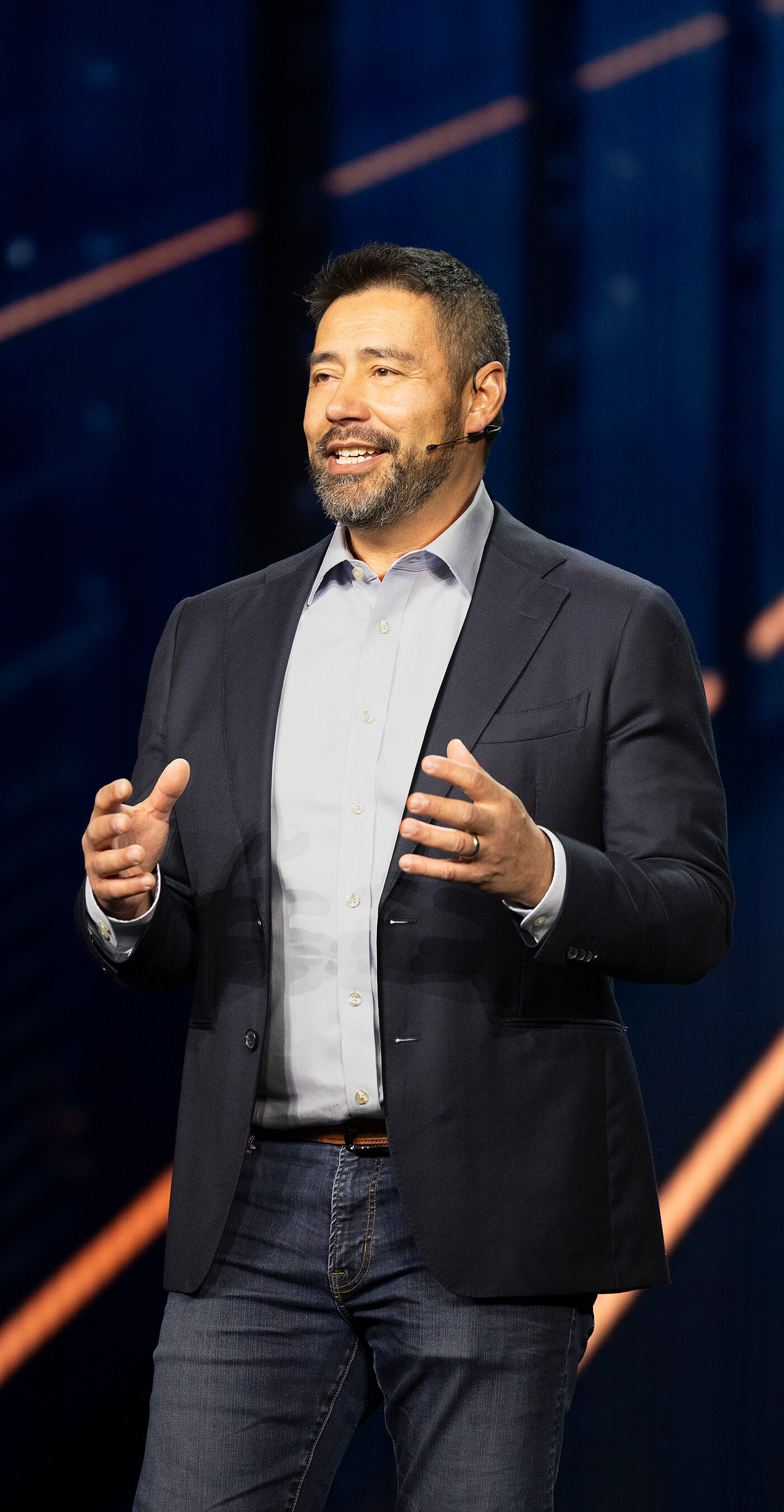
Creed shared the CES presentation with digital chief Ogi Redzic and technology chief Jaime Mineart. NVIDIA’s Deepu Talla joined the keynote as well. The cast reflected the breadth of the undertaking: equipment expertise, data and computing all have a role. A chief executive can set direction, but this work requires several disciplines in the same conversation.
A training budget belongs beside the technology
The CES program included a five-year, $25 million workforce innovation challenge. It forms part of Caterpillar’s broader $100 million workforce pledge, announced in April 2025. By May 2026, registration for the challenge had opened. The initiative seeks ideas that can help attract, retain and develop people for advanced manufacturing and technician work.
There is a plain operational reason to put training alongside new technology. Equipment needs people who understand its capabilities, maintain it and help customers use it. As interfaces and systems change, so do the skills required. A successful demonstration is one event; preparing people to work with the technology is a continuing responsibility.
Caterpillar’s five-year workforce commitment, announced in 2025.
$25m allocated to the global innovation challenge discussed at CES in 2026.
Creed’s connections also extend beyond the company. In July 2025, he joined the board of the US-India Strategic Partnership Forum, alongside media executive Uday Shankar. The forum brings business and government into discussion of the two countries’ economic relationship. For someone leading an international manufacturer, those relationships are another part of the operating environment.
Room to ask a question
Creed has described leaving finance for an operating role as his biggest professional risk. His advice to other leaders includes a short instruction: “Ask a lot of questions.” Away from work, he has recalled enjoying an intimate Zac Brown Band acoustic performance, named a Southlake barbecue restaurant as a family favorite, and admitted a weakness for ice cream. The tastes are pleasingly free of corporate strategy.
His September remarks suggest where those questions now lead. Alongside power investment, he discussed compact equipment buyers who own one or two machines, rental capacity for large projects, and service after the sale. These customers have different budgets and different jobs. Understanding those differences is a more exacting task than announcing a single future for everybody.
That is the work waiting behind the keynote lights. A machine has to arrive. Parts have to be available. Someone has to know how to use the new features. Creed has spent nearly three decades moving between the departments responsible for those obligations. Now he has to keep them connected while the equipment, and the economy it serves, changes around him.