On Aker BP’s Skarv installation, an electrician completed a maintenance session in less than two hours. The estimate had been eight. In Cognite’s account, the useful intervention was access to a 3D view showing where the equipment lived. The worker could get on with the inspection. A surprisingly large software proposition fits inside that small navigational improvement.
- The job: connect industrial records so people and AI can use them together.
- The buyers: energy producers, manufacturers, and power companies.
- The lesson: measure the time lost between systems before adding another application.
Factories are full of information. They are also full of things that look remarkably alike. A valve has an equipment tag, a place in an engineering drawing, a maintenance history, and perhaps sensor readings. Knowing that these records describe the same physical object is the unglamorous prerequisite for doing something clever with them.
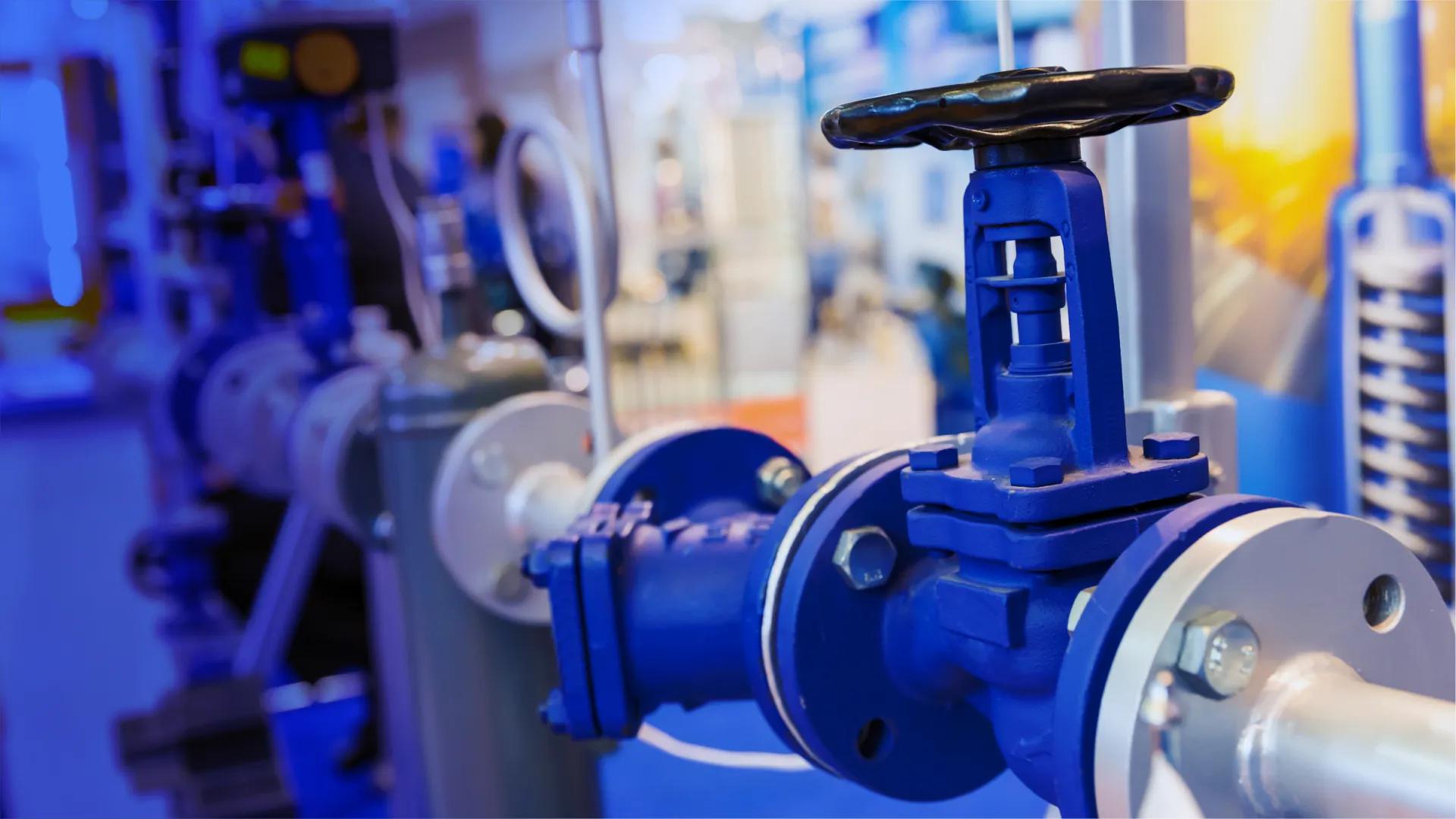
Give the pump an address
Cognite calls this work contextualization. Its core platform, Cognite Data Fusion, connects operational technology, engineering information, and business systems in an industrial knowledge graph. In ordinary language: it supplies the relationships. A temperature reading belongs to this pump, which belongs to this production line, which appears in that drawing.
The company traces its beginnings to 2016 in Norway. John Markus Lervik, Geir Engdahl, and Stein Danielsen were its founders; industrial group Aker supplied backing and an industrial setting. That proximity matters. When your software grows around expensive physical equipment, the question of whether someone can find and maintain it arrives early.

The expertise is unusually specific: industrial data engineering, equipment models, time-series information, technical documents, and spatial views. A generic database can hold records. Cognite’s proposition is to make the connections reusable across the different jobs a plant needs to perform.
The meeting before the meeting
Consider another Aker BP example. Its maintenance organization met each Wednesday to prioritize critical equipment. Preparing the overview required manual collection across separate systems. Cognite connected four sources and streamed the results into Power BI. The company’s case study reports 15 hours saved in data gathering.
The dashboard is almost the least interesting part. The useful change happened underneath it: information previously assembled by people became a maintained connection. The people could discuss priorities with the material already in front of them. This is a useful test for enterprise software: can it remove a recurring chore?
Manual data collection saved in the documented Aker BP workflow. Four source systems; one shared overview.
Celanese, the chemicals and specialty materials company, illustrates the same idea at plant scale. It uses Data Fusion for an integrated manufacturing portal. In January 2024, Cognite also announced a generative AI remote-operations control-room beta at Celanese’s Clear Lake facility. The intention was better visibility into operations and faster investigation of problems.
“less time identifying problems and more time finding solutions.”Ibrahim Al-Syed / Director Digital Manufacturing, Celanese
Three layers, one working day
Today the offering has three connected layers. Data Fusion supplies industrial context. Atlas AI supplies a low-code workbench for building agents that use that context. Flows, launched in May 2026, brings applications and AI into configurable workspaces for frontline teams. Industrial Canvas, InField, Maintain, and Charts sit within that working environment.
A maintenance engineer can bring drawings and trends into a shared canvas. A field worker can consult equipment information. A developer can build an application against the data platform. The buyer is an enterprise with assets to keep running; the users include people whose primary job has little to do with writing software.

Cognite occupies the space between industrial source systems and operational applications. AVEVA CONNECT addresses adjacent industrial information needs. General enterprise platforms such as Palantir Foundry and internally assembled cloud stacks offer other routes. Cognite’s distinguishing emphasis is the industrial relationship model, with APIs that let customers and partners build on it. Microsoft and Rockwell Automation are partners in that ecosystem.
Put a denominator under the return
Cognite sells software subscriptions and professional services under customer-specific order forms. Evaluating the cost means counting integration, deployment, and organizational work alongside the subscription. A February 2026 Forrester study provides one economic model: seven interviewees at four customer organizations informed a hypothetical $5 billion enterprise operating ten sites.
The commissioned analysis reports $35.7 million in three-year benefits present value and $29.4 million net present value. Subtracting those rounded figures implies approximately $6.3 million in modeled costs. Its reported 465% return belongs to that composite and its assumptions. It is a starting point for a buyer’s spreadsheet, rather than a forecast for every plant.
*Approximate difference between published benefits and net present value. Commissioned composite study, not a subscription quote.
The corporate numbers describe a different transaction. TCV invested $150 million at a $1.6 billion valuation in 2021. Cognite reported annual revenue above $170 million for 2025. On June 30, 2026, Schneider Electric announced a $3.1 billion acquisition agreement, with planned integration into AVEVA after completion. The announcement made closing conditional on approvals.
Even the map needs maintenance
On October 15, 2026, Cognite deprecated its classic asset-centric services, setting retirement for December 31, 2027. It directed customers toward Data Modeling and explained that maintaining two architectures slowed development. Existing users must examine integrations, dashboards, and applications that depend on the older services. A reusable foundation still demands upkeep.
The practical lesson is to start with a recurring job, identify the records it needs, connect them, and measure the change. The approach depends on access to source systems, maintained relationships, and workers willing to use the result. If those conditions are missing, another interface can preserve the old confusion. Start by making the equipment findable.