Saar Yoskovitz’s first computer repair business had an unusual operating expense: his mother’s time. In seventh grade, he went to people’s houses to fix their computers and teach them how to use Office and the internet. She drove him there and waited outside. The customer acquired a working computer; the young technician acquired some spending money. An entrepreneurial origin story rarely comes with such a patient transport department.
He grew up in Haifa, with childhood spells in Shreveport, Louisiana, and Merced, California. A first computer arrived in second grade. By fifth grade, back in Israel, he was learning to program. The Louisiana years left him with a southern accent. The computer left him with something more durable: a reason to take things apart.
Years later, he would co-found Augury, a company that helps manufacturers anticipate equipment trouble. There is a pleasing continuity between the teenager at someone’s computer and the founder at a factory: both need to understand what has gone wrong, and what the person paying them actually needs.
A campus, a chipmaker, and a useful detour
Yoskovitz studied electrical engineering and physics at Technion - Israel Institute of Technology. His professional profile records the years 2005 to 2009 and graduation summa cum laude. He also worked at Intel, where his roles included analog architect. His training crossed the boundary between understanding physical systems and designing the electronics that make computation possible.
At Technion, he started another undertaking: Select - Students for Technological Advancement. Founded in 2008, the voluntary project brought children from disadvantaged neighborhoods to the university for individual mathematics tutoring and group science enrichment, taught by student volunteers. Transportation was arranged so that getting to campus became part of the program’s design. His published biography credits the project with an Israel Council for Higher Education award for social involvement.
That detail belongs in the story alongside the engineering credentials. Teaching someone to use a computer and helping a child study mathematics both require attention to the person receiving the knowledge. Technical ability becomes useful through explanation, patience and access. Those are practical requirements, even when they are less convenient to count than a grade.
Two friends, several markets, one prototype
His future co-founder, Gal Shaul, was a university friend. They had spent years discussing possible businesses. Yoskovitz’s work on speech recognition suggested a question: could the methods used to interpret a voice also interpret a machine? An audio signal contains patterns. Some patterns might indicate that a component is beginning to fail.
The founding idea had room to travel. Commercial buildings, factories, vehicle fleets and shipping all depended on machinery. The pair talked across those markets, learning where their approach might solve a problem that customers would pay to address. The search mattered because a technical possibility can have several plausible destinations and still require a specific first customer.
Augury began in 2011, in Shaul’s parents’ house. Yoskovitz has described 2.5 years of bootstrapping, with the founders doing customer discovery and building the first prototype themselves. The length of that interval gives the origin story some useful weight. A photograph of a prototype is an instant; discovering the market around it takes considerably longer.
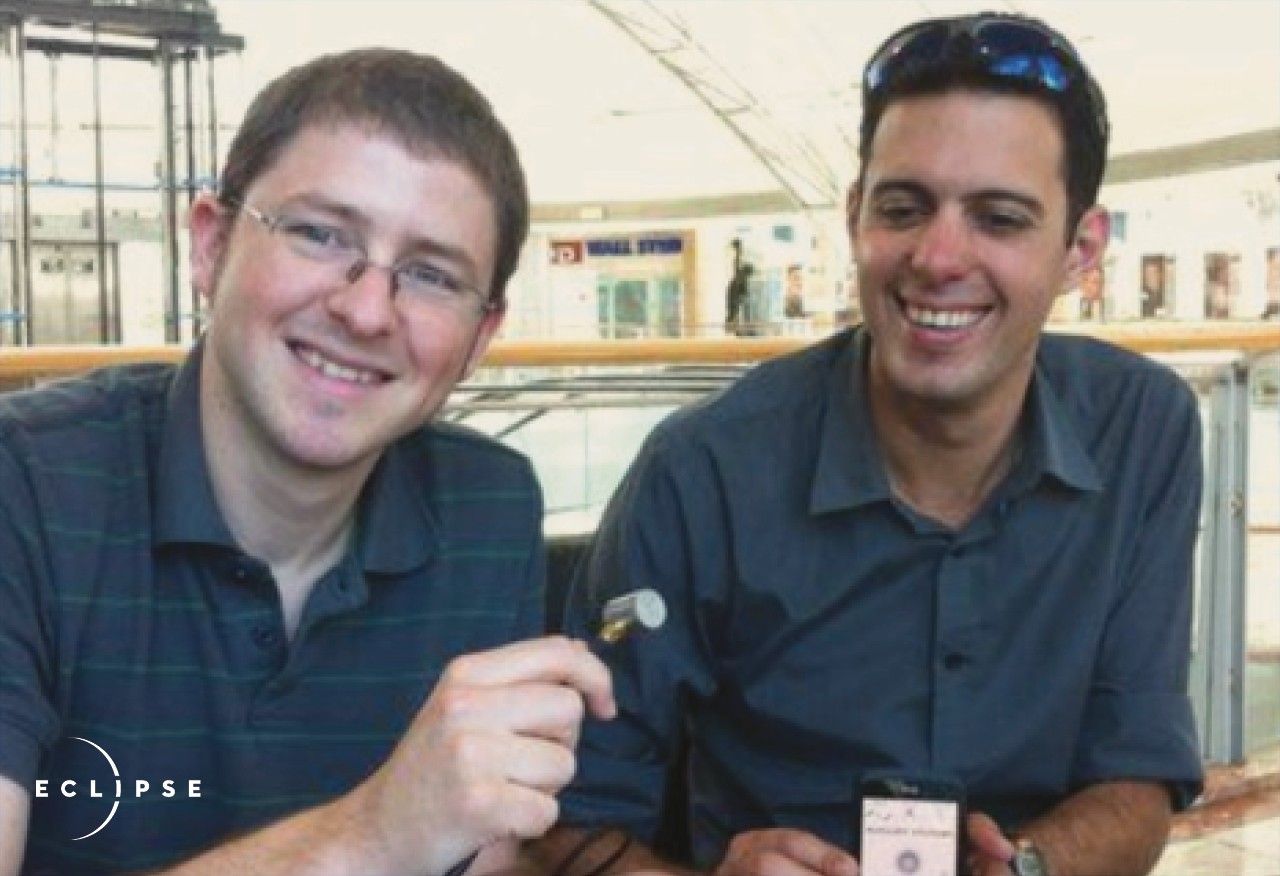
For Yoskovitz, the lesson was about execution and investigation. “The idea behind a business is not as important as the execution.” Customers and specialists could expose the assumptions hiding inside an attractive idea. Listening to them was part of making the technology worth building.
The factory hidden inside the factory
In practice, Augury’s system collects signals from industrial equipment, including vibration, temperature and magnetic data, and analyzes them for developing problems. A maintenance team needs an answer it can act on: what is happening, which equipment deserves attention, and what repair makes sense. A stream of measurements acquires value when it improves that decision.
- 01 / ListenSensors collect machine data.
- 02 / InterpretAnalysis identifies developing faults.
- 03 / ActTeams plan the needed maintenance.
A conceptual explanation of the workflow, not a performance forecast.
Yoskovitz has used the phrase “shadow factory” to describe capacity that equipment failures keep out of reach. The idea is easy to picture: a plant exists, its machinery is paid for, and its employees know their work, yet interruptions prevent it from producing what it otherwise could. Recovering some of those lost hours can change the economics of the same building.
His argument extends to the inventory kept against surprises. A company might hold spare parts because it cannot predict which machine will stop next. More warning could change where those parts are stored and when they are ordered. These are possibilities created by reliability, rather than promises that every customer will achieve the same result.
The vocabulary can sound abstract until a line stops. Then capacity means products, orders and schedules. A bearing has a modest place in the organization chart and considerable authority over the afternoon.
A billion dollars, and the work beyond the number
In October 2021, Augury announced $180 million in new funding, taking its post-funding valuation above $1 billion. Baker Hughes led the round. Schneider Electric’s venture arm, SE Ventures, joined alongside investors including Eclipse, Insight Partners and Qualcomm Ventures. The connections put an industrial technology company beside businesses that understood physical equipment and large deployments.
Capital gives a founder more room to build, hire and reach customers. It also changes the scale of the obligation. A prototype can impress the people who made it. A product installed in a factory has to keep helping people who have production targets and other things to do.
In 2022, Augury acquired Seebo, adding AI-driven process optimization. That broadened the problem. Equipment can be mechanically sound while the process around it produces avoidable waste or inconsistent output. Reliability and process performance meet on the same production line, but they ask different questions. The acquisition brought both into Augury’s offering.
Another round followed in February 2025: $75 million, led by Lightrock. Augury reported that revenue had increased fivefold since its 2021 round and that its customer base among Fortune 500 manufacturers had tripled. Those are company-reported changes across that period, useful for understanding expansion without turning a funding announcement into a personal fortune.
Multiples of the 2021 baseline. Relative growth, not absolute revenue or customer counts.
- 2011Founded with Gal Shaul
- 2021$180M funding round
- 2022Seebo acquired
- 2025Executive Chairman
The operator gets a vote
By late 2024, Yoskovitz was talking publicly about the distance between an AI demonstration and industrial adoption. In a conversation with John Furrier at the New York Stock Exchange, he described factories whose legacy systems made their data difficult to use. Augury’s approach to equipment monitoring was to collect its own dataset through sensors, creating a direct connection while working with customers’ IT and security teams.
His shorthand for the larger principle was simple: “AI is a tool, it’s not an outcome.” A factory manager still needs to decide which problem deserves attention. The people using the system need to believe its recommendations. Otherwise, an installation can leave their habits untouched.
“AI is a tool, it’s not an outcome.”
Saar Yoskovitz, 2024
That gives the operator a vote in the success of the invention. A purchasing decision gets technology into the plant. Daily use determines whether it becomes part of the work. For a founder trained in engineering, the human decision is another system to understand, with its own history and expectations.
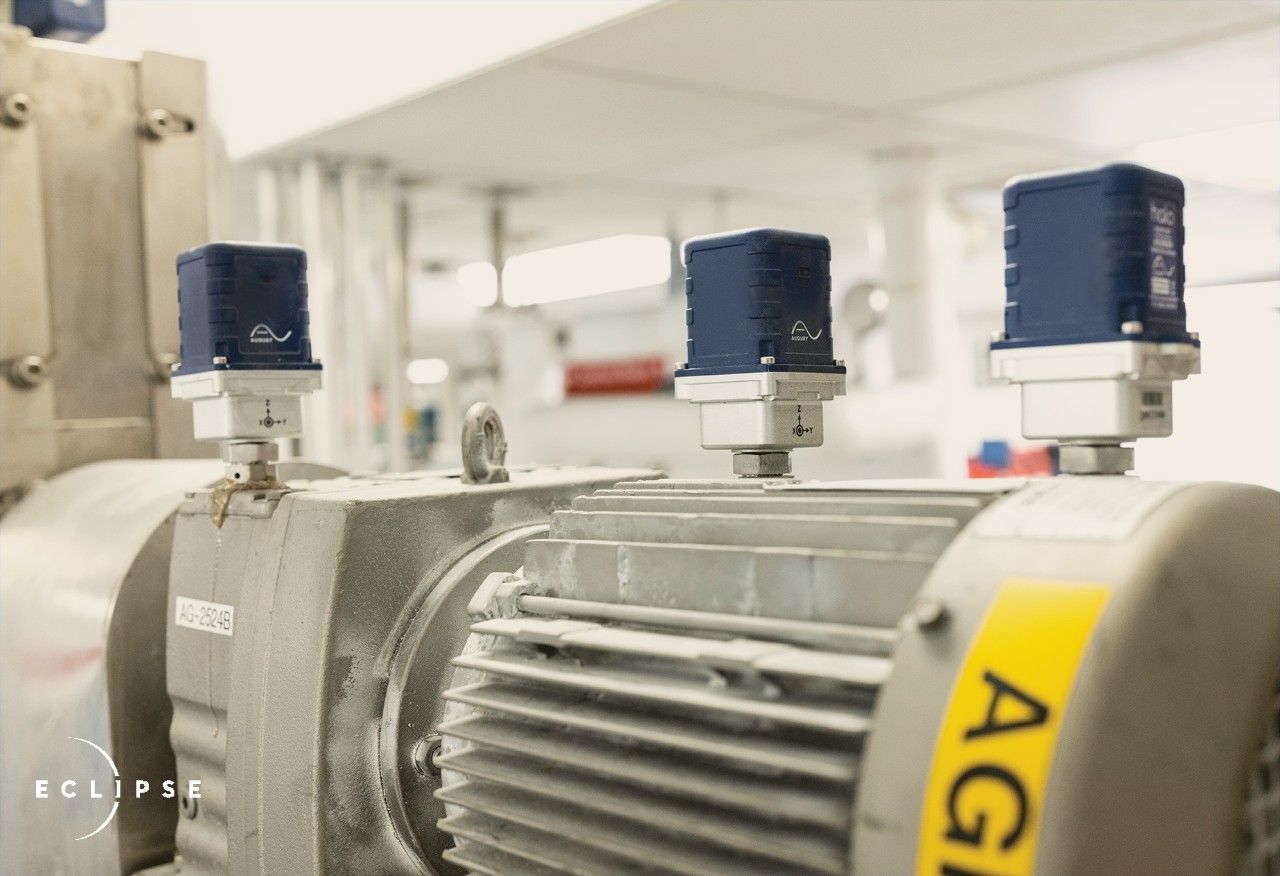
In his December 2024 writing, Yoskovitz connected industrial AI to the transfer of experience. A veteran technician may recognize a change in a machine that a new colleague misses. He argued that monitoring and process tools could help address that gap, while training would help workers use the information. His discussion also included a prosaic benefit of planned maintenance: fewer unexpected calls outside normal working hours.
It is an appealing measure of usefulness. A product that makes a working day more predictable may earn loyalty in ways that a dashboard cannot display. The ambition asks for both capable analysis and a workplace willing to make room for it.
A longer horizon, a different chair
In October 2025, after fourteen years as CEO, Yoskovitz became Executive Chairman. Elan Greenberg, previously Augury’s Chief Operating Officer, took over as Chief Executive Officer. Yoskovitz described his new focus as long-term vision, partnerships and the company’s future direction. The change gave the founding story a further test: could he help build the next stage from a different seat?
His writing in January 2026 returned to an immediate industrial problem: manufacturers seeking more domestic production capacity while new factories take years to establish. He argued for targeted investment in existing facilities alongside longer-term construction, with dependable operational data and maintenance records supporting AI adoption. The original concern with a machine’s behavior had widened into a question about how much an existing plant could produce.
Yoskovitz has called himself a techno-optimist. His discussion of sustainability places responsibility across the value chain and treats measurement and company culture as part of the work. Optimism, in that account, comes with tasks attached. Someone needs to collect the data, someone needs to change a process, and someone needs to keep asking whether the result is useful.
The seventh-grader arrived to solve a customer’s computer trouble. The chairman now spends time on customers and partnerships at industrial scale. Between those jobs sits a company built on detecting small changes before they become expensive events. Its satisfying moments may be ordinary ones: a planned repair, a steady line, a factory whose next surprise can wait.
Keep listening
Conversations, writing & public profiles