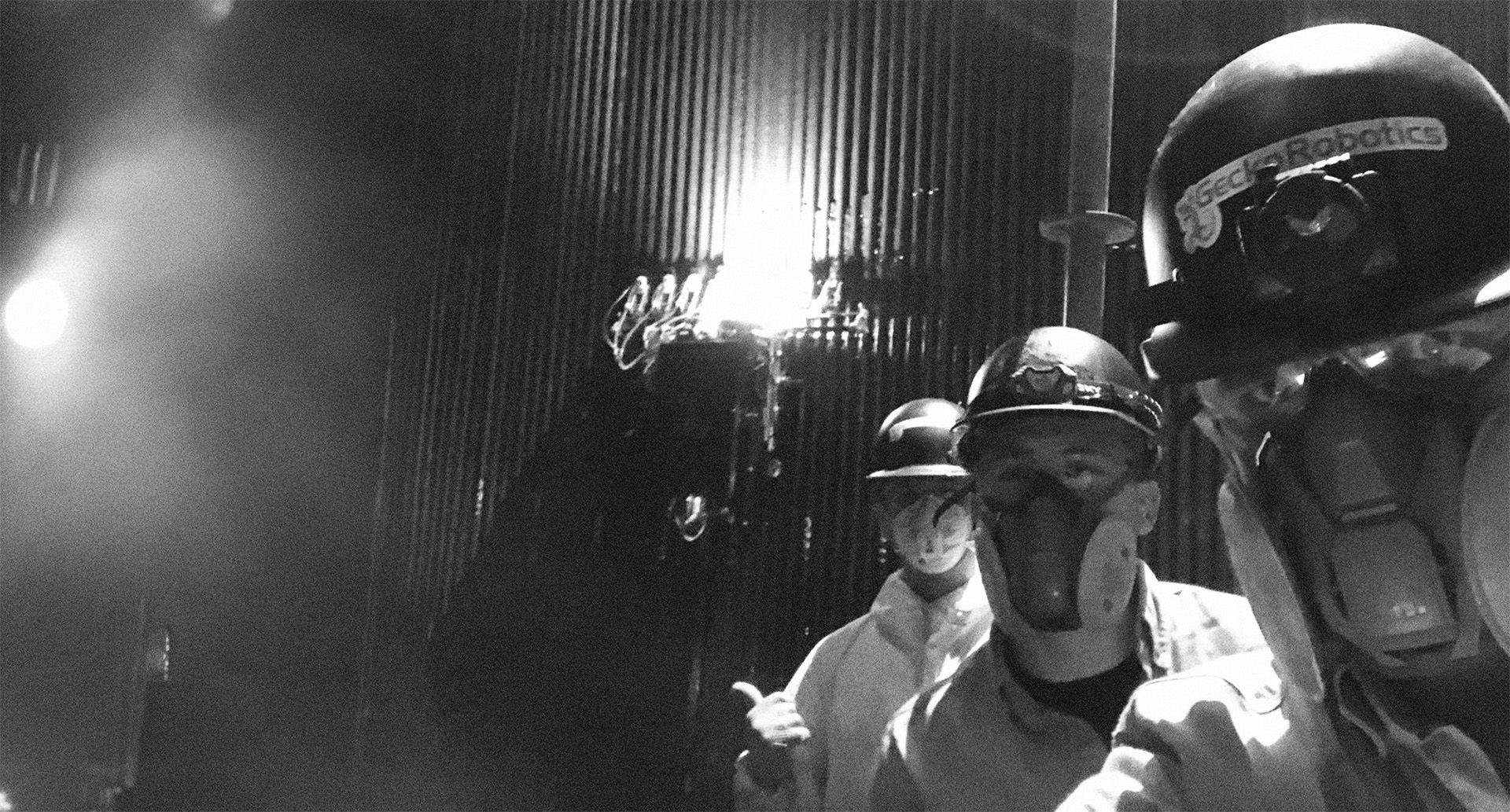
The boiler was the size of a football field. Finding what was wrong with it meant putting a person inside. In 2012, Jake Loosararian, an engineering student visiting a local power plant, encountered a facility losing millions of dollars a month to persistent downtime. He also learned that a worker had died after falling while looking for structural defects. The problem had a location. So did the danger.
- The work: robots measure infrastructure; Cantilever turns the readings into repair and operating decisions.
- The buyers: power operators, industrial manufacturers, and the U.S. military.
- The shift: Gecko now inspects new components as well as aging equipment.
The boiler came first
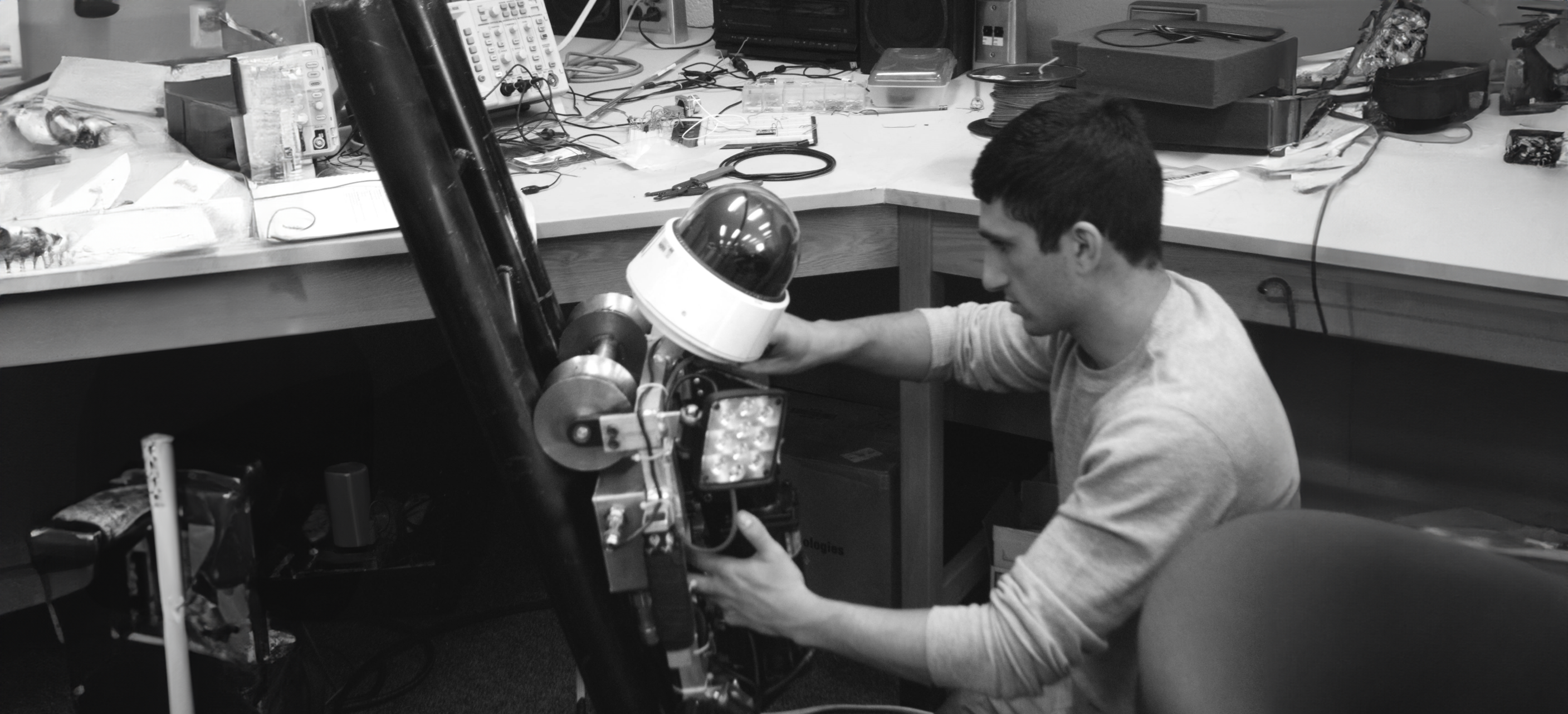
Loosararian went back to his dorm room and began building a robot that could climb walls carrying ultrasonic sensors and cameras. According to Gecko’s history, making it useful required weeks inside the dirty boiler, adapting the prototype until it could locate the recurring trouble. The plant’s problem preceded the product. Field work shaped the machine.
His former college roommate, Troy Demmer, had been working on tools for diagnosing the human body. The two cofounded Gecko Robotics in 2013. Demmer is now president; Loosararian is CEO. There is a pleasing continuity between the diagnostic work and what followed: measure something inaccessible, establish its condition, and give someone enough information to act.
The wall is only the beginning
A climbing robot is easy to understand. Gecko’s larger proposition takes another minute. Its machines collect physical measurements, including ultrasonic readings that reveal material thickness. Those measurements can expose thinning and deterioration that a photograph alone cannot settle. Cantilever, its software platform, combines robotic data with facility records to help teams assess condition, plan repairs, and allocate capital.
The important unit of value is the decision. A plant manager needs to know which tank deserves attention, whether a repair can wait, and what next year’s maintenance budget should contain. A colorful model earns its keep when it helps answer those questions. Gecko is selling a connection between the measurement and the work order.
This puts Gecko between inspection services, robotics suppliers, and enterprise asset software. It has alternatives on every side. Invert Robotics offers climbing inspection platforms; Eddyfi supplies robotic visual and ultrasonic testing systems. Conventional inspectors remain an alternative too. Gecko’s distinction is its attempt to join data collection, analysis, and operational planning in one commercial relationship. Owning a crawler alone does not establish that advantage.
A repair bill changes the conversation
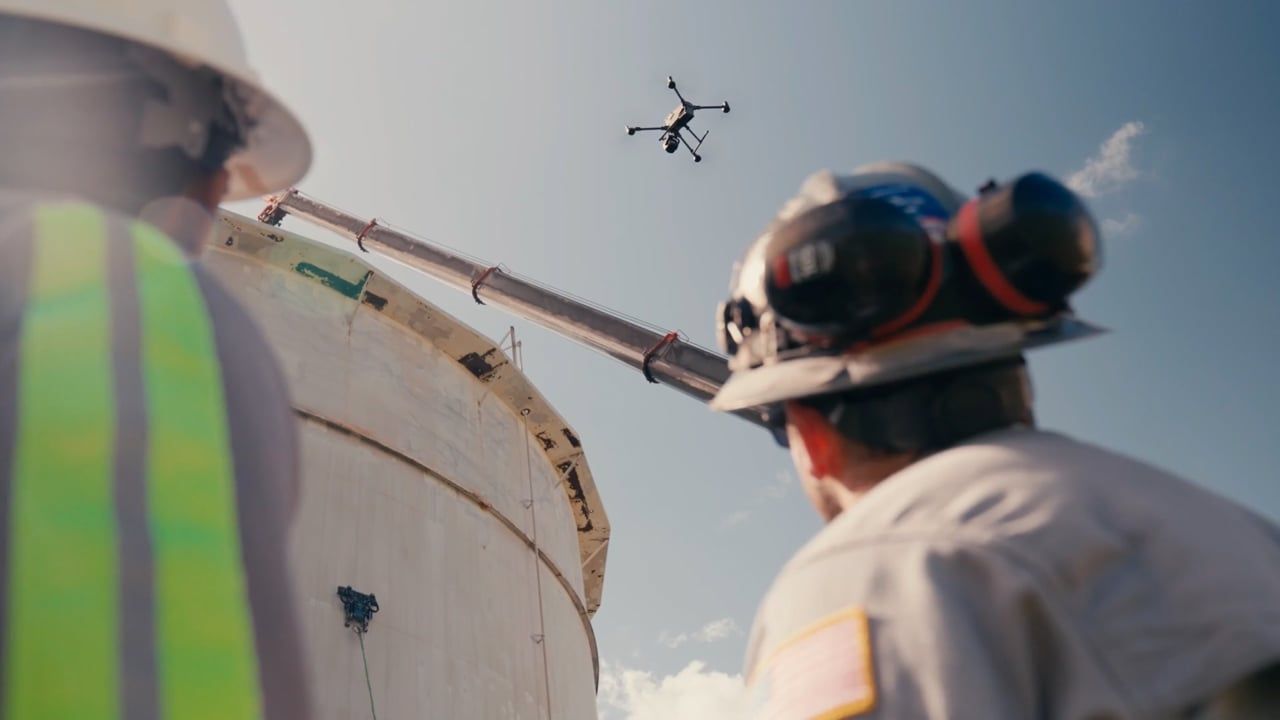
The customers have a reason to listen. A Navy ship in maintenance cannot perform its mission. A power asset unexpectedly offline cannot generate electricity. Gecko works with the U.S. Navy and Air Force, ADNOC Gas, manufacturers, and energy operators. Its business combines software, robotic inspection, and engineering work through enterprise and government agreements.
Consider NAES, the power operator. In February 2025, it announced a multiyear Gecko agreement valued above $100 million, with potential expansion beyond $250 million if demand warrants. The attraction is practical: use better condition data to reduce surprise maintenance and improve existing plants. That agreement is a commercial commitment, not a statement of cash already collected.
The distinction matters elsewhere. In March 2026, Gecko announced a five-year Navy and GSA contract vehicle with a $71 million ceiling. Initial Pacific Fleet work covers 18 ships and is worth up to $54 million over five years. Those figures describe potential scope. They should not be added to a venture round and called sales.
“in the built world, data is guilty until proven innocent.”
Jake Loosararian / June 2025
The financing is substantial in its own right. Gecko raised $125 million in June 2025 at a $1.25 billion valuation, with Cox Enterprises leading the round. The interesting test is what happens after the funding announcement: whether the measurements become dependable inputs to recurring customer decisions.
Inspect the part before it becomes a ship
Gecko’s expansion into manufacturing moves the same idea earlier in an asset’s life. In July 2025, Bechtel Plant Machinery, Inc., a contractor for the Naval Nuclear Propulsion Program, announced a partnership using Gecko’s technology to inspect components. Initial trials reduced inspection spans for forged components by up to 90%. That is a reported trial result, not a promise for every factory.
Up to 90% shorter
Illustrative index of the reported maximum reduction. Before = 100; these are not hours.
In January 2026, a Trident Maritime Systems partnership extended the manufacturing effort across 20 fabrication facilities. In October, Gecko announced work with Anduril on submarine-component production and automated quality assurance. The ambition is a record that begins when a component is manufactured and remains useful when maintenance teams encounter it years later.
Another September 2026 announcement, with NVIDIA, addressed the permissions governing AI-driven robots. Gecko described using OpenShell to explore enforceable boundaries between an AI agent and physical hardware. It is a useful reminder that industrial autonomy requires explicit limits as well as useful predictions.
Start with the reading you do not trust
The lesson other builders can copy is the sequence. Find an expensive uncertainty. Go to the place where it occurs. Improve the measurement. Connect it to a decision with an owner and a budget. Gecko’s published culture gives that first step a blunt name: Get to the Problem.
There are conditions attached. The robot, sensor, surface, and defect must suit one another. Useful predictions require trustworthy measurements and relevant history. Customers need people and processes that can turn findings into repairs. A detailed digital twin cannot tighten a maintenance budget into adequacy or manufacture a missing replacement part.
That returns the story to the boiler. Gecko began with the distance between an important structure and what its operators could reliably know about it. Its opportunity grows wherever that distance remains costly. The robot gets close enough to take a reading. The rest of the business depends on making that reading count.