The old way to inspect a power-plant boiler had the bleak efficiency of a medieval punishment. Shut down the plant. Build scaffolding inside a dark steel chamber. Send people as high as a hundred feet with handheld instruments, rope and notebooks. Ask them to find tiny changes in metal before those changes become expensive, violent ones. During a college visit to a Pennsylvania plant in 2012, Jake Loosararian learned that an inspector had fallen and died the year before. The plant, he was told, was also losing large stretches of the year to forced outages. The machinery was essential. The method for understanding it was perilously thin.
Loosararian was an electrical engineering student at Grove City College, close enough to graduation for respectable employment to be the expected ending. Instead, the visit supplied an obsession. If a machine could stay attached to the boiler wall, it could carry ultrasonic sensors over the surface, measure thickness and return a dense record while the operator remained below. He and fellow students built the crawler as a senior project through the college’s VentureLab program. The useful little contraption did more than climb. At its first plant, Loosararian has said, it helped prevent several forced outages and saved millions of dollars.
There are founders who begin with a market map. Loosararian began with ropes, soot and an invisible defect. It gave Gecko Robotics, launched after his 2013 graduation, the rare luxury of an unambiguous problem. It also gave him the less charming burden of solving it in places where prototypes encounter heat, grime, curved surfaces and gravity. Power stations are remarkably impatient with PowerPoint.
The lizard in the shower
The company’s name arrived in sunnier circumstances. On a college trip to Costa Rica, Loosararian saw a green gecko walk up the wall of a public shower. He decided it would be a good name for the company he hoped to build. Nature had spent a very long time on adhesion; a student could at least borrow the branding. The machine Gecko developed used magnetic wheels rather than sticky toes, but the association was immediate and useful. One glance explained the trick.
The years after college were less picturesque. Loosararian bootstrapped the business and put his savings into the robot. By 2015, by his own account, he was down to roughly a hundred dollars and sleeping on the floor of his best friend’s apartment. He had also discovered that a successful demonstration did not automatically make a company. Industrial buyers move carefully because their equipment is costly, regulated and expected to work for decades. A young vendor must be both audacious and house-trained.
Y Combinator’s Winter 2016 batch provided money, language and a network for a founder who had known industrial plants better than venture capital. It did not make the fieldwork tidy. Gecko earned trust in increments, starting small, collaborating with plant teams and sending its own people into operating environments. The company’s stated value of grit was practical before it became printable: when a crawler lost traction or a sensor misbehaved, the steel surface delivered immediate editorial feedback.
In 2017, the company found repeatable demand among power-generation customers. More inspections meant more chances to improve the robots, and better robots made it easier to win the next inspection. The loop began to compound. Gecko eventually moved into refineries, manufacturing sites, ships and defense assets. Its machines now include systems that climb, fly and swim. The animal kingdom, one suspects, should keep an eye on the trademark office.
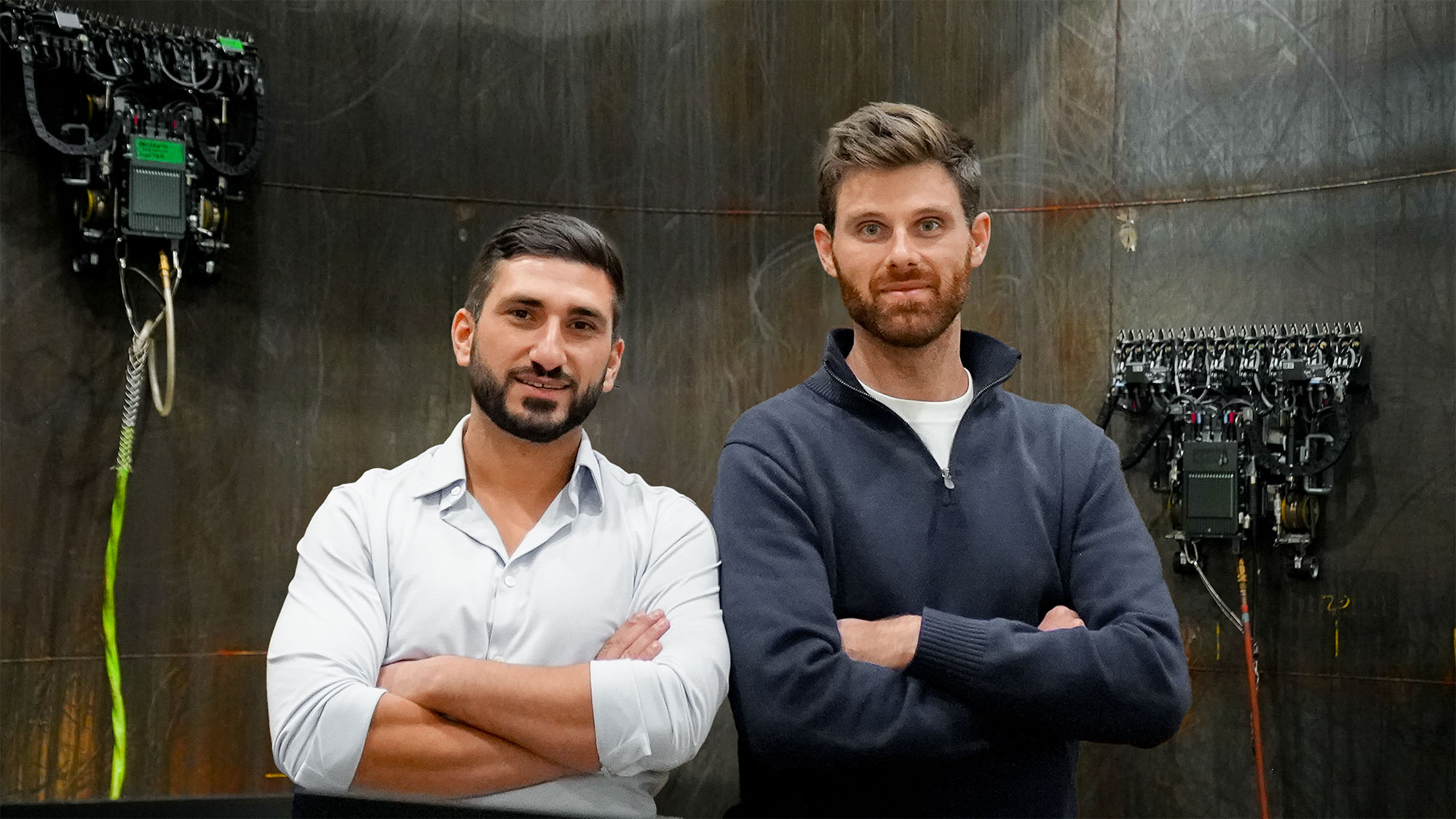
A robot is only the scout
The crawler was memorable, but Loosararian came to see hardware as the opening move. A robot can measure thousands of points across a boiler tube or ship hull. The more consequential question is what happens next. Which patch of corrosion is growing? Which repair can wait? Where should a plant put its capital during the next outage? A spectacular robot that leaves behind an unread report is merely a talented messenger with poor office habits.
Gecko’s answer is Cantilever, a software platform that organizes the measurements into digital models of physical assets. The robot collects the evidence; the software gives that evidence history and context. Operators can compare inspections, see patterns across equipment and decide which maintenance deserves attention. Loosararian’s succinct rule is that data in the built world is “guilty until proven innocent.” In an industry where a false confidence can become a rupture, skepticism is a feature.
The physical intelligence loop
This is Loosararian’s particular answer to the AI boom. Much of artificial intelligence begins with oceans of text and images that already exist. Industry has the opposite problem: the most valuable facts may be trapped on the far side of a hot surface, under water or inside the record of a technician who retired. Before a model can predict failure, something has to measure the metal. Gecko’s competitive position rests on manufacturing that ground truth.
The distinction also explains why Gecko does not fit neatly into the usual robotics story. Its customers are not shopping for a mechanical colleague with a friendly face. They want fewer blind spots in specific assets, and they want the information fast enough to change a maintenance plan. The form of the robot follows the surface and the sensor package follows the question. Charm is optional. Repeatability is not. In this corner of automation, the winning machine may be the one an executive hardly notices because its measurements have already become part of how the facility is run.
The economic pitch follows. Better information can keep a functioning asset in service longer, concentrate repairs where they matter and shorten shutdowns that cost operators dearly. Safety remains the moral origin of the company, but production is the language that opens budgets. Loosararian speaks comfortably in both registers. The same measurement can keep a person off a rope and help a chief financial officer avoid replacing healthy equipment. Virtue, at its most durable, often arrives with a spreadsheet.
The Pittsburgh wager
Gecko’s geography matters because its customers inhabit the physical economy. Loosararian has said he chose Pittsburgh for access to energy and industrial expertise, lower costs than the Bay Area and the chance to help the city become a robotics center. He had spent time in Silicon Valley and encountered the familiar pressure to keep the company there. He came back east, closer to the boilers.
His loyalty is not sentimental enough to be complacent. In 2025, after Gecko announced a $125 million Series D and a $1.25 billion valuation, Loosararian warned that Pittsburgh’s technology boom could evaporate if successful companies sold, moved or failed to reinvest locally. A unicorn, in this telling, is not a civic strategy. Cities need a flywheel of experienced employees, repeat founders and capital willing to make the next bet. “Energy and infrastructure need to be something that defines the city,” he said.
It is easy to see the symmetry. Gecko is trying to help operators extract more useful life from inherited infrastructure. Loosararian wants Pittsburgh to do something similar with its inherited industrial knowledge. Neither project is nostalgic. A steel city does not become a technology city by polishing an old furnace for visitors. It does so by turning metallurgists, roboticists, software engineers and customers into a working advantage.
What the machine remembers
Loosararian’s public story contains a few endearing detours. He was homeschooled and spent part of his youth in England. Before Gecko, he helped create a college scholarship endowment and bicycled from Seattle to New York. The company name came from that Costa Rican shower. In one interview, small talk wandered toward houseplants and decorative pots; in another, he said his younger self should have learned martial arts. He also receives hundreds of emails a day, a modern form of industrial hazard for which no crawler has yet been announced.
The pattern beneath the anecdotes is a preference for consequential work. Loosararian talks about energy production, ships, factories and the dignity of people whose jobs keep those systems operating. His aspirations for Gecko have widened accordingly. The first machine was built to inspect one kind of wall. The present ambition is an operating platform for the built world, fed by trustworthy data from many kinds of robot and used to guide maintenance, production and modernization.
That scale invites grand language, but Gecko’s most persuasive unit remains small: a measurement at a precise place, repeated later, showing that the wall has changed. From enough of those observations comes a model. From the model comes a decision. From the decision, perhaps, comes an outage avoided, a ship returned sooner or an inspector who stays safely on the ground.
Software has spent decades teaching machines to remember our documents, tastes and faces. Loosararian is working on a different memory - the condition of the things that hold modern life together. Steel does not volunteer its biography. Someone has to climb up and ask.