industrial-robotics
(14)
Alex Lonsberry Taught a Robot to Notice the Mess
A childhood spent building in an Ohio garage led to a doctoral lab, a stubborn sheet of shiny steel and a company built around one unfashionable truth: the real world refuses to hold still.
The Robot That Won the Job Before It Existed
Maven Robotics talked its way into a factory with little more than a drawing, won the work, and built the machine around the job. Now comes the harder experiment: turning eight industrious robots into an industrial system that can be made by the hundreds.

Outrider Put the Self-Driving Bet Where It Can Actually Work: The Yard
The highway stole the self-driving headlines. Outrider went behind the warehouse, taught an 80,000-pound robot to hitch trailers, dodge traffic and mind the brake lines - then built the safety and support machinery enterprises demand.
Caleb Horan Is Teaching Robots to Take the Shift Nobody Should Want
After years deploying machines around nuclear work, the Salem Robotics co-founder arrived at a practical thesis: let people keep the judgment, and give robots the routes, instruments and paperwork.
Daryl Lim
Daryl Lim is the co-founder and CEO of Augmentus, a no-code robotics company that lets factory operators program industrial robots by 3D-scanning a part instead of writing code or CAD. Founded in Singapore in 2019 and now US-headquartered near Austin, Texas, Augmentus targets surface finishing, sanding, welding and spray coating for high-mix manufacturing. A serial entrepreneur since his teens, Lim was named to Forbes 30 Under 30 Asia in 2022 and has raised roughly $16-17M across seed and Series A rounds, including an $11M round in July 2025.
Haojie Hu
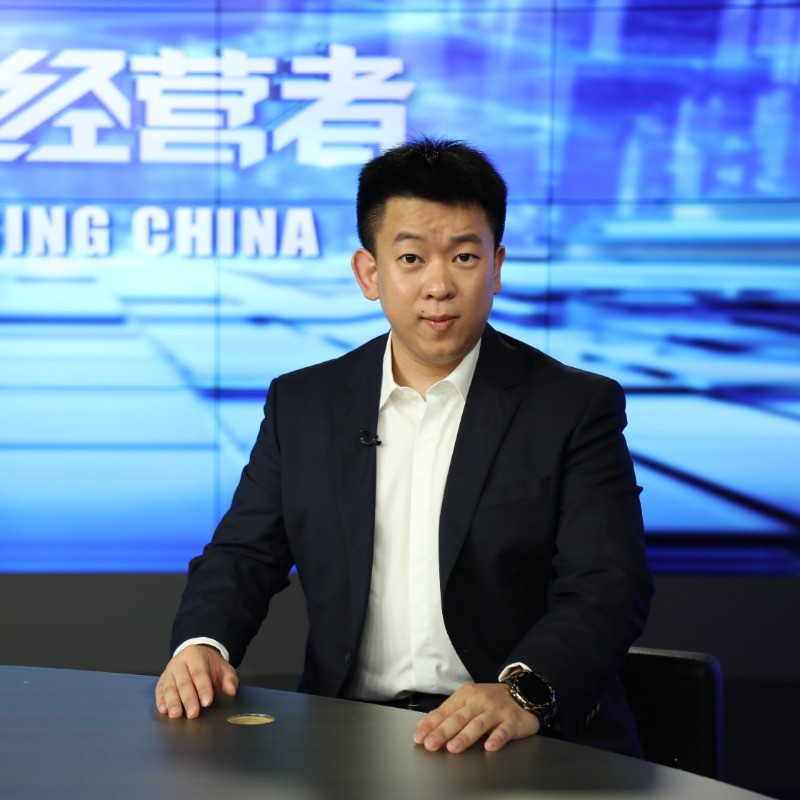
Haojie Hu is the founder and CEO of LE Robotics (Loyalty Robotics Welding Systems), a Chinese company that fuses AI, 3D vision, and autonomous navigation to build welding robots that read a metal seam and start work in seconds without pre-programming. A second-generation industrialist who trained on his father's factory floor before earning degrees at NYU Stern and Columbia Business School, Hu returned from Wall Street to build what he calls a comprehensive ecosystem service provider for industrial embodied AI in metalworking. He was named to Forbes China's 2023 list of 100 Outstanding Overseas Returnees.
Tacta Systems, Inc.
Tacta Systems is a Palo Alto robotics startup building 'Dextrous Intelligence' - a smart nervous system that combines proprietary software, hardware and AI to give robots human-level tactile skills and spatial awareness. Founded by serial hard-tech entrepreneur Andreas Bibl (whose previous company LuxVue was acquired by Apple), Tacta aims to let robots sense, adapt and manipulate the physical world with human-like precision and speed, automating factory work and grueling physical labor. The company emerged in 2025 with $75 million in seed and Series A funding.

Mbodi AI
Mbodi AI is a New York robotics-software company building an embodied AI platform that lets people teach industrial robots new skills through plain natural language and short demonstrations - no code and no specialized engineers. Founded in 2024 by two former Google Public DNS engineers, the platform combines generative AI, agent orchestration and symbolic reasoning to turn everyday instructions into precise, reliable robot actions that run in production within minutes and transfer across an entire robot fleet. Mbodi is a Y Combinator company with a joint commercialization partnership with ABB Robotics.

Matthew Brown
Matthew Brown is the founder and CEO of ThoughtForge AI, a Berkeley robotics company building a cloud-based control platform that gives existing industrial robots real-time adaptivity and human-level dexterity using Active Inference, a biologically-inspired approach drawn from neuroscience. Over more than two decades in AI, he wrote combat logic for the Aegis system at Lockheed Martin, built the enemy intelligence behind game franchises like Halo, Bioshock, and Splinter Cell, and was the first engineer at Bonsai AI, where he helped ship one of the world's first production deep reinforcement learning platforms before Microsoft acquired it in 2018. He now teaches and sits on the board of the Active Institute while ThoughtForge works with manufacturers like bp, Siemens, and members of the ARM Institute to bring common sense to the factory floor.
Max Cao
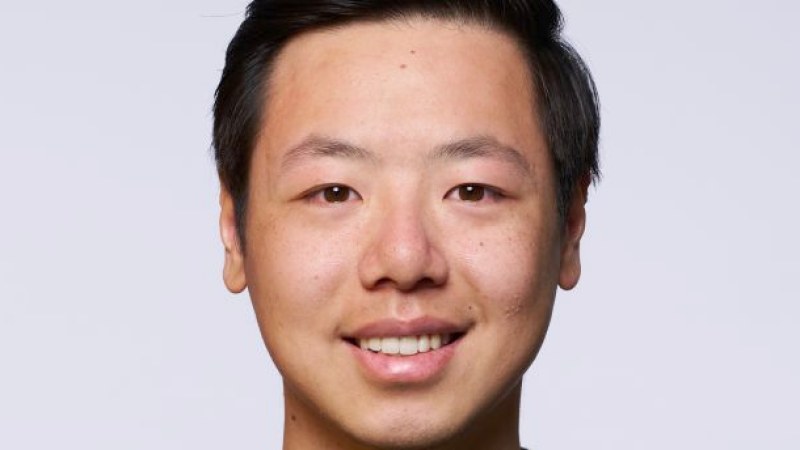
Max Cao is the co-founder and CEO of Jacobi Robotics, an Emeryville, California startup building AI-first software that programs industrial robot arms up to 20x faster. A mechanical engineer trained at Imperial College London and UC Berkeley's BAIR Lab under Ken Goldberg, and a former McKinsey consultant, Cao left academia to attack a problem most people never see: the way robots are programmed has barely changed since the 1980s. Jacobi's motion-planning technology cuts deployment from a month to under a day, claims 1000x less compute, and handles the singularities that freeze robot arms mid-task. The company launched publicly in July 2024 with a $5M seed round led by Moxxie Ventures.

Sebastian Peralta
Sebastian Peralta is a physicist-turned-roboticist and co-founder of Mbodi AI, a New York startup teaching industrial robots new skills through plain language and quick demonstrations instead of weeks of reprogramming. A former core engineer on Google Public DNS (8.8.8.8) with a triple major in electrical engineering, computer science, and physics from UPenn, he builds embodied-AI systems where one robot's lesson instantly becomes the whole fleet's. Mbodi won ABB Robotics' global AI Startup Challenge, reached the Startup Battlefield Top 20 at TechCrunch Disrupt 2025, and is rolling out factory deployments with a Fortune 100 consumer-goods partner.
Boxbot
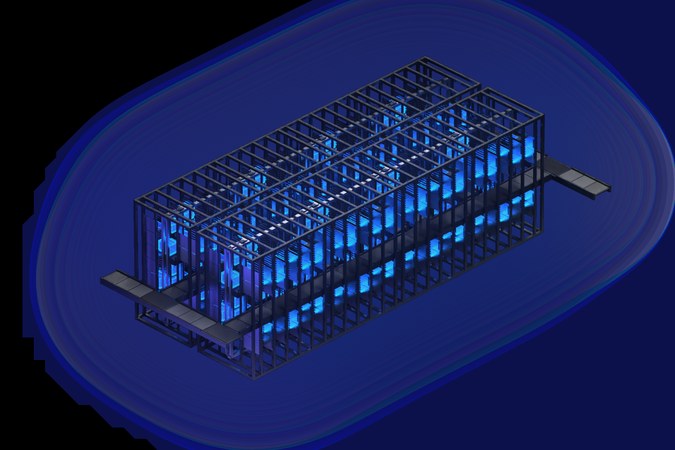
Boxbot is an Alameda, California robotics company building AI-enabled automated storage and parcel-handling systems for the supply chain. Its modular platform turns flat conveyors into three-dimensional, high-density storage that can store, sort, and sequence packages of varying sizes with minimal floor space. After pivoting from autonomous last-mile delivery vehicles, Boxbot now sells a hardware-and-software system aimed at last-mile delivery stations, 3PLs, air cargo, and cross-dock operations, promising faster vehicle loading and denser, more intelligent package flow at lower cost.
Pickle Robot Company
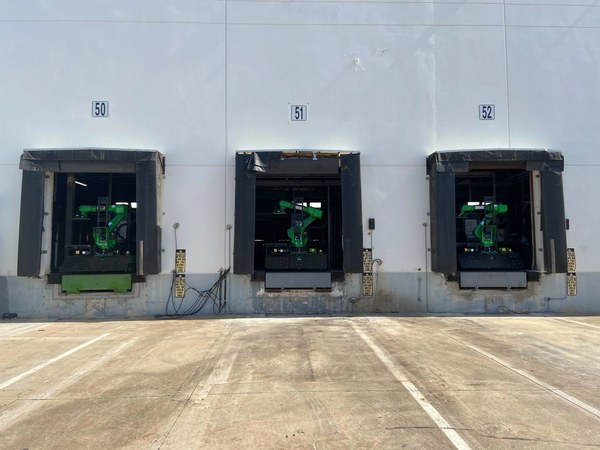
Pickle Robot Company builds Physical AI systems that autonomously unload trucks, trailers, and import containers of non-palletized goods at human-scale or better. Founded in 2018 and based in Cambridge, Massachusetts, Pickle pairs a multi-camera vision system with generative AI foundation models trained on millions of real warehouse data points, mounting a KUKA arm on a custom mobile base that drives into a trailer and clears it in roughly 90 minutes. The company is on a mission to automate inbound and outbound work at one million warehouse doors over the next decade.

MIPS
MIPS is a San Jose-based semiconductor IP company with a 40-year heritage in RISC computing. After abandoning its own legacy architecture, MIPS reinvented itself around the open RISC-V instruction set and now builds compute subsystems for autonomous platforms across automotive, industrial, robotics, and edge AI markets. Its Atlas portfolio - spanning Sense, Think, Act, and Communicate building blocks - targets the low-latency, safety-critical demands of what the company calls Physical AI. In July 2025, GlobalFoundries announced a deal to acquire MIPS.