BREAKING: Jacobi Robotics emerges from stealth with $5M seed Robots programmed 20x faster, deployed in under a day Max Cao - from Norway's fjords to Emeryville's robot arms 1000x less compute, claims the motion-planning startup Named after a 19th-century German mathematician's matrix BREAKING: Jacobi Robotics emerges from stealth with $5M seed Robots programmed 20x faster, deployed in under a day Max Cao - from Norway's fjords to Emeryville's robot arms 1000x less compute, claims the motion-planning startup Named after a 19th-century German mathematician's matrix
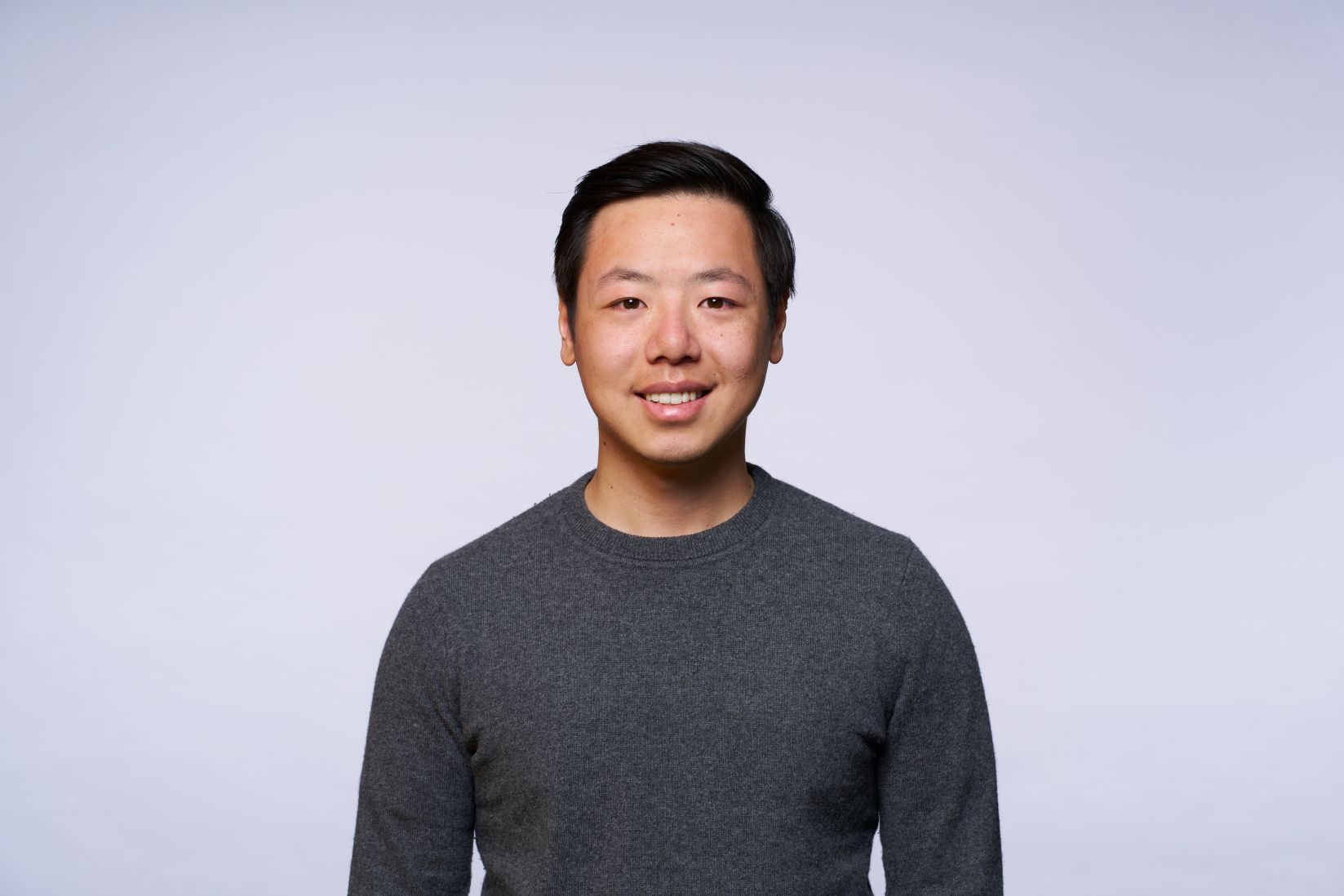
Max Cao, co-founder and CEO of Jacobi Robotics
MAX CAO // Co-founder + CEO, Jacobi Robotics. He hunts overlooked problems. This one had been sitting still since 1985.
The Profile

Max Cao

He could have stayed at McKinsey. He could have stayed in the lab. Instead he went after the part of robotics nobody bothered to update for forty years.

CO-FOUNDER + CEO // JACOBI ROBOTICS // EMERYVILLE, CA

Who he is now

The robot whisperer of Emery Street

Walk into a modern factory and you will find robot arms that cost six figures, lifted into place by experts, then handed to a programmer who codes their every move by hand. The hardware is from the future. The software workflow is from the Reagan administration. Max Cao noticed this gap and decided it was a business.

Today he is the co-founder and CEO of Jacobi Robotics, an eighteen-person company headquartered at 4071 Emery Street in Emeryville, California. Jacobi builds AI-first software that plans how a robot arm should move - around obstacles, around people, and around the mathematical dead-ends called singularities that freeze a robot mid-task. The pitch is blunt: what used to take a month of fiddling now takes less than a day.

Cao did not arrive here by accident. He spent years inside UC Berkeley's BAIR Lab, the Berkeley Artificial Intelligence Research group run by Professor Ken Goldberg, writing state-of-the-art algorithms for manipulation and motion planning. Then he did the unusual thing. He took the research out of the building.

20x
Faster robot programming
1000x
Less compute, claimed
$5M
Seed round, July 2024
<1 day
To deploy, vs. one month
The ways most robots are programmed today hasn't really changed since the 1980s.
- MAX CAO, ON THE PROBLEM HE STARTED A COMPANY TO SOLVE
The strange specific

He tried to build Slack in high school

Before motion planning, before McKinsey, before Berkeley, there was a teenager in Norway building software he could not yet name. In high school, Cao attempted to found a company that, in his own telling, "did essentially what Slack does today." He was simply a few years early - the kind of timing error that tells you more about a person than any success would.

The rocket engine came next. As a student studying engine design, he and a friend decided to build a working prototype at home. They learned quickly. "The road from idea to prototype is long," he said later, and he has been measuring that road ever since.

He grew up in Norway, which he still calls "my favorite place in the world." It gave him mountains and a happy childhood. What it did not give him was an entrepreneurial culture. So he left for the UK to gain a global perspective, earned an MEng in Mechanical Engineering at Imperial College London, and pointed himself toward the place where ideas turn into companies fastest.

The pivot

From the bleeding edge to the factory floor

At Berkeley he found his people. "At UC Berkeley, we did research at the bleeding edge of the robotics field and developed state-of-the-art algorithms in manipulation and motion planning," he said. His co-founders were in the same lab.

But Cao understood the difference between a paper and a product. Research pushes the frontier of what is possible. Production demands, in his words, "nothing short of perfection." He wanted the second thing. He believes "entrepreneurship is the way to go for a large impact on a short timeframe," and that "if you're going to do it, you should go all the way."

So in 2022, he did.
The company

Jacobi, as in the matrix

The name

A math joke

The company is named after the Jacobian matrix, the tool that maps how a robot's joint movements translate into motion at its hand. Behind it: Carl Jacobi, the 19th-century German mathematician. The name is a quiet signal of who the founders are.

The problem

The freeze

Singularities are points where a robot arm seizes up and stops moving - a real headache for bin picking, package sorting, and palletizing. Usually a human has to step in and restart. Jacobi's software plans paths that route around them.

The team

The BAIR five

Cao co-founded Jacobi with Yahav Avigal, Lars Berscheid, Jeff Ichnowski (now at CMU), and Prof. Ken Goldberg as chief scientist. "Very different personalities," Cao says, "but they are complimentary."

The reach

Vendor agnostic

The platform speaks to the major robot arm makers - ABB, Fanuc, Universal Robots, and Yaskawa - so customers are not locked into a single brand of hardware to use it.

The proof

Early pilots

Before launch, Jacobi ran deployments with automation firm Formic and an unnamed major consumer electronics company, backed by a roughly $1M pre-seed in early 2023.

The launch

Out of stealth

In July 2024, Jacobi emerged publicly with a $5M seed led by Moxxie Ventures, joined by Foothill Ventures, Humba Ventures, and The House Fund.

The road

Idea to prototype, the long way

A founder's path rarely runs straight. Cao's bends through three countries, one consulting firm, and a research lab before it lands on a factory floor.

HIGH SCHOOL
Tries to build "essentially what Slack does today." Too early.
UNIVERSITY
Builds a rocket-engine prototype at home. Learns the road is long.
IMPERIAL COLLEGE
MEng, Mechanical Engineering. Leaves Norway for a global view.
MCKINSEY
Management consultant. Learns how big industries actually move.
UC BERKELEY / BAIR
Research under Ken Goldberg on manipulation and motion planning.
2022
Co-founds Jacobi Robotics with his lab-mates.
2024
Launches publicly with a $5M seed round.
The aspiration

Four hundred million arms

Most founders talk about market size. Cao talks about arms - actual robot arms, doing actual work, in places where automation has never reached. Manufacturing. Warehouses. Construction. Healthcare. Agriculture. He gravitates, he says, toward "archaic industries that have not been disrupted for a very long time" where "technology can actually make a difference."

His measure of success is not a valuation. It is a count.

If the existence of Jacobi leads to 40 million or 400 million robot arms doing useful work beyond these existing use cases, then I will be very happy.
- MAX CAO
In his words

On building, all the way

"Entrepreneurship is the way to go for a large impact on a short timeframe."
ON WHY HE LEFT THE LAB
"If you're going to do it, you should go all the way."
ON COMMITMENT
"Asking for help early on. Getting advisors, talking to other founders helps you move forward faster."
ADVICE TO HIS YOUNGER SELF
Off the clock

Five things that don't fit on a pitch deck

🏔

He climbed the Matterhorn. Mountaineering and skiing are his off-hours obsessions. The 14,692-foot peak in Switzerland is one he has actually summited.

🇹🇽

Norway is home base. He grew up there and calls it "my favorite place in the world" - even as he notes it lacks Silicon Valley's startup culture.

🎥

From Lion King to The Martian. His childhood favorite film was The Lion King. His current favorite is The Martian - a story about engineering your way out of trouble. Fitting.

Next stop: Japan's islands. He recently visited Seoul and dreams of exploring the islands of Japan.

The record

Follow the trail

Spread the word

SHARE MAX CAO'S STORY