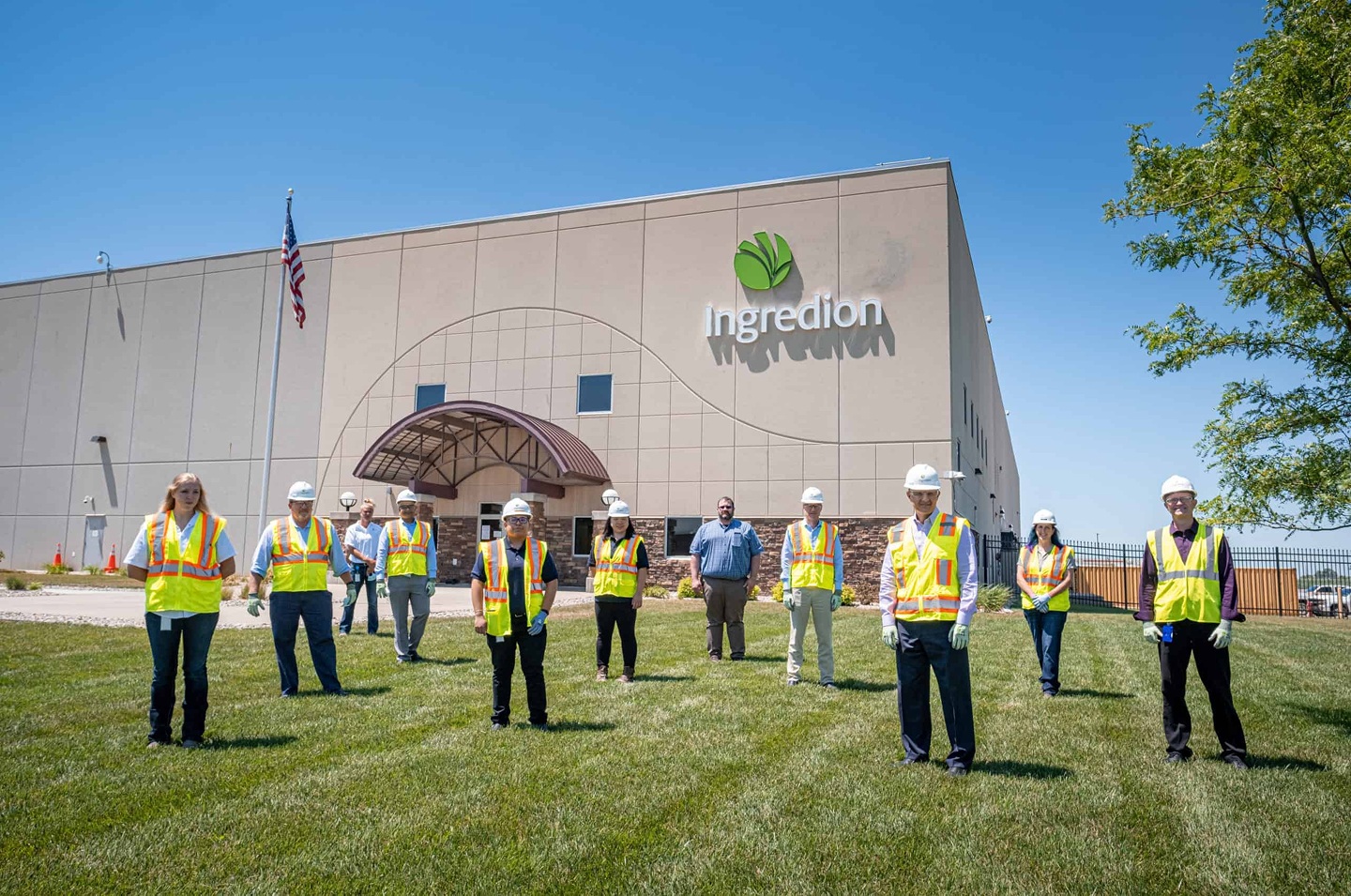
At Ingredion’s North Kansas City plant, a critical pump failed. There were no spare parts on hand. Production stopped for three days. It is an ordinary enough industrial story, until you consider what the next version looked like: a looseness defect, an early warning, a work order. This time, the plant had a chance to intervene.
- Tractian puts wireless sensors on industrial equipment and interprets the signals with AI.
- Its maintenance software connects findings to the people, parts and tasks needed for a repair.
- The useful outcome is earlier action. Customer savings depend on what a stopped machine costs.
The pump with no understudy
Ingredion’s experience appears in a Tractian customer story. It captures the company’s appeal better than the phrase “industrial AI.” Machinery can deteriorate while continuing to produce. A factory therefore has two clocks: the production schedule and the equipment’s declining health. Maintenance becomes expensive when the second clock surprises the first.
Tractian sells a way to watch that second clock. Its wireless sensors collect physical signals; software helps interpret them; maintenance teams decide what to do. Customers include food producers, automotive businesses and chemical manufacturers. The audience is practical: reliability engineers, technicians and plant managers who need enough warning to arrange a repair.
A mechanic’s ear, made repeatable
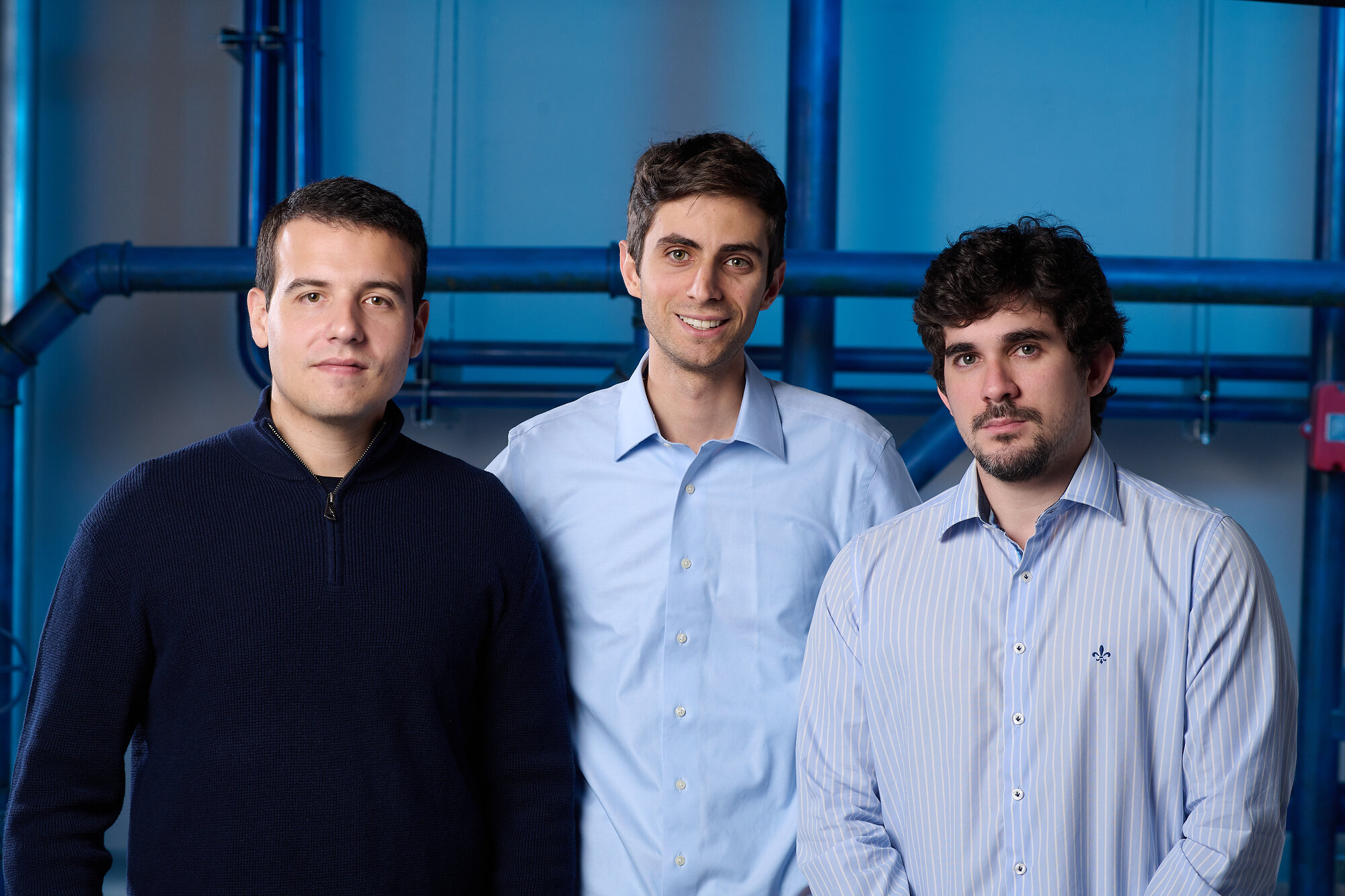
The company began in 2019 with Igor Marinelli, Gabriel Lameirinhas and Leonardo Vieira. Brazilian reporting traces Marinelli’s interest to his father’s maintenance work, including the practice of listening to machinery through a screwdriver. The instrument was simple; the interpretation depended on experience. Tractian’s opportunity was to make that kind of attention repeatable across many machines.
It joined Y Combinator’s Winter 2021 batch. Today, its product combines several ways of observing equipment: vibration, ultrasound, temperature and rotational speed. Each adds context. The diagnosis has to separate a machine doing something unusual from a machine developing a particular fault. A maintenance engineer needs to know whether to lubricate, investigate alignment or plan a bearing replacement.

The handoff is the product
That last step explains why Tractian also makes a computerized maintenance management system, or CMMS. It organizes work orders, preventive schedules, procedures and spare parts. Its mobile app supports offline maintenance work, an accommodation for places where reception cannot be assumed. Electrical monitoring and production analytics broaden the view beyond the mechanical symptom.
A warning creates another task. Somebody must assess its urgency, find the right parts and secure permission to interrupt production. Putting machine health beside maintenance work gives Tractian a coherent proposition: reduce the distance between an observation and a completed job. That is its distinctive packaging, rather than an exclusive claim to predictive maintenance.
- 01SensePhysical change
- 02DiagnoseFault + priority
- 03AssignPeople + parts
- 04VerifyMeasure again
A simplified workflow, not a promised repair time.
There are alternatives at both ends. Augury competes in machine health. MaintainX, UpKeep, Fiix and Limble compete for maintenance workflows. Existing enterprise systems can also remain in place: Tractian advertises integrations with SAP, Oracle NetSuite and Maximo. A buyer can evaluate the monitoring layer without assuming that every established system must disappear.
“It was pretty impressive for that, the results we got early on.”Jacob Hoffine, reliability engineer at Ingredion
The bill has more than one line
Published CMMS offers list Standard from $60 per user per month, with five users minimum and annual billing. That makes the starting software commitment $3,600 a year. Enterprise starts at $100 per user per month with ten users, or $12,000 annually. These are starting subscription calculations. Implementation carries a separate fee, while sensor packages need a quote.
Calculated from published annual-billing offers. Implementation, sensors and custom integration are additional.
The economic question is whether earlier intervention is worth the full deployment cost. A rarely used, easily replaced motor offers a different calculation from a pump with no backup. Buyers should compare the installed system, engineering support and response process against the actual consequence of failure. Counting alerts alone would reward noise as readily as useful warnings. A sensible pilot therefore follows a finding through to the finished repair, then checks whether the measured condition improved. It also records the labor and parts consumed. That gives the next budget discussion a concrete event to examine, instead of a dashboard full of activity.
A warning still needs an owner
Here is the part a reader can copy: begin with equipment whose failure has a clear consequence. Establish who receives an alert and who can authorize action. Record the finding, the repair and the follow-up measurement. This is an operating lesson drawn from the workflow, rather than a guarantee about any particular installation.
The approach depends on an observable fault, usable data and enough time to respond. A failure outside the monitoring system’s coverage, or a warning that nobody acts on, leaves the plant exposed. Even accurate diagnosis cannot conjure a spare part. Sensor selection, equipment context and maintenance capacity belong in the purchase decision alongside the software demonstration.
Integration deserves the same scrutiny. Tractian’s NetSuite guide distinguishes reading maintenance data through a SQL connector from sending information back through its API. That requires an IT team to define and test the flows. A purchase order and a vibration reading belong to different systems, with different owners. Connecting them is part of the job.
The next inspector may move
There is substantial computation behind the small sensor. NVIDIA’s account describes Tractian using accelerated infrastructure for signal processing, model training and serving diagnostics. Its published case study puts the deployment at 200,000 machines across 1,500 manufacturers. Those are partner-reported figures, useful for understanding the engineering workload rather than predicting a particular plant’s return.
Tractian calls its employees “Blue Caps.” Its recruiting language emphasizes customer obsession and engineers willing to tackle hardware as well as software. The combination fits the work: a usable diagnosis depends on the physical measurement, the model and the person receiving the instruction. A weak link in any of those places can travel all the way to the repair.
The company has attracted capital to pursue this problem: its December 2024 announcement disclosed a $120 million Series C led by Sapphire Ventures. Its engineering ambitions now extend to robotic inspection. In August 2026, Brazil’s BNDES approved R$120.1 million in financing for research combining robotics, sensing and AI, with execution planned through June 2028.
That is a development project. The current proposition remains understandable without it: give a maintenance team better evidence while there is still something useful to do. The factory keeps making ingredients, components or chemicals. The technician gets a planned task. The machine’s warning has bought something valuable: time.