Company Profile / Industrial IoT
When Heavy Machines Break, Elevāt Makes Them Talk Back
The Seattle startup wires up off-highway equipment - tractors, cranes, fire trucks - and hands technicians an AI that reads the machine's mind before anyone opens the panel.
A tractor stalls in a field two hundred miles from the nearest dealer. Under the old rules, this is a bad day that becomes a bad week: a technician drives out, opens the housing, guesses at the fault, drives back for the wrong part, and drives out a second time. The machine sits. The season does not wait. This is the exact moment Elevāt was built for - the gap between a machine that has broken and a person who has to figure out why.
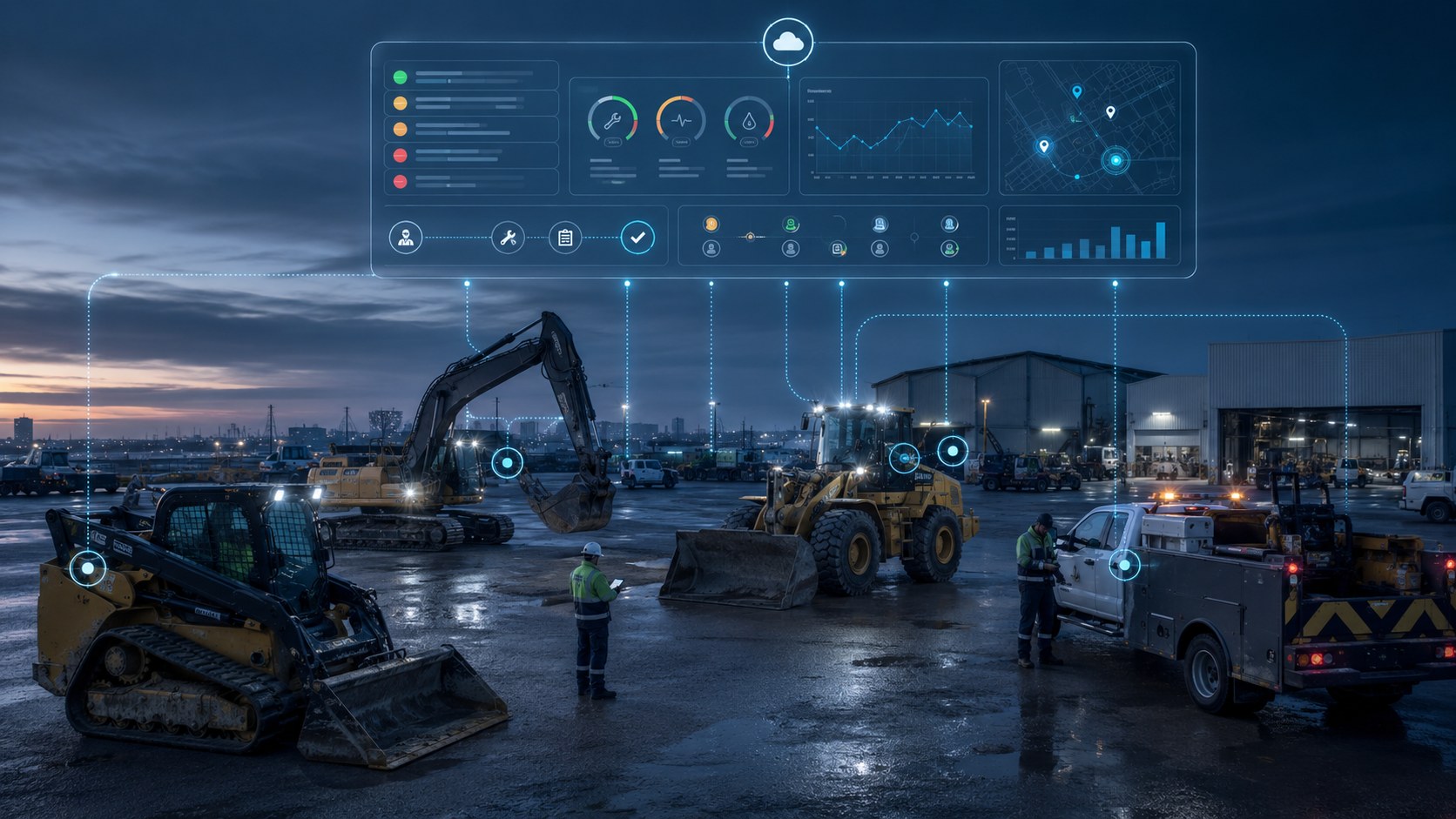
Elevāt, a Seattle company of roughly eighteen people, connects the kind of heavy, mobile equipment most software never touches: excavators, harvesters, cranes, utility rigs, fire apparatus. It bolts an edge gateway onto the machinery, streams the data to the cloud, and then - the part that matters - hands the technician an AI assistant that has already read the fault codes, the service history and the manual. Instead of guessing, the mechanic arrives knowing which valve to check first.
01 / What it doesTurning telemetry into a repair, not a chart
Plenty of companies will happily sell you a dashboard of blinking numbers. Elevāt's bet is that a dashboard is not the point - a finished repair is. Its core platform, Machine Connect, gathers CAN bus signals, fault codes and sensor readings off mixed fleets, then routes them through a workflow that ends at a technician's hands. Fault code to likely root cause to guided fix, in one thread a person can actually follow while standing in the mud.
The company frames the problem less as a data problem than a labor one. Skilled equipment technicians are retiring faster than they are being replaced, and you cannot hire your way out of that shortage quickly. So Elevāt's tools aim to make each remaining technician sharper - front-loading the diagnosis so the expensive, scarce human spends time fixing rather than hunting.
Underneath the headline product sits a stack of specific tools that make the loop work. Pre-configured, hardware-agnostic edge gateways handle the sensing. CAN Bus Trace exposes signal-level behavior for the failures that never throw a clean code. Remote diagnostics and condition monitoring watch for trouble before it becomes downtime, and file transfer and over-the-air updates let an operator change what a machine does without sending anyone into the field. None of these are flashy on their own. Stitched into one workflow, they are the difference between a second truck roll and a first-time fix.
The Elevāt loop, from steel to solved. The value hides in step three.
02 / Who buys itSelling to the machine-builder, not the operator
Here is the strategic choice that shapes everything else: Elevāt sells to the OEMs and dealer networks who build and service the equipment, not to the farmer or contractor who runs it. That decision puts the company's data pipe between the machine and the people responsible for keeping it alive - a sticky place to sit. Its named partners and customers read like a directory of industrial heavyweights: Bosch Rexroth, Cummins, HydraForce, Parker Hannifin, IDEX Fire & Safety and Versatile among them.
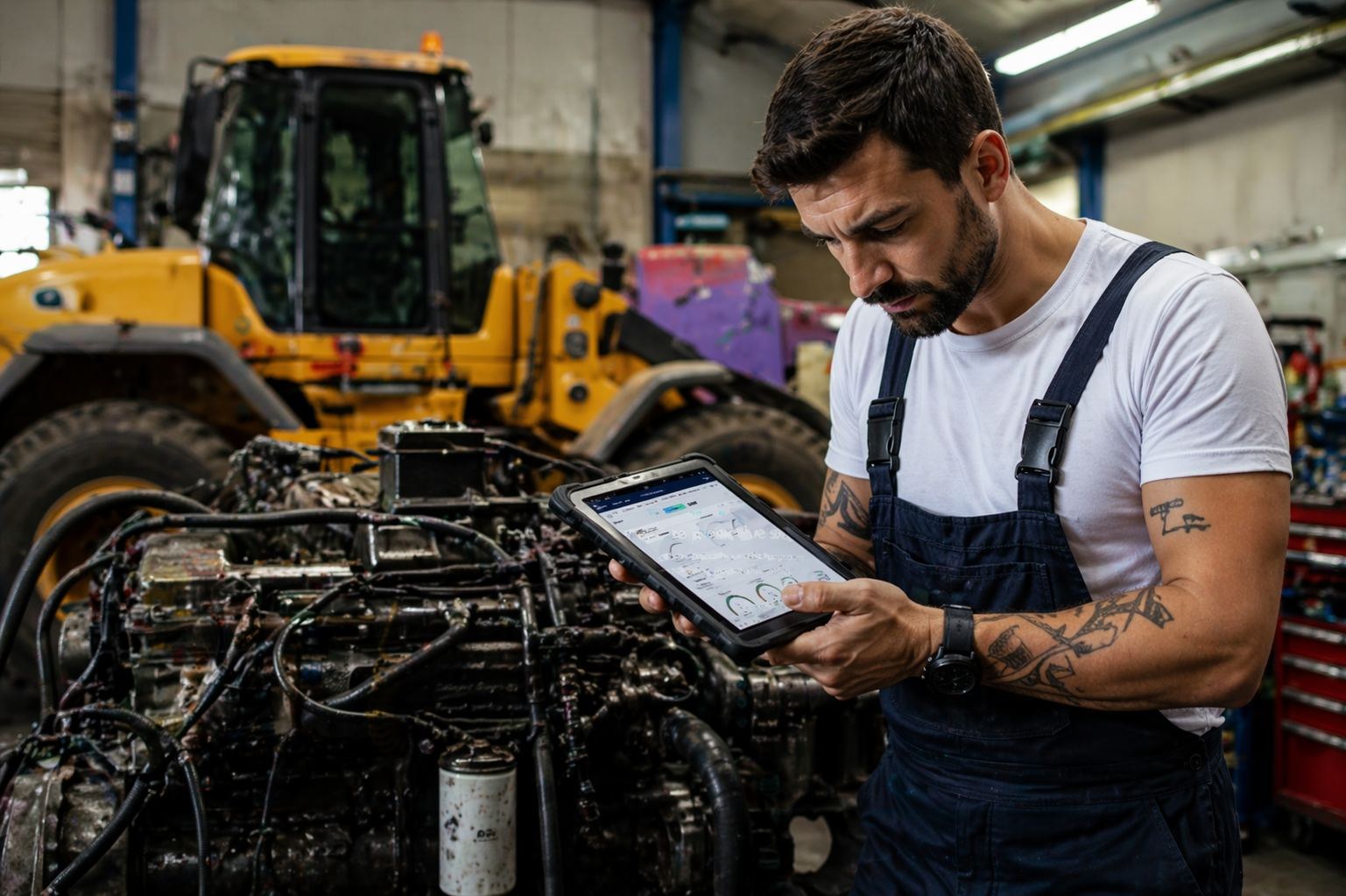
The practical payoff lands in a few plain places. An OEM can watch how its machines behave in the wild and feed that back into the next design. A dealer can quote a repair with a part already in the truck. An operator can see a fault brewing before it strands a crew for a day. And a service manager can turn what used to be a cost center - warranty and downtime - into a revenue line built on connected service. That last move, service revenue, is a large part of why equipment-makers keep signing up.
03 / The originA hydraulics shop that grew a software company
Elevāt did not start on a whiteboard in a co-working space. The concept took shape around 2015 inside Western Integrated Technologies, a fluid-power systems integrator that had been working with industrial hydraulics since 1987. The company was formally spun out as Elevat, Inc. in 2017, co-founded by CEO Adam Livesay and chairman Bill Hill, who had run the parent integrator for decades.
That heritage is the moat. Elevāt's team did not learn heavy equipment from a pitch deck - they came up through the hydraulics and the mud. It shows in a product that feels built rather than hyped, and it is a large part of why blue-chip OEMs are comfortable routing their engine and controller data through a startup this small.
Own the data pipe between the machine and the dealer. Sell to the OEM, turn a one-time hardware sale into a recurring subscription, and you become infrastructure - not a vendor. The pattern travels far beyond excavators.
04 / How it's differentNot fleet telematics - deep machine integration
The obvious comparison is Samsara, and the obvious comparison is wrong in a useful way. Samsara and its peers largely connect the cab: trucks, drivers, routes. Elevāt goes after the machines the trucks haul and the equipment that never sees a highway - the off-highway world of construction, agriculture, forestry, mining and utilities. It competes on depth of integration rather than breadth of fleet, sitting closer to platforms like PTC ThingWorx, Siemens Insights Hub, Particle and the hyperscaler IoT stacks, but narrowed hard onto the OEM service workflow.
One concrete proof of that depth arrived in 2026, when Elevāt, HydraForce and Bosch Rexroth shipped over-the-air firmware updates for off-highway equipment. Pushing a software update into a hydraulic controller buried inside a machine on a remote site is a genuinely hard problem. Getting an excavator to update like a phone is not a slide - it is a feature that shipped.
The expertise gap is what makes this hard to copy. Reading the electrical and hydraulic language of an off-highway machine - the controllers from Bosch Rexroth, the engines from Cummins, the valves from HydraForce and Parker Hannifin - is not something a generalist IoT vendor picks up quickly. Elevāt speaks that language natively because its founders spent decades in it. When the company integrates a controller's data or ships an OTA path into a hydraulic module, it is trading on a fluency that took years to build, not a connector it wired up last quarter.
05 / The moneyFunded steadily, not spectacularly
Elevāt has raised in deliberate steps rather than in one headline swing. Early seed capital in 2018 was followed by a $9.5M round in 2020 led by D4 Investments, and then a $12M Series A in February 2026 aimed squarely at speeding up equipment repairs. The business model underneath is straightforward: hardware gateways plus recurring cloud subscriptions, sold into OEM and dealer accounts.
In 2023 the company became a technical partner of Microsoft, running Machine Connect on Azure IoT Edge and extending that data pipeline into the heavy-machinery and off-highway EV worlds. In 2025 it was named IoT Emerging Company of the Year - Enterprise Market at the CompassIntel Awards. For a team of eighteen, that is a lot of surface area.
06 / Where it fitsThe last big fleet nobody connected
Off-highway equipment is, in a sense, the last enormous fleet that consumer-grade IoT skipped. The machines are expensive, they break in inconvenient places, and the people who fix them are getting scarcer. Elevāt's whole thesis is that this specific, unglamorous corner of the industrial world is worth connecting properly rather than generically - and that the winner is whoever sits closest to the OEM's service problem.
Whether it stays independent or becomes an acquisition target for a larger industrial-software player, Elevāt has done the hard part: it turned decades of hydraulics know-how into a data layer that real OEMs rely on. The machines are talking. The interesting question now is who else is listening.