seattle-startup
(52)
Deako Put a $12 Backplate in the Wall - and Built a Smart-Home Beachhead in 350,000 Houses
Most smart-home companies sell gadgets one homeowner at a time. Deako persuaded builders to hide its upgrade path inside the wall - then made the humble light switch the front door to a much larger platform.
How Aerostrat Turned a Maintenance-Planning Bottleneck Into a $15 Million Acquisition
Airlines still make expensive fleet decisions with planning tools that can buckle under real-world complexity. Aerostrat found the useful middle - software mature enough to trust, flexible enough to bend - and AAR paid $15 million upfront for it.

HeadLight Is Turning $20 Billion of Infrastructure Work Into a Searchable Memory
Road projects generate mountains of evidence and still lose the one photo that matters. HeadLight’s field-first software turns jobsite observations into a live, defensible record - but its value depends on disciplined adoption, integration and trust.

The Startup Dragging Farm Payroll Out of the 1980s
Farm HR still runs on paper packets and cash-back-of-the-check math. Ganaz built a phone-first onboarding, messaging and payroll stack for the 175,000+ workers who feed the rest of us.
The Seattle Startup Turning Amazon's Own Bonus Into a Creator Paycheck
Levanta connects Amazon sellers with vetted creators, tracks every sale through Amazon's own API, and lets brands pay commissions instead of bidding on ads. In roughly 20 months it went from a services idea to $286 million in annualized tracked sales - and a $20 million Series A.

The Cloud Security Company That Actually Fixes the Alerts
Every cloud scanner is great at finding problems. Tamnoon built a business on the boring part nobody wanted: fixing them - and doing it without taking production down.
When Heavy Machines Break, Elevāt Makes Them Talk Back
The Seattle startup wires up off-highway equipment - tractors, cranes, fire trucks - and hands technicians an AI that reads the machine's mind before anyone opens the panel.

Common Room
The AI GTM Platform: Complete buyer intelligence. Real pipeline impact.

Evocalize
Evocalize is a Seattle-based marketing technology company that builds a collaborative, AI-powered platform enabling local businesses - especially real estate agents and mortgage loan officers - to launch and optimize sophisticated digital advertising campaigns across Google, Meta, TikTok, YouTube and direct mail with push-button templates. Its software is typically embedded within the tools of enterprise partners such as Realtor.com, Rate and MoxiWorks, and it operates a patented Digital Co-Marketing Network that lets agents and lenders run compliant, cost-shared campaigns together.
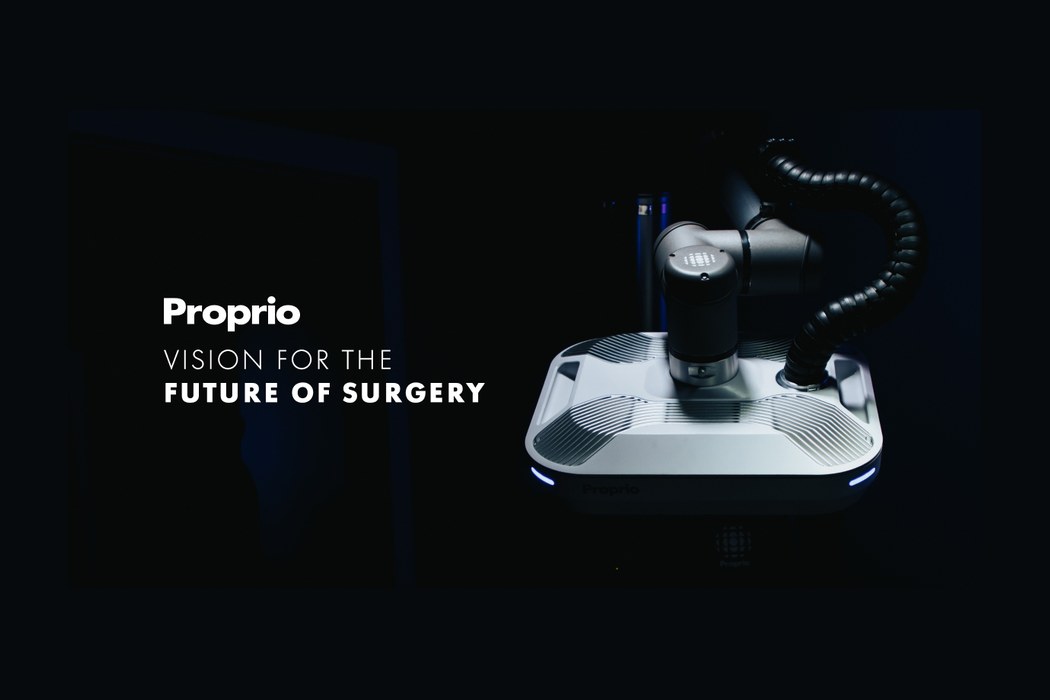
Proprio
Proprio is a Seattle medical technology company building an AI-powered surgical navigation platform, Paradigm, that uses light field imaging, computer vision, and machine learning to give surgeons a continuous, radiation-free 3D view of anatomy during spine surgery. Spun out of the University of Washington in 2016, the company fuses live intraoperative sensing with preoperative scans - a capability it calls Volumetric Intelligence - to improve precision, capture surgical data, and build a foundation model for surgery.
TraceAir Technologies
TraceAir Technologies is a Seattle-based construction-technology company that turns drone and LiDAR data into a site-intelligence platform for land developers and homebuilders. Founded in 2015, its software captures ground surveys, runs cut-and-fill and earthwork analysis, generates stormwater and grading reports, and gives executives portfolio-wide visibility from land acquisition through vertical construction. The platform is used by many of the largest U.S. homebuilders, including D.R. Horton, Lennar, Howard Hughes and Meritage Homes, and raised a $25M Series B in 2024.

Gabriel Jones
Gabriel Jones is the co-founder and CEO of Proprio, a Seattle medtech company building AI-powered surgical navigation. Its FDA-cleared Paradigm platform combines light-field imaging, real-time AI, and 3D visualization to give surgeons dynamic spatial awareness during spine procedures. Jones took an unusual path to medtech - engineering study in Japan, civil engineering at Taisei, Wall Street M&A, and work with the Bill & Melinda Gates Foundation - before co-founding Proprio in 2016 with a neurosurgeon, a robotics professor, and a computer vision specialist. He frames the mission around a single question: is it possible to do well and do good?

Amperity
Amperity is a Seattle-based enterprise software company that builds an AI-powered customer data platform. Its patented machine-learning identity resolution engine, Stitch, unifies fragmented customer records from disparate sources - email, phone, address, loyalty and device IDs - into a single, accurate view of each customer. Founded in 2016 by Kabir Shahani and Derek Slager, Amperity helps global consumer brands like Alaska Airlines, DICK'S Sporting Goods, and Wyndham turn messy data into reliable profiles, predictive insights, and activation across marketing, analytics, and AI. The company reached unicorn status in 2021 with a $100M Series D and has since pivoted toward an AI-first, lakehouse-native architecture that runs directly inside Databricks and Snowflake.

Augment AI
Augment AI is a Seattle-based startup building Decision Site, which it calls a Relationship Operating System for B2B sales teams. The platform pulls meetings, calls, notes, follow-ups, CRM data, Slack threads and buyer resources into a single shared workspace so buyers and sellers can see what has happened, what is happening, and what to do next. Spun out of the Allen Institute for AI (AI2) and co-founded by Napster co-founder Jordan Ritter, the company started in 2022 as an AI personal assistant aimed at enabling the four-day workweek and later refocused on agentic tooling for enterprise sales and deal execution.
Caddi
Caddi is a Seattle-based AI company that turns screen recordings into working automations. Its 'record-to-code' platform watches a professional demonstrate a repetitive back-office task - client intake, document filing, billing, data entry - and generates deterministic, API-driven code that runs the workflow across 80+ tools. Aimed at law firms, financial advisors, accountants and consultants, Caddi pitches itself as a way to do more work at the same headcount without asking teams to learn yet another complicated tool.

Cascade AI
Cascade AI is a Bellevue/Seattle-based startup building an agentic AI platform for HR and IT operations. Its AI teammates sit across systems of record like Workday, ADP, UKG and ServiceNow to answer employee questions and resolve requests across benefits, leave, compensation, policy and IT - executing workflows in real time rather than just surfacing information. Founded in 2022 by former Microsoft engineers Ana-Maria Constantin and Pulak Goyal, the company raised a $3.75M seed round led by Gradient, Google's AI-focused venture fund, and says customers see roughly a 50% drop in HR ticket volume after deployment.

Clearly AI
Clearly AI is a Seattle-based, Y Combinator-backed startup that automates security and privacy reviews for regulated enterprises. Its AI-native platform gathers context, assesses risk, and flags where human review is actually needed - so security, privacy, and compliance teams can clear their review backlogs and ship products faster without sacrificing trust. Founded in 2024 by former Amazon security engineers Emily and Joe Choi-Greene, the company raised an $8.4M seed round in February 2026 and counts Fortune 500 brands like Ericsson, Rivian, and HID Global among its customers.

Duranta
Duranta is a Seattle-based software company building AI-powered tools for landscapers and lawn care professionals. Its flagship model, AIdan, automatically measures property details from imagery and turns them into estimates and proposals, wrapped in a suite that includes landscape design, invoicing and a CRM. Founded by the team that previously built Aurora Solar, Duranta raised a $7 million seed round in July 2025 to help outdoor-service businesses spend less time on site visits and more time closing work.

Emovid
Emovid is a Seattle-based B2B platform for asynchronous, multimodal business communication - video, audio, and text messages meant to replace long email threads and unnecessary meetings. Founded in 2023 by former Evite CEO Victor Cho, it layers AI summaries, transcripts, and 60+ language translation on top of each message, and pairs every video with a patent-pending Seal of Authenticity that verifies the speaker's identity and flags any AI alterations - positioning itself as 'Verified Human Communication' in an era of deepfakes and synthetic media.

Enzzo
Enzzo is a Seattle-based AI platform that helps hardware product teams move from idea to investment-ready in roughly half the time. Spun out of startup studio Pioneer Square Labs and led by serial founder Ford Davidson, Enzzo uses generative AI and customer-supplied data to draft product definitions, requirements, user personas, competitive analysis, risk assessments, concept images, and bill-of-materials pricing - the slow, document-heavy front end of building physical products. It raised a $3M seed round in March 2024 and counts electronics and instrumentation makers among its early paying customers.

Expanso
Expanso is a Seattle-based distributed data processing company built on its open-source Bacalhau project. Instead of shipping raw data to a central cloud, Expanso runs lightweight agents that filter, transform, and govern data at its source - across edge devices, on-prem systems, and multiple clouds. The 'Compute Over Data' approach cuts egress and storage costs, keeps sensitive data in place for compliance, and speeds up pipelines feeding analytics and AI. Founded in 2022 by former Google, AWS, and Microsoft engineers, it raised a $7.5M seed round in 2023.
Meadow AI
Meadow AI is a Seattle-based multimodal AI platform that gives restaurants and retailers real-time visibility into their physical operations. By combining computer vision, natural language processing, and data from existing point-of-sale, labor, inventory, video, and audio systems, Meadow automates the manual 'secret shopper' audits that chains have long done by hand - continuously evaluating customer experiences and staff performance, then surfacing AI recommendations to lift revenue, tighten consistency, and reduce labor costs. The company emerged from stealth in November 2025 with $6M raised and more than $2.5M in contracted annual recurring revenue.

Plus AI
Plus AI is a Seattle-based software company that builds an AI presentation maker working directly inside Google Slides and Microsoft PowerPoint. Rather than trapping users in a separate web editor, Plus generates and edits native slides - drafting decks from a prompt, converting documents like PDFs and Word files into presentations, rewriting and remixing existing slides, and matching custom brand templates. Founded in 2021 by former Madrona venture capitalist Daniel Li and ex-BCG and Webflow product leader Chloe Qi, the company has raised roughly $8-10M in seed funding and says its tools have been installed by more than a million users.

ProductWind
ProductWind is a Seattle-based retail influencer marketing platform that helps enterprise brands ramp new product launches in days instead of months. Founded in 2020 by former Amazon product lead Jason Kowalski and ex-Uber engineer Tom Hirschfeld, the company mobilizes thousands of retail-native creators to drive social content, reviews, SEO and sales velocity on marketplaces like Amazon and Walmart. Its core idea - 'marketing to the algorithm' - treats retailer AI systems as a second customer alongside human shoppers, coordinating waves of creator activity to push products from page five to page one.

Roboto AI
Roboto AI is a Seattle-based analytics platform for robotics and Physical AI teams. It ingests multimodal robot logs - ROS bags, PX4/ULog, MCAP, Parquet, video - and uses AI agents plus a Python SDK and CLI to automatically search, analyze, and surface edge cases, anomalies, and failures across entire robot fleets. Founded in 2022 by former Amazon Robotics leaders Benji Barash and Yves Albers-Schoenberg, the company spun out of the Allen Institute for AI and raised a $4.8M seed to help robotics developers stop digging through petabytes of sensor data by hand.

TestSprite
TestSprite is a Seattle-based startup building an autonomous AI testing agent that validates AI-generated code. Its agent plugs into AI IDEs like Cursor, Claude Code, and VS Code via an MCP server, then autonomously writes test plans, generates and executes tests in the cloud, diagnoses failures, and feeds fixes back to the coding agent. Founded in 2023, TestSprite has raised $8.2M total, including a $6.7M seed led by Trilogy Equity Partners in October 2025, and serves 35,000+ users. It positions itself as the 'testing backbone' of the AI-native development era.

Elizabeth Liu
Elizabeth Liu is the CEO of Crowd Cow, the Seattle-based online marketplace that connects independent farms and fisheries directly with people who want to know where their meat and seafood comes from. She has been with the company since its earliest days, rising from category and operations roles to VP of Marketing before taking the top job in February 2023 when co-founder Joe Heitzeberg stepped down. Before Crowd Cow she spent roughly 15 years in direct-to-consumer and marketplace commerce, including marketing director at Wayfair, payments product manager at Amazon, and business development at Zulily. She holds an MBA from Northwestern's Kellogg School of Management and mentors early-stage founders through Techstars.

Jason Kowalski
Jason Kowalski is the co-founder and CEO of ProductWind, an influencer technology platform built for brands that sell on online retailers like Amazon and Walmart. A former Amazon product lead who built the retailer's self-service marketing platform, Kowalski started ProductWind in 2020 on a contrarian idea: brands should market to retail algorithms, not just shoppers. The company coordinates thousands of micro-influencers to move e-commerce metrics that matter to those algorithms - sales velocity, reviews, organic placement, and Best Seller Rank - rather than chasing likes and reach. Bootstrapped and profitable from day one, ProductWind grew revenue tenfold before raising a total of roughly $5.17M in seed funding.

Alejandro Castellano
Alejandro Castellano is the co-founder and CEO of Caddi, a Seattle AI startup that turns a screen recording of someone doing their job into working, API-driven automation - a method the company calls 'record-to-code' or 'automation by demonstration.' Born in Lima, Peru, where he wanted to be an inventor, he started his first company at 19, learned to scale businesses inside a family office he calls his 'on-the-streets MBA,' then earned a master's at Cornell Tech focused on computer vision and machine learning. Caddi emerged from the AI2 Incubator and raised a $5M seed round in 2025 to free lawyers, accountants and financial advisors from repetitive back-office work.

Ana-Maria Constantin
Ana-Maria Constantin is the CEO and co-founder of Cascade AI, a Bellevue-based startup building agentic AI that automates the grind of HR and back-office operations. A Harvard dual major in computer science and astrophysics who left Romania after high school, she spent five-plus years as a software engineer at Microsoft writing code that touched millions of users on Azure before deciding HR - the function that touches more lives than any other in a company - was the perfect place to point machine learning. She raised a $5.45M-plus seed round led by Google's Gradient Ventures with AlleyCorp, was named GeekWire's Young Entrepreneur of the Year in 2024, and recognized as a 2025 Google Cloud Partner All-Star.