The office is a strawberry field at 5 a.m. The filing cabinet is a plastic tote in a farm-truck cab. The payroll department is a check that a worker will later hand to a corner store and pay a fee to cash. For a huge slice of American agriculture, this is not a caricature - it is Tuesday. Ganaz, a Seattle company founded in 2017, built its whole business on a single, slightly indignant observation: the people who pick, pack and process the country's food have been running on systems everyone else abandoned decades ago.
"It's still operating like it's the '80s," founder and CEO Hannah Freeman told TechCrunch, describing how farm labor gets hired and paid. Ganaz is her answer: a workforce-management and financial-services platform that lets agriculture and food-processing employers recruit, onboard, train, message and pay a mostly deskless, multilingual and often unbanked workforce - almost entirely from a phone.
What it actually doesHiring, without the clipboard
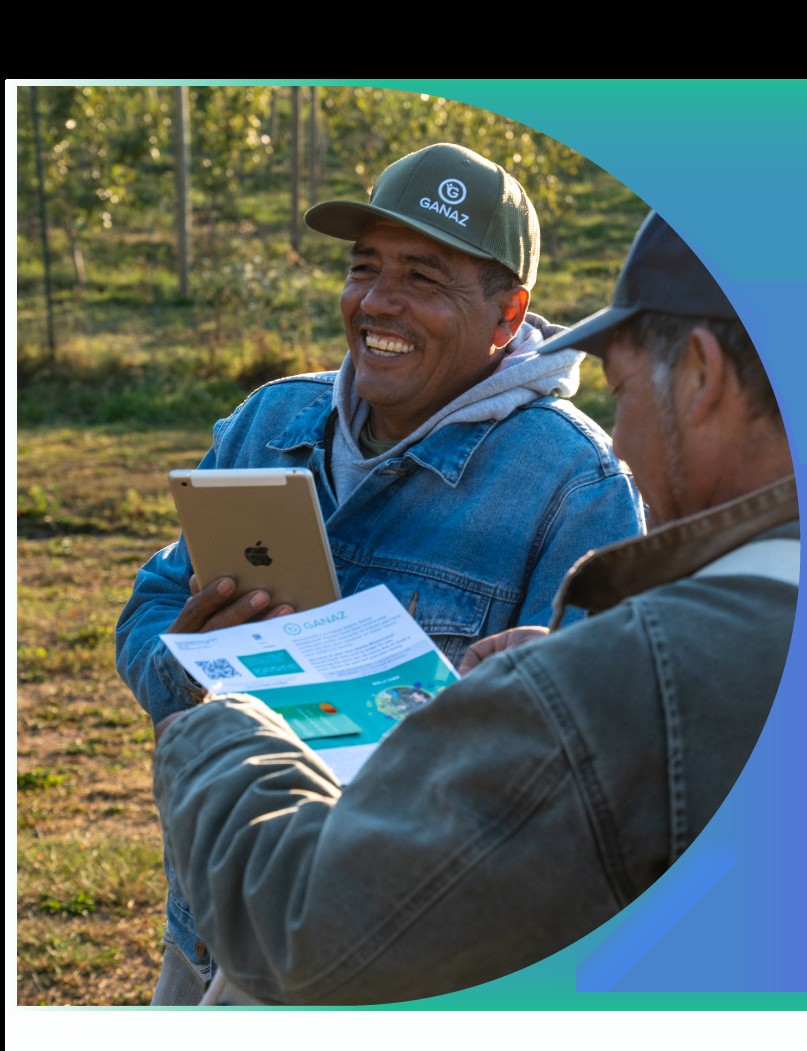
Start with onboarding, because that is where the pain is loudest. Bringing a single seasonal worker onto a farm can mean 20 to 30 minutes of paper forms - I-9s, tax documents, handbooks, consent sheets - often for someone who may not read English, or read much at all, standing in a field with no desk in sight. Multiply that by a crew of hundreds arriving in the same week and you get a bottleneck that costs real money.
Ganaz turns that packet into a guided flow on a tablet or phone. The apps are built to work offline and for low-literacy users, and the company says employers complete hiring forms roughly three times faster. Every record lands in one digital place, which matters when a labor auditor comes knocking.
The old way
- Paper packet, 20-30 min per worker
- Forms in a language you may not read
- Records in a truck-cab tote
- Payday is a check you pay to cash
The Ganaz way
- Guided tablet flow, ~3x faster
- Built for low-literacy, offline use
- One digital record for compliance
- Pay lands on a Mastercard card
The language problemOne text, every crew, their words
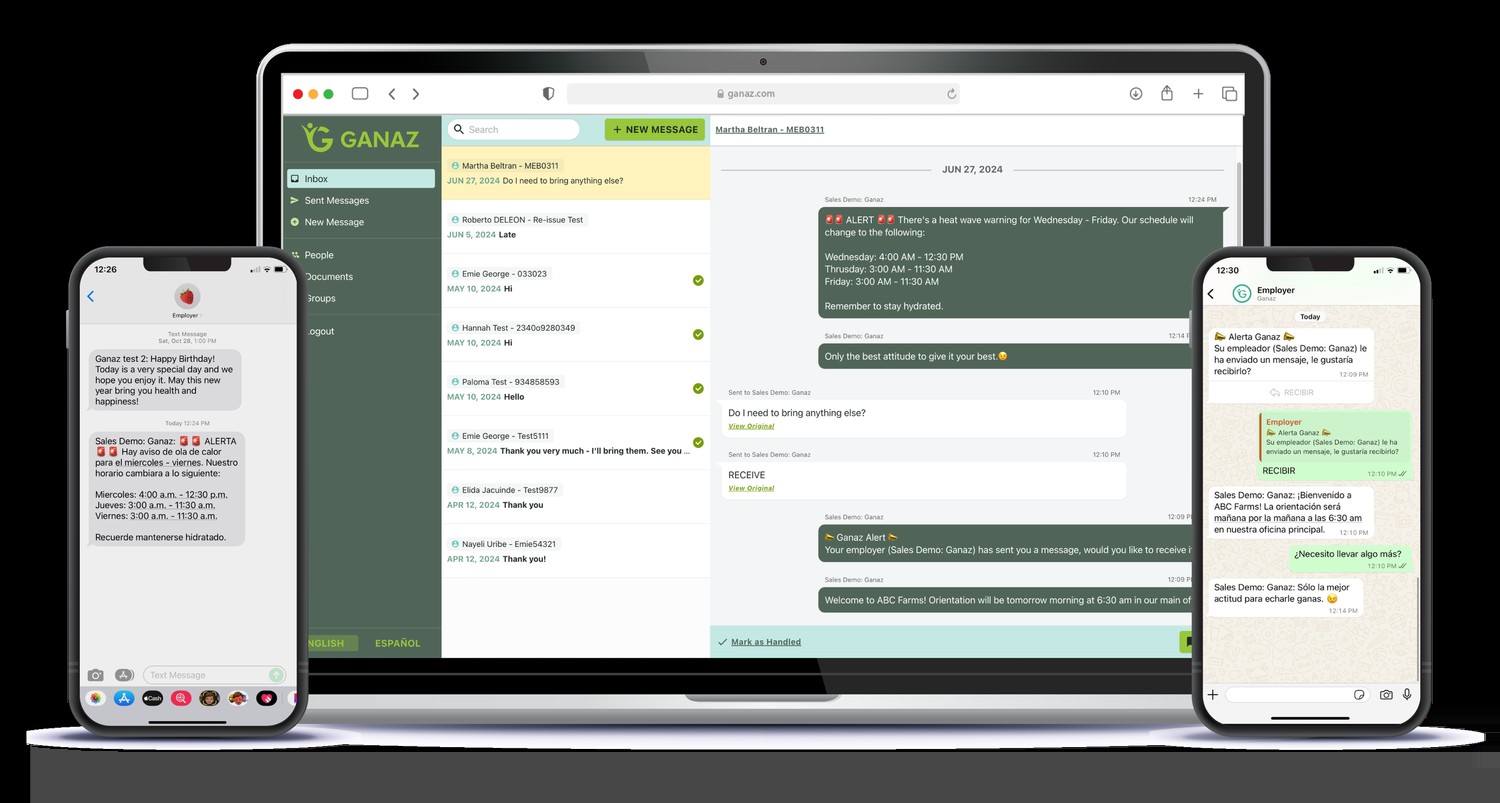
A single farm crew is rarely one language. It can be Spanish speakers, workers whose first language is an Indigenous Mexican tongue, and Punjabi speakers - all reporting to the same manager. Ganaz's workforce-communication tool lets that manager write one message and have it auto-translated per worker, delivered over SMS and WhatsApp, with replies flowing back translated too. A heat-wave schedule change, a shift reminder, a "welcome to the farm" note - sent once, understood by everyone.
"We are conscious of both the huge opportunity ahead of us to digitize billions of dollars in payroll, as well as the responsibility to build inclusive, low-cost, wealth-building tools for workers."Hannah Freeman, Founder & CEO
The fintech turnA card for the unbanked harvest
The most consequential piece is the money. A large share of farmworkers are unbanked, which means the paper check they earn becomes a second transaction - a trip to a check casher who takes a cut of wages the worker already sweated for. Ganaz's response is the Ganaz Mastercard payroll card: pay loaded digitally, no bank account required, with planned remittance features so money sent home to family costs less along the way. It reframes payroll from a cost center into a financial-inclusion product, which is a large part of why Ganaz is incorporated as a public benefit corporation - worker welfare written into the charter, not the marketing.
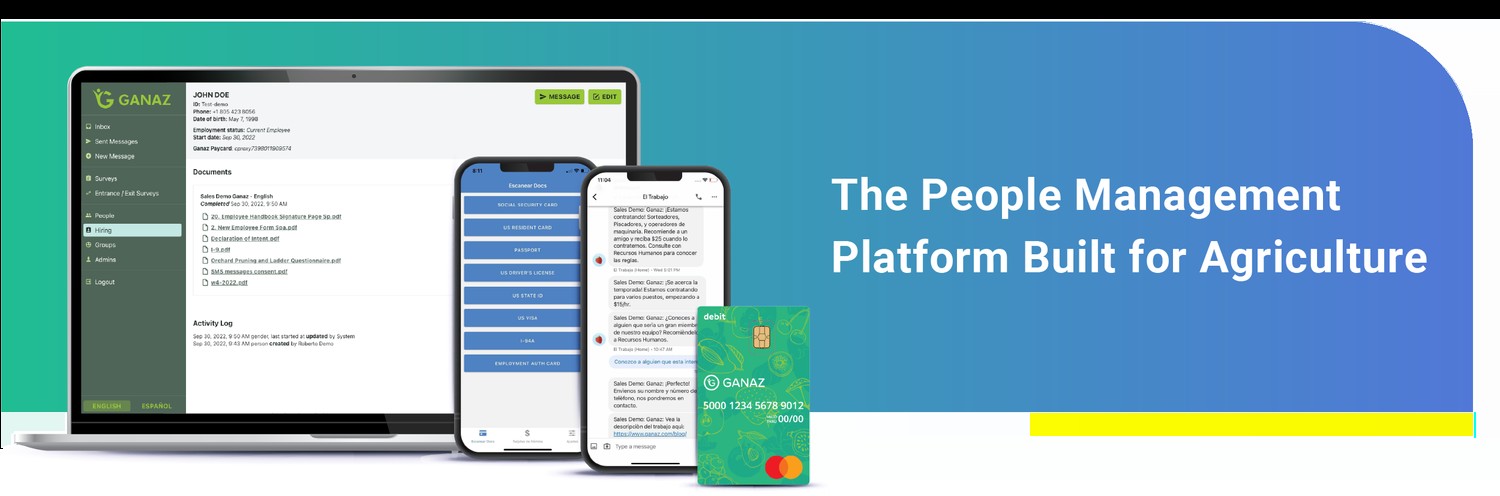
Where a farm worker's day lives now
One platform, four jobs that used to need four systems (or none).
The visa mazeH-2A, turned into a dashboard
Then there is the H-2A guest-worker program - visas, housing, wage rules and hours that add up to a compliance minefield for any farm that leans on seasonal foreign labor. Ganaz packages software and services that give employers end-to-end visibility into the program, which is the difference between a clean audit and an expensive Friday afternoon. It rounds out a stack that also includes digital training modules and workforce analytics, so a grower can see not just who they hired, but whether the crew is coming back.
Ganaz's real bet is that the labor shortage is not only about finding workers - it is about keeping them.The retention thesis
Who's buyingCostco suppliers and the salad aisle
The customers are commercial growers and food manufacturers across the United States and Mexico, including names like Taylor Farms and a Costco supplier group, plus operations such as K&K Land and Management and Salinas FLC. Reported figures put roughly 75 employers and more than 175,000 workers on the platform - a base that expanded sharply when the pandemic forced farms to digitize almost overnight. Ganaz says its commercial-grower customer count grew about tenfold during 2020, and that recurring revenue and user numbers tripled year over year around its Series A.

How it's differentThe vertical nobody wanted
Plenty of companies sell onboarding software, deskless-workforce messaging, or payroll cards. Almost none of them built for a strawberry field. Ganaz's edge is the combination: ag-specific hiring, multilingual crew messaging, an unbanked-first payroll card and H-2A tooling, stitched into one stack aimed at a workforce that generic HR platforms treat as an afterthought. The alternatives are traditional payroll and HRIS providers, a few agriculture-specific labor tools, and - most often - the paper-and-cash status quo. Ganaz is betting the boring vertical is the whole opportunity.
Ganaz at a glance
- Founded
- 2017, Seattle, Washington
- Founder
- Hannah Freeman, CEO & Co-Founder (ex-Fair Trade USA)
- Structure
- Public benefit corporation
- Funding
- ~$11.3M total; $7M Series A (June 2021)
- Backers
- Trilogy Equity, Bessemer, AgFunder, Founders' Co-op, Taylor Ventures, Techstars
- Reach
- 175,000+ workers; U.S. & Mexico
The catchWhere the model strains
None of this is frictionless. Agriculture runs on thin margins and long trust cycles; growers do not swap decades-old habits because a demo looked slick, and adoption often rides on a single crew leader's buy-in. Connectivity in the field is spotty, which is exactly why the apps are built offline-first. And a payroll card is only as good as its fees and its acceptance - the promise of "low-cost" has to survive contact with the actual rails. Ganaz's answer is to keep the mission legally binding and the tooling narrow: solve the specific, unglamorous problems of one industry better than a horizontal platform ever will.
What a reader can take from it is smaller than the company but just as useful: the overlooked, low-status corner of an industry is frequently where the software gap - and the margin - is hiding. Ganaz found a multibillion-dollar payroll flow still moving on paper, and decided the fix was worth building. The salad on the table is quietly running on it.