There is a particular kind of optimism in believing that a scale ticket can change an industry. A scale ticket is the receipt a farmer gets after grain is weighed at an elevator. It is useful, unlovely, and easily lost in a pickup cab. When a local grain elevator asked Jake Joraanstad's Fargo software shop whether the thing might be made digital, the assignment did not sound like the beginning of a national software network. It sounded like one less piece of paper.
Joraanstad and his co-founder, Ryan Raguse, followed the paper anyway. The ticket led to bids, contracts, signatures, account balances, settlements, and payments. Each step exposed another place where agricultural commerce still depended on phone calls, retyped information, or a check moving down a road in an envelope. Their company, then called Myriad Mobile, had spent years building apps for almost anyone who needed one. The grain project presented a sharper proposition: perhaps uncelebrated work in agriculture was necessary work to modernize.
Joraanstad has an affectionate phrase for this territory: the “messy middle.” It sits between the farm and the consumer, among grain elevators, co-ops, retailers, processors, lenders, and the software systems already keeping their books. Robots in fields are easier to put on a conference stage. A contract that no longer needs to be printed has less theatrical potential. Yet harvest does not much care for theatre. Grain must be weighed, priced, bought, moved, and paid for.
“We're doing the plumbing, so to speak, and nobody wants to be the plumber. But it's required to make things work.”Jake Joraanstad, on the unglamorous work of agtech
The trip out of Fargo that never happened
The curious part is that Joraanstad once saw computer engineering as his route away from North Dakota. He grew up in Rolla, a small town near the Canadian border, the son of a nurse and a banker. At North Dakota State University, he imagined graduation followed by a job at Google or Microsoft. The expected pilgrimage was familiar: learn technical skills on the prairie, then carry them to a coast.
Instead, during his senior year in 2011, he and Raguse started a mobile and web development business. Smartphones were still novel enough that software “in your pocket,” as Joraanstad later recalled, felt like a new commercial frontier. The pair took custom work, learned quickly, and stayed. “I never left,” he has said. The sentence is plain, almost sheepish. Its sequel carries more weight: “Now I'm proud to say I'm glad I never did.”
Staying became more than inertia. Joraanstad helped co-found Emerging Prairie, the nonprofit that built gatherings and connective tissue for Fargo's entrepreneurs. He served on its board from 2012 through 2021 and now sits on the board of Grand Farm, the agricultural-technology test and collaboration network near Casselton. The regional ecosystem and his company grew alongside one another. Fargo supplied access to agricultural customers and local capital; Bushel supplied jobs, investment, and proof that a software company did not need a coastal address to sell across a continent.
Joraanstad and Raguse found Myriad Mobile while Joraanstad is finishing college.
Bushel launches as a platform built around the digital relationship between grain businesses and growers.
Myriad Mobile takes the Bushel name and makes its agricultural focus explicit.
Bushel acquires FarmLogs, extending its reach into farm management and profitability tools.
An oversubscribed $26 million round backs payments, farm management, and network integrations.
A startup discovers the virtue of saying no
For several years, Myriad Mobile did what capable young agencies do: it said yes. The team built custom software and learned industries one assignment at a time. Agricultural jobs kept going unusually well. Joraanstad and his colleagues knew the language and rhythms of the business through families who had lived around farms. Raguse eventually proposed that they stop treating this fluency as a coincidence and concentrate on grain.
The first Bushel product launched in 2017. Two years later, Myriad Mobile changed its name to Bushel, turning a product into the identity of the company. Joraanstad has said the narrowing should have happened sooner. Founders are often congratulated for their range, when the market tends to reward a more austere talent: deciding which good opportunities will no longer be pursued.
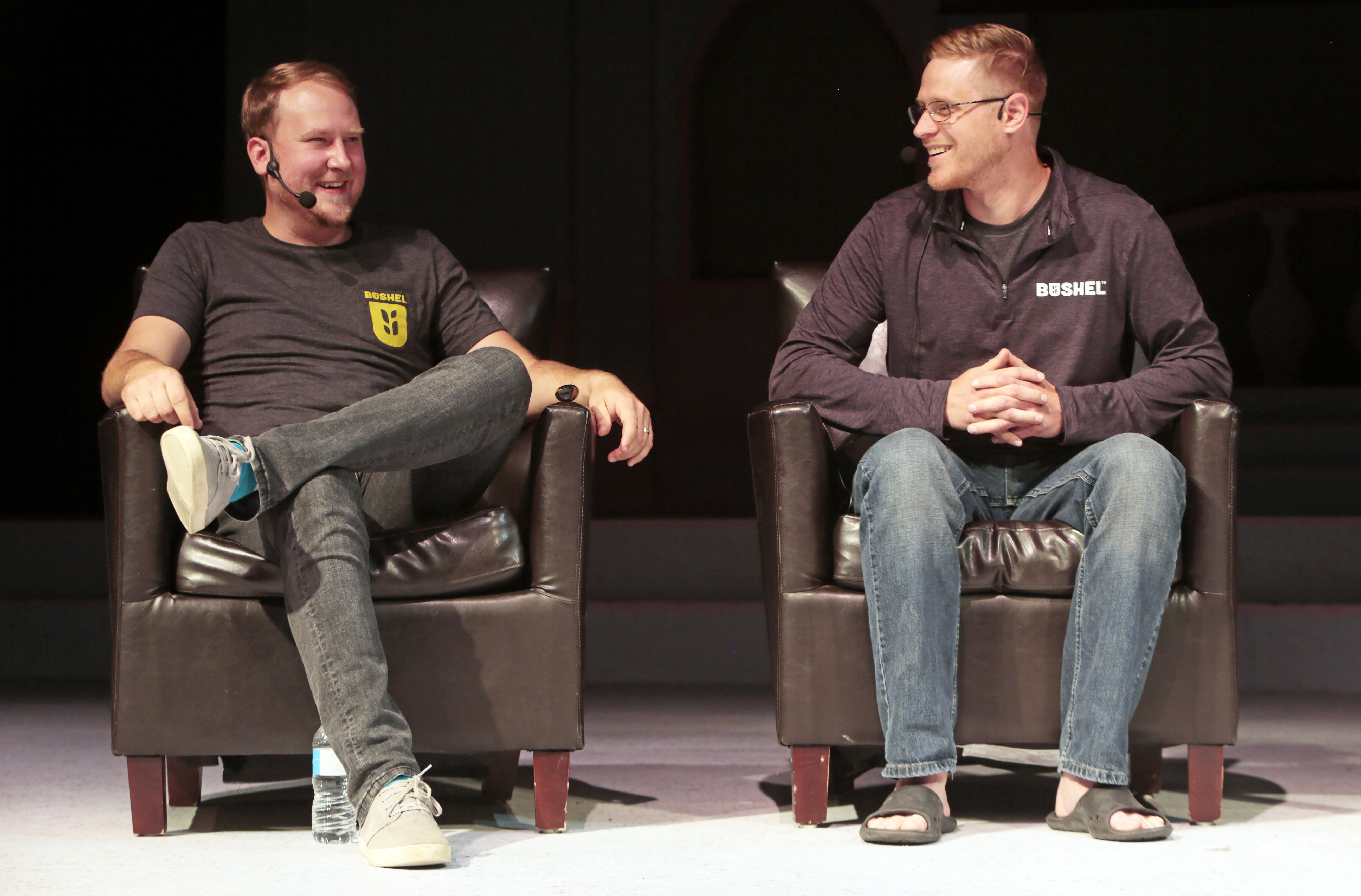
That focus produced a peculiar scale. Bushel now says its software connects more than 3,500 grain buying and ag retail locations across the United States and Canada, representing more than half of U.S. grain origination. The number is striking because the product remains mostly invisible to anyone who does not sell grain. Farmers may encounter an app wearing the name of their local elevator or co-op; underneath, Bushel supplies the machinery.
Those figures are company-reported, but the sequence behind them is easy to understand. A farmer who can see a scale ticket can also see a contract. A farmer who can see a contract may want to sign it. An offer that can be signed can be settled. A settlement naturally raises the question of payment. The business grew by tracing a transaction rather than adding a random shelf of features.
How one receipt became a platform
The farmer was not the reluctant one
Joraanstad's experience also challenged one of agtech's tidier explanations for slow adoption: that farmers simply dislike technology. He argues that farmers of different ages will use tools that make sense and make their work easier. The greater obstacle is often institutional. An elevator or retailer cannot casually replace the processes it uses during harvest, nor can it discard accounting software that already holds years of customer and transaction data.
This explains Bushel's emphasis on integration. Its software sits alongside established enterprise systems and gives agribusinesses customer-facing tools under their own brands. The approach is less revolutionary in posture and more demanding in practice. It requires old and new software to cooperate while the grain keeps arriving.
The same tension becomes tangible in money. Bushel's 2023 farmer survey found that 80 percent of grain payments were still made by paper check. Joraanstad later gave the inefficiency a physical description: “We're literally burning gasoline to move paper.” The absurdity is comic until one remembers the sums involved, the time spent waiting, and the security risk attached to a valuable check.
A good piece of agricultural software does not announce the future. It removes an errand from Tuesday.The practical test behind Bushel's expansion
Bushel responded with digital payment products and, after acquiring FarmLogs in 2021, a farm-management system that could connect operational records with grain sales. In 2023, the company raised $26 million from financial and agricultural investors to push further into payments, records, and network connections. Joraanstad's original scale ticket had become financial infrastructure, though he describes the continuity more than the leap: the problem was always the inefficiency between farmer and agribusiness.
Two seconds, and the patience to get there
Joraanstad's recent language has become faster. At Bushel's 2026 Buddy Seat Conference, he argued that artificial intelligence could work like a “super agronomist,” using farm records and agronomic data to support decisions. He also set a severe standard for routine commerce: paying a bill, requesting a quote, pricing fertilizer, or signing a grain contract should become nearly effortless. In his formulation, the last action ought to take two seconds.
It is a bracing target for an industry where a check may still cross town by pickup. It also reveals a useful contradiction in Joraanstad's career. He enjoys touring-car racing, a pastime concerned with extracting speed from a machine. Yet his company's progress has depended on years of patient integration, relationship-building, and persuasion. Software can be quick. Changing a network is not.
That patience is visible in the people around the story. Raguse supplied the grain focus. Local elevators supplied problems worth solving. Emerging Prairie supplied a meeting place. Grand Farm widened the region's agricultural-technology ambitions. Investors, employees, and customers helped turn the custom shop into a platform. Joraanstad is the CEO, but his own account rarely pretends that a founder operates alone.
What he did possess early was the instinct to look twice at an ordinary inconvenience. The paper ticket was not interesting because it was paper. It was interesting because of everything attached to it. A scale weight touched a contract; the contract touched a payment; the payment touched a farm's decisions. Digitize the object and little changes. Connect the transaction and an industry begins to move differently.
Joraanstad once expected software to take him somewhere else. Instead, it taught him to pay closer attention to where he already was: a city surrounded by agriculture, a community learning how to support founders, and an industry with sophisticated machinery in the field but stubborn paperwork in the office. He stayed in Fargo. The scale ticket did not.