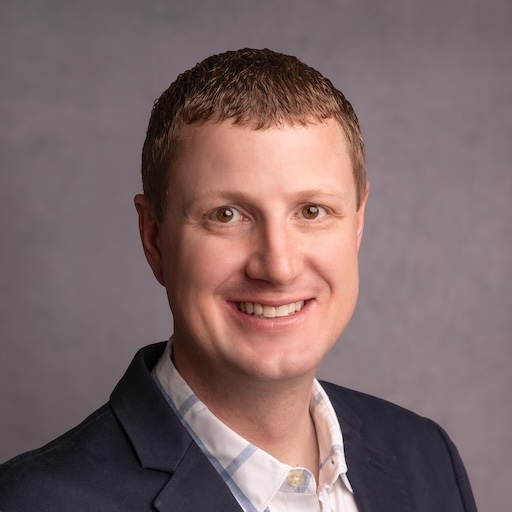
Most software CEOs treat fieldwork as a metaphor. Kris Poulson treats it as Tuesday.
The platform he runs, FarmQA, is the kind of company that prints quietly in trade press but rarely gets the breathless coverage reserved for chatbots. Yet in the year since Poulson took the CEO seat in May 2024, recurring revenue doubled and acres under management jumped from 20 million to 37 million. The company closed an oversubscribed $4 million seed round in June 2025, led by gener8tor 1889, with Kevin O'Leary's Wonder Fund North Dakota and Badlands Capital piling on.
This is his second act. His first was Sentera, an aerial imaging and analytics company he co-founded that grew 1800% under his watch and reached customers in more than fifty countries. John Deere bought it in May 2025. Lesser operators would have taken the exit, the keynote circuit, and the comfortable advisor's chair. Poulson went home to North Dakota and signed up for a software company half the size of the one he had just sold.
The reason is in the company's pitch deck and also, more plainly, in his biography. FarmQA was founded by Howard Dahl, the long-time CEO of Amity Technology and a Fargo manufacturing fixture. Dahl spent decades building things that move dirt. He needed someone who knew dirt and could ship software. Casselton's most credentialed export, with degrees in agricultural economics from NDSU and strategy from Harvard, plus a Licensed Crop Insurance Agent card and a Custom Applicators License in his wallet, fit the brief.
Poulson is candid about the industry's blind spot. "Lots of agtech is designed around companies, not producers," he has said - a sentence that doubles as a thesis statement and a quiet jab at most of his competitors. He has put the principle to work in product. Before FarmQA released its grower-facing QA Farmer app, he and his team interviewed more than fifty farmers and worked inside fifteen farm families through early access. The design rules that came back were unsentimental: big buttons, no bloat, actionable answers. The tractor cab is not a UX lab; it is bumpy.
The pitch to investors and customers leans on a phrase Poulson uses often: clean data. FarmQA's earliest, stickiest customers are independent crop consultants and premium growers who do the unglamorous work of recording every scouting note, soil sample, and prescription. Multiply that diligence by 37 million acres and a model has something to chew on. "Our ability to build an AI engine would be second to none given the cleanness of the data," he told reporters during the seed round.
He is also realistic about what AI should do for agronomy. The analogy he reaches for is medicine. AI helps doctors find the right answer faster; it does not replace the bedside conversation. FarmQA wants to compress an advisor's drudgery - the synthesis, the report-writing, the lookup - so the human can focus on the disease in the field. "Trying to really embolden them to do bigger and better things" is how he puts it.
For all that, the strategic conversation around FarmQA is unmistakably about scale. The company already absorbed Farm Dog last year. Poulson talks about acquisitions for 2025-2026 and grins when he says, "We have a war chest here we could go out and do some interesting things with." Translation: more deals are coming, and an international expansion that mirrors the playbook he ran at Sentera.