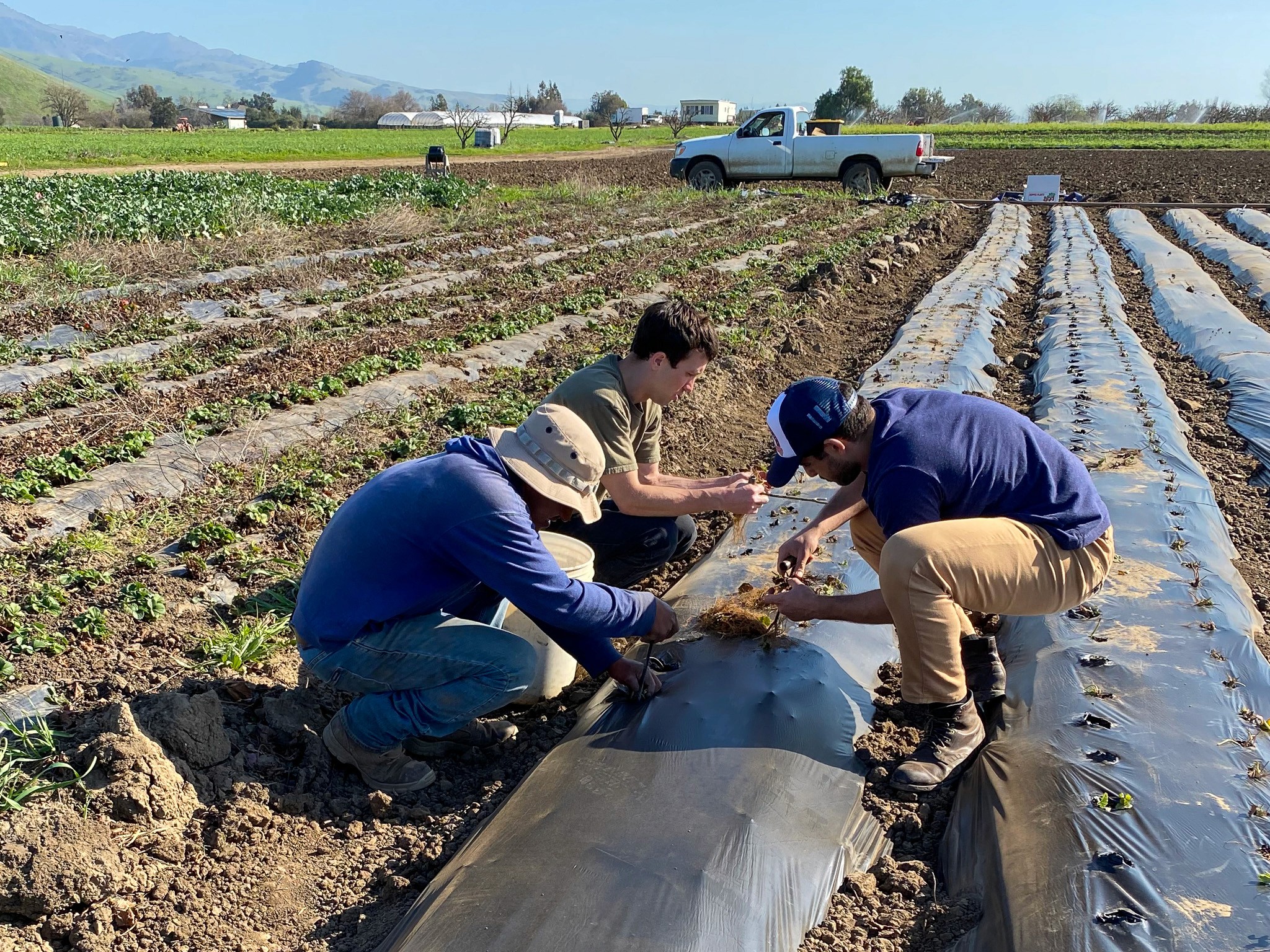
At Thanksgiving in 2018, Michael Guirguis did something slightly more useful than compliment the vegetables. He sat down with his cousin Marsha Habib and her husband, Modesto, to look through the books of Oya Organics, their farm in Hollister, California. The produce was good. The arithmetic was less kind. Labor was expensive, hard to secure, and capable of putting a ceiling on everything else the farm did.
Someone mentioned a farm visa. Guirguis followed the clue to H-2A, the U.S. program that lets farms hire temporary foreign agricultural workers under a long list of conditions. Jordan Taylor, who grew up farming and had worked in product at Farmers Business Network, joined him. In 2019 they founded Seso. The first job was to make an elaborate hiring process more navigable.
- Seso sells U.S. farms and labor contractors H-2A services and software for hiring, onboarding, HR, payroll, and paycards.
- Its useful trick is carrying one worker's information across jobs that farms often manage in separate files.
- A public standard price is unavailable; employers request a quote. Seso says recruitment is free for workers.
A visa is the beginning of the paperwork
H-2A was a shrewd place to begin. A grower needs workers at a particular time, yet the application, recruitment, travel, housing, and record rules do not bend to a late harvest. Seso combined software with people who know the process. Its worker service says it recruits and screens applicants and forbids prohibited fees to workers. The employer side tracks applications, contracts, documents, and arrival logistics.
The first version did not solve the whole problem. Once a worker arrived, someone still had to collect identification, complete an I-9 and W-4, assign a crew, calculate wages, issue a paystub, and keep documents ready for an audit. Domestic workers needed many of the same steps. A successful visa could therefore deliver a person into an office that still ran on spreadsheets and cabinets. Seso says this discovery changed its ambition: from helping farms file to becoming the system where the labor record lives.
Why the ordinary HR stack feels out of place
A farm workforce is not merely a collection of employees in a database. Crews change with the crop. Seasonal arrivals have dates and documents attached. Pay may involve hourly work, piece rates, overtime rules, and H-2A wage requirements. Housing and transportation can become operational records. A broad HR package can store a name and address; it may leave the agricultural details to an export, a specialist, and somebody's very patient spreadsheet.
Seso's HR system manages worker records, crew and housing assignments, onboarding packets, compliance documents, and an audit file. Its onboarding product supports English and Spanish forms, mobile completion, electronic signatures, and E-Verify integration. It also offers exports compatible with farm software such as Famous, Datatech, PickTrace, and HeavyConnect. That last detail is practical. Few farms will replace every tool simply because a new vendor asks nicely.
Payroll is offered two ways: customers can operate Seso's software themselves or send timesheets to a Seso specialist for managed processing. The platform describes automatic tax filings, ag wage calculations, and digital paystubs. Seso's paycards extend the chain to workers who would otherwise handle paper checks and check-cashing trips. The cards are issued by Pathward under a Visa license; the worker app supports balances and transfers. Each added product depends on the same underlying information being correct.
“Farmers want to farm. They're not good at paperwork.”Michael Guirguis, quoted by Forbes in 2022
A narrow start, a wider bill
There is an instructive tension here. Seso began with a discrete and urgent job: help a farm bring in workers lawfully and on time. Its present pitch is much broader: a place to hire, manage, pay, and retain an agricultural workforce. That breadth took capital. Index Ventures led a $25 million Series A in 2022. BOND led a $26 million Series B in April 2024, with Index Ventures, NFX, SV Angel, and several customers participating. Seso said the later money would help build payroll, HR, and worker financial products.
The figures measure different things. Signups are not confirmed job placements.
Customers can be small or surprisingly peculiar. Forbes found a South African ostrich farmer, Utah sheepherders, and a North Dakota bee farmer among the early users. The current case studies include Golden Eagle Ag Labor, a contractor founded by former farmworker Jesus Gonzales. His account describes using the platform to show growers how workers and required documents are managed. For a contractor, that visibility is part of the product being sold to the farm.
The price of making the pieces agree
The product's advertised efficiencies should be read with the label attached. Seso says customers switching to its onboarding software cut time spent on that work by an average of 88 percent. It says its payroll automation can reduce time spent on payroll activities by 60 percent. These are company claims, not a guarantee for the next farm. Public pricing is not posted; an employer has to ask for a quote. The cost to the company is easier to see in its funding rounds, though a financing amount is not the cost of delivering the service.
The alternative is rarely one neat competing product. A farm might use an H-2A agent, a labor contractor, an agricultural payroll system, a general HR suite, and paper files. Seso's distinction is to connect the steps, with software and specialized help in one sale. The trade is only attractive if the farm has enough recurring administrative pain to justify changing its workflow, and if the data entered at the start is reliable. Automation can move a typo very efficiently.
The copyable idea: Start with a deadline-driven task customers already pay to solve. Then map every document and decision that task creates downstream. Keep the same record moving, and make it exportable where customers already have tools.
Agricultural rules also move. In 2024, Seso's legal team reported winning an H-2A appeal for Greenwell Farms, a Hawaii coffee grower whose seasonal need was disputed. In 2026, the team was publishing updates on state wage and overtime proposals. Those examples show both the appeal and the limit of the model: software can organize evidence and calculations, but a contested case still calls for judgment, and changing law still needs watching.
What began at Oya Organics was a question about finding labor. The answer became an argument about information. A field may be measured in acres, but the work of employing the people in it is measured in forms, dates, signatures, hours, and pay. Seso's wager is that a farm should be able to see those facts together before the filing cabinet closes.