The Robot That Picks a Tomato Better Than You Can
Two Pitt engineers spent months living in greenhouses to learn why picking a tomato is so hard for a machine. Their answer, the GR-100, now harvests faster than the humans it works alongside.
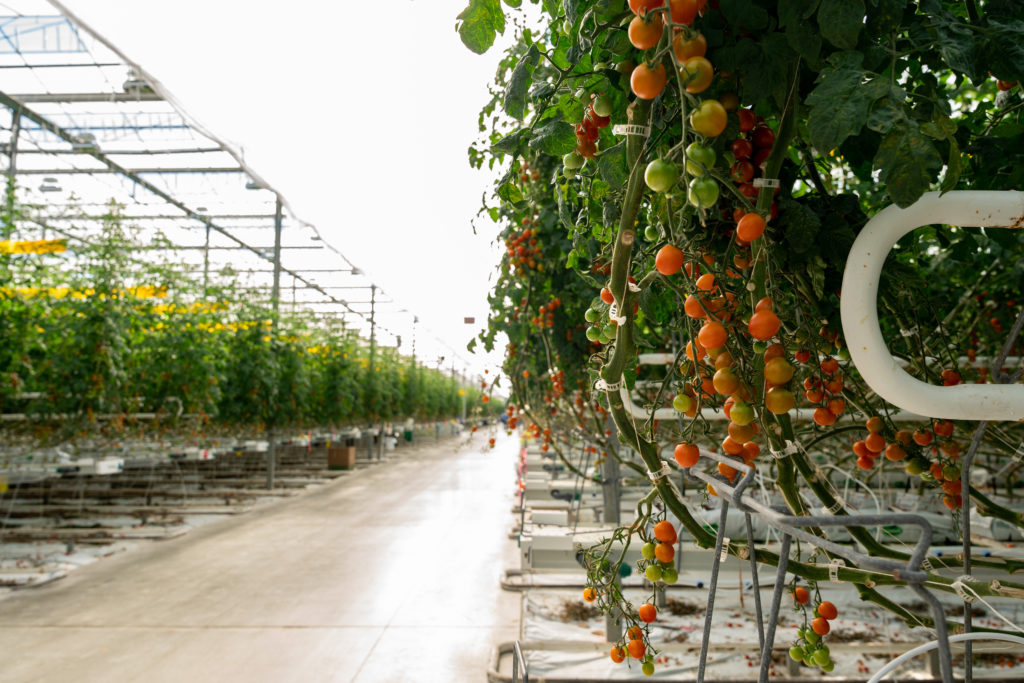
A ripe tomato is a nightmare for a robot. It is soft, it bruises if you look at it wrong, and it likes to hide behind a wall of leaves on a vine that runs twenty feet into the air. For decades that combination kept the harvest a human job - a good one to have during a labor shortage, and a bad one to fill. Four Growers, a Pittsburgh company founded in 2017, decided the combination was an engineering problem rather than a law of nature. Its robot, the GR-100, now rolls down greenhouse rows in the Netherlands and Canada, spots the red fruit, and picks it without a bruise about 98% of the time.
The company is the work of Brandon Contino and Dan Chi, two engineers who met at the University of Pittsburgh's Swanson School of Engineering and started a hydroponics club together. Contino's background runs through neural prosthetics, water-quality sensors, computer vision and motion planning; Chi handles the mechanical design. That mix - biology-adjacent perception plus hardware - turns out to be the exact skill set you need to convince a machine that one red blob is ready and the one behind it is not.
What it actually doesEight cameras, one careful hand
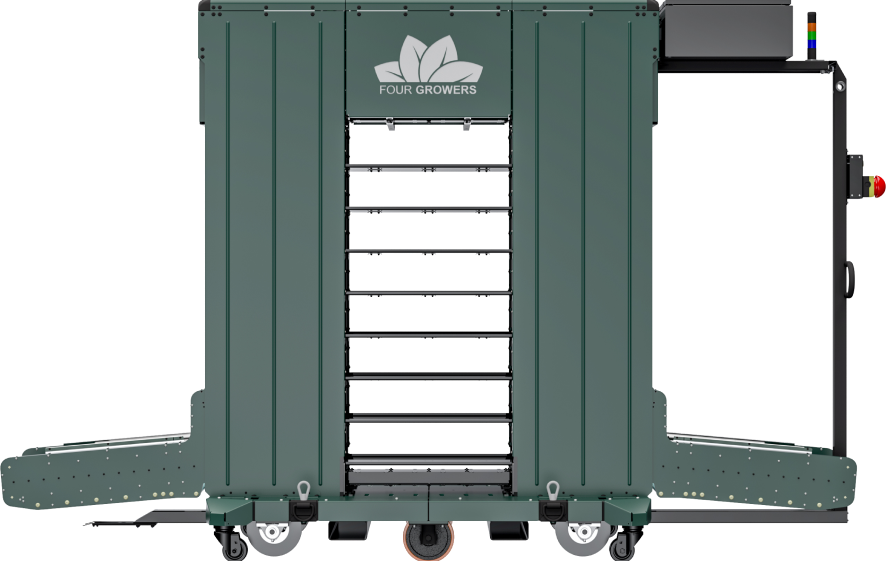
The GR-100 is a mobile robot with an arm, a set of stereo cameras, and a vacuum-style gripper. The cameras build a 3D read of each plant so the robot can tell a pickable tomato from an unripe one or a stem it must not snap. A perception model the team built in-house grades ripeness; motion-planning algorithms then find a collision-free path to the fruit and pull it off cleanly. Contino says the planning runs about 34 times faster than standard approaches, which is the difference between a robot that picks and a robot that stands in the row thinking for twenty seconds per tomato.
Speed comes from doing all of that without expensive gear. Rather than lean on costly sensors, the team calibrated the system with cameras and software, keeping the unit cheap enough to sell into an industry that counts pennies per kilo. The gripper uses suction instead of pinching fingers, which is gentler on fruit that goes to a supermarket shelf where a single bruise is a reject.
The number that matters to a grower is not accuracy, though - it is throughput, and specifically what happens to the fruit after the arm grabs it. Early on, Four Growers learned this the hard way. A picking arm that has nowhere to put its tomatoes is a very expensive way to make a mess.
"If we didn't solve the packing and logistics of the harvested tomatoes, our solution had limited value to them."Brandon Contino, CEO and Co-Founder
So the company built the unglamorous half of the product: a patented weighted elevator packing cart that rides along, receives the fruit, and handles roughly 24 crates - about 246 kilograms - in a single continuous session. It is the part nobody puts on a pitch deck, and it is arguably why the robot sells. Picking five times faster than the competition only counts if the tomatoes have somewhere to go.
The pivotWhy they quit vertical farming
Four Growers did not start here. Like a lot of agtech in the late 2010s, the founders were first drawn to vertical farming - the stacked, LED-lit indoor towers that promised to grow lettuce next to the city that eats it. Then they ran the numbers.
"The only way we can see the business model working is if you have really high prices for your produce - it's not going to have large impact in the near term."Brandon Contino
They pivoted to Dutch-style glasshouses instead: a century-old technology with proven economics, a smaller carbon footprint than vertical systems, and greenhouses that have stayed in business for fifty years. It is a very un-startup decision - choosing the boring, proven market over the futuristic one - and it is the reason the robots are in real greenhouses today rather than in a lab.
GR-100 vs. the baseline (per Four Growers)
The real productA robot that is also a data company
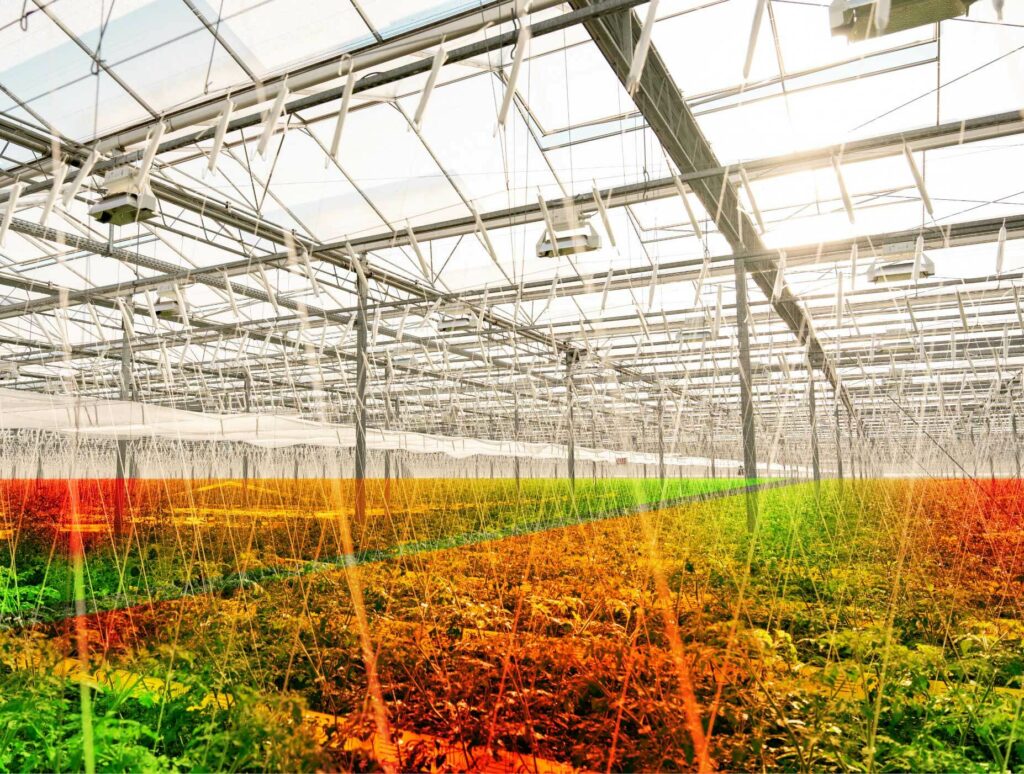
Ask Contino what Four Growers is and he pushes back on the obvious label. Every time the GR-100 runs a row, it is also surveying the crop. That turns a harvest into a dataset: yield heatmaps that resolve down to three-meter zones inside the greenhouse, and forecasts of how much fruit will ripen in the coming weeks. A remote dashboard lets an operator watch several units at once.
"We don't really think of ourselves as a 'greenhouse tomato harvesting robot company.' We're really building an automated AI platform that also performs analytics as well."Brandon Contino
This is the reframe that makes the business interesting. The robot replaces scarce labor - a one-time value. The analytics tell a grower where their yield is soft and what next week looks like - a value that compounds. Four Growers is betting the data is worth as much as the picking.
Who buys itFive customers, millions of tomatoes
Four Growers sells to commercial greenhouse operators rather than growing produce itself - a B2B model that keeps it out of the low-margin food business and in the higher-margin robotics one. As of late 2024 it counted around five customers, with robots that had collectively harvested millions of tomatoes. Deployments include Syngenta's TomatoVision facility in the Netherlands and sites in Canada.
Getting there required a very physical kind of product research. The founders coded from inside the rows off a laptop, and the team spent months at a time living in temporary housing near Canadian greenhouses to stay close to the crop and the customer. Contino is careful about how he frames the labor question: the robot is augmentation, he says, letting workers move to more comfortable tasks as fewer people show up to do the picking. A 2024 industry report described a critical shortage of agricultural workers, and unharvested crops rot into pure loss.
"We actually started just running everything off a laptop, and I would be there in the row coding."Brandon Contino
That closeness is also the answer to a fair question about hardware startups: why should a grower trust a robot in a working greenhouse where a bad week is a lost crop? Four Growers earned it the slow way, iterating in the aisle rather than in a demo booth, and designing the GR-100 to drop in with little or no modification to the facility. A grower who has to rebuild their greenhouse to fit a robot will simply keep hiring people. One who can wheel a machine into an existing row is a customer.
The money$9M to build more robots
In November 2024 Four Growers closed a $9 million Series A led by Bassett Capital, with Ospraie Ag Science and Y Combinator joining. That brought total funding to roughly $17.3 million for the company, which went through YC's Summer 2018 batch. The plan for the money is straightforward: scale production of the GR-100 and expand into Europe, North America and Oceania.
Four Growers at a glance
- Founded2017, Pittsburgh, Pennsylvania
- FoundersBrandon Contino (CEO), Dan Chi (CTO)
- ProductGR-100 autonomous tomato-harvesting robot + analytics
- Funding~$17.3M total; $9M Series A (Nov 2024)
- Team~31 people
- DeployedNetherlands, Canada
What's nextCucumbers, peppers, and the hard crops
The GR-100's gripper can be swapped, which is how one machine grows into a platform. Cherry tomatoes came first; cucumbers and peppers are next, with higher-value crops on trellis systems - think apple orchards - further out. The honest limit, Contino says, is dense, bushy plants: those are still the toughest for a robot to see into. The crops that grow in neat, trained rows are the ones a machine can learn fastest.
The competition is real and growing - MetoMotion, Tortuga AgTech, Ripe Robotics and the Root AI team now inside AppHarvest are all chasing versions of the same future - but so is the market pulling them in. Vertical farming's stumbles have sent investment toward the greenhouse, and the labor math only gets harder. Four Growers' bet is that whoever owns the harvest also owns the data underneath it. For now, its robot is the one in the row, picking the tomato better than you can.