The future of farming, in Eitan Marder-Eppstein's telling, has the manners of a good stagehand. It arrives beneath the scenery, performs the heavy work and leaves the lettuce to take the bow. At Hippo Harvest's greenhouse in Pescadero, California, low autonomous machines travel under square crop modules. They water plants, deliver nutrients, take pictures, gather readings and carry mature greens toward harvest. The robots began life in warehouses. Here they behave as indoor tractors, only less inclined to announce themselves with a diesel cough.
This is a fitting second act for an engineer who has spent much of his career teaching machines where they are and what to do next. Before co-founding Hippo Harvest in 2019, Marder-Eppstein worked on open-source navigation at Willow Garage, helped turn robotics research into products at hiDOF and led developer engineering for Google's Project Tango. Offices became maps. Phones learned to perceive rooms. Now the room is a greenhouse, and the destination is the produce aisle.
The idea sounds whimsical until the economics walk in. Indoor agriculture has seen expensive systems collide with energy bills, complicated fixed automation and the merciless arithmetic of grocery retail. A leaf is a fragile little commodity. It has to grow consistently, travel well, look inviting and reach a shopper at a price that does not demand a board meeting.
A robot walks into a nursery
Marder-Eppstein's useful trick is to look backward as carefully as he looks forward. He has described the Hippo Harvest system by recalling an old nursery worker with a watering can. The worker could visit one plant, treat it differently and move on. Large greenhouse plumbing loops tend to surrender that discretion. Plants share water and nutrients, and problems can share the plumbing too. The system is efficient in one sense and stubbornly collective in another.
Hippo Harvest places plants in individual cells inside three-foot-square modules. Robots move underneath, rising into the aisles to deliver measured inputs and collect data. The architecture makes each plant group an address rather than a passenger on the same aquatic bus. It also lets the team run more experiments. Every visit can produce another observation about water, nutrition, microclimate or yield.
“We went all the way back to how nurseries used to be managed. It's truly old-school, with a person with a watering can walking around. But now we've got a robot that can do that.”Eitan Marder-Eppstein
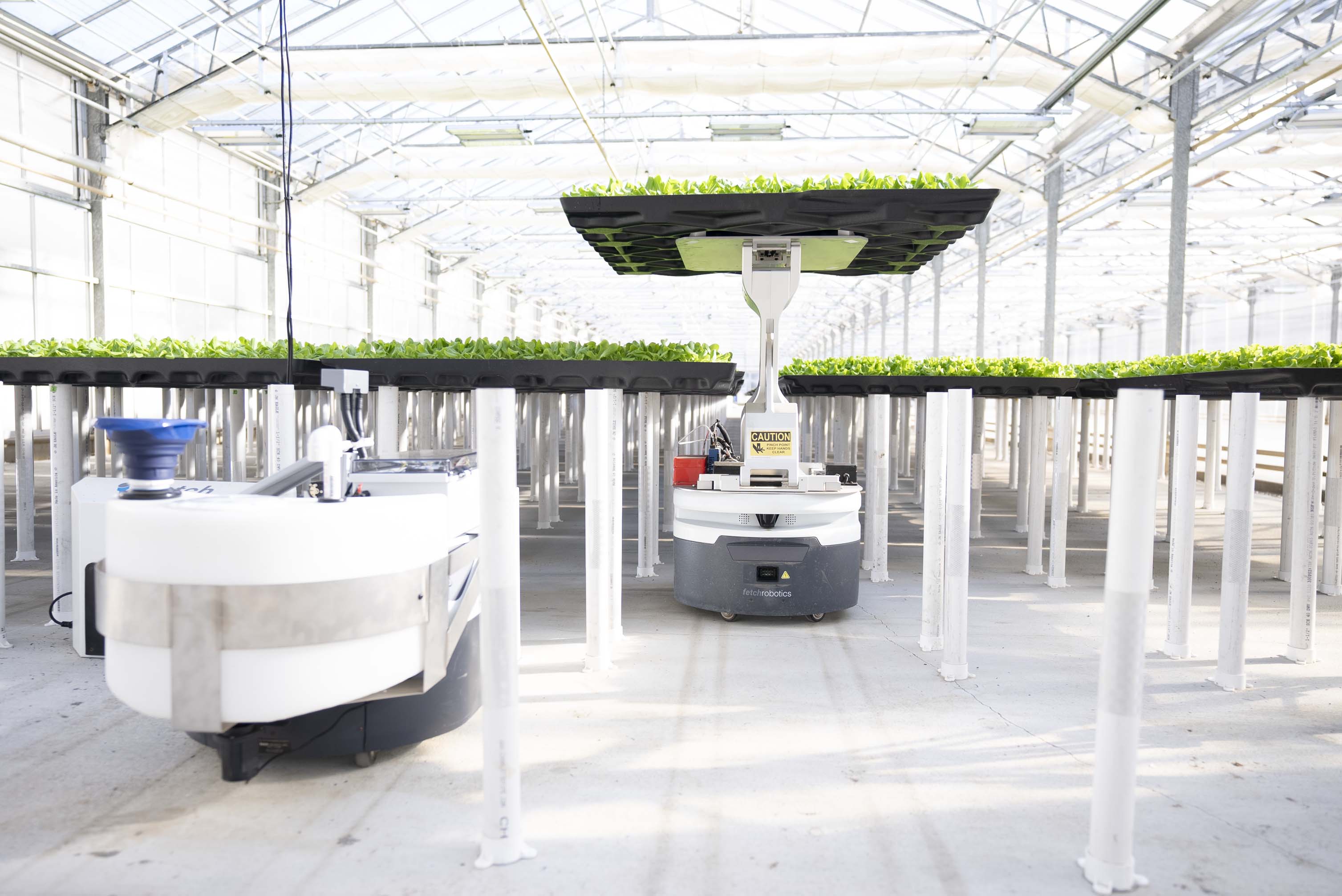
The robots are bought rather than born. Hippo Harvest adapts autonomous mobile robots and supplies the bespoke software, tools and agricultural choreography. That choice matters. Mobile warehouse robots have become widely available, which means a young farming company does not have to invent the wheels before it can improve the watering. In a fixed system, changing the process can require changing the building. A mobile machine can receive a new route or attachment.
The navigation stack finds a field
The career behind this arrangement began in autonomous navigation. At Willow Garage, Marder-Eppstein worked on mapping, exploration, planning and coordination for mobile robots. He maintained open-source navigation software used across the Robot Operating System community and co-authored actionlib, a framework for tasks that take time and need feedback, interruption or cancellation. Academic papers carried his name beside experiments in robust office navigation, assisted remote driving, door opening and autonomous robotic butlers.
There was beer as well. A 2013 biography noted that, of the many things he had programmed robots to do, he was most proud of helping one fetch beer ordered through a web application. The detail is funny because it is gloriously specific. It also reveals the durable problem beneath the party trick: translate a human request into coordinated movement through an untidy physical world.
At Google, the physical world shrank into a phone. As developer engineering lead for Project Tango, Marder-Eppstein worked on technology that gave mobile devices motion tracking, area learning and depth perception. In 2016 he hosted workshops about indoor-location applications and spatial storytelling, and presented Project Tango at SIGGRAPH. The technology could let a device remember a room, measure it and place digital objects within it. The recurring concern was location with consequences.
A greenhouse brings those threads together with less glamour and more dirt. The robot needs to know its position. It needs to avoid collisions, execute a task, report what happened and repeat the performance. Sensors need to convert space into data. Software needs to survive contact with hardware. The lettuce, having no interest in a demo day, simply needs the right amount of attention.
The shelf is the scoreboard
Marder-Eppstein has described his pre-Hippo career as “technology for technology's sake.” At Hippo Harvest, he says, technology can be used for real impact. The phrase could invite grand speeches. His own public framing is more disciplined: improve unit economics enough for greenhouse-grown organic produce to compete with outdoor fields.
That commercial target sharpens every design decision. Hippo Harvest uses greenhouses and sunlight rather than a sealed vertical farm dependent on intensive artificial lighting. Robots make it possible to water and feed plants directly while keeping the layout changeable. Machine learning is fed by repeated observations, not sprinkled on top as a fashionable garnish. The company reports substantial reductions in resource use compared with traditional agriculture.
Those figures are striking, but Marder-Eppstein's harder question remains the price of a bag. A sustainable system that works only for an indulgent niche has limited reach. Cost competitiveness turns an environmental preference into a purchasing default. It gives retailers a reason to keep ordering through climate volatility and gives shoppers one fewer compromise to contemplate beneath fluorescent lights.
Hippo Harvest's early retail footprint included California stores such as Gus's Community Market and Amazon Fresh. By 2026, the company was serving buyers across Northern California and the Pacific Northwest, including Sprouts and Haggen. Butter lettuce entered the retail offering early that year. Spinach followed toward commercialization, giving the robotic system a crop that is both familiar and technically demanding.
“We've spent years building a system that can grow certified organic greens consistently and at a price that works for both retailers and consumers.”Eitan Marder-Eppstein
Thirty acres of consequences
In July 2026, Hippo Harvest closed a $30 million Series C led by Cox Farms. The funding is intended to support a planned 30-acre facility in Hollister, California, and the next generation of its robotic growing system. The leap from a one-acre operation to that proposed footprint is not merely a larger drawing. It tests whether a flexible system stays flexible when the route map expands, whether carefully gathered plant data keeps improving decisions and whether the cost curve bends as promised.
The new robots are designed to respace growing modules automatically during the crop cycle. Young plants can sit close together; mature plants need elbow room, or whatever lettuce calls elbows. Moving modules as they grow makes better use of greenhouse space and aims to raise throughput without turning the building into a monument to fixed machinery.
There is still plain engineering candor in the story. Hippo Harvest has used natural gas for greenhouse heat while committing to net-zero emissions by 2040. Scaling a physical system means managing energy, permits, crops, retail demand, people and machines at once. Software founders may speak lightly of pushing an update. A farmer cannot deploy version 2.1 to yesterday's spinach.
Marder-Eppstein's public persona emerges through these choices rather than confessional detail. He is drawn to systems, experiments and useful motion. He borrows proven hardware, writes what must be custom and returns repeatedly to the unit economics. His collaborators form a line through the work: Willow Garage robotics peers, Google developers and Hippo Harvest co-founder Wim Meeussen, who joined him in studying what greenhouses did poorly before deciding what robots should do well.
Useful machines, finally
Robotics has always lived with an image problem. A machine that dances earns a million views; a machine that reliably waters the correct plant at two in the morning earns a purchase order. Marder-Eppstein's career moves steadily toward the second category. The office marathon, the robotic butler and Project Tango were all ways of teaching machines to negotiate space. Hippo Harvest asks that intelligence to pay rent.
The old beer-fetching boast survives as a charming prehistory. The robot now carries lettuce, which is less festive but more consequential. It moves below the leaves, almost hidden, while sunlight does the photogenic part. If Hippo Harvest can make its planned scale work, the accomplishment will not be that robots learned to farm. It will be that the machinery became ordinary enough for shoppers to stop noticing.
That is the quiet ambition beneath the greenhouse glass: not a robot spectacle, but a resilient food system assembled from careful routes, measured drops and millions of unremarkable journeys. The machine knows where it is going. The harder task is making the economics arrive there too.