A basil leaf ought to have a modest travel budget. Viraj Puri and his partners discovered, over dinner at an Italian restaurant in Brooklyn, that the basil on their table had been grown in Israel and flown to the United States. They had been thinking about food, cities and sustainable businesses already. Here was the whole problem, sitting beside the mozzarella: a delicate herb with an international itinerary, being eaten in a city perfectly capable of growing it.
Puri later recalled the meal as a catalytic moment for Gotham Greens. The founders wrote a business plan in 2008; the company dates its founding to 2009. In 2011, they opened a 15,000-square-foot greenhouse on a roof in Greenpoint, Brooklyn. The geographical correction was rather pleasing. Instead of asking a leaf to cross an ocean, they asked a building to do a little more work.
That roof became the beginning of a national greenhouse business. But Puri’s story is more interesting than the familiar ascent from small operation to large company. His career has involved a steady negotiation between environmental ambition and the stubborn particulars of running things. A plant must grow. A customer must buy it. A building inspector must allow the greenhouse to exist. Each gets a vote.
The route home went through the Himalayas
Puri graduated from Colgate University in 2003. His studies encompassed economics, international development and environmental studies, a useful combination for somebody interested in both the desirability of a project and whether it could survive outside a seminar. He also attended the Doon School in India. His early professional work took him into renewable energy, green building and environmental design.
In Ladakh, in the Indian Himalayas, he worked on green building and renewable energy projects. In Malawi, his work included fuel-efficient cooking stoves. The connecting idea was practical suitability: choose technology that makes sense in the place where people will use it. A good solution has to belong somewhere. Geography, available resources and the surrounding economy are part of its design.
That principle is a useful antidote to the entrepreneur’s temptation to arrive carrying the answer before hearing the question. Puri’s eventual greenhouse business would use technology developed well before Gotham Greens existed. His contribution was to consider where it might work, what it might grow and who might want the result. New York offered plenty of customers and very little farmland. It also offered roofs.
By 2007, he was working with New York Sun Works on the Science Barge, a floating demonstration of sustainable agriculture on the Hudson River. A greenhouse aboard a barge is an excellent way to loosen someone’s assumptions about where a farm belongs. It also brings the practical details into view: water, power, growing systems and the people who understand them. Puri was learning to turn an environmental proposition into a functioning place.
A roof needs more than a good idea
Eric Haley brought a different set of skills. The longtime friend worked in finance; Puri worked in environmental engineering. They began discussing a green business while both were living in New York. Jenn Frymark brought the greenhouse expertise. She had operated growing facilities in Antarctica and worked on the Science Barge. There was a pleasing division of labor: the idea, the money and somebody who could actually persuade the lettuce to cooperate.
The trio’s complementary experience matters because Gotham Greens was never a business with just one difficult problem. A greenhouse on a city roof requires a suitable building and a willing landlord. It needs construction, permits, operating systems and a route to customers. Real estate and horticulture share an address, though they seldom share a vocabulary. The founders had to become conversant in both.
One early insurance conversation illustrates the trouble. An agent hearing about hydroponics imagined the roof covered by a foot of water, like a gigantic bathtub. The misunderstanding was funny; the underlying obstacle was serious. Before the business could operate, other people had to understand what it proposed to build. Explaining the farm was part of building the farm.
Puri has described New York’s zoning and permitting process, along with the city’s costs and logistics, as major hurdles. In that setting, conviction becomes a sequence of appointments and applications. A rooftop can look beautifully empty in a photograph and still present a formidable amount of paperwork. The lettuce has the comparatively straightforward job of being lettuce.
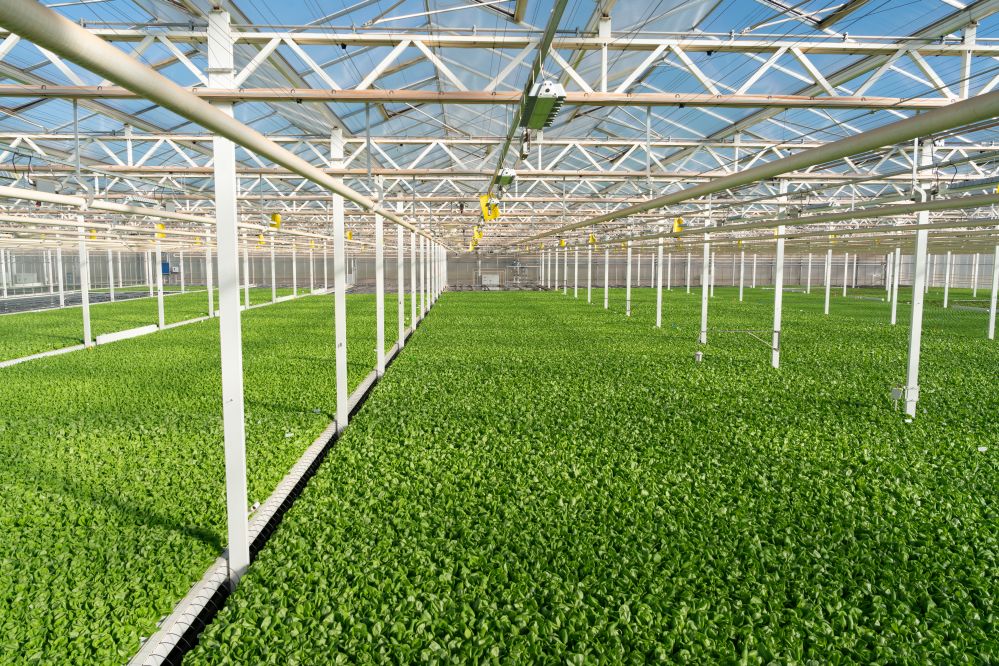
The elevator became part of the farm
The Greenpoint greenhouse began supplying supermarkets and restaurants in 2011. Two years later, Gotham Greens opened a greenhouse on top of the Whole Foods Market in Gowanus, Brooklyn. The relationship took an unusually literal form. The grower occupied the roof; a customer occupied the building below. Harvested produce could travel downstairs by elevator to the store.
The arrangement gave Puri’s argument a physical demonstration. People could buy something grown above their heads. Farming, retail and an ordinary grocery trip became neighbors. The roof also made the business easier to explain than any diagram of a continental supply chain. The distance from production to purchase could be understood by looking up.
Gotham Greens carried the rooftop approach to Chicago in 2015, opening a greenhouse above Method’s manufacturing plant in Pullman. The company subsequently expanded into other regions, including New England, the Mid-Atlantic, Colorado and California. Its later network included larger facilities beyond the original Brooklyn rooftop format. The location strategy could change while the aim of growing nearer customers remained.
There is an instructive flexibility in that progression. The roof was the opening move, with particular advantages in New York. Repeating it everywhere would have made an appealing visual signature, but the commercial question was broader: where can this company grow and distribute produce effectively? A founder’s first successful idea can become a constraint if every subsequent decision must resemble it.
- 2011Greenpoint’s rooftop greenhouse opens.
- 2013A greenhouse above Whole Foods in Gowanus.
- 2015Rooftop growing reaches Chicago’s Pullman neighborhood.
- 2021California expansion and B Corp certification.
- 2026Puri becomes executive chairman.
Lettuce has its own opinions
The word “technology” appears frequently around indoor farming, sometimes so frequently that one could overlook the plants. Puri has kept returning to a useful warning: “plants are not widgets.” Sophisticated equipment helps the business, but the crop remains a living thing requiring growers who can interpret what is happening and respond.
Gotham Greens’ greenhouses primarily use sunlight, with climate controls and hydroponic growing systems. They differ from farms that stack crops indoors under artificial lighting. That distinction helps explain the operating choices Puri has defended. He is interested in tools that improve production and efficiency, and in crops that can be grown economically. The hardware has to earn its place in the business.
He has spoken about balancing ambition with conservatism and examining the economics of individual greenhouses. This is a more demanding posture than merely announcing an ambitious expansion. Each facility must make sense on its own terms. Construction costs, crop performance and customers’ willingness to buy are not persuaded by the size of a fundraising announcement.
Puri has also resisted the suggestion that indoor farming will replace traditional field agriculture. In a 2022 conversation, he argued that its production capacity was unlikely to surpass open-field farming. There is plenty of room for a useful business without claiming responsibility for every crop on earth. Lettuce and basil offer their own substantial assignment.
“I think that curiosity is a really important attribute or characteristic for strong leaders.”
Viraj Puri, 2022
The bigger company needed other hands
The business grew beyond bags of greens. Gotham Greens added dressings, dips, cooking sauces and salad kits, carrying its produce identity into adjacent parts of the grocery shop. For Puri, expansion meant learning the disciplines around the crop: branding, distribution, retail relationships and product development. Growing something people want is one task. Getting it into their baskets repeatedly is another.
The company became a Certified B Corporation in 2021. By its April 2026 leadership announcement, its greenhouse network covered nine states and roughly 1.8 million square feet, with products available in more than 6,500 locations nationwide. Those figures describe how far the enterprise had traveled. They also describe the amount of coordination required behind an apparently simple package of leaves.
Company-reported footprint and availability, April 2026.
Looking back on the company’s development, Puri listed jobs he had performed himself: construction work, bookkeeping, deliveries, fundraising and product tasting, among others. It is a wonderfully unglamorous catalogue. The founder title covers a considerable variety of errands. The tasting sounds enjoyable; the bookkeeping presumably asks for a different kind of appetite.
By 2026, he described a team of more than 700 people. He credited the employees, partners, investors, retailers and consumers who had supported the company. The change in scale required a change in how the work was held. A founder can begin by filling every gap, then spend years learning to make room for people who fill those gaps better.
A different seat, the same growing season
In April 2026, Gotham Greens announced that Craig Stevenson would become CEO and Puri would move to executive chairman. Stevenson arrived with experience leading Lundberg Family Farms and consumer businesses including Burt’s Bees. Puri’s new remit included advising the board and leadership team on long-term strategy and growth. The person who had helped build the company would continue to shape its direction from a different seat.
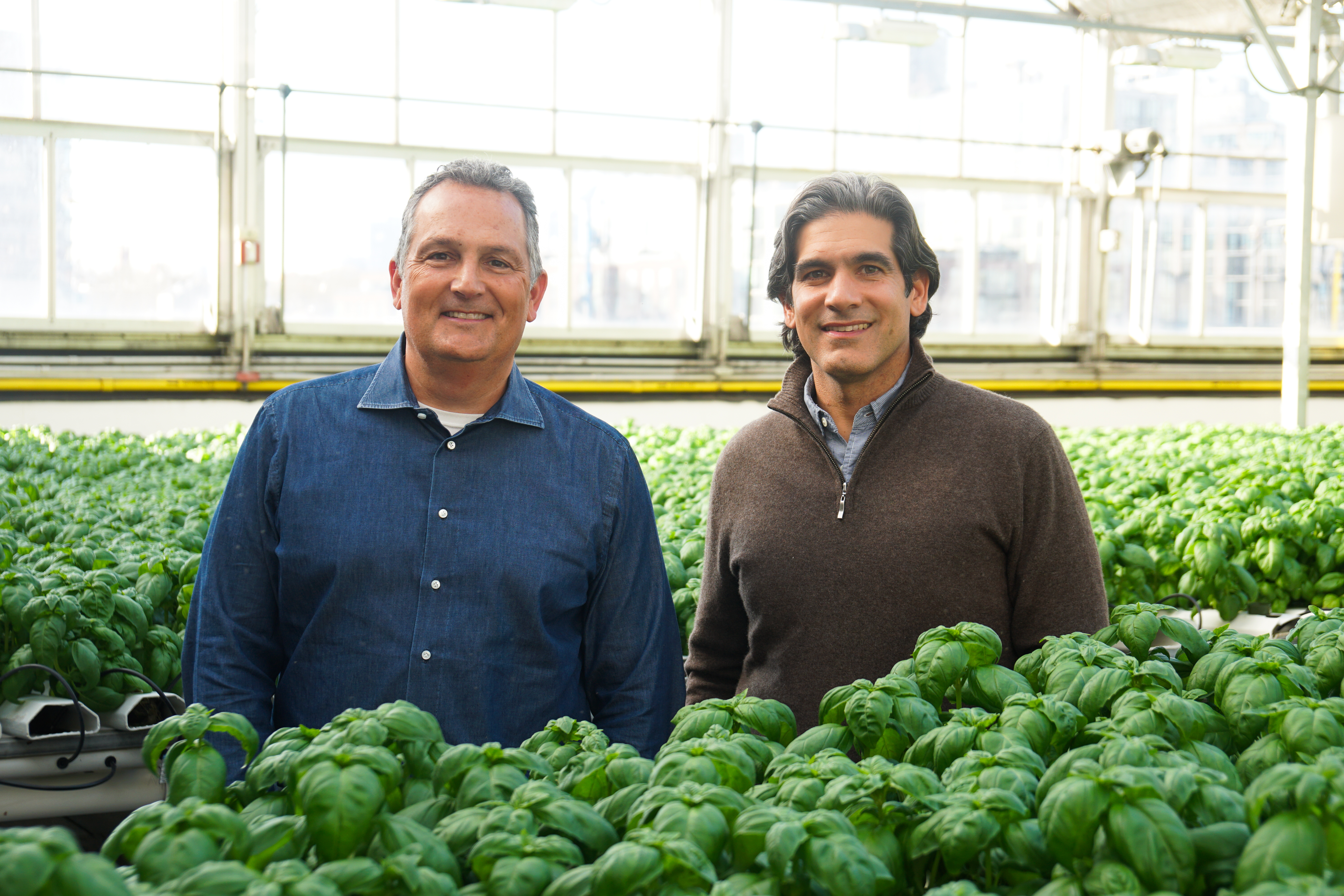
That same month, Puri returned to Colgate as its 2026 Entrepreneur of the Year and participated in the university’s student venture showcase. He joked that his fraternity brothers, asked in 2003 to identify a future showcase participant, would have considered him an unlikely candidate. The retrospect is useful: the finished career can make the original uncertainty disappear.
His advice to students was direct: “Passion - tell that story with passion, as if it’s your most important thing in the world.” He had learned to explain a greenhouse to people who imagined a rooftop bathtub, and to explain a business that needed growers, builders and buyers to agree. Passion had acquired practical uses.
The basil at that Brooklyn dinner had supplied a small, irritating question: why had this traveled so far? Puri and his partners spent the following years answering it with buildings, growing systems, people and groceries. In the process, a roof became a place of work and an elevator became a delivery route. For a founder drawn to making sustainable technology useful in particular places, it was a fitting way to come home.