Fresh food is a promise with a stopwatch attached. Lettuce wilts. Avocados ripen on their own timetable. A school lunch must arrive before lunch, which is the sort of pitiless deadline that makes most corporate calendars look decorative. The customer sees a neat shelf or a sealed tray. The operator sees temperature, distance, labor, machinery, procurement, food safety and several opportunities for Tuesday to become expensive.
Mark Lodge has spent more than 30 years in that hidden world. He is not a celebrity chef, a campaigning farmer or the inventor of a photogenic vegetable. He is an operations executive - the person expected to make an attractive food idea survive contact with scale. His career has moved through Fresh & Easy, True Fresh HPP, Revolution Foods, Renaissance Food Group, Calavo Growers and, since 2023, Gotham Greens. Follow the jobs and a peculiar history of modern American fresh food comes into view.
The ingredients keep changing. The underlying question does not: how can food retain the qualities people want while moving through a system large enough to supply them reliably?
The factory behind the grocery store
Lodge was born in the United Kingdom and has lived with his family on the American West Coast for more than two decades. Public biographies do not offer a cinematic origin story, which is fitting. Operations careers rarely begin with a spotlight. They accumulate in plants, loading bays and meetings where someone asks why the line stopped.
His consequential early American chapter came with Tesco's attempt to build Fresh & Easy. Lodge helped identify and implement the chain's U.S. manufacturing business and later held senior responsibility for manufacturing operations, supply chain and logistics. Fresh & Easy's stores were the visible experiment. Behind them sat the corporate kitchen: a central commissary producing and packing ready-to-eat food for stores across California, Nevada and Arizona. In 2011, Lodge was tapped to manage that kitchen operation.
The chain did not endure. Tesco ultimately withdrew, and Fresh & Easy closed. Yet the assignment put Lodge at the center of a problem that would define his later work: consumers increasingly wanted food to feel recently made, while retailers needed it manufactured, packaged and distributed with industrial consistency. “Fresh” was becoming a production category as much as an adjective.
The perishable promise
Pressure, without the heat
In 2016, Lodge became president of True Fresh HPP and True Food Innovations in Southern California. HPP stands for high-pressure processing, a technology with a rather thrilling name for a very practical task. Packaged food is subjected to intense hydrostatic pressure. The treatment can inactivate microorganisms and extend shelf life without cooking the product with heat.
True Fresh operated three high-capacity machines under one roof and offered processing to other food companies. Its location put it near Los Angeles ports, the Vernon co-packing district, the Inland Empire and the arterial roads carrying goods east. The geography reads like an operator's map: not scenery, but access.
“The idea is you want to retain all the sensory aspects, the biochemical value, the nutritional aspect, and the aesthetic of the food ... and yet, you want to make it safe and longer lasting.”Mark Lodge, discussing high-pressure processing in 2016
There is his professional theme in one sentence. The job is not to choose between the appealing thing and the scalable thing. It is to make them coexist. At the time, Lodge said the facility served more than 20 customers. The equipment itself could cost millions of dollars, so a tolling center allowed brands to rent capability instead of buying the machinery. Operations, in this case, became a shared service.
Lunch cannot be late
The next chapter made the deadline even less negotiable. From 2017 to 2019, Lodge served as an executive vice president at Revolution Foods, whose work included supplying all-natural school meals across the United States. His remit covered operations, innovation and customer experience. In 2019, the company was described as producing through eight facilities nationwide.
A school meal network combines manufacturing complexity with a public obligation. Menus vary, dietary and quality standards matter, and thousands of individual meals must arrive where children are waiting. A restaurant can apologize for a delay. A school bell does not bargain. The work called for the same disciplines Lodge had used in retail food, now distributed across a national system and tied to a daily civic ritual.
When Renaissance Food Group recruited him in October 2019, its president Jim Gibson emphasized Lodge's leadership, team building and comfort with fast, complex supply chains. The new role was broad: operations, product management, procurement and costing across the company's nationwide footprint. It joined what food companies make to what they pay and how they deliver - three subjects that are separable mainly on organization charts.
The avocado years
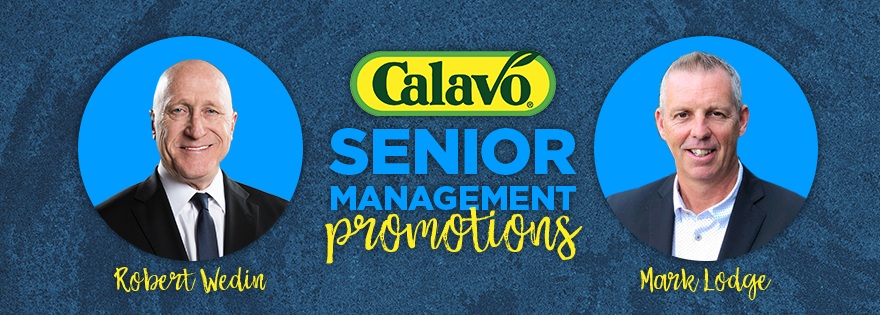
Renaissance Food Group was part of Calavo Growers. Less than a year after Lodge arrived, Calavo promoted him to chief operations officer. He became responsible for all its production facilities in the United States and Mexico. Calavo's chief executive said Lodge had already helped evolve and strengthen the global supply chain.
The promotion turned Lodge's long apprenticeship in perishability into an enterprise-wide brief. Avocados introduce their own brand of suspense: fruit sourced across regions and borders, packed and moved through a market in which ripeness is both the product and the hazard. Calavo also operated prepared-food businesses, so the job crossed produce, manufacturing and logistics rather than sitting neatly inside any one of them.
Where the farm meets the operating manual
Lodge joined Gotham Greens in 2023. The move can look like a turn toward agriculture, but the company's greenhouses are also production systems of unusual precision. Climate, irrigation and crop performance are monitored. Greens are grown, harvested and packed in the same facility. Farms sit near metropolitan markets to shorten distribution. The pastoral image of farming meets sensors, controls and schedules.
By the year Lodge arrived, Gotham Greens had expanded to 1.8 million square feet of greenhouse production, nearly 40 acres, with new facilities in Colorado, Georgia and Texas. Its assortment had also stretched beyond lettuce and herbs into dressings, cooking sauces and dips; salad kits followed in 2024. This was not simply a grower adding more roofs. It was a fresh-food company adding categories, regions and handoffs - precisely the point at which operating experience stops being administrative and becomes architectural.
The company's model tries to tame two old enemies of produce: seasonality and distance. Climate-controlled greenhouses allow year-round growing. Regional distribution can reduce the travel between harvest and shelf. Neither advantage runs itself. Consistent production must meet orders; packaging must match the product; quality and food-safety routines must hold across facilities. An indoor farm still has mornings when something refuses to behave.
Lodge's career supplies a useful corrective to the language of food innovation. New technology attracts attention at the moment of invention. Its consequences are decided later, in the repetition. HPP needed customers, machines, certifications and a useful location. School meals needed eight facilities to behave like one promise. Avocados needed a cross-border production network. Greenhouses need to turn controlled climates into dependable grocery inventory.
Freshness is what the shopper experiences. Operations is everything that had to go right beforehand.
A life in motion
The sparse personal detail in Lodge's official biography is pleasingly apt: away from work, he can usually be found on two wheels and staying active with his dogs. The precise meaning of “two wheels” is left open. Bicycle or motorcycle, it still suggests motion - a rare hobby that doubles as a summary of a logistics career.
Colleagues have publicly described him as people-focused, commercially oriented and a team builder. Those phrases can become corporate wallpaper, but his job history gives them weight. Food operations are irreducibly social. Machines process; people notice. People catch the variance, make the call, repair the line and explain the problem to a customer. A system without trust is only a diagram.
Lodge's public record contains no manifesto about what comes next. It offers something more concrete: a pattern of moving toward larger, more intricate versions of the same problem. From a commissary to a processing center, from eight school-meal facilities to a multinational avocado network, and then to a national greenhouse company, the scale grows while the product keeps insisting on its biological nature.
That tension may be the whole career. Food is alive, or recently was. Business prefers predictability. Between them stands the operator, asking nature for a schedule and then building enough resilience for the answer.
Keep exploring