A restaurant plate is a small, edible deception. It arrives composed and calm, giving no evidence of the purchasing, prep lists, temperature logs, labor schedules, vendor calls, equipment failures, and quick decisions that brought it to the table. The guest sees dinner. The operator sees everything that almost prevented dinner.
Taylor Andersen has built a career on that second view. His public résumé begins far from a factory floor, in inside sales at Vivint Smart Home, then moves through customer relations at La Jolla Groves and operations at Malawi's Pizza. It continues into leadership at Tall Hat Foods, a Utah contract manufacturer of prepared foods, and now to an Orem business called Nourish. The sequence reads like an education in widening circles of responsibility: first the person buying, then the room serving, then the system producing.
Andersen is not a conspicuous founder. His public comments are spare. His professional profile offers no manifesto and little biography. Even his listed social handle, @breakfastislife, is more appetite than autobiography. Yet the career itself supplies a clear argument. Food businesses are not scaled by recipes alone. They are scaled by people who can translate a promise into a repeatable process without squeezing the life out of it.
01 / Learn the customer
Before the systems came the people
Sales and customer relations make an unlikely preface to a manufacturing career only if manufacturing is mistaken for machinery. An operator ultimately manages expectations: what was promised, what can be delivered, what it will cost, and what happens when those four facts disagree. A sales floor teaches the speed of a customer's yes or no. A restaurant teaches the slower, messier truth that satisfaction is assembled by a team.
La Jolla Groves, the polished Utah restaurant where Andersen worked in customer relations, put him close to hospitality's most sensitive instrument: the guest. Malawi's Pizza moved him toward the engine room. An operations manager cannot merely admire the finished pie. The work is staffing, timing, inventory, standards, and dozens of handoffs that must feel invisible by the time the box closes.
There is a modest but important clue in Andersen's profile: he lists Spanish at native or bilingual proficiency. In kitchens and production facilities, language is not decorative. Clear communication affects training, trust, and whether a procedure exists on paper or in practice. His public record does not say how he uses Spanish at work, so the rest should not be invented. It is enough to note that operations happen through people, and shared language expands the room in which leadership can happen.
“Proud of this team!”Taylor Andersen, in one of his few visible public comments
02 / Respect the process
When a recipe becomes a responsibility
In December 2019, Andersen received a Master Certified Food Executive credential from Alchemy Professional Services, with a focus on HACCP. The acronym belongs to the stern vocabulary of food safety: Hazard Analysis and Critical Control Points. Its central idea is preventative. Find where a process can go wrong, decide what control matters, measure it, and act before a problem travels farther.
That discipline is larger than a certificate. Restaurant cooking tolerates a certain intimacy. A chef can taste, adjust, and watch. Manufacturing replaces proximity with systems. A batch must meet the same expectation when the maker is not leaning over every kettle. Ingredients arrive in volume. Products cross more hands. Packaging and storage become part of the recipe. Memory is no longer a control plan.
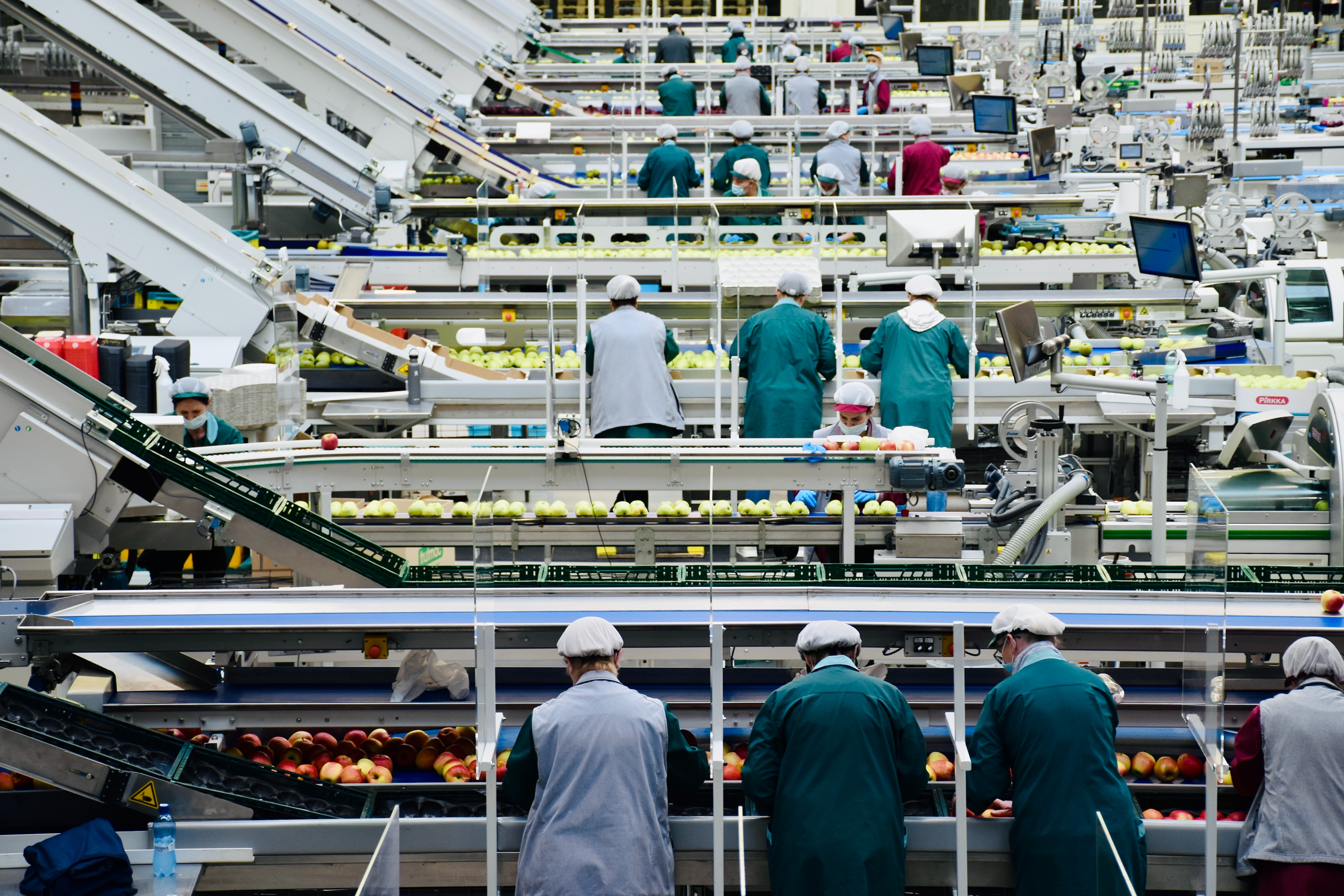
Tall Hat Foods sits on this border between culinary intention and industrial repetition. Its public materials describe custom manufacturing of soups, sauces, frozen meals, ready-to-eat foods, and private-label products. Andersen has been listed first as director of operations and later as chief operating officer. These are third-party public listings, not a diary of his daily work, but they locate him squarely where product development meets capacity, compliance, and cost.
Co-packing can sound like a simple transaction: one company has a product, another company makes it. In practice, the arrangement asks an operator to reconcile two businesses at once. The brand owner cares about taste, presentation, price, and launch dates. The manufacturer must translate those expectations into ingredient specifications, production runs, packaging formats, sanitation steps, storage conditions, and a schedule that also contains other customers. A tiny change at the front of that chain can become an expensive hour at the back.
The menu of capabilities attributed to Tall Hat makes the coordination visible. Soups behave differently from sauces. A frozen meal brings different handling questions than a shelf-ready component. Private-label work adds another delicate obligation: the manufacturer is often invisible to the ultimate customer, yet it carries much of the responsibility for whether the brand's promise survives the package. It is hospitality performed at a distance.
He also studied at Utah Valley University between 2018 and 2021, with public directories reporting bachelor and associate credentials while leaving the fields unspecified. The overlap is telling. Formal business study, food-safety training, and operating responsibility were not separate chapters. They accumulated at the same time, as if Andersen were building a vocabulary for work he was already doing.
Utah draws a firm regulatory line around that work. Manufactured-food operations may need a plan review before opening, a pre-operational inspection, registration, and written procedures for specialized processes. Depending on the product, state oversight can sit beside federal requirements. None of this makes an alluring founder photograph. All of it shapes the calendar, the facility, and the cost of doing business. For an executive, compliance is not a binder that belongs to someone else. It is architecture.
The widening operator's view
A conceptual map of Andersen's career progression, not a measure of company output.
03 / Mind the economics
The factory can become a very expensive monument
Andersen's most revealing public activity may be something he did not write. He reshared an operations analysis by colleague Ryne Cardon about a regional restaurant group whose commissary was supposed to make growth easier. Instead, the analysis argued, millions in capital and heavy monthly overhead drew focus inward. Managers who might have opened stores were managing batches, equipment, and compliance. The company's expansion slowed.
A repost is not a blanket endorsement of every sentence, and it should not be dressed up as one. It does show what captured Andersen's attention: the hidden cost of operating infrastructure. For someone with a manufacturing background, the subject is especially interesting. The mature position is neither “build everything” nor “outsource everything.” It is to understand what a capability earns, what attention it consumes, and whether control is serving the business or flattering it.
The best operating decisions rarely look dramatic. They make tomorrow less dramatic.
This is the paradox of the competent operator. Success tends to erase its author. The product is available. The line moves. The temperature holds. A customer gets what was promised and never learns how many opportunities there were to break that promise. Failure has a face; good process is anonymous.
Nourish, the Orem organization now shown on Andersen's professional profile, is identified in the business record as the company he owns and co-founded. It is separate from the New York telehealth company at nourish.com, whose founders are Aidan Dewar, Sam Perkins, and Stephanie Liu. Names travel cheaply on the internet; identities deserve more care.
04 / Keep the promise
A low profile, a legible pattern
Andersen is based in Provo and works nearby in Orem. He has moved through sales, restaurant service, restaurant operations, and food manufacturing leadership. He has studied business, trained in food-safety systems, and shown an interest in the economics of scale. His visible public comments are brief and collegial: “Very insightful. Thank you for sharing!” and “Proud of this team!”
The geography matters. Provo and Orem are neighboring cities, close enough that a career can cross the municipal line without changing its commercial ecosystem. Utah Valley has supplied Andersen with a university, restaurant brands, customers, colleagues, and manufacturing work. His is not the familiar founder tale of leaving home to locate destiny in a coastal capital. The movement is functional rather than theatrical: from one layer of the local food economy to another, gathering a more complete view each time.
The restraint suits the work. Operations is a profession of nouns that prefer not to become news: recall, outage, shortage, injury, delay. It rewards an appetite for details and a tolerance for repetition. Oscar Wilde could make a dinner party glitter, but even he required someone to order the oysters.
Andersen's career suggests a person moving steadily closer to the whole machine. Customer relations reveals how the promise feels. Restaurant management reveals how it is delivered under pressure. Manufacturing reveals how it survives volume. Ownership adds the least forgiving question of all: whether the system deserves to exist economically.
The plate still arrives composed and calm. That is the point. Somewhere behind it is an operator counting, checking, translating, scheduling, and deciding what not to build. The guest should never have to know. The guest's ignorance is part of the craft.