A shrimp dumpling helped widen John Cheng’s idea of what a sugar business could do. In a 2022 interview, the Innovate360 founder recalled tasting an early Shiok Meats prototype with a startling production cost: $5,000 per kilogram. The seafood had been cultivated from cells. The price belonged to an experiment, but the problem it illustrated was thoroughly commercial. Making something remarkable once is a different undertaking from making it affordable, repeatedly, for customers.
Innovate360 works in that awkward space. It provides food businesses with places to experiment, manufacture and store products, along with introductions to people who can help finance and sell them. The company now reports managing approximately 200,000 square feet across manufacturing, innovation, warehousing and commercial space. Its latest move takes the experiment into retail, where a shopper can deliver a verdict by walking past.
The appeal is practical. A founder can arrive with a promising ingredient or a small-batch product and need almost everything surrounding it: equipment, production knowledge, a manufacturer, a distributor. Innovate360 brings several of those resources into the same business. The kitchen matters. So does the person who knows which factory to call.
A sugar business opens the doors
Innovate360 emerged in 2018 from Cheng Yew Heng, the Singapore sugar manufacturer established in 1947. That ancestry explains much of its character. John Cheng was working with a business that already understood buying ingredients, running production and supplying customers. Opening that knowledge to young companies also offered a way to find new products for existing distribution channels.
In July 2019, The Peak reported that the business had invested $15 million in infrastructure development for the platform. Its account described a 90,000-square-foot facility linking startups with laboratories, manufacturing resources and mentors. This was a substantial physical commitment to a business whose customers might still be working out what their product should become.
Cheng’s interests broadened as founders arrived. He told Singapore Global Network that sustainability was a recurring concern among applicants, including Shiok Meats. The original ambition of helping businesses and finding products to distribute developed into investment and structured acceleration. In that account, Innovate360 also connected jackfruit-based food company Karana with a Singapore dumpling manufacturer.
“The biggest challenge we help startups overcome is scaling up.”
John Cheng · Singapore Global Network, 2022
A separate 2021 account published by JTC described the funding and mentoring of plant-based cheese startup Nut Culture. It also outlined a two-way relationship: the incumbent could help younger businesses commercialise, while their ideas might expand its own products and capabilities. The established manufacturer had something to learn as well as something to offer.
The loading bay is part of the pitch
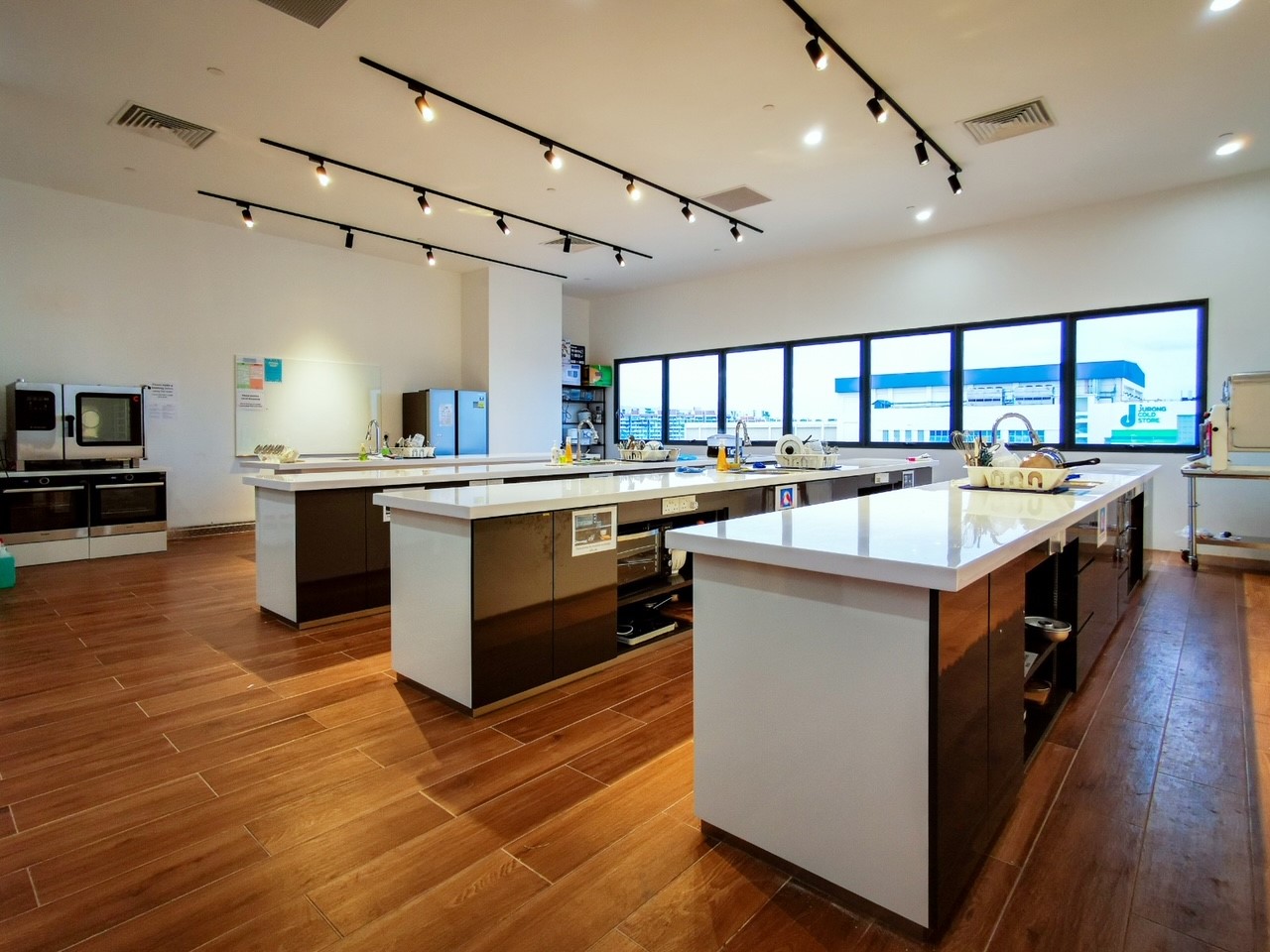
The Innovation Hub’s inventory reads like a food founder’s expanding to-do list. There are shared and private laboratories, a licensed kitchen, industrial production space, warehouses, offices and meeting rooms. There is even a photo studio. A product that survives the test kitchen will eventually need its picture taken.
These facilities address different stages of the job. Laboratory benches support development. Kitchen access supports testing and demonstrations. Production space accommodates manufacturing, while storage and distribution help move finished goods beyond the building. The original hub’s published floor plan places production and research on different levels, with offices and meeting facilities above them.
At the Tee Yih Jia + Innovate 360 Food Hub, the emphasis extends to cold chain storage and larger manufacturing requirements. The company advertises production configurations from 500 to 50,000 square feet, including 10,000-square-foot suites with private goods lifts. A goods lift may be an unlikely selling point in a startup profile. Try moving a production operation without one.
The SMC Nutrition Hub adds a different specialism: nutritional and functional ingredients. Its partner, SMC Food 21, brings ingredient-blending experience. The published facilities include research, chemistry and microbiology laboratories, production areas and workspace. The choice of site can therefore follow the product’s requirements, rather than simply where an empty desk happens to be.
- 01DevelopLabs + kitchens
- 02MakeProduction space
- 03MoveStorage + distribution
- 04SellRetail + feedback
Capabilities founders can combine. The route depends on the product.
Who pays, who invests, who gets a desk
Innovate360’s current description reaches beyond the accelerator label. It includes manufacturing and distributing sugar and food products to business customers, managing infrastructure, delivering innovation programmes and investing selectively. Its public company registration also lists property operation and sugar manufacturing. There are operating businesses underneath the startup activity.
The customer base is correspondingly varied. A young food company might need a kitchen or production space. An established manufacturer might want access to new businesses. A corporate or government partner might work with Innovate360 on an innovation or market-entry programme. Consumer brands can now use its retail platform to meet shoppers.
Its membership offers make those different relationships visible. Startup membership lists corporate introductions, consultancy, event invitations and one month of co-working access. Corporate membership lists tours, startup matching and access to innovation programmes. Those are distinct services for people on opposite sides of the same potential deal.
Investment is selective. The company’s FAQ puts its typical startup cheque at S$50,000 to S$250,000, while noting that some investments have been larger. The affiliated Asia Food Sustainability Fund reports $30 million in assets under management and focuses on food security, sustainability and innovation. That fund figure describes a pool of investment capital; it should not be read as funding raised by the operating company.
Infrastructure investment reported in 2019.Historical spending on the platform’s facilities.
to S$250k
Typical startup investment ticket.Company FAQ; investment is selective.
For a founder, the useful calculation is the total commitment required to reach the next commercial milestone. Space, equipment, storage and services belong in that calculation alongside any financing. A venture cheque and access to a kitchen solve different problems, even when the same organisation can discuss both.
Useful neighbours, with actual introductions
The company says it has supported more than 300 startups since 2018. That is a cumulative support figure, broader than either current tenants or portfolio investments. It is best understood as a measure of the network’s reach, rather than a scorecard of financial returns.
The team’s public roles suggest how that network is organised: investment, infrastructure and supply chain, partnerships and programmes, and brand experience. The culture visible from outside is one of practical matchmaking. The relevant introduction could be to a manufacturer or corporate buyer as readily as an investor.
There are alternatives nearby in the market. Big Idea Ventures offers a five-month Singapore accelerator with cash and in-kind investment for food innovation businesses. Nurasa combines food development facilities with pilot and scale-up capabilities, including extrusion and fermentation. Both offer more than introductions, and both overlap with parts of Innovate360’s work.
Innovate360’s particular proposition is the combination of industrial accommodation, operating experience, commercial connections and retail access. Its own website also lists Big Idea Ventures among ecosystem partners. Food innovation is a small enough world for an alternative provider to be a collaborator, too. Founders can choose according to the bottleneck they actually face.
Orchard Road becomes the next test kitchen
On May 26, 2026, the Retail Accelerator at L^IFE launched at *SCAPE. Developed with the Singapore Retailers Association and supported by Enterprise Singapore, the two-year programme brings together 16 local brands. Participating retailers receive subsidised rents and shared resources, alongside structured support.
The training covers marketing, visual merchandising, public relations and livestreaming, with opportunities to develop international connections. The government’s stated ambition is that participating brands eventually become strong enough to establish their own permanent presence or continue at *SCAPE. Lower initial operating costs buy room to test a concept.
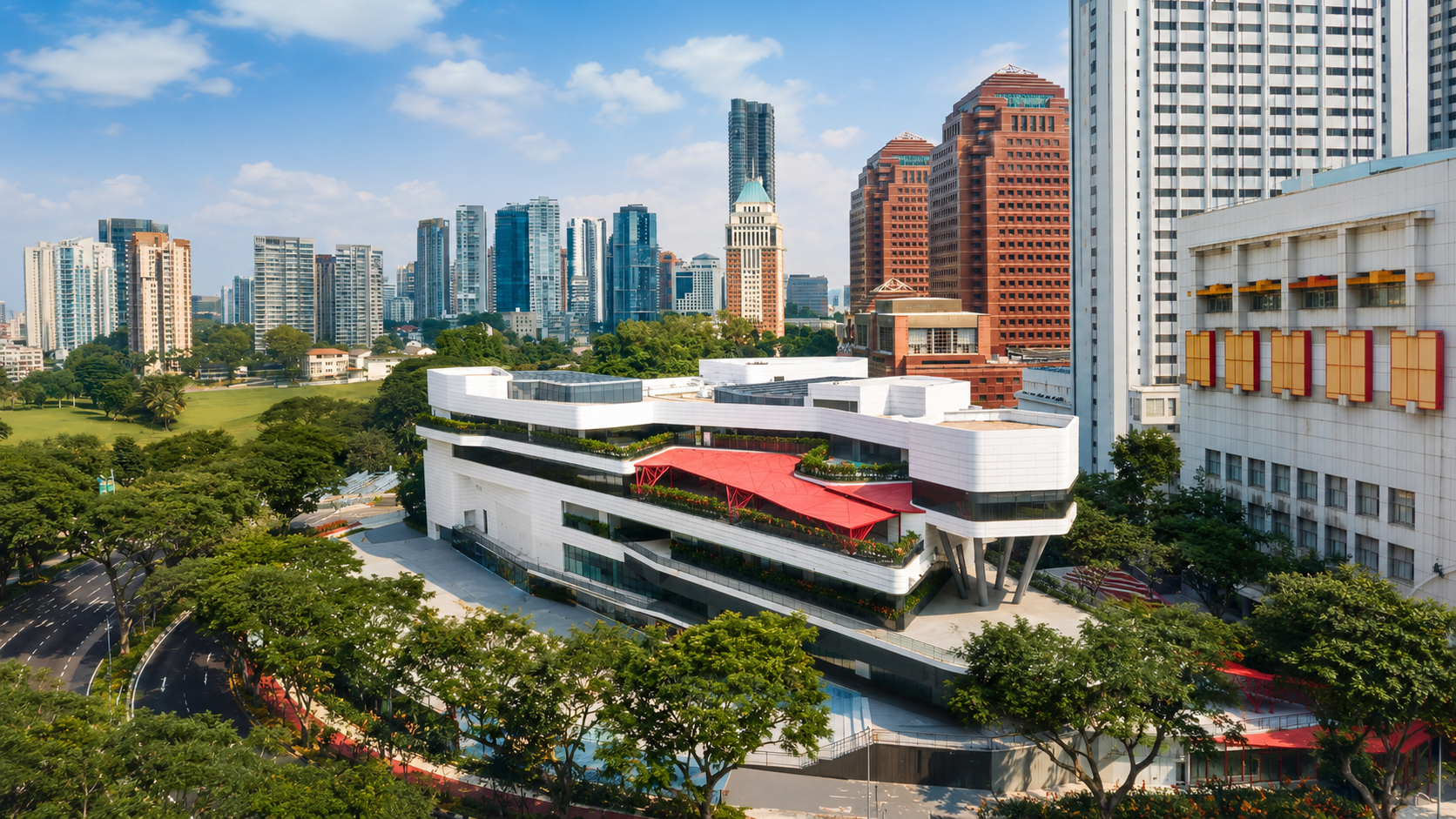
L^IFE stretches beyond food into fashion, beauty, wellness and lifestyle. Its two-storey setting also accommodates events and brand activities. In July, NUYOU described a magazine and product-discovery corner there, a small example of how the space can host an encounter as well as a transaction.
For Innovate360, retail adds another way to examine whether a product works. A lab can help establish what can be made. A shop can reveal which explanation catches attention, what price prompts hesitation and whether somebody returns. These are different kinds of learning, and a consumer business eventually needs both.
Borrow the factory. Earn the second order.
The lesson founders can copy is to identify the missing capability before committing to build it themselves. A shared kitchen, a suitable manufacturing partner or a distributor introduction may be the next useful step. The right question is specific: what prevents this product reaching its next paying customer?
The application makes that commercial focus explicit. Founders are asked whether they have commercialised their product and what revenue they generate, alongside a short explanation of the company and a pitch deck capped at 3 MB. The form also accommodates applicants who have not yet registered a company. It is an invitation to describe the business as it stands, including how far it has travelled towards sales.
A useful way to prepare is to follow one batch through the proposed operation. Where will ingredients arrive? Which equipment will be needed? Where does the finished product wait, and who takes delivery? That exercise turns a broad request for support into concrete requirements. It also helps a founder distinguish an attractive facility from one suited to the work ahead.
There are limits. Shiok Meats, an early Innovate360 participant, merged with Umami Bioworks in a transaction completed in the third quarter of 2024. That development is a reminder that an accelerator relationship can sit alongside substantial changes in a startup’s own strategy and structure. Access to support does not determine the outcome.
Shared facilities also need to fit the process. They cannot, by themselves, make an expensive product economical or persuade customers to buy again. Innovate360’s value rests on helping founders work through those questions with equipment, experienced operators and possible buyers close at hand. The milestone to watch is the repeat order, followed by the ability to fill it.
Step inside
Explore the facilities, applications and people behind the story.