The mushroom cabinet looks like an appliance from a future in which dinner has become considerably more interesting. Behind its glowing windows, oysters spread in ruffles and lion’s mane hangs in shaggy white clusters. Smallhold originally imagined its growing equipment behind the scenes. Customers wanted it out front. A farm could be useful in a kitchen. In a dining room, it could make people stop talking.
- The proposition: organic specialty mushrooms, made approachable through display, packaging and recipes.
- The reversal: Smallhold closed its three farms during its 2024 restructuring.
- The surviving business: a national brand supplied by independent organic farm partners.
That distinction helps explain both the appeal and the trouble. Smallhold could persuade people to notice mushrooms. It could grow them, too. Building a company that paid for all the machinery, buildings and people required another kind of persuasion: enough customers had to keep buying, often enough, to support the growing operation.
The farm that wanted an audience
Andrew Carter and Adam DeMartino officially started Smallhold in January 2017 after experimenting in a Brooklyn shipping container. Carter had worked in commercial greenhouses. His experience with lettuce and tomatoes seemed a promising qualification. Mushrooms made him relearn his craft. The founders were dealing with fungi, a separate kingdom, whose requirements could not simply be borrowed from plants.
The resulting expertise was unusually mixed: cultivation, climate control, hardware, software and the patient work of finding buyers. Smallhold’s remotely managed minifarms brought production inside restaurants and grocery stores. The company’s FAQ describes controls for temperature, humidity, light and gases. Growing blocks used materials including sawdust, seed hulls and grains. The forest floor had acquired an engineering department.
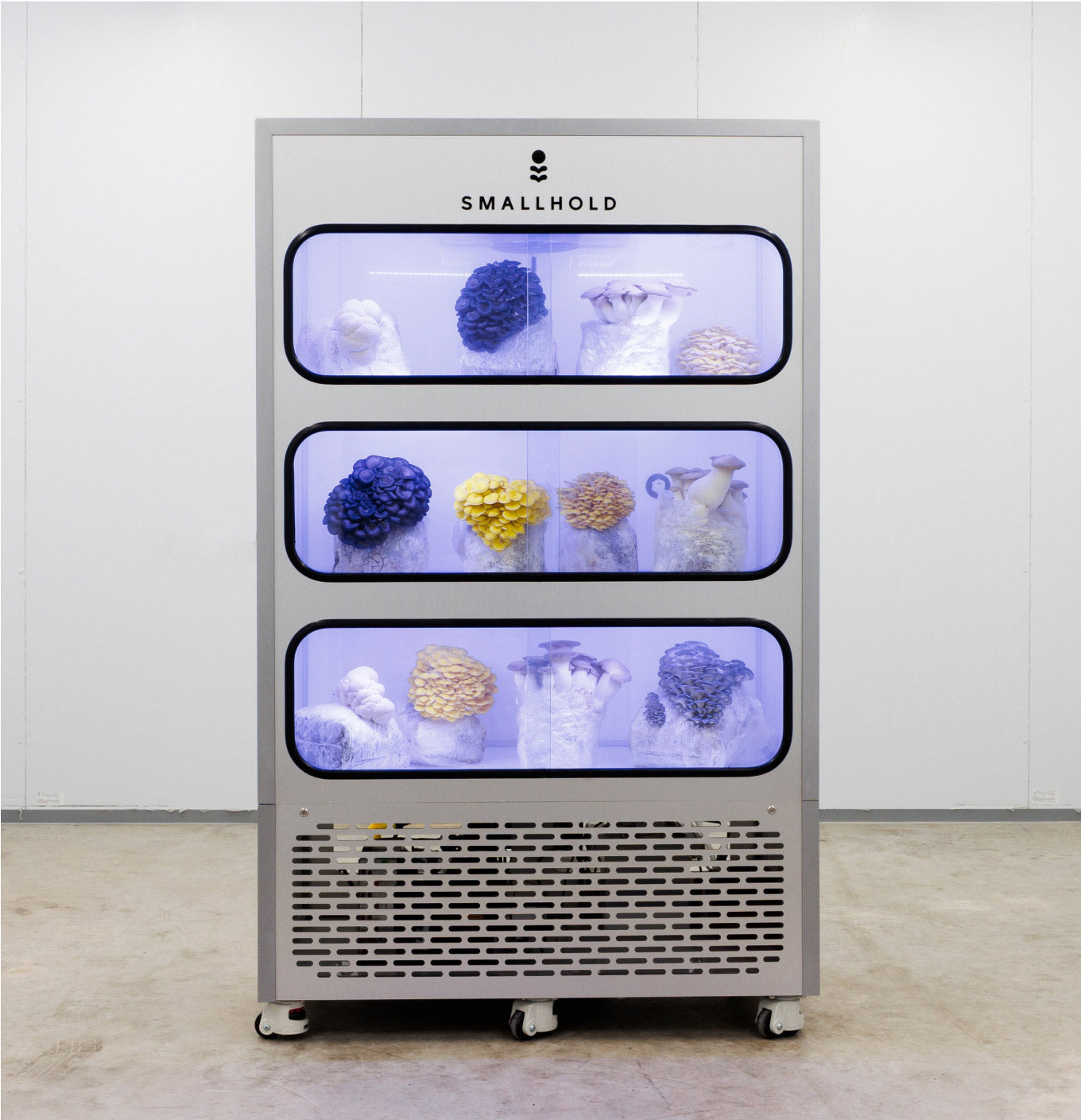
In a PostHarvest interview, Carter explained that customers wanted to show the units off. That response changed their placement. It also made the technology part of the sales pitch: shoppers could see a mushroom before deciding whether to eat one. A strange ingredient becomes less intimidating when its growth is visible.
Restaurants offered an early audience, including Bunker and Mission Chinese. Then the pandemic disrupted that channel. Growing blocks destined for installations became home grow kits. Hypebeast’s 2020 reporting describes an effort to move extra stock that expanded through word of mouth and photographs. The object was already there; the buyer changed. A kitchen counter became another place to introduce fungi.
A box with a small confession
Smallhold’s grocery proposition sits beside the familiar button mushroom: more shapes, different textures and instructions that suggest what dinner might become. Blue oysters, trumpets and lion’s mane are prominent in its range. The website suggests roasting oysters, cutting trumpet stems into scallop-like rounds and shredding lion’s mane for mock crab cakes. The advantage is culinary possibility made legible.
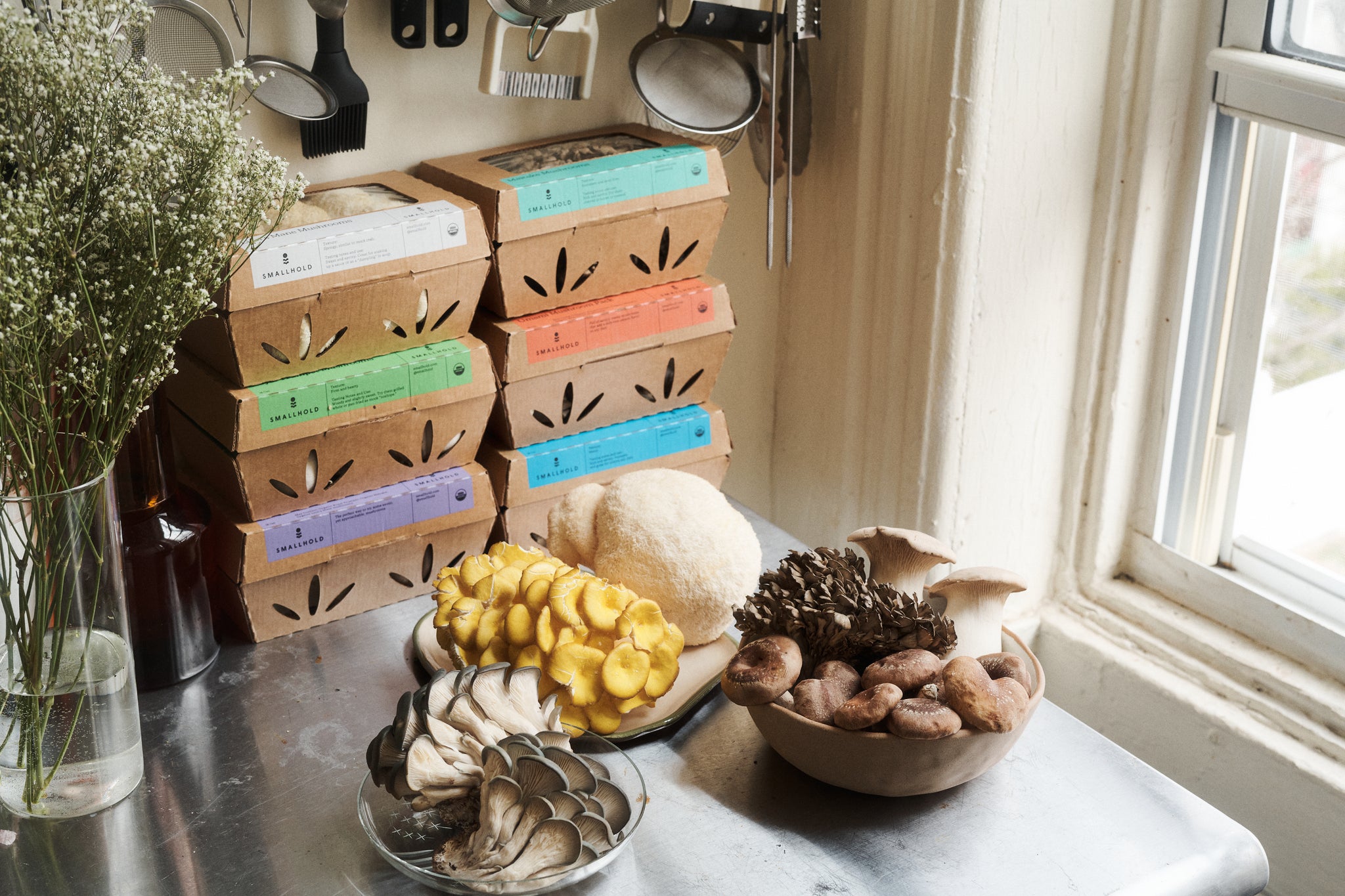
For years, the founders resisted individual retail packs, selling bulk five-pound cases instead. Eventually, they concluded that shoppers needed an explanation at the shelf. A box could identify the mushroom and propose a use for it. According to Smallhold’s January 2024 packaging account, developing the first clamshell took eighteen months.
“There is no such thing as sustainable packaging for at scale mushroom farms.”
Smallhold’s packaging account, January 2024
The confession makes the story better. The company experimented with compostable cartons, drawing on supplier Sambraillo’s strawberry packaging. But mushrooms dried out without a window. Plastic returned in that small piece. The FAQ tells customers to remove it before composting the rest. An environmental intention had met a perishable product, and the product insisted on being considered.
Other growers can copy something concrete here: packaging should teach the buyer while protecting the food. Smallhold said it did not seek exclusivity on its approach. Its separate mushroom pesto, introduced in 2023, addressed another awkward category: trimmings and mushrooms that missed the fresh retail pack. Dehydration and cooking gave that material another product form.
The expensive part of being local
The company expanded into larger regional farms, applying its technology beyond the display cabinet. A $25 million Series A announced in October 2021 supported the next phase. Investors included Astanor Ventures, Energy Impact Partners, Wheatsheaf Group, AlleyCorp and Almanac Insights. The attraction was a national brand whose production could happen closer to its customers.
Capital raised for the expanding farm network.
Smallhold also earned B Corp certification in 2023. B Lab records an assessment score of 91.6 and describes community work including education, food donations and artistic collaborations. These were features of the farming business people admired. They also involved actual people and places, which made the later closures consequential beyond a change in corporate strategy.
On February 18, 2024, Smallhold filed for Chapter 11 protection. Reporting based on court documents identified a difficult fundraising market and a largely flat fresh-mushroom category. Monomyth took control, and the founders departed. The financial pressure arrived before the company’s ability to make appealing mushrooms disappeared. Demand and available capital had failed to support the owned-farm expansion.
Other people’s farms, the same shelf
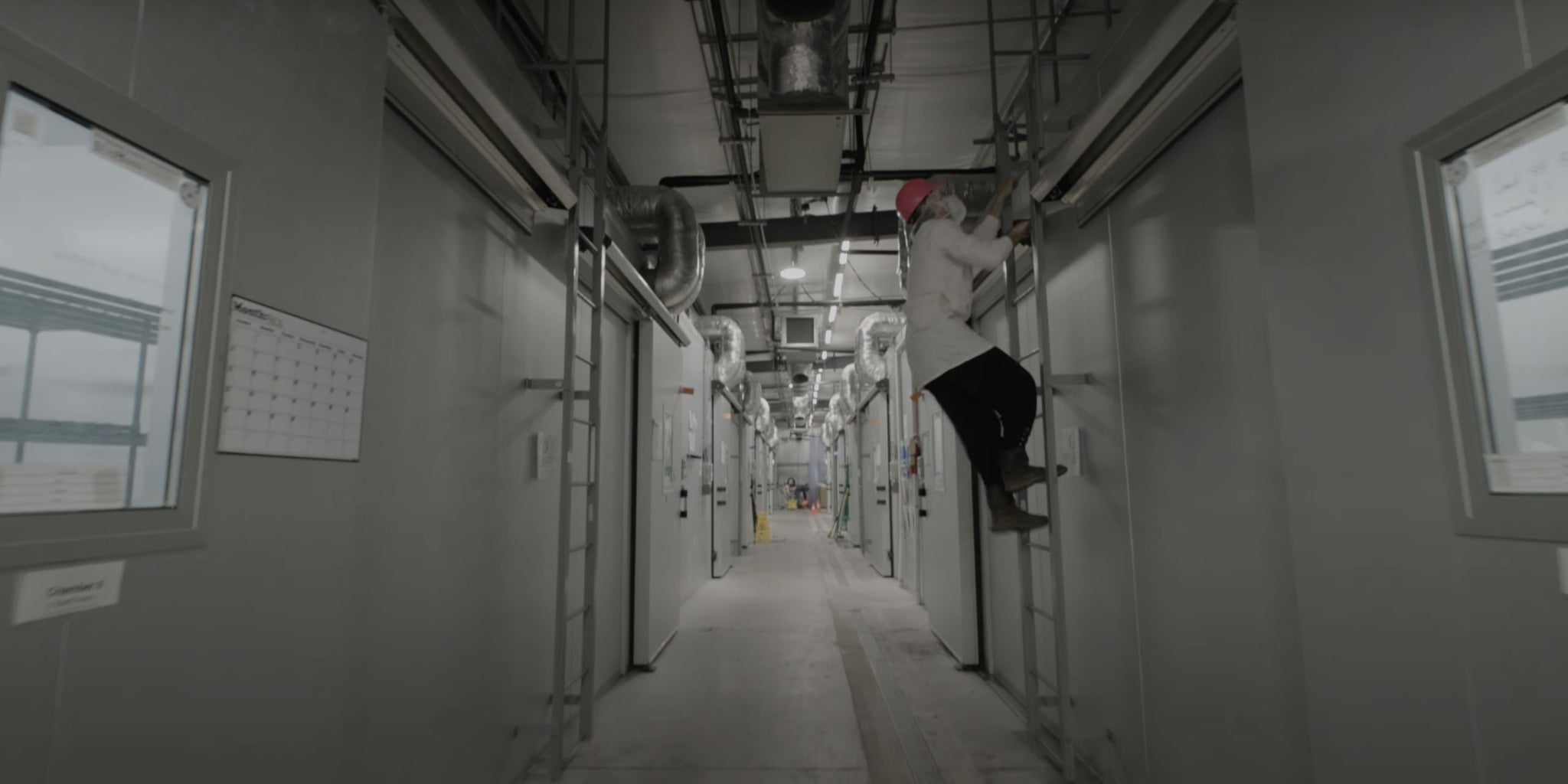
By September 2024, Smallhold had closed its farms in New York, Texas and California and completed restructuring. It announced a replacement network of independent certified-organic growers. More than 700 retail locations carried its products at that point. A later September update named Whole Foods, Sprouts, Central Market and Meijer. Those figures describe that moment, rather than today’s store inventory.
The inference for other founders is practical: test repeat demand before adding production commitments that require it. Partner production still needs reliable quality, dependable supply and workable delivery costs. It cannot rescue a product shoppers do not want. Smallhold’s second act preserves the invitation that made its cabinets interesting in the first place. Pick up an unfamiliar mushroom. Learn what to cook. Come back for another box.
Follow the mushrooms
Explore Smallhold, its mushroom range and journal. Follow Instagram, LinkedIn, X, Facebook or TikTok.
Watch Andrew Carter’s Farm to Fork interview or visit Smallhold on YouTube. Read the September 2024 business update.