The fruit was rotting in the backpack. This is a poor place for fruit to end its career, but a rather good place for a food company to begin. Tomás Froes wanted to eat more plants. Carrying them around had produced an inconvenient discovery: a healthy intention could survive the working day better than the ingredients meant to fulfil it.
- Freeze-dried fruit and vegetables, ready to mix into a smoothie.
- Online subscriptions meet supermarket packs at Walmart.
- The useful trick: fewer preparation steps, longer storage.
The fruit in the backpack
In kencko’s account of its beginnings, Froes changed his diet after a diagnosis of acute gastritis. He says eating more plants helped his symptoms. His personal experience became a reason to experiment; it is an origin story, rather than evidence that a smoothie treats illness.
The practical obstacle remained. Fresh produce spoiled. Cold-pressed juice was expensive, short-lived and, in his view, nutritionally incomplete. He began investigating freeze-drying, working with nutritionists and trying combinations. Friends wanted some. The story acquired its first customers before it acquired a supermarket shelf.
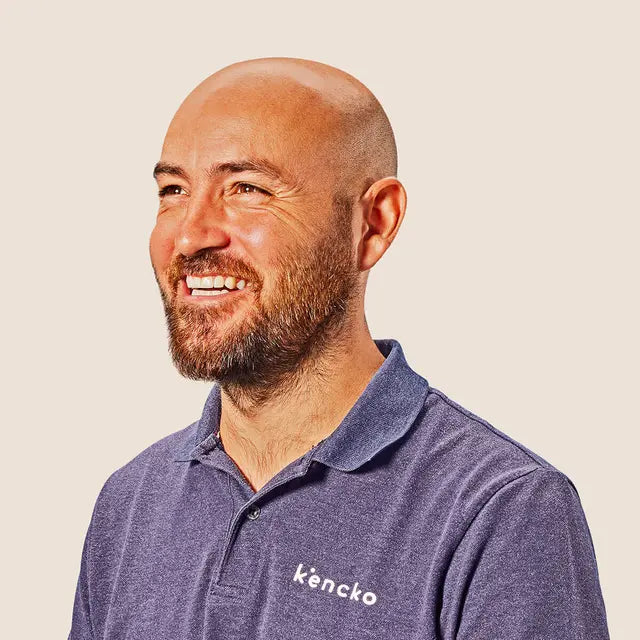
Froes built the business with Ricardo Vice Santos, whose earlier work included international expansion at Spotify. Their respective backgrounds suggest an interesting pairing: food entrepreneurship alongside experience getting a consumer proposition into new markets. The 2019 company account described thousands of subscribers and a team working between New York and Lisbon.
A smoothie that lives in a drawer
kencko’s intervention is largely physical. Fresh fruits and vegetables are flash-frozen and slowly dried, leaving a powder that can wait at room temperature. The shopper adds liquid when ready to drink. The company sells familiar pleasures in unfamiliar storage: strawberry, banana and greens, without a bag of frozen ingredients occupying the freezer.
- 01ProduceFruit + vegetables
- 02Freeze + dryWater removed
- 03MixAdd chilled liquid
Its instant smoothie range advertises an 18-gram sachet and shelf life of up to 18 months. That changes the geography of the product. A drawer at work becomes possible storage. So does a travel bag. The business competes partly with the smoothie someone meant to make and never did.
There is an important distinction from juice: the product retains plant fiber. There is also an important distinction from lunch: kencko’s FAQ says its products are not designed to replace meals. They are additions to a diet, with the nutritional profile depending on the blend and what goes into the bottle.
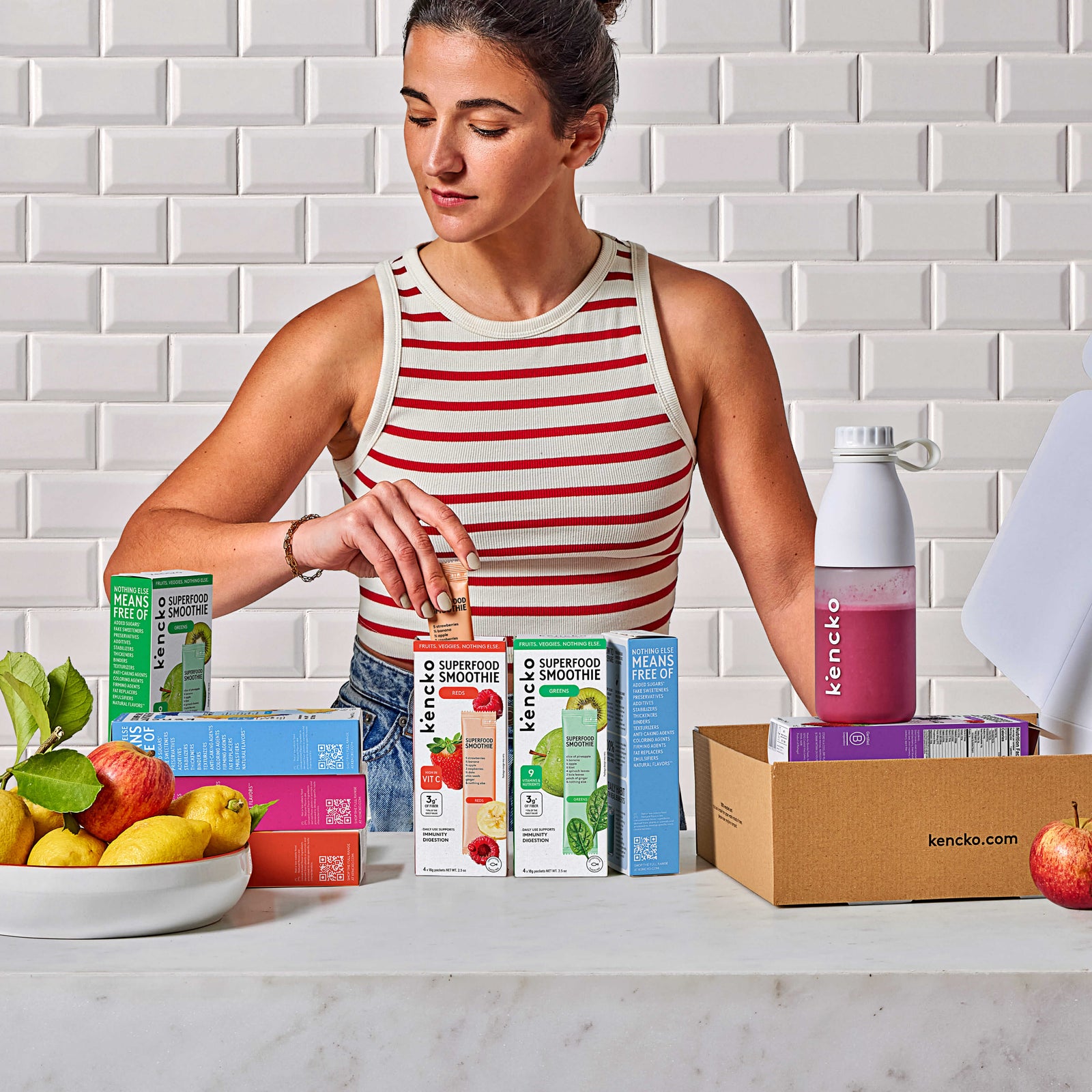
The range has spread into other eating occasions. Protein smoothies use a blend of pea, sunflower and pumpkin seed protein. Easy Oatmeal brings fruit into hot or overnight oats. Iced latte mixes take the idea toward coffee time. These are recognisable products attached to the same promise: plants with fewer chores.
The price of fewer decisions
Convenience carries a bill. At the time of writing, the US storefront lists 28 subscription smoothies every four weeks for $84. Forty cost $112.50. One-time boxes cost more per serving. Buyers begin with a curated selection, then can personalise later orders. The subscription sells replenishment as much as powder.
The proposition suits busy adults and families who want portable produce and can afford a recurring purchase. It is less persuasive for someone who enjoys making smoothies and already uses every banana. Value depends on the routine being replaced. Buying convenience that sits untouched in a cupboard is an unusually tidy way to waste money.
Capital helped build the machinery behind that routine. A $10 million Series A announced in January 2022 was led by Siddhi Capital. kencko’s later fundraising materials described ownership of mixing, packing and fulfilment operations. A food business has to make the small packet reliably, repeatedly and at a workable margin.
In its 2023 investment pitch, kencko reported $31 million in gross revenue for 2022 and said repeat customers accounted for 65% of sales that year. Those are dated company disclosures. They do, however, reveal the commercial logic: a packet earns its place when customers come back for another box, rather than merely admire the first one.
The aisle that did not exist
Retail exposed a different problem. As commercial chief Kelly Deen explained in a 2025 interview, buyers lacked an established instant-smoothie category. A product can be easy to use and difficult to place. Frozen smoothies have a home. A shelf-stable smoothie asks the supermarket to reconsider its map.
The 2023 Walmart launch gave kencko more than 1,000 stores and branded endcaps. The company also renamed gumdrops as fruit bites to make the eating occasion clearer. These choices translate an online explanation into something a passing shopper can grasp. Distribution becomes a form of product design.
By September 2024, kencko was announcing an expanded breakfast-aisle assortment in over 1,400 Walmart stores. In April 2025, crunchy Fruit Snaps extended its freeze-drying process into another snack format. Smaller retail packs also offered a cheaper first experiment than committing to a subscription.
“Snacking is the next frontier for our business.”Kelly Deen / April 2025
Consider the difference between selling on a website and selling beside cereal. Online, a brand can explain the drying process, show the shaker and answer questions. In a supermarket, packaging must carry much of that conversation. The move into breakfast makes intuitive sense: it gives an unusual format a familiar moment, when the customer is already looking for something quick.
A packet has to earn its keep
Sustainability adds another constraint. kencko has been B Corp certified since December 2020, and describes home-compostable primary packaging. In 2019, it said it would absorb higher production costs to move to compostable sachets. The environmental ambition had to survive contact with the packaging budget.
The drink itself has a compromise. kencko’s preparation guide acknowledges clumping, recommends blending for a creamier result and advises allowing time for rehydration. A shaker is useful on the go. Texture still matters. Anyone expecting the thickness of blended frozen fruit should pay attention to that distinction.
For the reader, the sensible experiment is modest. Choose a flavour, follow its mixing instructions and decide whether the texture and portion fit an actual gap in the day. A shelf-stable backup may be useful without becoming breakfast every morning. The cheapest routine is the one whose food gets eaten, whether it arrives in a sachet or a shopping bag.
The idea worth copying is concrete: find the steps that stop a customer doing something they already want to do, then remove several at once. kencko shortened preparation and extended storage. Its remaining test is wonderfully ordinary: will the packet become part of breakfast, or merely join the cupboard’s collection of admirable intentions?