A meal kit arrives with a small, inconvenient assumption: you will cook it. Sakara Life dispenses with that assumption. Open the fridge, take out a prepared meal, eat. For a company surrounded by talk of microbiomes, ancient wisdom and metabolic health, its most persuasive proposition is remarkably domestic. Lunch has already been dealt with. Someone else has done the shopping, considered the ingredients and washed the things that grow in the ground.
- The offer: organic, plant-rich meals delivered ready to eat.
- The customer: someone with money to spend and a routine to simplify.
- The business lesson: advice becomes more valuable when somebody performs the work.
The first customer was the founder
Before there was a delivery program, there were two childhood friends from Sedona, Arizona. Danielle DuBoise and Whitney Tingle arrived in New York with ambitions that had little to do with packing salads. Their eventual business began with dissatisfaction: the kind that makes a person reconsider the rules she has been following rather than search for a better way to obey them.
Tingle has described struggling with acne; DuBoise with a difficult relationship to food. Their answer became a way of eating built around plants and abundance. The company’s origin belongs to the early 2010s: accounts place the initial experiment in 2011, while its business record dates the start to 2012. The discrepancy is less interesting than the experiment itself. They fed friends, raised $700 over dinner and began selling something people could actually taste.
“We started with $700 we raised from friends at a dinner party”Danielle DuBoise and Whitney Tingle, 2021 interview
That detail is useful because dinner is a rather good research instrument. People can profess an interest in eating differently forever. Buying a meal turns an opinion into an order. Sakara’s early appeal could be tested before the founders had to imagine a national audience, a supplement shelf or the peculiar challenge of keeping tomorrow’s lunch cold while it travels.

The inconvenient part of convenience
The first operational ceiling was modest: roughly 25 clients outgrew the Soho apartment. The pair handled early deliveries themselves and went unpaid for two and a half years. For the customer, convenience looked like a meal at the door. For the founders, it meant absorbing the chores the customer had escaped. That exchange remains the heart of a prepared-food business, however lovely the packaging becomes.
The product also required a change in emphasis. Sakara’s nine nutrition pillars include “Eat Your Water” and “No Calorie Counting.” These phrases give an eating philosophy a vocabulary people can remember. Water-rich produce sounds more inviting when it comes with an instruction you might repeat to a friend. The language is part education, part identity: here is the sort of person you could become at lunchtime.
The expertise behind the offer combines recipe development, chefs and nutrition advisers. Its distinctive skill is making those inputs into a repeatable service. A customer can buy the prepared result instead of becoming an expert in sourcing ingredients. The founders’ personal accounts explain their motivation; the wider wellness promises remain the company’s claims, rather than proof that its products will produce the same outcomes for everybody.
A weekly habit with a premium price
The Signature Nutrition signup page advertises a starting price of $161 per week. Customers select program days and meals, with drinks and proteins available as extras. Subscribers receive a 15% discount, limited meal swaps and the ability to skip weeks. Cancellation becomes available after the first week. The flexibility matters: a recurring food order has to accommodate the inconvenient fact that its customer also has a life.
Program size and add-ons change the total. Subscription pricing advertises 15% savings.
This is a premium convenience purchase. The natural customer is someone who wants more plant-rich meals but does not want another planning project. It fits a busy schedule, an interest in wellness and a budget that can absorb paying someone else to prepare the food. The purchase solves time and coordination problems immediately, even before any hoped-for change in how the customer feels.
That positions Sakara beside prepared-meal services such as Thistle, Daily Harvest and CookUnity, while also competing with the grocery shop and the kitchen at home. Its distinction is the whole package: organic positioning, a recognisable nutrition philosophy, ready-to-eat delivery and a lifestyle surrounding the plate. A person primarily shopping for the lowest grocery bill will have a different calculation.
Plan02
Source03
Prepare04
Deliver
The customer enters here: open, eat, repeat.
Why a salad company wanted a bigger shelf
In 2021, Sakara raised $15 million in Series B funding from investors including One Better Ventures, Silas Capital and Annox Capital. The founders described an awkward fundraising problem: the popularity of meal kits helped people accept food arriving by mail, but also encouraged investors to put Sakara into a category it wanted to exceed. Their ambition included packaged wellness products, which customers could purchase without ordering a week of food.
The much-repeated $150 million revenue figure needs its date attached. Contemporary reporting said Sakara was expected to approach that amount in 2021. It is a historical projection. More instructive than carrying the number forward is looking at how the basket expanded: powders, bars, teas, capsules and gummies give the company additional ways to participate in a customer’s day.
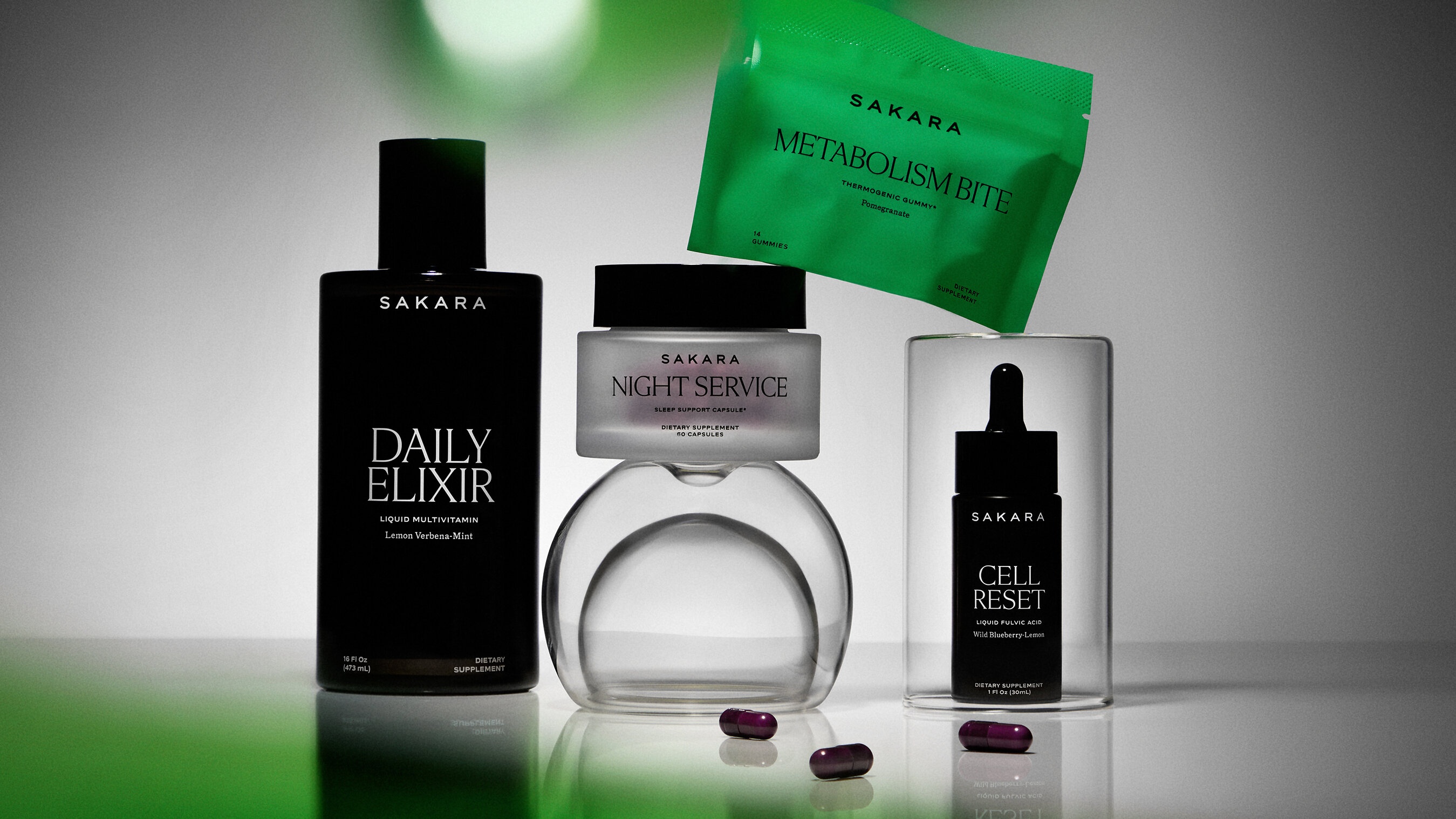
A four-product supplement line arrived in February 2025, addressing metabolism, stress, skin and sleep in the brand’s marketing. Sakara described a community of more than 500,000 people; that audience should not be mistaken for a subscriber count. In 2026, trade coverage added Fiber Bite to the story: strawberry-lemonade gummies, reported at $35, with six grams of prebiotic fiber per serving. The smaller purchase opens a different door into the brand.
You can borrow the idea without buying the box
The founders’ 2019 cookbook, Eat Clean, Play Dirty, offers another entry point. Its publisher calls it a national bestseller. A cookbook customer buys instructions; a meal subscriber pays for their execution. Both can belong to the same food culture. The podcast and editorial material extend that relationship into the hours when nobody is eating.
For a founder, the transferable move is to test a recurring need with something customers will pay for, then remove the work that prevents them repeating it. For a reader, it is simpler: arrange the food before the busy week begins. Sakara makes sense when preparation is the obstacle and the price fits. People who enjoy cooking, need extensive menu freedom or live outside its continental US meal coverage have reasons to choose another route. The proposition earns its keep at the fridge.