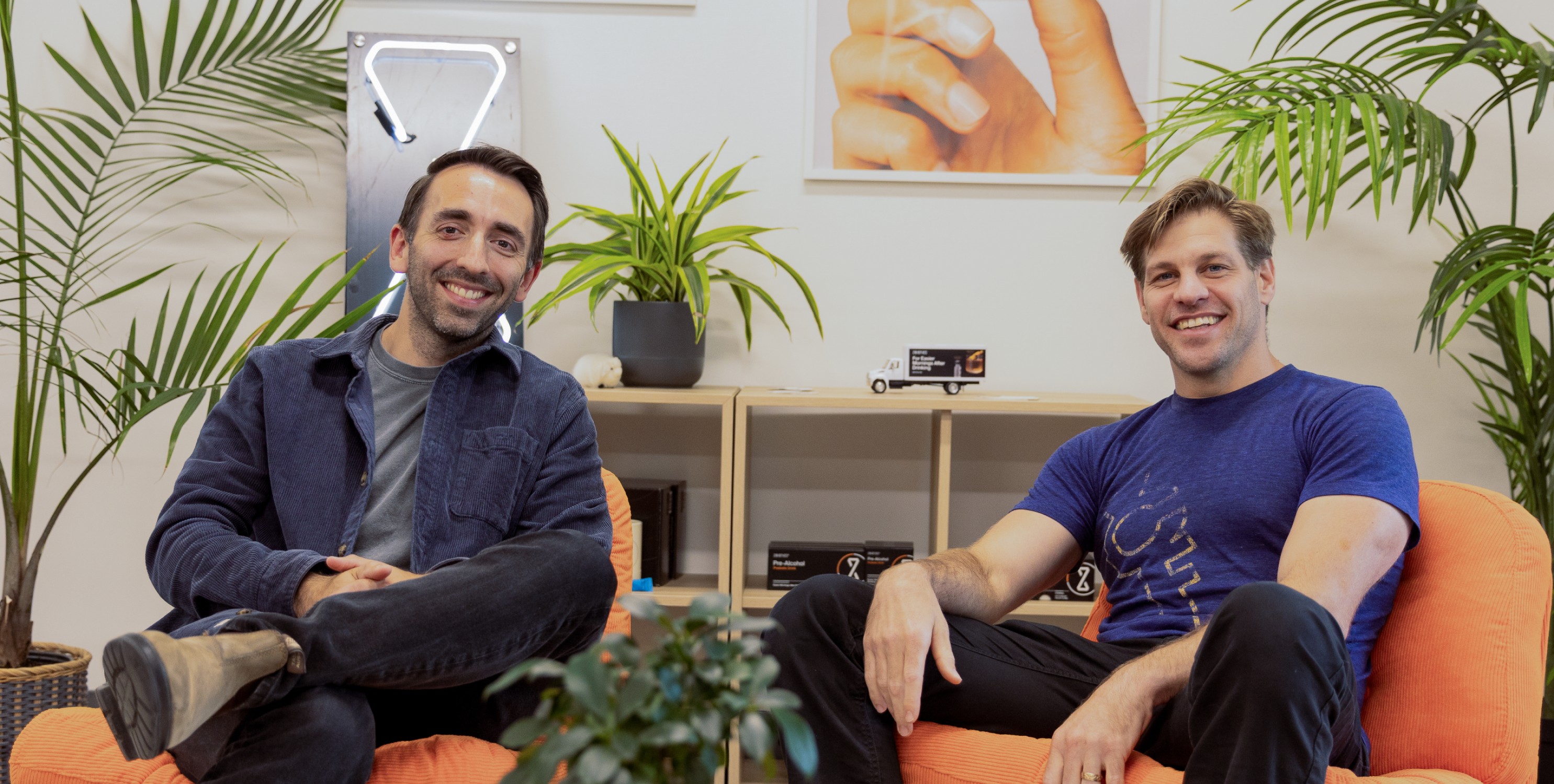
A vial of bacteria is a peculiar thing to take on a sales call. In 2017, Zack Abbott could make about 200 early ZBiotics samples every 36 hours. He and his new cofounder, Stephen Lamb, loaded them into a car and drove the length of the Bay Area, handing them to friends, prospects and investors. Most food brands were covering their packages with “non-GMO.” Abbott had made the opposite wager. The organism inside his little bottle was genetically engineered, and he intended to say so.
The short version
- ZBiotics engineers probiotic bacteria to do specific jobs in the gut.
- Its first product, Pre-Alcohol, is designed to break down acetaldehyde; Sugar-to-Fiber is designed to make a small amount of prebiotic fiber from dietary sugar.
- A $12 million Series A in 2024 followed reported profitability in 2023. The company says it has since sold 14 million Pre-Alcohol bottles.
- The lesson is practical: sell a job people understand, explain the unfamiliar science honestly, and make the product pleasant enough to use again.
The problem Abbott wanted to solve was larger than a bad morning. He had worked in microbiology and HIV research and seen genetically engineered bacteria used as factories for proteins. Those proteins were removed from the microbes, purified and shipped under careful conditions. The science was powerful; the route to an everyday product was expensive and remote. Why not let a food-safe microbe perform a useful task directly?
That ambition could have produced a dozen products. Abbott floated ideas to friends and family. One kept drawing an immediate reaction: a probiotic that could break down acetaldehyde, an unwanted compound generated when alcohol is metabolized. The market research was wonderfully unsophisticated. People understood the problem without a seminar. Abbott picked a job first, then built the biological tool.
The first useful trick
A tiny factory with one assignment
The Pre-Alcohol bottle contains Bacillus subtilis ZB183, engineered to produce acetaldehyde dehydrogenase. That enzyme converts acetaldehyde into acetate. ZBiotics positions the drink as a way to add that activity in the gut before drinking begins. It is a specific intervention, with a specific boundary: the company says the bottle does not lower blood alcohol, reduce intoxication or make drinking safer.
Two products, two enzyme jobs
Engineered B. subtilis ZB183 makes an enzyme that breaks down acetaldehyde in the gut.
Engineered B. subtilis ZB423 makes levansucrase, which converts some dietary sucrose into levan fiber.
The mechanism is measurable. The size of any day-after benefit varies by person and is a separate question.
That distinction matters in a category full of extravagant promises. Acetaldehyde is only one part of the body’s response to drinking. A plausible biochemical pathway does not mean every customer wakes up transformed. ZBiotics says roughly 5% of users report no benefit; the company’s quality pages describe batch testing for enzyme activity, viability and purity. Those are meaningful details about what is in the bottle, though they are different from proof of a particular experience for every drinker.
The bottle itself is almost comically modest: 15 milliliters, about half a fluid ounce. On the company store, one costs $13 and a six-pack costs $60; subscriptions offer a discount. ZBiotics also sells larger packs. The customer is buying a consumable for an occasion, then deciding whether the next morning justifies another order. For a business with a research lab, the verdict arrives in the most ordinary form: repeat purchase.
The second act
The biology was clever. The powder was grainy.
A company can survive as a one-bottle curiosity. ZBiotics wanted a platform. Its second product, Sugar-to-Fiber, arrived in 2024 with a different engineered strain. This one produces levansucrase, which turns some sucrose from food into levan, a prebiotic fiber. It is a daily mix, aimed at people who want more fiber in their routine. A 30-serving pack is listed at $80.
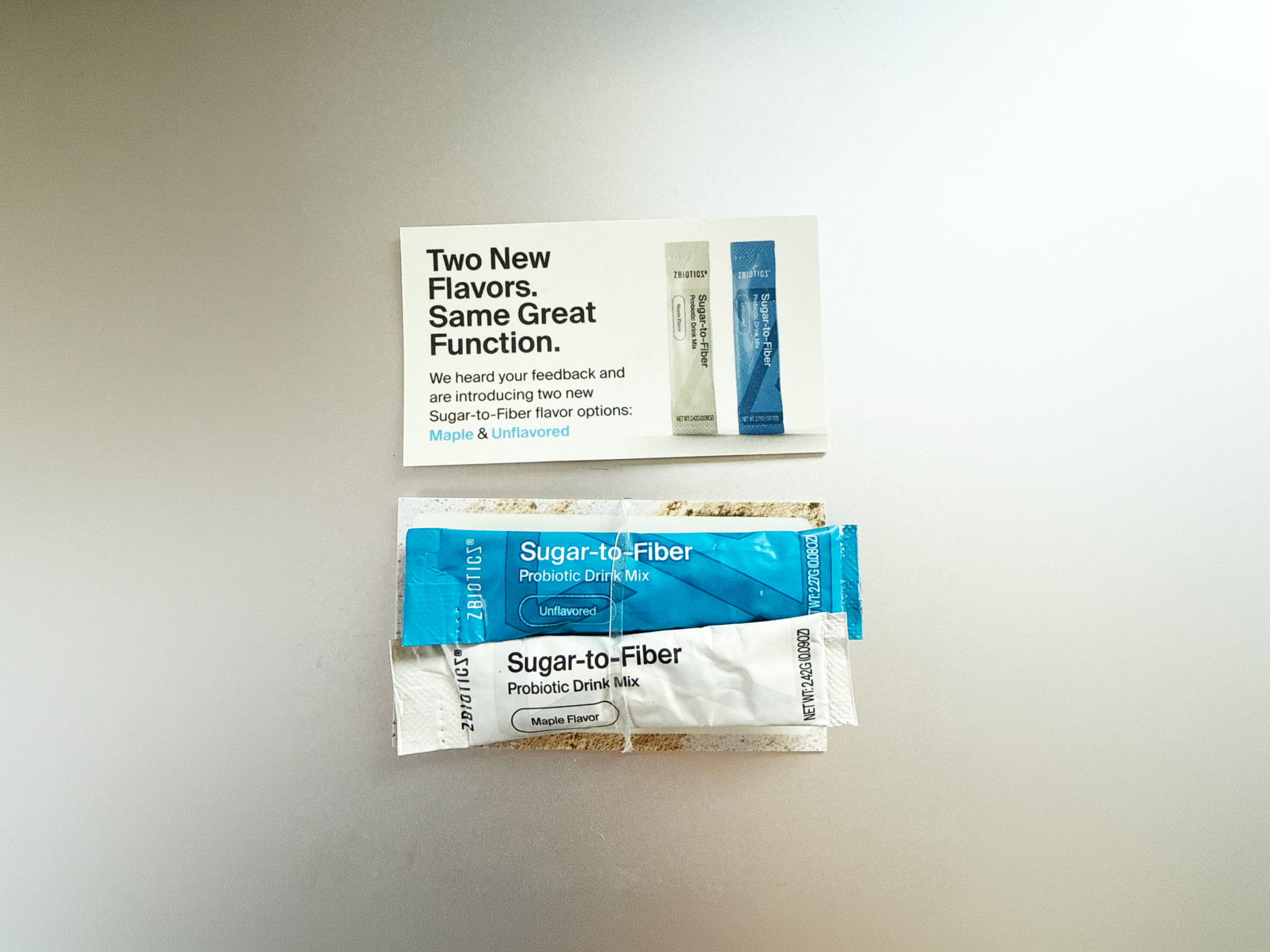
Here the first visible failure had nothing to do with an enzyme. Customers said the original mix was grainy, hard to dissolve and awkwardly flavored. For a daily product, that is not a cosmetic complaint. Nobody builds a habit around a lumpy cup of coffee. The company changed the formula for texture and mixability, expanded the stick packs to a 30-serving format, sampled Maple and Unflavored versions in October 2025, and later rolled out both. The unglamorous test of a biotechnology platform turned out to be whether it disappeared into breakfast.
“It’s much easier to have people open their minds when you have something they want and that they understand.”Zack Abbott, on choosing a first product
A new aisle for an old organism
Where the product meets the public
Abbott and Lamb joined Y Combinator in 2018 and launched Pre-Alcohol in August 2019 after safety work, supply-chain development and patent filings. By 2023, the company reported company-wide profitability. Its 2024 Series A, led by Spring Tide Capital with Access Capital, Seamless Capital, Goat Rodeo Capital and Seaside Ventures participating, was meant to fund product development and physical distribution. ZBiotics says it had sold more than five million units by that announcement; its tenth-anniversary page now puts Pre-Alcohol at 14 million bottles. These are company-reported sales figures, not audited revenue.
The distribution has grown beyond a checkout page. Pre-Alcohol appears in selected US stores, and a 2026 partnership put it in minibars and venues at Gurney’s Montauk. That setting is revealing. A resort guest is already planning an evening. The product can meet the customer at the moment its promised job makes sense. It is the same instinct behind those early hand-delivered vials, translated into a hospitality shelf.
The alternatives are familiar: conventional probiotics, fiber powders, electrolyte mixes, and supplements marketed for the morning after. ZBiotics is unusual because it engineers each strain for a named function, discloses the engineering, and publishes detailed quality checks. Its expertise is microbial genetics; its commercial skill is making that expertise legible in a small consumer package. The products sit between packaged wellness goods and synthetic biology, a place where scientific specificity can be an advantage only if customers trust the explanation.
The founders' original fear was that “GMO” on a label would end the conversation. Their response was to leave the letters where anyone could see them and make the product concrete enough to invite a question. The lesson travels beyond probiotics: lead with the task, show the mechanism, measure what can actually be measured, and listen when the customer says the texture is wrong. Even a carefully engineered microbe has to live in the real world.