A grocery shelf makes a promise without saying a word: the chocolate is solid, the tea is dry, and the jar has arrived in one piece. Move that shelf onto a website and the promise gets more complicated. Somebody must build the shop, buy the inventory, answer the emails, collect the sales tax, pick the order, and make sure the chocolate does not become a small brown lake on the way to Phoenix. WorldPantry.com is the company willing to be that somebody.
The short version
- World Pantry runs branded online stores and can act as the retailer behind them.
- Its offer joins marketing and customer care to warehousing, packing, and delivery.
- Its edge is food-specific work: heat, freezing, fragile goods, and unusual bundles.
- Brands can use the full operation, fulfillment alone, or marketplace support.
The business began in 1998, when most food makers still needed persuading that a website could sell anything. David Miller, a former Intuit marketer, and engineer Darren Yee started with two brands: Annie Chun’s and Hellas International. By 2002, a San Francisco newspaper found Miller still explaining the idea door to door. That sounds quaint now. It also describes the hardest part of commerce remarkably well. First, persuade the maker that a new channel is worth the trouble. Then remove the trouble.
The maker makes. Someone else minds the store.
A food brand can hire a designer and open a Shopify account. That gets it a shopfront. It does not get it a warehouse, a trained phone team, a summer packing plan, or someone to reconcile the taxes. World Pantry’s full-service offer folds those jobs into one operating model. It builds and manages branded stores, improves merchandising and conversion, runs email, SMS and paid search, reports first-party customer data, and handles phone and email support. It also buys the products and resells them as merchant of record. That last phrase matters: the store can wear the brand’s name while World Pantry runs the retail transaction behind it.
The arrangement gives the brand a direct channel without requiring it to build every department of a small retailer. It also changes the relationship between the two businesses. World Pantry is more than a software vendor; inventory, consumer experience, compliance, and repeat orders all enter the same conversation. The company describes a retail-margin model and invites prospective partners to discuss a tailored operating model. For a brand, the cost comparison must include the margin on goods sold alongside shipping, acquisition, service, and the staff it would need to run these jobs itself.
There are narrower doors into the business too. WP Logistics offers third-party fulfillment. World Pantry also operates marketplace programs on Amazon, Walmart.com and TikTok, and describes small wholesale stores as part of its menu. Divine Chocolate, for example, directs smaller retail buyers to a World Pantry wholesale ordering channel. In each version, the same question sits underneath: which parts of selling online does the brand actually want to own?
Geography is a product feature
The company says its three distribution centers can deliver by ground to more than half of US households in one day and up to 99% in two. Orders received by 5 p.m. local time can ship the same day. Its warehouses use employees rather than simply passing packages to an anonymous network, and open cases so staff can assemble gifts and variety packs item by item. Those details make the service more specific than a promise to “fulfill orders.” They decide whether a brand can offer a mixed tea box, a limited-edition gift, or a six-pack that does not already exist in a factory carton.
Food adds another difficulty: its enemies are often ambient. A book can arrive warm. Chocolate cannot always do so. World Pantry advertises temperature-sensitive storage and shipping for goods at risk of melting or freezing. It even offers a very particular boast: getting chocolate to Arizona in summer by ground. The line is memorable because it turns an abstract logistics pitch into a picture anyone can understand. It is a claim about operating expertise, not magic; packaging, weather, destination, and product all still matter.
“All we do is send them products.”Bette Kroening of Bette’s Diner, describing the early World Pantry arrangement in 2002
A Goya shop, a World Pantry operation
Goya provides a modern case. In September 2022, the food company launched an online store for household staples and products shoppers might struggle to find in local supermarkets. Its public store terms say World Pantry operates the webstore. Questions about online orders go to a World Pantry email address. Returns can go to World Pantry facilities in Pennsylvania, California, or Missouri. Goya’s name is on the storefront; the operational fingerprints are easy to find once you know where to look.
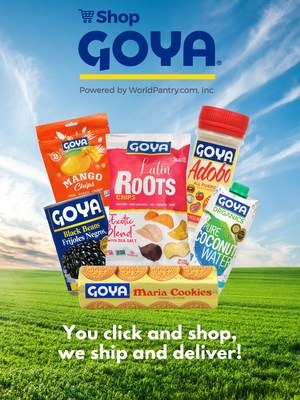
That is a cleaner explanation of the business than a list of services. The brand keeps its voice and assortment. The operator handles the dull, costly, perishable reality of getting things to people. Goya’s store even offers individual units, larger quantities, and variety packs - precisely the sort of mixed ordering that an open-case warehouse is designed to handle.
It was always a matter of voice as well as boxes. In World Pantry’s early years, partners praised Yee’s habit of making each site look like the food maker rather than like every other site in a network. Annie Chun’s site carried recipes and a founder’s letter. Bette’s Diner said World Pantry was its only extension onto the web. The first failure, for some prospective partners, had been a plain web page that did little to sell or tell the story. What changed their minds was an operator that could make the online shop both recognizable and usable.
The unglamorous lesson
World Pantry sits in the space between an ecommerce agency and a logistics company. An agency may make the page beautiful. A warehouse may move the carton. A marketplace seller may list the product. World Pantry’s pitch is that the jobs affect each other: a gift bundle changes picking, a promise of rapid delivery changes warehouse placement, and a customer complaint may reveal a packaging flaw long before a dashboard does. That is why its combination is more interesting than any single service on the menu.
There is a useful idea here for a brand that cannot buy the whole package. Treat the online order as one continuous experience, from the product page to the opened box. Put customer-service notes in front of the people designing packs. Plan summer shipping before promising year-round availability. Test variety packs against the actual labor of picking them. Work out who owns the transaction, the data, and the unhappy customer. World Pantry built a business by taking those questions seriously while many companies were still celebrating the existence of a “Buy” button.
The model will fit best where a brand’s products are distinctive enough to bring customers directly to a branded store, but online operations would distract its own team. The numbers in a bespoke contract still have to work: gross margin, shipping costs, heat protection, and customer acquisition can consume a good idea quickly. World Pantry cannot make a weak product desirable. It can, however, make a desirable product available, presentable, and intact. In food ecommerce, that is no small job.