The most expensive piece of bread in San Francisco was not a croissant. It was a six-inch sandwich roll. Hero Bread spent more than $30 million developing that roll and other products, then supplied it to Subway with negative margins. The formulation worked. The arrangement ate cash and attention. By the time YuChiang Cheng arrived as interim marketing chief in 2022, the young company was facing an impolite question: could a famous customer kill it?
The answer was nearly yes. Hero had promised a national restaurant chain something it was not operationally ready to deliver. Cheng's first-week move was to say so. Hero apologized and withdrew. Then it tried the apparently smaller thing: selling bread to individual people on the internet.
The story in five crumbs
- Cole Glass started experimenting because his severe food allergies made other low-carb baked goods unusable.
- The Subway program produced a good roll, negative margins and more than $30 million in R&D expense.
- Hero switched to direct sales, targeted low-carb enthusiasts and learned who reordered.
- That evidence helped win Sprouts and other grocers; wholesale distribution now exceeds 9,500 doors.
- The playbook depends on repeat purchase. Ads can find a first order, but they cannot manufacture a second.
It started with a muffin and a pollen allergy
Glass grew up with severe food allergies related to pollen. Fruit, vegetables and nuts were largely out, leaving an awkward diet of carbohydrates, protein and fat. In 2017, worried about what that menu might do over time, he cut carbohydrates and went searching for substitutes. Most contained something else he could not eat.
So he chose a muffin he missed and treated it like laboratory equipment. Hero says he baked more than 100 a day for two years, changing proteins, fibers and baking ingredients by tiny increments. The eventual formula used resistant wheat starch, plant proteins and added fibers to preserve the soft, springy behavior people expect from flour while reducing the digestible carbohydrate count. The first useful fact about Hero is not that Glass had a flash of inspiration. It is that he endured a spectacular number of bad muffins.
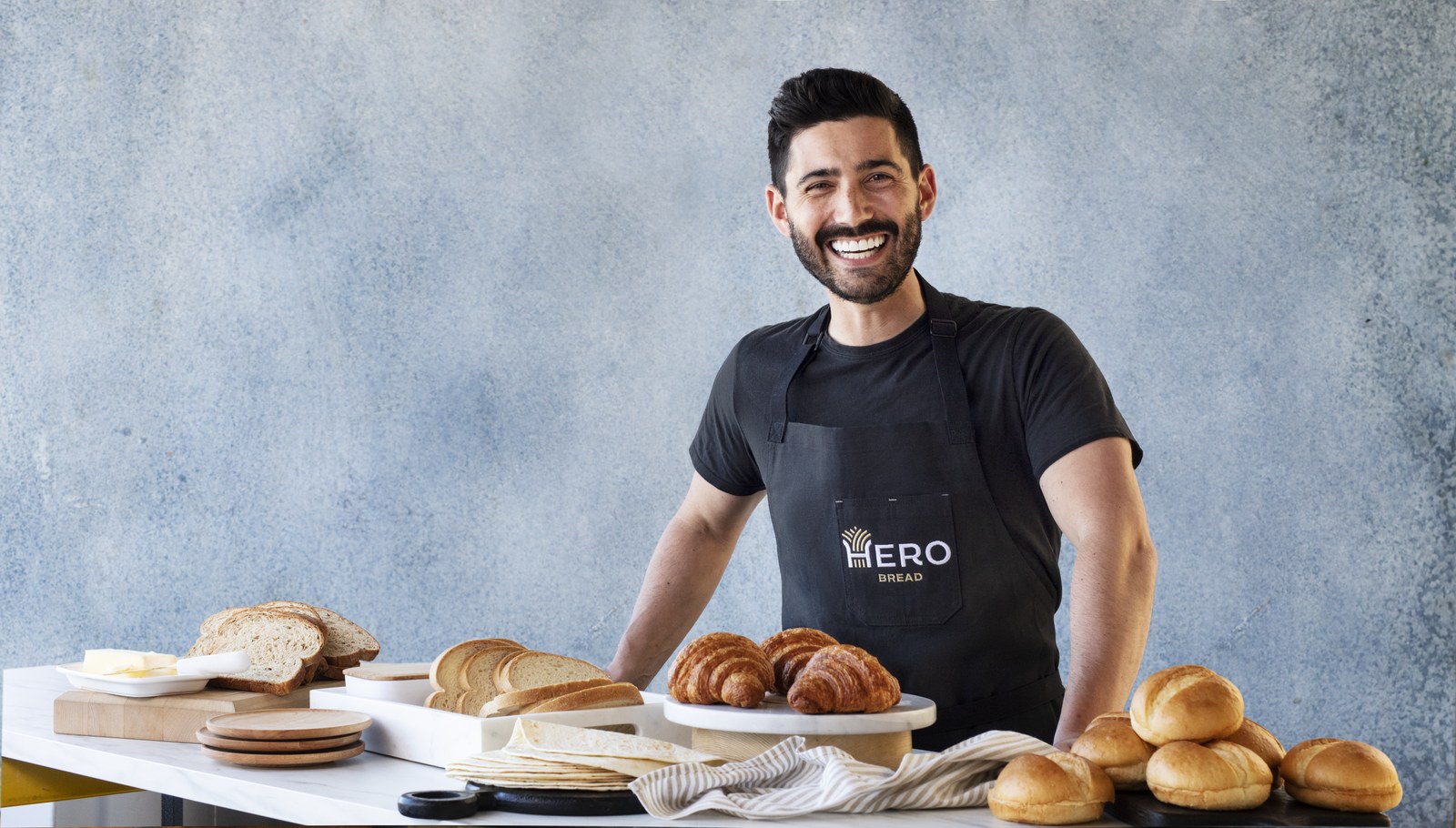
The customer that ate the company
In 2021, Subway tested Hero's one-net-carb roll in selected restaurants. Tom Brady appeared in the launch. The nutritional numbers were made for headlines: one gram of net carbohydrates, zero grams of sugar, 12 grams of protein and 26 grams of fiber in a six-inch roll. For an unknown food startup, the logo on the other side of the deal looked like a shortcut to scale.
It was also concentration risk with a sandwich wrapper. Cheng later said the entire company became embroiled in servicing Subway. Margins were negative. Staff time disappeared into the account. Capital raised during food-tech's exuberant years went into R&D and fulfillment. Hero had made the familiar supplier's error: treating the size of the buyer as proof of the health of the business.
“We sold them something we weren't ready for.”YuChiang Cheng, CEO
What changed their minds was not a focus group
The board was already reconsidering food service. Glass advocated for the hard pivot and, later, Cheng's appointment as CEO. That detail matters. Founders are often praised for refusing to quit; this founder helped vote against continuing the strategy attached to his own product.
Hero put money behind an under-resourced direct-to-consumer team. It advertised on social platforms and Google to low-carb enthusiasts, sold white and seeded loaves, and used a croissant - rare in a category full of dutiful sandwich bread - to attract curiosity. It also launched on Amazon, where its white bread reached the top of the bread category.
The clever part came next. Hero approached Sprouts not with a vague claim that everyone wanted healthier bread, but with a modest database. Roughly 1,000 to 2,000 of its online customers also shopped at Sprouts, Cheng recalled, and they bought Hero about once every six weeks. The sample was small enough to sound almost comic. It was also behavior, not aspiration.
Sprouts put the loaves on shelves. Selected Albertsons, Publix and other grocers followed. In its first five months in grocery, Hero reported a 54 percent repeat-purchase rate. A rollout that began in 23 stores was headed for 2,300 locations across 32 states by May 2023. By August 2026, wholesale distribution had passed 9,500 locations.
The product is a subtraction problem with texture
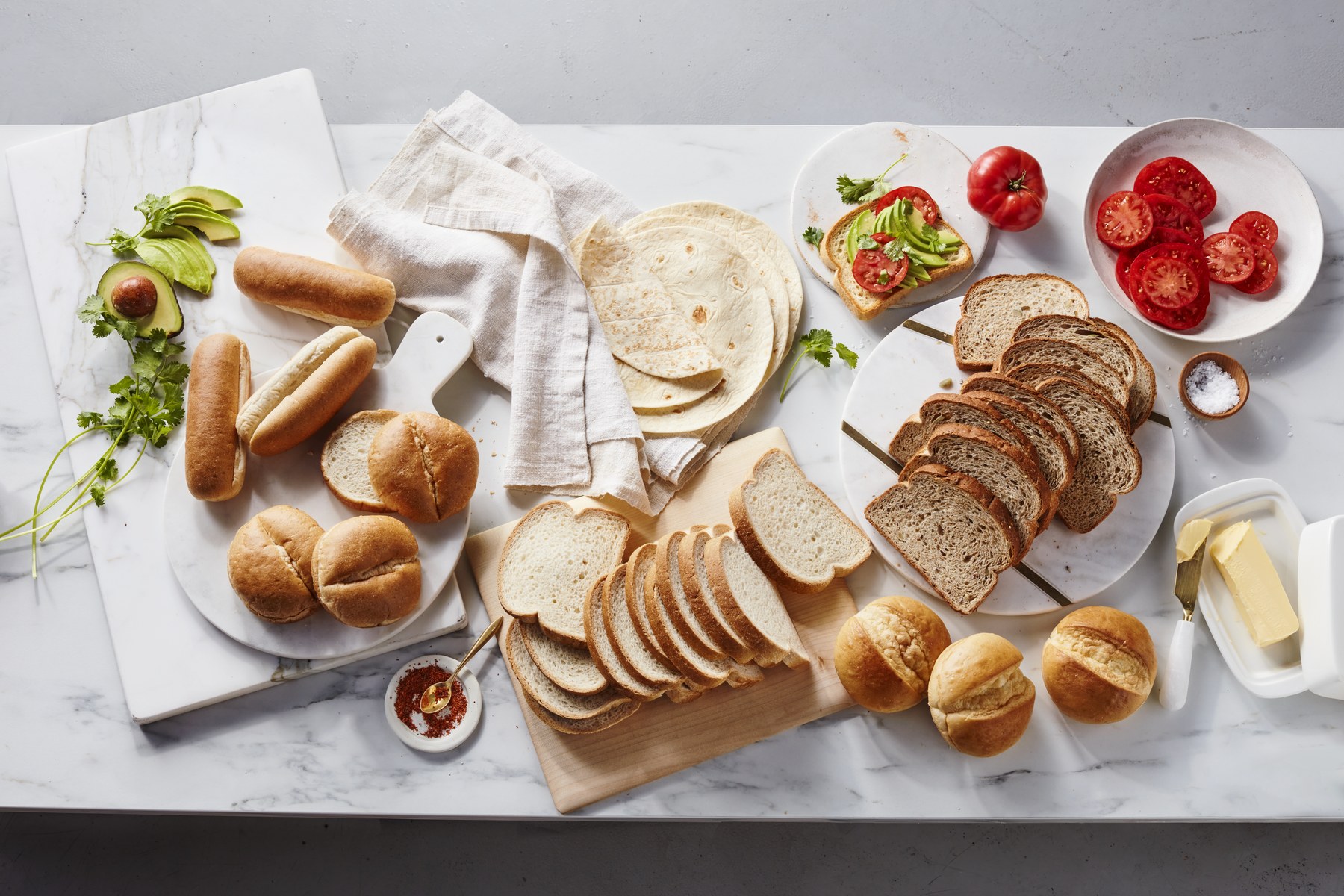
Hero's current range runs from sliced bread, tortillas, burger buns, hot dog buns and Hawaiian rolls to bagels and small-batch pastries. The Crafted Collection is the more playful end of the business: croissants, biscuits, scones, pain au chocolat, shortbread, pizza crust and periodic noodle drops. In September 2026, Hero and Auntie Anne's released a limited pretzel bite with three grams of net carbs, 16 grams of protein and 18 grams of fiber per serving.
Wheat starch that functions as dietary fiber rather than ordinary digestible starch.
Sources such as wheat and fava bean help build structure and raise protein.
Flax, Jerusalem artichoke and other fibers replace bulk lost with conventional flour.
Water, yeast or baking powder, olive oil and salt still have to produce bread people enjoy.
That last requirement separates Hero from a supplement disguised as lunch. A loaf can carry attractive arithmetic and still lose if it toasts poorly, tears around a sandwich or tastes medicinal. Hero's bet is that shoppers do not actually want diet food. They want ordinary bread with different numbers.
Distribution milestones reported by Hero Bread and CEO YuChiang Cheng. The bars show relative store count, not revenue.
A premium loaf in the crowded middle
Hero sits between conventional bread and the specialist keto shelf. Sola, BetterBrand, Carbonaut, Base Culture and Unbun chase similar shoppers; large bakers have their own low-carb lines. Hero differentiates with breadth and familiarity: not merely a functional loaf, but the bun, tortilla, croissant and occasional novelty that lets a customer rebuild an entire pantry.
The business model mirrors that breadth. Grocery creates routine and reach. Hero.co sells bundles, subscriptions and scarce drops while revealing which ideas deserve a longer life. Amazon captures intentional searches. Restaurant partners put the product inside a finished meal. The $21 million raised in June 2024 - taking disclosed funding above $68.5 million - went toward distribution, retailer support, manufacturing and new products. Inc. later estimated 2025 revenue at $54.1 million and ranked Hero No. 122 on its 2026 list of fast-growing private companies, after 2,392 percent growth over three years.
The part worth copying is smaller than it looks
Most founders cannot spend two years on muffins or raise nearly $69 million. They can borrow the sequence that followed the mistake:
- Admit when a prestigious account has bad economics. Fame does not pay a negative gross margin.
- Choose a narrow group with an urgent reason to care. Low-carb enthusiasts were cheaper to identify than “everyone who eats bread.”
- Measure the second purchase. Reorders turn enthusiasm into evidence.
- Translate customer data into the buyer's language. Hero connected online customers to a specific retailer and shopping cadence.
- Use the direct channel as a laboratory. Limited drops expose demand before a product needs permanent shelf space.
There are conditions. Direct sales are expensive when shipping is bulky, paid acquisition is high and the basket is too small. Retail buyers will not care about a mailing list if customers do not reorder. A technically improved food still fails when taste and price make every purchase feel medicinal. And a company without enough cash to survive the learning period may discover the right channel after the runway has ended.
Back in restaurants, with the order reversed
Hero did not swear off food service. It supplies wraps to Just Salad and appears at Crisp & Green and selected Freebirds locations. The difference is the order of proof. The company first built consumer pull and a retail base, then returned to restaurant partners as one channel among several. No single sandwich chain had to carry the company.
This is why the story travels beyond bread. Hero's turnaround was not a sudden insight about resistant starch. Glass already had the formula. It was a correction in who got to validate the business. One giant customer had said yes and nearly consumed it. Thousands of ordinary customers said yes again, six weeks later. That quieter answer turned out to be the useful one.