The origin story of GOOD GOOD is not a eureka moment. It is an inventory problem. Before the cheery jars and national grocery listings, the Icelandic company was called Via Health and sold stevia drops and tabletop erythritol. Useful products, perhaps, but not products around which most people build a breakfast. When a pile of sweetener threatened to become a write-off, the team did the obvious thing only in retrospect: it cooked the ingredients into jam.
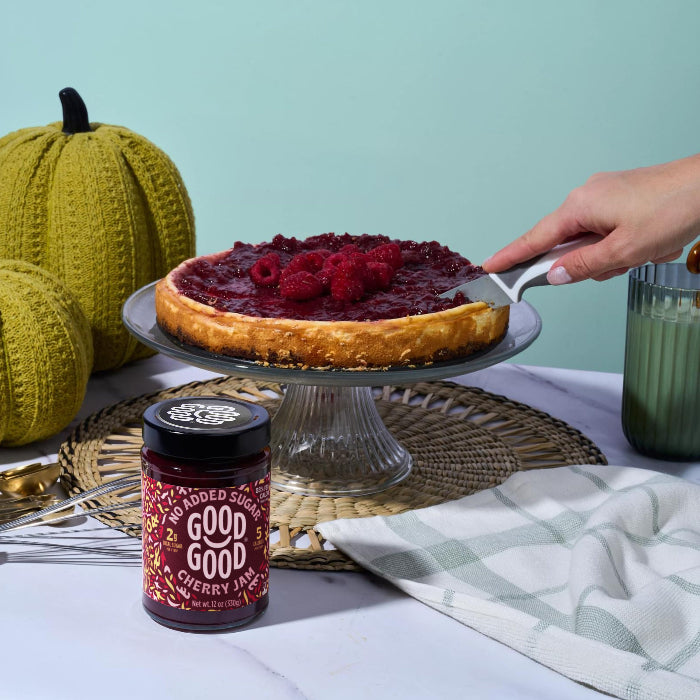
That jam changed the object being sold. Instead of asking shoppers to understand a substitute, dose a dropper and invent a use, GOOD GOOD offered a familiar ritual - toast, peanut butter, a spoon, done. The company eventually sold its stevia-production equipment to a co-packer in the Netherlands, rebranded around the promise of “good taste and good for you,” and made finished pantry food the business. Today it sells no-added-sugar jams, fruit spreads, chocolate spreads and peanut butter online and through more than 10,000 reported U.S. retail locations.
Before
Sell the substituteStevia drops, erythritol blends, owned equipment and a shopper who still had homework.
After
Sell the breakfastJams and spreads, contracted factories, familiar formats and an immediate reason to repeat.
The product was not stevia. The product was permission.
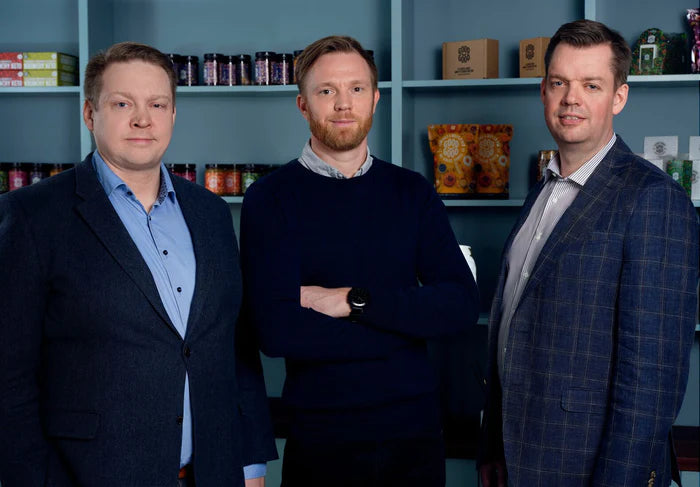
The founders - Gardar Stefansson, Agnar Lemacks and Johann Ingi Kristjansson - were motivated by relatives who needed to reduce sugar but disliked the alternatives. Stefansson has spoken in particular about an aunt with diabetes and the dreary tradeoff she faced. The technical brief was therefore only half nutritional. The food had to taste recognizable enough that eating it did not feel like a medical appointment.
GOOD GOOD’s early jam used stevia and erythritol in place of added sugar. Its broader proposition welcomed people managing sugar intake, keto and low-carb shoppers, and anyone reading the nutrition panel. But the colorful label never looked like a prescription. That distinction matters in a category bought with the eyes, tasted in seconds and judged against childhood memory. A jar can make a health claim once. It earns the second purchase through breakfast.
“Our goal is to make sweet products that are better than the sugary ones.”Gardar Stefansson, co-founder and CEO
The line grew outward from the jar: strawberry, raspberry, blueberry, apricot, cherry and grape; chocolate-hazelnut spread; syrups, mixes and bars in some markets; then low-carb peanut butter in 2022. In 2025, the company made an instructive adjustment. Its new Whole Foods fruit spreads contained more fruit and no sugar alcohols, an answer to consumers who wanted less sugar but did not necessarily want erythritol. The mission stayed. The formulation widened the audience.
Jams & jellies
Familiar fruit flavors with no added sugar, built for toast, sandwiches and baking.
Chocolate spreads
The sweetest test of the thesis: dessert cues without the usual sugar load.
Fruit spreads
More fruit and no sugar alcohols, aimed beyond the strict keto customer.
Mango habanero
A 2026 “swicy” launch that puts Texas heat into an Iceland-born brand.
Iceland designed it. The market made it travel.
There is a tidy operations lesson inside the loud packaging. Iceland was a credible laboratory: health-aware consumers, a strong food culture and a manageable place to test. It was also expensive and remote from millions of grocery shoppers. GOOD GOOD’s answer was not to build a heroic factory at home. The team kept recipes, product development and brand judgment close, while outsourcing manufacturing, logistics and warehousing nearer to North America and Europe.
That structure traded plant ownership for coordination risk, but it cut freight, capital requirements and lead times. It also clarified the company’s expertise. GOOD GOOD is not chiefly a machine operator. It is a product and brand company that briefs certified producers, gets jars through distributors, manages retailer relationships and persuades a shopper to pick bright yellow over an incumbent’s red gingham lid.
The disclosed expansion capital was substantial. A $3 million Series A in 2020 funded American distribution, marketing and new products. At the time, the brand was in 1,800 U.S. stores. A $20 million Series B led by Icelandic private equity group SÍA IV followed in May 2022, alongside a listing in 3,500 Walmart locations. By 2026, GOOD GOOD said it had passed 10,000 U.S. locations and was preparing to enter roughly 1,200 Target stores in the fall.
Reported U.S. retail footprint
The shelf is the business model
GOOD GOOD sells directly through its Shopify store, on online marketplaces and to retailers through wholesale distribution. E-commerce did more than produce revenue. Amazon gave an Icelandic brand a way to be discovered without first winning a national buyer. Reviews, search demand and repeat behavior then gave the sales team something more persuasive than a founder’s enthusiasm. In grocery, that evidence can win a first facing. Velocity keeps it.
The customer has also broadened. The company still speaks to people reducing sugar and to keto or low-carb shoppers, but Whole Foods, Walmart, Kroger, H-E-B, Publix and Target are not specialist diet shops. The opportunity is the ordinary household that likes jam, prefers less sugar and will tolerate a premium if the taste holds up. The threat is equally ordinary: a cheaper jar from Smucker’s, Bonne Maman, ChocZero, a retailer’s own label, or no jar at all.
That makes pricing and promotion less glamorous than the funding headlines and more important. A 12-ounce jar on GOOD GOOD’s U.S. site recently listed at $12.99. Grocery private labels can undercut it sharply. The defense cannot be a claim alone because “no added sugar” is copyable. GOOD GOOD needs fruit flavor, texture, packaging, availability and repeat purchase to reinforce one another. Its 2025 reformulation shows the company understands that ingredient preferences move, even when the mission does not.
A forest, a marathon and the serious work of being likable
The brand’s culture is deliberately playful. In February 2026, Stefansson ran the Austin Marathon dressed as a strawberry jam jar, the sort of founder stunt that turns an operating executive into a moving endcap. Yet the company’s recent move to Austin is more than theater. GOOD GOOD has been adding people there, developing Texas-inspired products and bringing more operations and production closer to its biggest market. The latest mango-habanero launch is a little postcard from that relocation.
Its environmental program is similarly tied to transactions. Through Dollar Donation Club, GOOD GOOD donates $1 from qualifying build-a-bundle purchases to forest-garden projects in sub-Saharan Africa. The partner says each dollar contributes four trees, along with restored land and produce. GOOD GOOD set a goal of supporting tens of thousands of trees and floated the eventual dream of a company forest in Iceland. It is cause marketing, but at least the mechanism is legible at checkout.
What another founder can copy
- Start with a painful constraint, but hide the technical solution inside a familiar ritual.
- Use a small, demanding home market as a test rather than as a manufacturing obligation.
- Prove discovery and repeat online before asking a retailer to gamble on shelf space.
- Treat packaging as the first salesperson. Lead with pleasure; make the nutrition easy to verify.
- Keep reformulating for the next customer. A mission is not permission to freeze the recipe.
The most stealable move is not “make sugar-free jam.” It is the order of operations. GOOD GOOD took a real limitation, put its solution inside a behavior people already understood, outsourced the capital-heavy work, used online demand as proof and expanded retail one reset at a time. Even the company’s founding pivot respected continuity: it did not abandon sweeteners; it demoted them from the hero to the supporting cast.
When this playbook breaks: when the reformulated product loses on taste, when contract manufacturers cannot deliver consistent texture at scale, when the premium is too wide for the aisle, or when an online niche is mistaken for mass-market repeat. Grocery punishes novelty that does not turn.
After a decade, GOOD GOOD fits between diet food and the regular pantry. That middle is attractive precisely because it is uncomfortable. Go too clinical and the family shopper walks past. Go too indulgent and the nutrition promise becomes invisible. Go too broad and the company competes only on price. The jars have to communicate both halves of the name in the few seconds between seeing the shelf and reaching for it.
The company’s first product asked people to change how they sweetened food. Its breakout product asked them to make a sandwich. That is the whole pivot, and much of the payoff. GOOD GOOD did not remove friction by explaining stevia more loudly. It put the idea in a jar, placed the jar where breakfast happens, and let the spoon do the explaining.