The Grandmother's Sauce That Became a Wall Street Deli Empire
The only publicly traded company built entirely around the deli case turned a grandmother's Sunday sauce into a $171 million bet on the least glamorous corner of the grocery store.
Walk to the back of almost any American supermarket and you reach the deli case - the glass counter of meatballs, salads, olives and rotisserie chicken that shoppers grab when they want dinner without cooking it. It is one of the most reliable margin drivers in the store, and for decades it has been supplied by a scatter of small, regional, family-run manufacturers. Nobody had tried to own it as a single, national, public company. Mama's Creations decided to try.
Based in East Rutherford, New Jersey, and trading on the NASDAQ under the fitting ticker MAMA, Mama's Creations, Inc. describes itself in plain terms: a "one-stop-shop deli solutions" business. It manufactures fresh, ready-to-eat prepared foods and sells them to grocery, mass, club and convenience retailers, who resell them out of the deli section. The company reported revenue of $171.7 million for the fiscal year ended January 31, 2026, up 39.2% from the year before, and it is, by its own account, the only pure-play publicly traded deli prepared foods company in the United States.
01 / The OriginA recipe that crossed the Atlantic
The story the company tells about itself starts in 1921, when Anna "Mama" Mancini emigrated from Italy through Ellis Island and settled in Brooklyn. She raised a family on slow-cooked meatballs and a Sunday sauce built on roughly seven ingredients. Decades later her grandson, Daniel Mancini, who had spent about thirty years in the garment trade, decided the recipes were a business. He founded MamaMancini's to sell meatballs in sauce, appeared on television to demonstrate them, and took the company public in 2013.
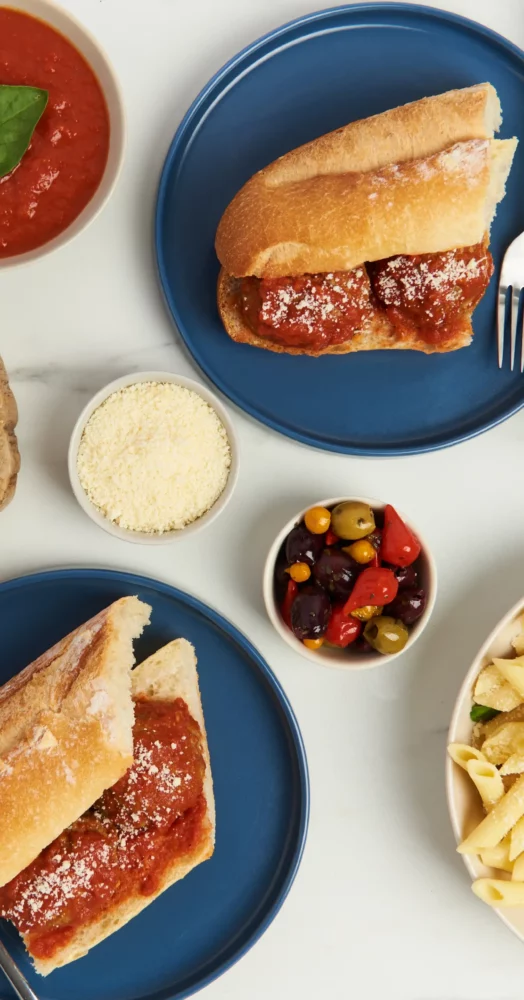
For years that was the whole company - essentially one hero product in a category defined by it. The heritage was genuine and the sauce sold, but a single-SKU meatball brand has a ceiling. The question that would define the next chapter was whether a nostalgic Italian recipe could become the front door to something much larger: the entire deli case.
There is a reason the deli resisted becoming a big business. Prepared foods are perishable, margins are thin, and food-safety requirements are demanding, which favored small operators close to their customers. The flip side is that shoppers keep buying: fresh, ready-to-eat meals are one of the few grocery categories still growing as households trade restaurant meals for something they can heat at home. A manufacturer that could industrialize quality and reliability across that aisle would have a durable position.
02 / The PivotFrom one meatball to a platform
The turn came in 2022, when Adam Michaels joined as chief executive. Michaels had spent nine years at Mondelez International across supply chain, sales, marketing and strategy, and had worked on mergers and acquisitions inside its ventures portfolio. He looked at a $40-billion-plus deli-prepared category that was growing steadily and served by hundreds of small manufacturers, and saw a consolidation opportunity hiding behind the meatballs.
"I'm not looking to be a $100 million company. We're going to be a $1 billion business."Adam Michaels, Chairman & CEO
In 2023 the company renamed itself from MamaMancini's Holdings to Mama's Creations and switched its ticker to MAMA. The rebrand was not cosmetic. A company called "MamaMancini's" is a meatball brand; a company called "Mama's Creations" can sell salads, olives, chicken and prepared meals under one corporate roof. The name change gave the business permission to become a house of brands aimed at filling the deli case, not just one shelf of it.
03 / The ProductsFour brands, one glass counter
Today the portfolio is built to let a single retail buyer source much of their deli program from one vendor. Each brand covers a different section of the case.
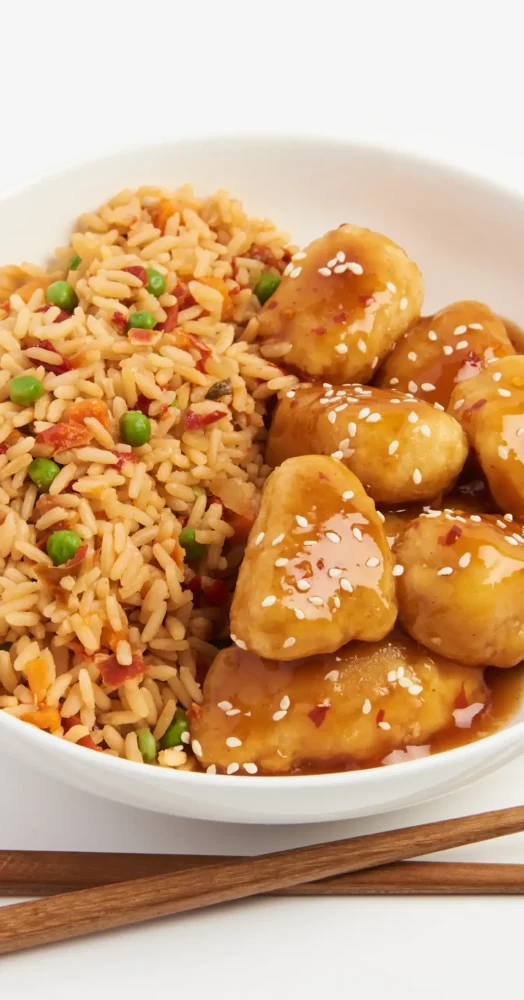
On top of the retail business, the company launched a direct-to-consumer e-commerce store in late 2023, shipping frozen meatballs and prepared foods to shoppers nationwide - a way to capture an occasion the grocery deli case cannot, and to read demand signals directly.
04 / The ModelSell the retailer, not just the shopper
The clearest way to understand Mama's Creations is that its customer is the retailer as much as the consumer. Its pitch to grocery, mass, club and convenience chains is convenience of supply: one manufacturer that can deliver fresh meatballs, salads, olives and prepared proteins on a single truck, with the food-safety controls and consistency a national chain requires. That "one-stop-shop" framing is why acquisitions matter - each brand added is another section of the case the company can now supply.
"The vision we laid out demands we develop a holistic deli offering - a team effort across Marketing, Sales and R&D."Lauren Sella, Chief Marketing Officer
The strategy shows up most vividly at Costco, where the company grew from roughly half a million dollars in annual sales to more than $10 million in a single quarter within a few years, reaching "everyday item" status in the club's Northeast region. New placements at Walmart, Target and Food Lion followed. The playbook is unglamorous and effective: land a section of one retailer's deli case, prove reliability, and expand.
Revenue trajectory (fiscal year, $M)
05 / The Roll-UpBuying the case, one plant at a time
Growth at Mama's Creations runs on two tracks: organic wins in existing accounts, and tuck-in acquisitions of regional manufacturers. In December 2021 it bought T&L Creative Salads and The Olive Branch for about $14 million, adding salads and olives. In September 2025 it acquired the assets of Crown I Enterprises from Sysco for $17.5 million, gaining a Long Island fresh-protein plant and roughly $56 million in additional annual revenue. The Crown deal was funded partly by a $20 million private placement.
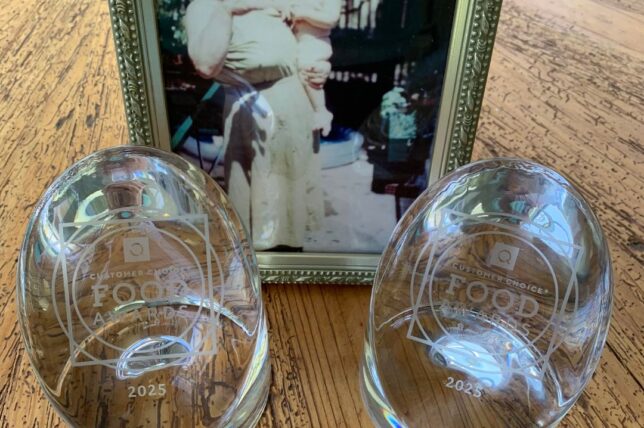
Michaels frames the operating discipline behind all this as the "4 Cs" - Cost, Controls, Culture and Catapult - a shorthand for turning family-run acquisitions into a single, data-informed manufacturer before layering on growth. It is the kind of management vocabulary you would expect from a former consultant, applied to a business that still runs on a grandmother's recipes. The leadership bench is stocked accordingly, with veterans of large consumer-goods companies - among them Chief Marketing Officer Lauren Sella, who spent years on brands at Mondelez before joining - now applying big-company rigor to a mid-cap manufacturer.
That combination - heritage recipes on one side, packaged-goods operating discipline on the other - is the actual product Mama's Creations sells to Wall Street. The meatballs are real, but the investment thesis is about a management team that thinks it can do to the deli case what larger firms did to the freezer aisle a generation ago: standardize it, consolidate it, and run it at scale.
06 / The MarketWhere it sits, and who it is up against
Mama's Creations is a small company inside a large, fragmented category. It competes with names like Reser's Fine Foods, Bob Evans Farms, Giovanni Rana and Hormel, as well as regional deli makers and grocers' own in-house kitchens. What sets it apart is less any single product than its structure: a public company using scale, capital markets and acquisitions to consolidate an aisle that has historically resisted consolidation. That is also the risk. The $1 billion by 2030 target implies years of continued acquisitions and integration executed cleanly, in a business with thin margins and perishable inventory.
"Fiscal 2026 was a landmark year for Mama's Creations. We delivered 39% revenue growth."Adam Michaels, Chairman & CEO
For now, the numbers point the right way. Fiscal 2026 brought record revenue, adjusted EBITDA up roughly 52% to $15.4 million, positive free cash flow and net income of $5.3 million. The company held a virtual investor day in February 2026 to walk through Crown 1's integration and new tier-one retail placements. Whether the deli case can carry a billion-dollar public company is still an open question - but Mama's Creations is the only one asking it out loud.