There is a moment in every successful mobile game when the fantasy stops and the arithmetic begins. The dragon has been rendered, the village balanced, the players acquired. Someone taps “buy.” At that instant, a company that did not draw the dragon, balance the village, or acquire the player may collect a substantial share of the sale. The app store calls this distribution. A game studio may use a less diplomatic noun.
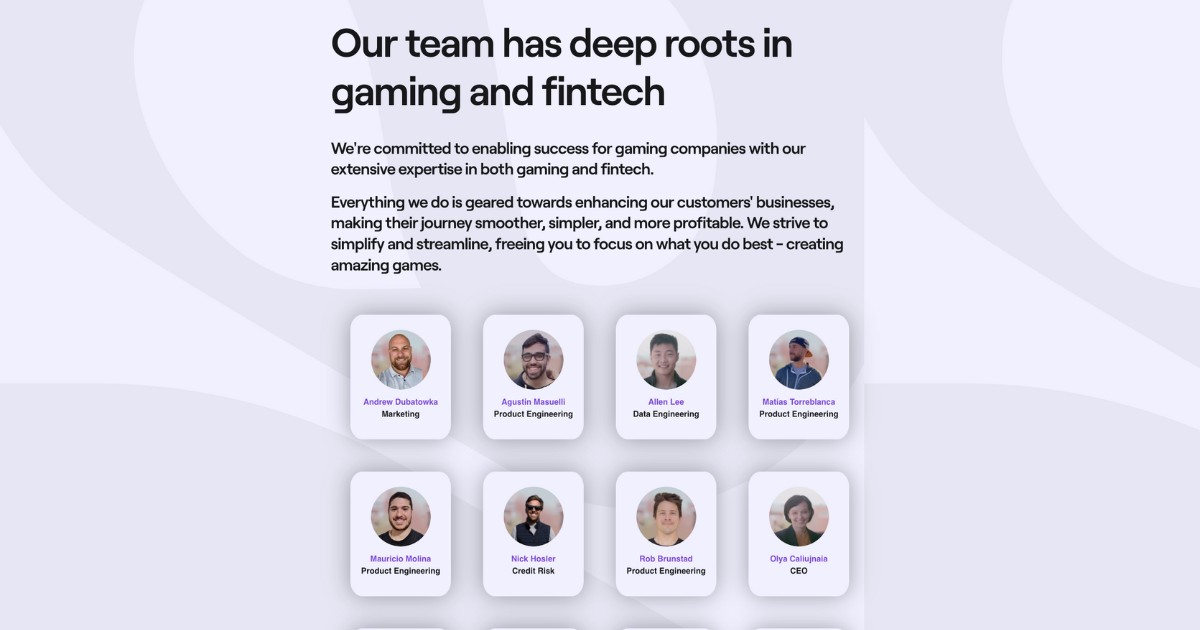
Sanlo lives in that undiplomatic gap. Founded in San Francisco in 2020 by Olya Caliujnaia and William Liu, the company began with a sensible fintech proposition: game and app makers had peculiar cash flows, expensive user acquisition, and few lenders who understood either. Sanlo would read their performance data, offer financial insight, and advance growth capital without taking equity. It was finance made fluent in games.
Sanlo in one screen
- What it sells: webshops, web and Unity checkout, merchant-of-record operations, analytics, and non-dilutive game financing.
- Who buys: independent developers, mobile studios, and publishers that want better margins and a direct player relationship.
- What it costs: Sanlo advertises a single webshop fee and disclosed financing fees, but publishes no rate card.
- The catch: a second checkout channel only matters if players love the game enough to use it.
The loan led to the till
The founders had unusually tidy résumés for this untidy problem. Caliujnaia had worked across Electronic Arts, Getty Images, fintech firm SigFig, and venture capital. Liu had passed through EA, consumer lender Earnest, and mobile-fintech company Branch. Between them sat both halves of the puzzle: how games make money, and how money moves.

Their first product asked studios to connect banking, platform, product, and marketing data. Sanlo used that read-only view to underwrite advances and show operators what their scattered dashboards could not. A studio could receive up to $1 million, repay it on a fixed schedule with a stated monthly fee, and keep its shares. That mattered in a market where the alternatives were often venture capital, publisher money tied to control, or a lender baffled by a free-to-play economy.
The company raised $3.5 million in 2021 and another $10 million in a Konvoy-led Series A in 2022. A partnership with HCG Funds expanded the available pool of developer capital to $200 million. The capital was the headline. The more interesting discovery was underneath it: financing user acquisition solves the cost of finding a player, but does nothing about the expensive machinery that collects from one.
“A webshop is one of those super tactical steps that actually proved to show that you can implement revenue from.”Olya Caliujnaia, co-founder and CEO
A checkout button with a backstage crew
In April 2024 Sanlo put its Webshop Builder into closed beta. The pitch was deliberately unromantic: a studio could launch a direct store that worked with its existing stack, fill it with bundles, discounts, rewards, and segmented offers, then receive payouts weekly. Sanlo would stand behind the curtain as merchant of record, dealing with tax, compliance, fraud, security, and payment operations.
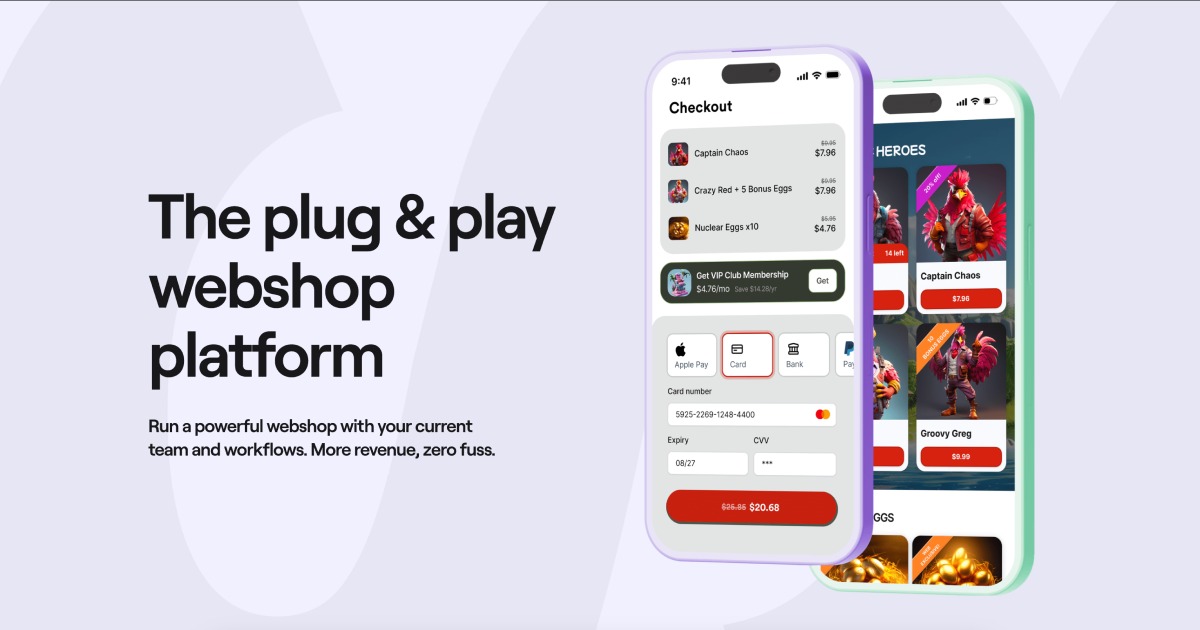
Webshop Builder
A complete branded store with live-ops offers, loyalty mechanics, global payments, and weekly settlement.
Web Checkout
An embeddable SDK and API layer for a studio’s existing website, custom shop, or browser game.
Unity Checkout
A customizable native payment flow for Unity games on iOS and Android.
Game Funding
Non-dilutive capital for user acquisition, development, portfolio expansion, or payout timing.
Web Checkout pulls the payment component out of the full store and lets developers embed it in a website or browser game. Unity Checkout carries a native form into Unity-built games. Creator codes connect sales to influencers. One-click payment reduces the chance that a determined player becomes a distracted former shopper. It is not one product so much as a graduated answer to the same question: how much commerce infrastructure does the studio wish to own?
The thirty-percent provocation
The market was prepared for this argument by Apple and Google. Their in-app purchase commissions, commonly described as reaching 30%, made an external store look less like an ecommerce hobby and more like margin strategy. In 2024, TechCrunch estimated that game webshops generally charged around 4% to 10%, though Sanlo itself does not publish a fee. The comparison is not perfectly clean - platform rules, payment costs, marketing, discounts, and player drop-off all meddle with the spreadsheet - but it is clean enough to start a sales conversation.
Sanlo commissioned a survey of 5,050 active mobile players for its 2024 Web Shop World Report. Eighty-one percent said they knew game webshops existed. Among those aware of them, 77% had bought through one; 90% of purchasers said they were likely to do so again. The awkward number was 25% - the share who actually preferred a webshop. Familiarity, it turns out, is not affection.
What players told Sanlo
Sanlo Web Shop World Report, 2024. Base sizes differ by question; purchase figures refer to respondents aware of webshops.
What failed first was the shortcut
No public account says Sanlo’s financing product failed. It remains on sale. What failed, in the wider games market, was the comforting idea that growth capital alone could repair a studio’s economics. Money can buy installs. It cannot make an indifferent player loyal, turn poor retention into durable revenue, or stop platform fees from thinning every purchase.
A case study with Turkish developer Vertigo makes the danger plain. The studio warned that early “golden cohort” metrics can collapse at scale: retention, lifetime value, and acquisition cost all change when a thousand unusually keen players become a million ordinary ones. Vertigo used Sanlo’s financing intensely over two months for user acquisition and reported growth and profit during that period. Its copyable lesson is not “borrow and spend.” It is “know the payback, choose the moment, and spend against a measured return.”
The same discipline applies to web commerce. Sanlo’s own study of more than 50 game stores recommends a recognizable official URL, painless account login, email capture, clear offers, and constant promotion. Fusebox Games, maker of games based on the Love Island television property, chose Sanlo because a small team could not comfortably build the whole capability itself. This is Sanlo’s best competitive distinction: vertical software plus human help, made by operators who already know why a game’s most loyal spender is unlike an ordinary online shopper.
The useful trick is knowing when not to play
Sanlo competes with specialists including Xsolla, Appcharge, Coda, Stash, Aghanim, and Neon, with general tools such as Stripe, and with the most stubborn competitor of all: building in-house. Its bundle is attractive when a studio wants financing, checkout, compliance, and gaming-specific monetization under one roof. A large publisher with a mature payments team may prefer to own the stack. A tiny developer with no loyal payer base may not have a channel worth owning yet.
Before copying the playbook
A direct shop works best when the game already has loyal payers, a reliable player-account system, recurring live-ops content, and a team able to promote offers outside the familiar in-app flow. It works badly when retention is weak, players cannot log in cleanly on the web, discounts consume the fee savings, or financing is used to disguise negative unit economics.
The cleverness of Sanlo is not that it discovered the checkout button. It is that it followed the same customer from the bank statement to the buy button and noticed that both belonged to one problem: independence. Capital without equity preserves ownership. A direct store preserves margin and customer data. Merchant-of-record service removes chores without removing the relationship. Each product is another attempt to let game makers keep the business while they build the world.