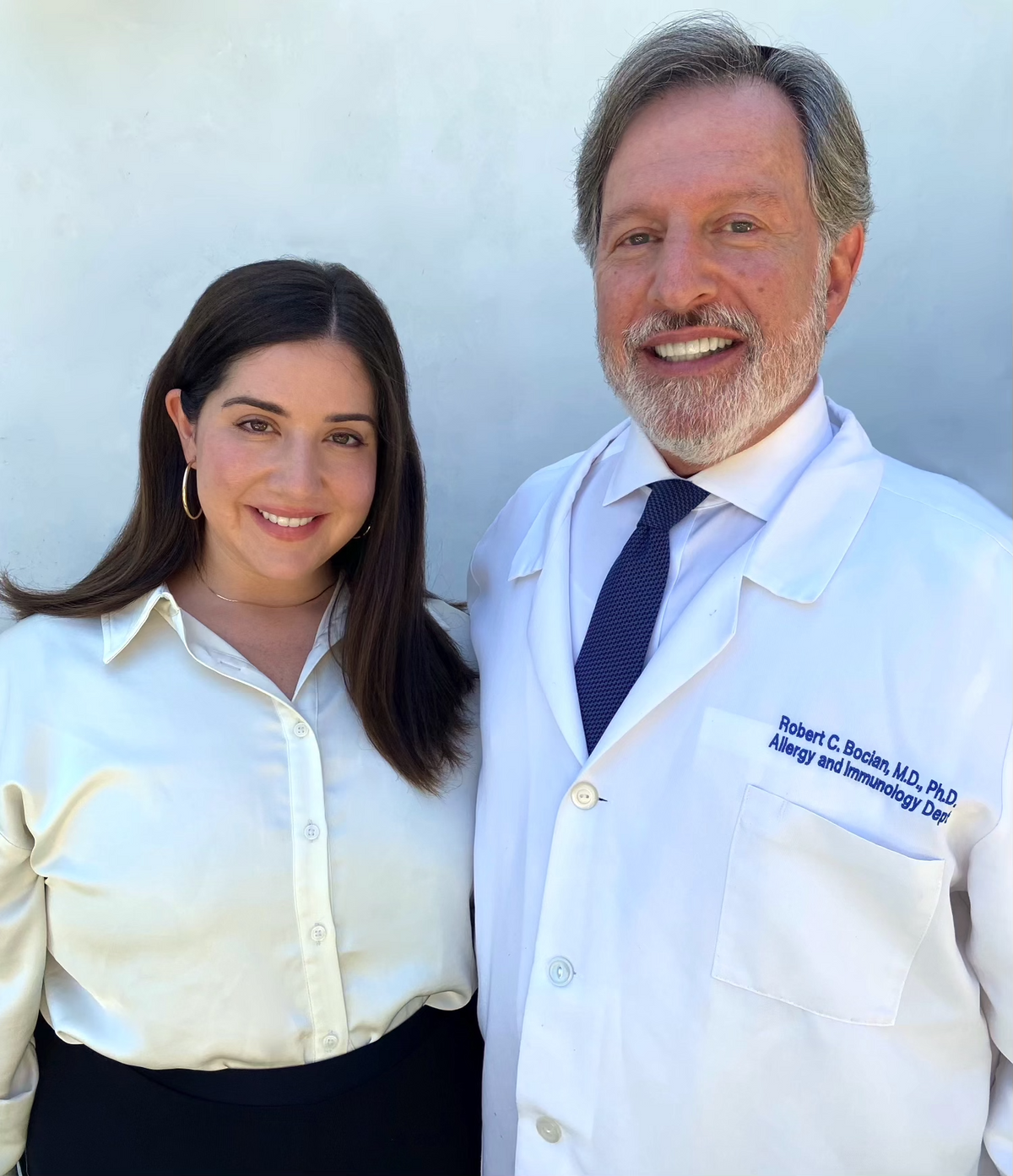
The trouble with the allergy aisle is that it asks a complicated question with a wall of identical boxes. Is the nose blocked, dripping, itching, or inflamed? Does it do all four at once? Dr. Robert Bocian spent more than three decades treating people for whom the shelf's answer was inadequate. He adjusted combinations and doses for individual patients. They called the results “Bocian's Potions.” It is a name with a whiff of magic, though the ingredients were familiar medicines and the method was clinical.
His daughter, Shani Bocian Steinberg, knew the method from childhood. She used the sprays herself, and later saw custom medicine delivered through online services in other fields. Her question was less pharmaceutical than logistical: if her father could make a tailored spray in an office, could a company make that care available beyond the office? Allermi is her answer.
- Allermi serves adults with nasal allergy and rhinitis symptoms through an online clinical intake and, when appropriate, a custom prescription spray.
- Its Super Spray can combine up to four active ingredients; a saline mist and access to a care team accompany the advertised kit.
- The company reports more than 100,000 patients treated. Its current advertised kit price is $45 per 30-day order, plus shipping and handling.
- The lesson for builders: expert advice got the first patients talking; a repeatable medical and pharmacy operation made wider distribution possible.
The potion needed a system
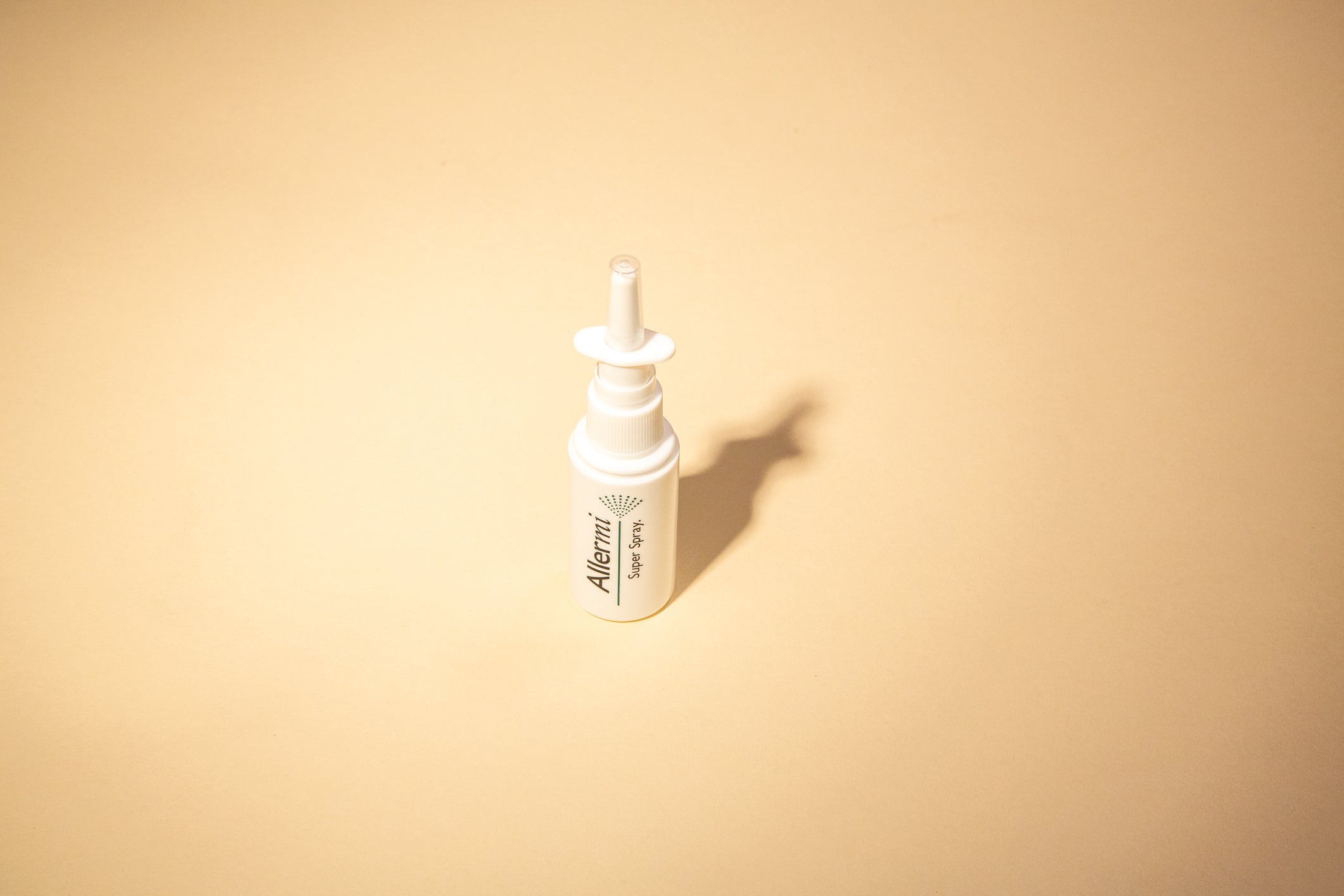
The product is a compounded prescription nasal spray called Super Spray. A prospective patient describes symptoms and medical history through an online intake. A clinician reviews the answers and decides whether a prescription is appropriate. The resulting formula may contain some combination of azelastine for histamine-related symptoms, ipratropium for a runny nose, triamcinolone for inflammation, and a low dose of oxymetazoline for congestion. The selection and dose depend on the patient. Allermi says its offering now spans 80 formula variations.
The distinction matters because a blocked nose and a dripping nose can coexist without responding to the same ingredient. Drugstore sprays generally offer a fixed formula; a conventional consultation may result in several separate products. Allermi's wager is that an online visit, one customized bottle, and subsequent adjustments are convenient enough to justify an extra step before checkout. This is a service as much as it is a bottle.
There is also a Salinity Spray, a non-prescription saline mist intended to moisturize and clear nasal passages. The advertised kit includes both sprays, a consultation and ongoing access to the medical care team. The website currently lists the kit at $45 per 30-day order plus shipping and handling, and says it does not accept insurance. Patients may request a formula change when the first prescription is not doing the job. That last feature may be the most revealing one: “personalized” here is meant to continue after the parcel arrives.
First, find the people who have tried everything
Allermi's early customers did not materialize from a clever slogan. In a 2023 interview, Shani described going into allergy support groups on Reddit and Facebook with medical staff to answer questions. The group members often had persistent symptoms and a drawer full of disappointing attempts. The team asked what they had already tried, discussed the clinical problem, and invited suitable people to test the service. Early users gave feedback while the company refined its process.
People in support groups hate to be sold to.
Shani Bocian Steinberg, on finding early usersThe line is easy to mistake for a marketing trick. It was more demanding than that. A prescription product cannot be handed out like a packet of shampoo. The company still needed an intake, a clinician's judgment, a pharmacy, and a way to respond when a treatment needed changing. It took years of development to turn the office method into a repeatable service. A 2025 founder interview described nearly $1 million in personal investment during that build, covering formulation, operations, technology and compliance. That figure is self-reported, but the work it describes is plain to see in the transaction: the bottle cannot exist without the system around it.
Allermi launched in California in July 2022. A $1.25 million pre-seed round led by Lucas Venture Group was reported that September. In March 2023, a $3.5 million seed round led by Nelstone Ventures, with FourSight Capital Partners participating, helped finance expansion. The company said it was then available in 28 states. Its stated expansion required more than a national website: clinician coverage and pharmacy arrangements had to follow the product across state lines.
The polished ad lost to the doctor with a phone
The first patient conversations established a use case. They did not automatically create a scalable acquisition channel. Shani said an experienced adviser pressed her to show how Allermi could find customers beyond support groups. The company hired marketing expertise and tested paid social ads. In a podcast interview, she recalled resisting the advice to make “ugly ads.” She preferred beautiful creative; phone footage of her and the doctors explaining the disease and treatment converted better, she said. TikTok and Meta were working channels at the time of that interview.
The explanation is less romantic than “authenticity wins.” In health care, the buyer is being asked to reveal symptoms, trust a prescriber, and commit to a recurring product. Showing the actual clinician speaking plainly shortened the distance between an unfamiliar brand and the person asked to trust it. Allermi's public numbers should still be read as company reports: its site says more than 100,000 patients have been treated and displays thousands of reviews. Neither number reveals how many are currently subscribed or how a particular patient's outcome compares with another treatment.
A narrow market can be a large one
The company could have tried to treat every condition associated with allergies. It considered other problems, including eczema, then stayed with the nose. That decision sounds modest until one considers the competitors: inexpensive fixed-dose sprays, oral drugs, conventional allergist visits, and prescription combination products. Allermi sits between the shelf and the specialist's office. It packages clinician-guided customization as a consumer subscription, for people willing to complete an intake and pay out of pocket for a more tailored option.
It has also added a separate Rebound Rescue program for new patients who overuse standard decongestant sprays. The site lists a one-time $199 price for a three-phase plan, subject to a clinician's review. That extension stays close to the original territory: nasal symptoms, a prescription process, and follow-up. A 2024 article with air purifier company Molekule similarly placed the spray alongside ways to reduce indoor triggers. Neither move requires Allermi to become an all-purpose allergy clinic.
For another founder, the copyable part is surprisingly small. Start with the people who describe a problem in detail. Put real experts in those conversations. Learn where fixed products fail them. Then work out whether the unglamorous delivery machinery can reliably repeat the expert's judgment. The approach would be a poor fit for a product that needs no expert judgment, or for a team without the clinical and operational resources to deliver it safely. Allermi had a thirty-year head start in the judgment part; most would-be imitators will not. Its story is therefore as much about the patience required to build the machinery as it is about the charm of a family recipe.
Keep reading, keep looking
See the current offer, the company's own explanation of its method, and the founder's account of how the first patients arrived.