The Woman Who Sold America a Coffee With No Coffee In It
Caroline MacDougall couldn't drink coffee but loved the taste. So she roasted chicory, carob and figs into a caffeine-free brew - and built the best-selling coffee alternative in America.
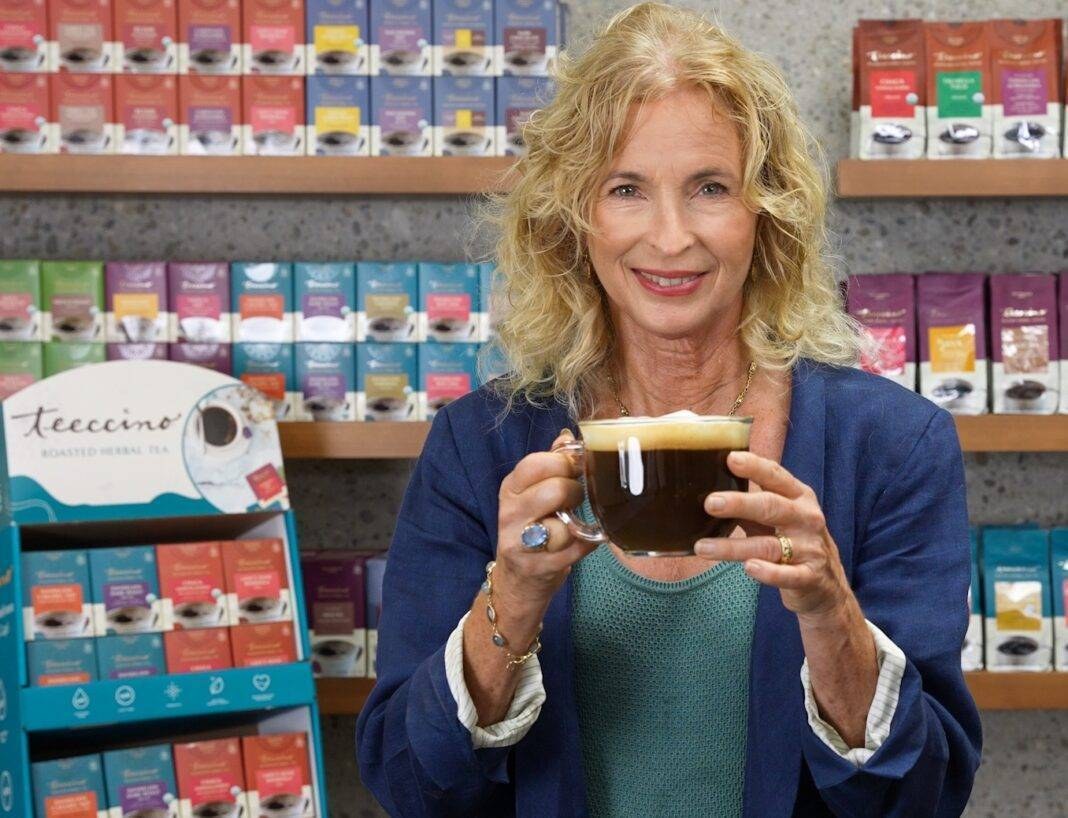
In the fall of 1993, a tea designer named Caroline MacDougall woke up from a dream. In it, she was harvesting herbs in a Costa Rican rainforest, and she heard herself tell her boss at the Republic of Tea: "The next product I'm going to create is a caffeine-free cappuccino, and the name of the product is Teeccino." She had dreamed the concept and the name in one shot. The problem was simple and personal - she loved the taste and ritual of coffee, but caffeine and acidity did not love her back.
More than thirty years later, that dream is a company. Teeccino Caffe, Inc. sells a roasted herbal brew that grinds and pours like coffee but contains no coffee bean at all. It is made from roasted chicory root, carob, barley, dates and figs. It has no caffeine, it is low in acid, and by most market accounts it is the best-selling coffee alternative in the United States. Not a bad outcome for a beverage that started as a note-to-self from a dream.
01 / The ideaA coffee for people who can't drink coffee
The pitch is easy to say out loud, which is part of why it works: a warm, dark, roasted cup for people who love coffee but can't handle what comes with it. That audience is larger than the coffee industry likes to admit. It includes people with caffeine sensitivity, anyone managing acid reflux or GERD, pregnant and nursing women told to cut caffeine, and the steadily growing crowd trying to sleep better and drink fewer stimulants.
Look closely at who actually buys Teeccino and the strategy comes into focus. It is the new parent who was told to drop caffeine and misses the morning cup. It is the person whose doctor mentioned acid reflux and who quietly gave up espresso. It is the shift worker chasing better sleep, the person tapering off a four-cup habit, the wellness shopper who wants a prebiotic in the mug rather than a supplement on the counter. None of them want to be told they are on a diet. They want a replacement that feels like a treat, and Teeccino's entire catalog is built to make the swap feel like a small upgrade instead of a sacrifice.
MacDougall didn't invent chicory coffee - Europeans have stretched coffee with roasted chicory root for centuries, and New Orleans built a whole identity on it. What she did was reframe it. Instead of selling chicory as a cheaper substitute for the real thing, she built it as the main event: a premium, all-herbal brew you would choose on purpose. The name, pronounced "tea-CHEE-no," is a wink at cappuccino. The promise is that you give up the caffeine, not the pleasure.
The next product I'm going to create is a caffeine-free cappuccino, and the name of the product is Teeccino.Caroline MacDougall, recalling the 1993 dream that named the company
02 / The founderFifty years of herbs, one very specific resume
If Teeccino looks like an overnight wellness brand, the founder's history says otherwise. MacDougall started working with herbs in the early 1970s. At 21 she was a globe-trotting herb buyer for Celestial Seasonings, sourcing across Europe, North Africa and Central and South America. She apprenticed with the legendary herbalist Juliette de Bairacli Levy, spent time in the herb garden at Scotland's Findhorn Foundation, and later formulated beverages for Yogi Tea, Uncle Lee's Tea and Organic India. Before Teeccino, she carried the title "Minister of Herbs" at the Republic of Tea.
The through-line is that MacDougall had already spent twenty years perfecting other companies' recipes before she risked her own. That is the quiet lesson buried in the origin story: sometimes the founder needs two decades of someone else's research and development first. When the dream finally arrived, she had the sourcing contacts, the formulation instinct and the palate to act on it.
There is a family echo, too. Her great-grandmother, Alice Foote MacDougall, was a single mother who built a coffee-roasting business into a chain of gourmet coffee houses in early-1900s New York. Three generations later, the family business went from selling coffee to selling coffee without the coffee.
03 / The recipeWhat is actually in the mug
Teeccino's base blends are built from roasted and ground plants, not beans. Chicory root brings body and a natural prebiotic fiber called inulin. Carob and barley add roasted depth. Dates and figs bring a faint sweetness and help it caramelize like a dark roast. The result brews in a drip machine, a French press or an espresso maker, and steeps in a tea bag for people who want a single cup.
Because there's no coffee bean, there's no caffeine and far less acid - the reason so many reflux sufferers and expectant mothers end up as loyal customers. The chicory inulin gives Teeccino a gut-health story that most decafs simply don't have. It is a food, not a medicine, and the company is careful about that. But the ingredient list is doing real work, not just marketing.
04 / The lineupFive flavor families and a functional turn
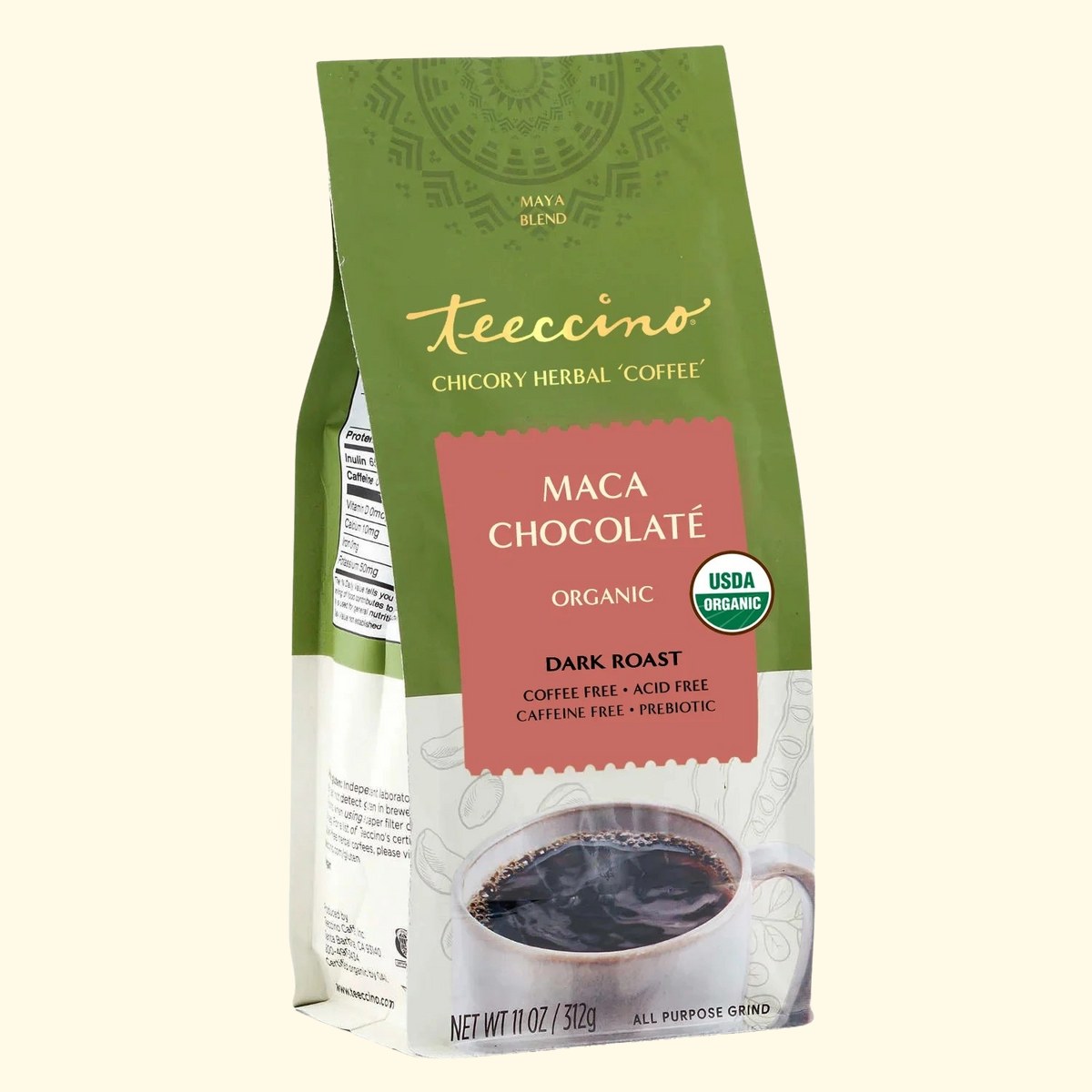
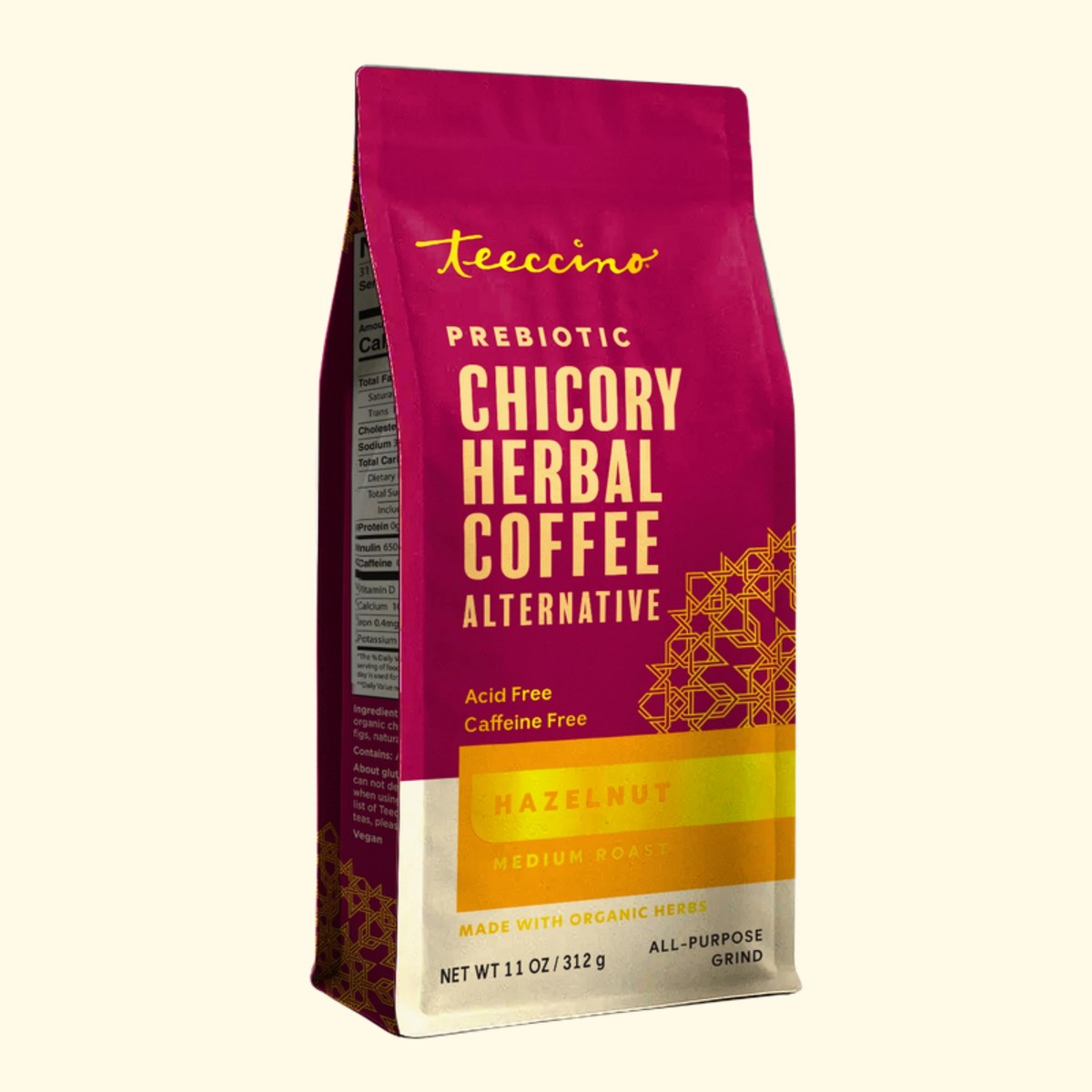
The catalog has grown to more than thirty organic, mostly gluten-free blends, sorted into five families so the shelf actually makes sense. There are the original Mediterranean-style roasts - French Roast, Vanilla Nut (the first flavor, from 1995, and still a best-seller), Hazelnut, Chocolate. There are the Maya blends, introduced in 2005, built around ramon seeds wild-harvested from Guatemala's Maya Biosphere Reserve. There is a certified gluten-free Dandelion collection from 2013 for anyone avoiding barley.
Then, in 2020, Teeccino took a functional turn - and did it early. The Prebiotic SuperBoost line layers concentrated vegan GOS and organic XOS prebiotics on top of chicory's natural inulin for a bigger gut-health hit. The Mushroom Adaptogen line pairs one mushroom with one adaptogenic herb per blend - Lion's Mane with Rhodiola Rose, Reishi with Eleuthero, Cordyceps with Schisandra. The design choice matters: instead of sprinkling a microdose of ten mushrooms into one cup, each blend delivers a meaningful amount of a single pair. The Lion's Mane blend, for instance, carries 300mg of lion's mane and 300mg of rhodiola.
Maximum wellness in every cup.Teeccino, on its mushroom adaptogen and prebiotic blends
The timing is the interesting part. Teeccino was doing functional mushroom coffee in 2020, before the venture-funded wave of mushroom brands crested. It got to the trend by walking, not sprinting - which is roughly how the whole company operates.
05 / The marketThe quiet leader in a loud category
The coffee-alternative market is not small. Industry estimates put the global category in the range of $14 billion, growing steadily as more people cite caffeine sensitivity, poor sleep and digestive comfort as reasons to switch. It is a crowded aisle now - chicory blends like Cafix, Dandy Blend and Postum on one side, buzzy mushroom-and-adaptogen brands like MUD\WTR, Rasa and RYZE on the other.
In that noisy field, Teeccino is the quiet one that keeps winning. Multiple market analyses name it the leading US coffee-substitute brand, with roughly 19% share - ahead of Dandy Blend, MUD\WTR, Postum and Rasa. Its edge is old-fashioned: it brews like real ground coffee in equipment people already own, and it costs less than the newer functional entrants, often around $8 to $12 a package.
The business behind that leadership is deliberately modest. Teeccino runs on roughly 29 employees and, by third-party estimates, about $4.4 million in annual revenue. Its only disclosed outside capital is a $450,000 debt round in 2021. There is no nine-figure raise here, no blitz-scaling. It sells through natural grocers like Whole Foods and Sprouts, on Amazon, and direct from teeccino.com, and it has held the top spot the slow way.
06 / The valuesWild spaces, and a family that runs on them
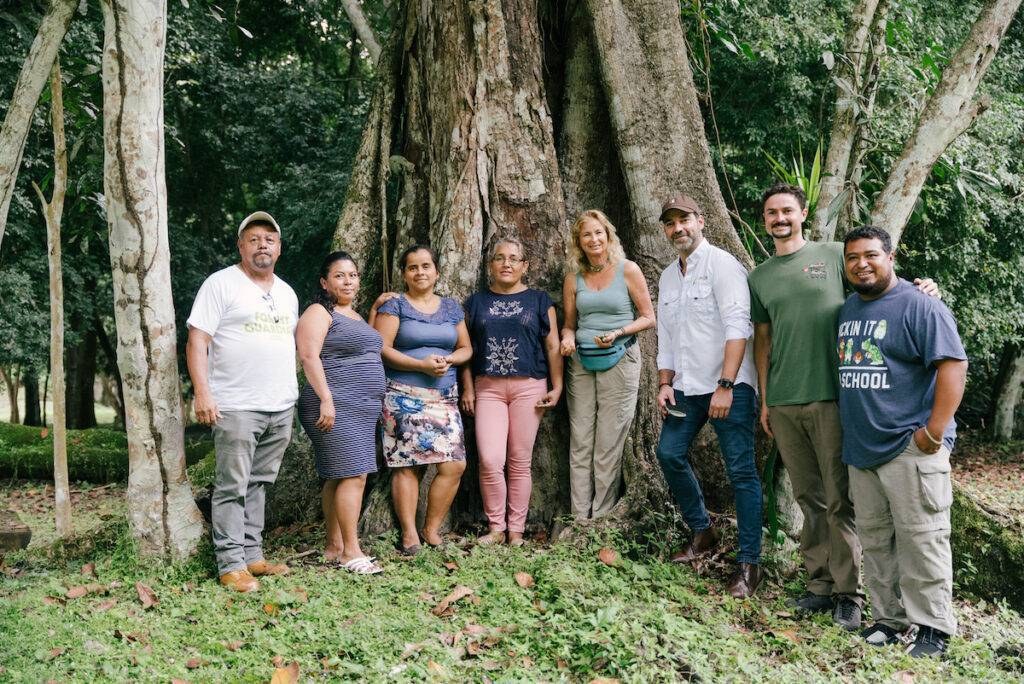
Teeccino describes itself with five words: purpose, people, planet, profits, passion. That can read like a wellness-brand poster, but the sourcing gives it teeth. The company says roughly three-quarters of its ingredients come from wild spaces, and its Maya blends are the clearest example - ramon seeds harvested by communities that hold land-management concessions in the Guatemalan rainforest, giving them a reason to keep the forest standing.
The way we preserve wild spaces is to enable the people who live with them or near them to earn income from them.Caroline MacDougall, on Teeccino's sourcing philosophy
It is also, still, a family business. MacDougall is CEO. Her son Galen leads sales. Her husband Jerry Isenberg is the chief financial officer. Thirty years in, she says she is more passionate about the mission than when she started - the kind of line founders often say, but one that lines up with a company that never sold itself off or chased a quick exit.
07 / The takeawayWhat you can steal from Teeccino
There is a usable playbook in here for anyone building a consumer brand. First, turn a constraint into the whole strategy - MacDougall's own caffeine sensitivity defined the product, the audience and the moat. Second, sell the upgrade, not the loss: "quit coffee" is a downer, but "a warm ritual that won't wreck your sleep or your stomach" is a purchase. Third, you can lead a trendy category without venture money if you get there first and stay useful. Teeccino was doing prebiotic, low-acid, functional-mushroom coffee before those were buzzwords, and it got there by compounding for three decades instead of raising for three years.
The honest asterisk: it only works because the product actually tastes like a dark roast to the people who miss one. A chicory brew is not espresso, and no amount of positioning changes that for a hardcore coffee drinker with no reason to switch. Teeccino's whole business lives in the gap between "I love coffee" and "coffee doesn't love me." It just turns out a lot of people live in that gap - and one of them dreamed up the answer.