Before Little Spoon could feed a baby, it had to wait for a phone call. The founders had been preparing a Whole Foods launch. Then their contact left, and approval became an exercise in corporate patience. Days became weeks. Weeks became months. A food business was ready to move; its route to the customer was standing still.
- A stalled retail launch led to direct sales in 2017.
- The menu grows with children, from formula to lunch kits.
- Public batch results give parents something to inspect.
- Target adds a way to buy selected products without subscribing.
The team eventually stopped waiting. Little Spoon launched directly to consumers in 2017. The interesting consequence was access to parents themselves: questions, complaints, requests, the small practical details a supermarket receipt cannot explain. A blocked entrance had opened a different door. The founders could now hear how feeding actually worked inside a household.
The proposition was straightforward. Parents could buy fresh baby food without making every batch themselves. Behind it sat a more useful question: what happens when a food company keeps listening after the first spoonful?
01A customer who outgrows the product
Michelle Muller had struggled to find fresh options for her own child. She joined Ben Lewis, Angela Vranich and Lisa Barnett to build Little Spoon. Lewis became CEO, Vranich led product, Barnett led marketing, and Muller focused on the customer experience. The founding group combined food operations, consumer branding and a parent’s intimate acquaintance with the kitchen sink.
Baby food presents an awkward commercial problem. Your delighted customer grows teeth. A business selling only purées must keep finding new babies as existing customers graduate. Little Spoon’s answer has been to graduate with them.
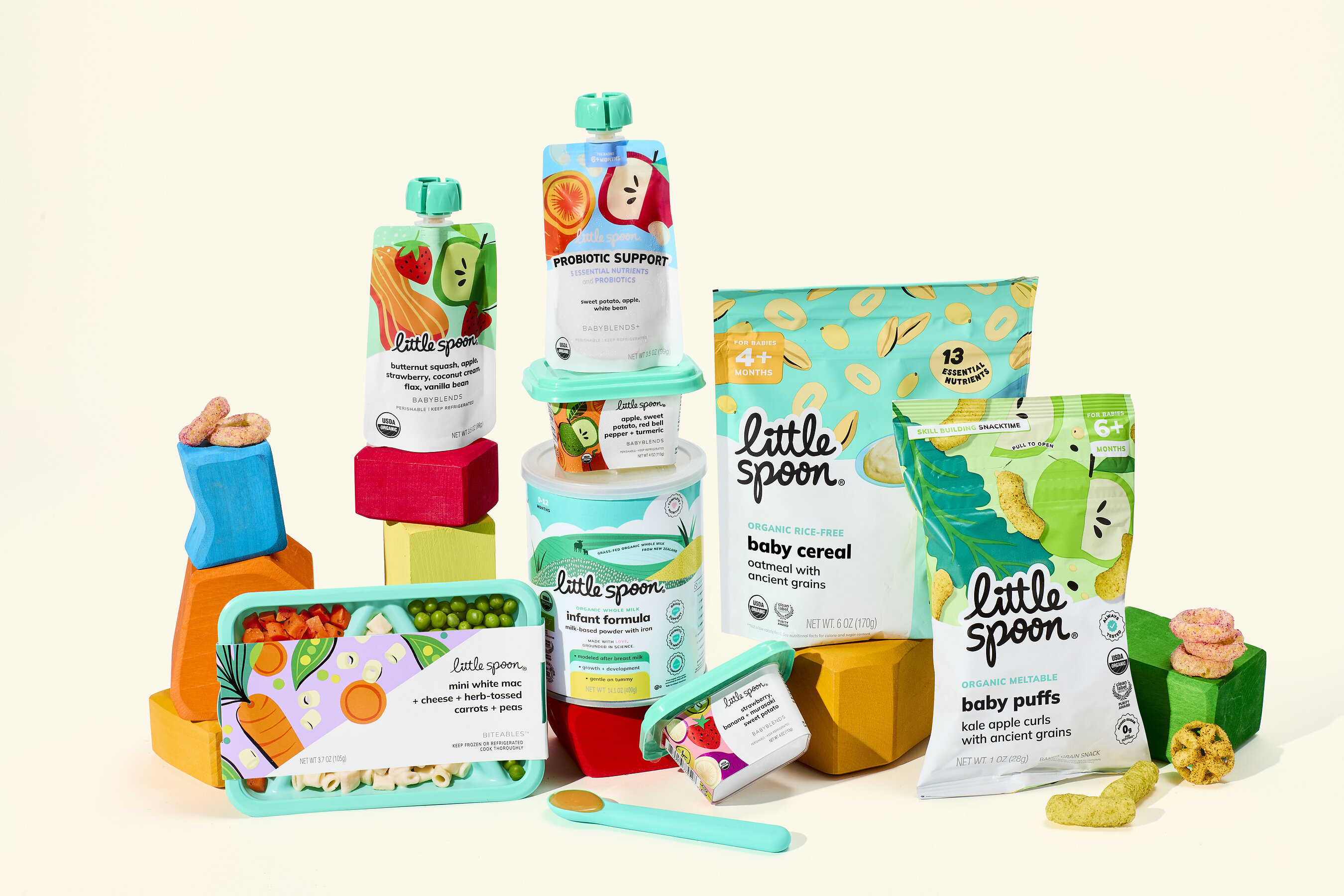
Babyblends supply organic purées. Biteables provide small, soft finger-food meals for the transition to table food. Plates are prepared toddler and children’s meals; Lunchers turn lunch into a build-and-eat activity. Refrigerated Smoothies and yogurt-based YoGos, rice-free puffs, cereal and snacks fill other feeding occasions. The assortment follows changing appetites and abilities rather than asking every child to remain conveniently six months old.
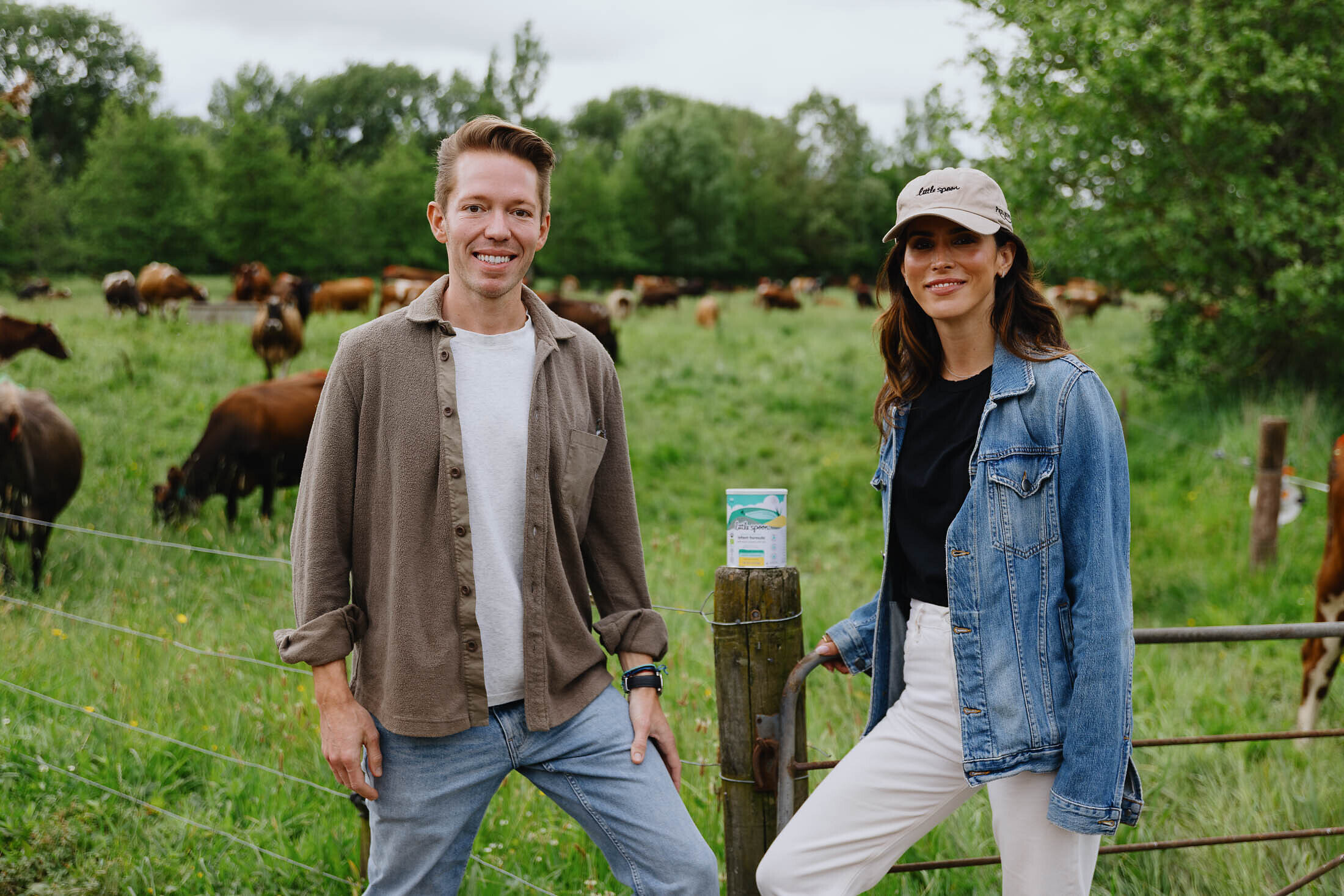
In March 2026, the company moved earlier in that sequence, introducing Organic Grass-Fed Whole Milk Infant Formula. The milk comes from New Zealand; the company says the formula carries both U.S. and EU organic certification. That creates an opportunity to meet families before solids enter the picture. It also takes the brand into a category with a different level of nutritional and manufacturing responsibility.
02The inconvenient business of convenience
For parents, the service removes several jobs at once: choosing recipes, buying ingredients, preparing portions and repeating the process next week. Its natural customer is a caregiver whose scarce resource is time and whose budget can accommodate prepared food. Little Spoon sells relief from meal preparation, alongside the food itself.
The online business runs on recurring orders, generally shipped every two weeks. Customers can choose menus and adjust, skip, pause or cancel before the cutoff. Refrigerated deliveries require insulated packaging, coolant and space in a fridge or freezer. Convenience travels inside a surprisingly demanding logistics operation.
Price deserves daylight. A publicly available Yahoo review reports roughly $3.32-$4.28 per Babyblend and $6.49-$7.74 per Biteables or Plates meal, plus $10 shipping per order. These are published review figures, not a live checkout quote; product, quantity and promotions affect the bill. At that meal range, one prepared dinner daily for 30 days is about $195-$232 before shipping. The arithmetic gives parents a better starting point than a first-box discount.
The venture also required outside capital: a $7 million financing announced in 2019, a $22 million Series A reported in 2021 and a $44 million Series B that July. The latter valued the company at roughly $200 million, according to contemporary reporting. Those figures describe financing at the time, not today’s market value.
Before shipping. Published review prices; actual checkout varies.
03Trust gets a lot number
Freshness was the original distinction. Little Spoon uses high-pressure processing for its baby purées, an alternative to the heat treatment associated with shelf-stable formats. But “fresh” answers a storage question more readily than it answers a parent’s next question: what else is in this food?
In September 2024, Little Spoon published EU-inspired contaminant testing standards. In April 2025, it expanded the program across Biteables, puffs, Smoothies and YoGos. Its current Transparency Hub lets visitors browse categories or search a package’s lot code. The company says its covered infant, baby and toddler products undergo third-party testing for more than 500 toxins and contaminants, and batches that fail its limits are withheld.
That is a claim about a testing system, not a promise of zero contaminants. Organic certification, ingredient selection and measured contaminant levels answer different questions. The useful distinction is that a parent can inspect the stated limits and batch results instead of interpreting a reassuring adjective.
Little Spoon also draws on pediatricians, dietitians and feeding specialists. Its newer Spoon Fed content platform explains feeding and safety topics. In June 2026, it described funding independent infant-formula research at UW-Madison. Information has become part of the service: a company that ships dinner also has to explain itself.
“We were stuck in this limbo.”Angela Vranich, on the stalled retail launch
- 01 / LIMITPublished voluntary thresholds
- 02 / TESTThird-party batch analysis
- 03 / LOOK UPResults by product or lot code
04Back to the aisle, with better questions
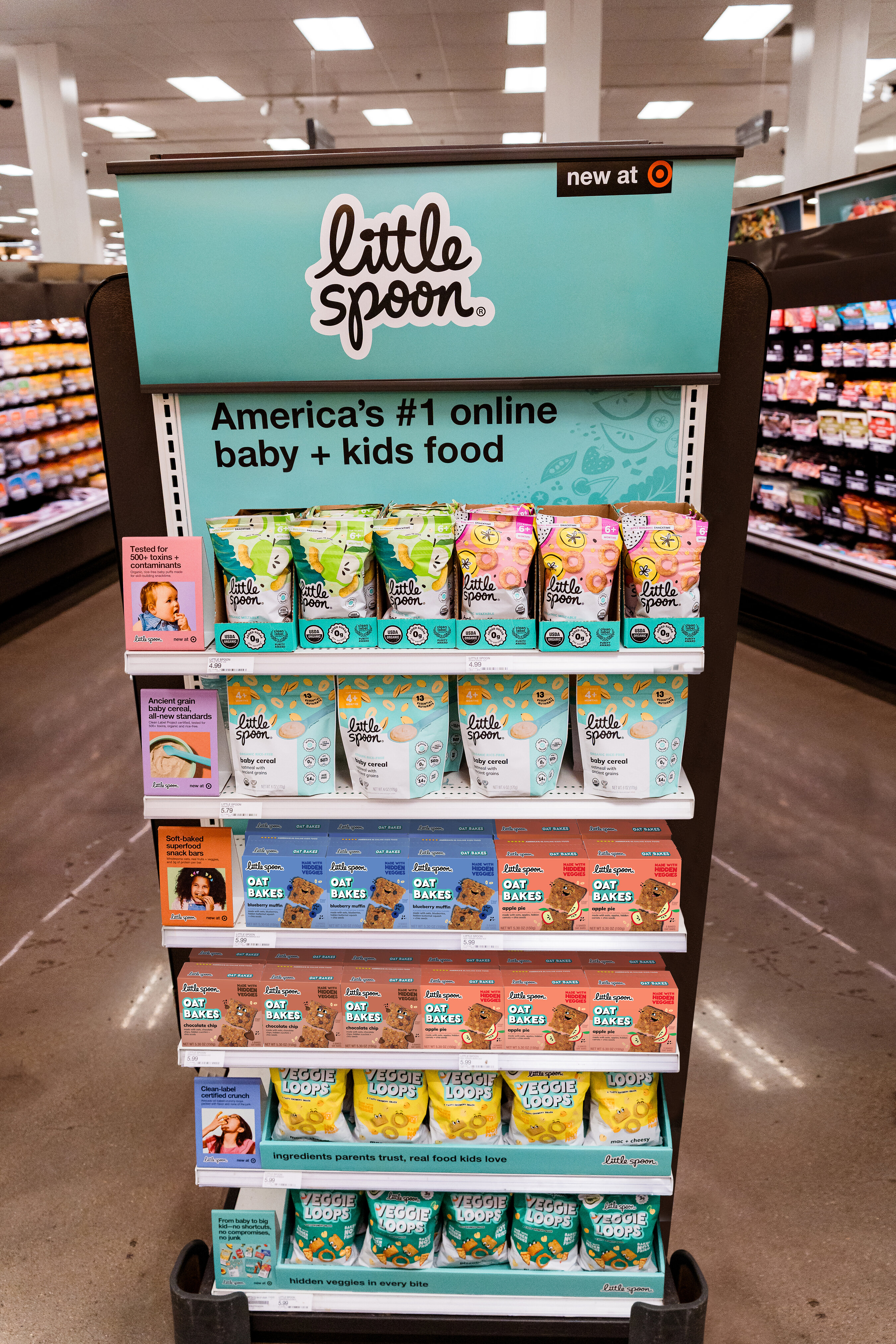
On September 30, 2025, Little Spoon announced its Target debut: 23 products across seven categories and six aisles. Its research found that 80% of its customers already shopped there. Retail offered another way to reach the same families, including those who prefer choosing a few items without arranging a subscription.
The revealing detail is the frozen multiserve range. Parents had asked to buy favorite components of Plates separately. Target received chicken dippers, veggie sliders and turkey-kale meatballs that could be portioned and combined at home. The feedback became a product format, not merely a warmer customer-service email.
Little Spoon occupies the premium convenience end of children’s food. Nurture Life offers another prepared-meal route; Once Upon a Farm and supermarket baby-food brands offer alternatives for particular stages. Home cooking remains the substitute that needs no venture round. Refrigeration, delivery access, recurring-order deadlines and individual allergen requirements all affect the fit. Some products are made in facilities handling common allergens.
The lesson for another business is practical: record the requests that repeat, then change the product around them. Publish evidence where trust matters. Expand when the customer’s next problem becomes clear. Little Spoon’s return to retail suggests that a distribution decision can remain provisional. The spoon gets bigger. The questions keep coming.
Keep following the spoon
Shop Little Spoon · Explore the testing hub · Read Spoon Fed
LinkedIn · X · Instagram · Facebook · TikTok
Lisa Barnett on marketing ↗
The founders on trust ↗
Formula research on video ↗