Before there was a subscription plan, a national delivery map or a Series B, there was soup cooling in somebody else’s kitchen. Nicole Centeno cooked it early, in a pizza shop in Greenpoint that lent her its burners during the hours when the ovens were otherwise quiet. Then she carried lunch into the rest of her day. Sometimes that meant a pop-up. Sometimes Brooklyn Flea or Smorgasburg. Sometimes it meant bringing orders to colleagues while she was still employed in media, a food founder disguised as a digital strategist until noon.
This was 2013, and Splendid Spoon was less a company than a persistent arrangement among limited time, borrowed space and Centeno’s conviction that a busy day should not make a decent meal feel extravagant. She began with one flavor and one account in one city. There is something clarifying about a beginning that small: nobody can confuse the operation with its ambition.
Centeno had already accumulated the ingredients of an unusual founder résumé. She studied biology at Boston College, with attention to biochemistry and diet therapies. She worked in research. Then she crossed into digital publishing, building marketing programs at Condé Nast for titles including WIRED and The New Yorker. Food kept tugging at her from the margins, so she attended the French Culinary Institute while holding down her full-time job. Her evenings filled with restaurant work, catering, pop-ups and cooking classes. The side pursuit began to occupy the dimensions of a second career.
A problem hiding in the lunch hour
The useful founder story is rarely about a lightning bolt. It is about several ordinary facts becoming impossible to ignore at once. Centeno loved food, understood its mechanics and knew how stories moved through culture. As she prepared to become a parent, the shortage of time stopped being theoretical. Planning, shopping and cooking were each manageable; threaded through a demanding workday, together they became a small bureaucracy.
Her answer was not to ask people to discover more discipline. It was to remove labor. Splendid Spoon’s early soups arrived finished, not as a cheerful box of homework. That distinction would later extend to smoothies, grain bowls, noodle bowls and shots. The proposition remained stubbornly practical: open, heat when needed, eat.
The company’s name carries a more personal piece of the idea. Centeno’s father is Filipino; her mother is of English and Scottish descent. At Filipino family meals, she remembers soup or extra sauce and a spoon at every setting, with rice nearby. The spoon gathered something starchy, something tart or pickled, something salty and savory. One utensil, many flavors, properly negotiated. “Splendid Spoon” is an homage to that balanced bite and to the cheerful cultural collision of a family table.
When “no” became a distribution strategy
The first version of Splendid Spoon chased the familiar food-business route. Centeno sold locally and landed FreshDirect as an early large account. But grocers repeatedly declined to carry a whole line of soups. Rejection has a talent for sounding final when it is merely specific. Stores did not want the assortment. Customers, Centeno believed, still wanted the food.
In 2015, Splendid Spoon shifted away from a wholesale-first model and toward online ordering. The internet did more than rescue distribution. It gave the company a direct line to the person opening the bottle or bowl. Centeno’s media career, once the sensible job she had left behind, suddenly looked like fieldwork. She knew that facts may persuade, but stories are what people carry away.
Soup from a borrowed Greenpoint pizza kitchen reaches markets, pop-ups and FreshDirect.
Retail resistance pushes the company toward national direct-to-consumer delivery.
Customer and angel investor Elise Densborn joins the operating team.
A paused capital process returns as a $12 million Series B led by Nicoya.
Splendid Spoon acquires Mosaic Foods and adds in-house manufacturing capability.
Online, the assortment could grow without begging for shelf space. Smoothies arrived in 2017, grain bowls in 2019, then noodle bowls and shots in 2020. Centeno also translated the company’s early soup thesis into The Soup Cleanse Cookbook, published by Rodale in 2016. The product line changed; the original constraint did not. Time was still short. Lunch was still approaching.
The customer who moved inside the company
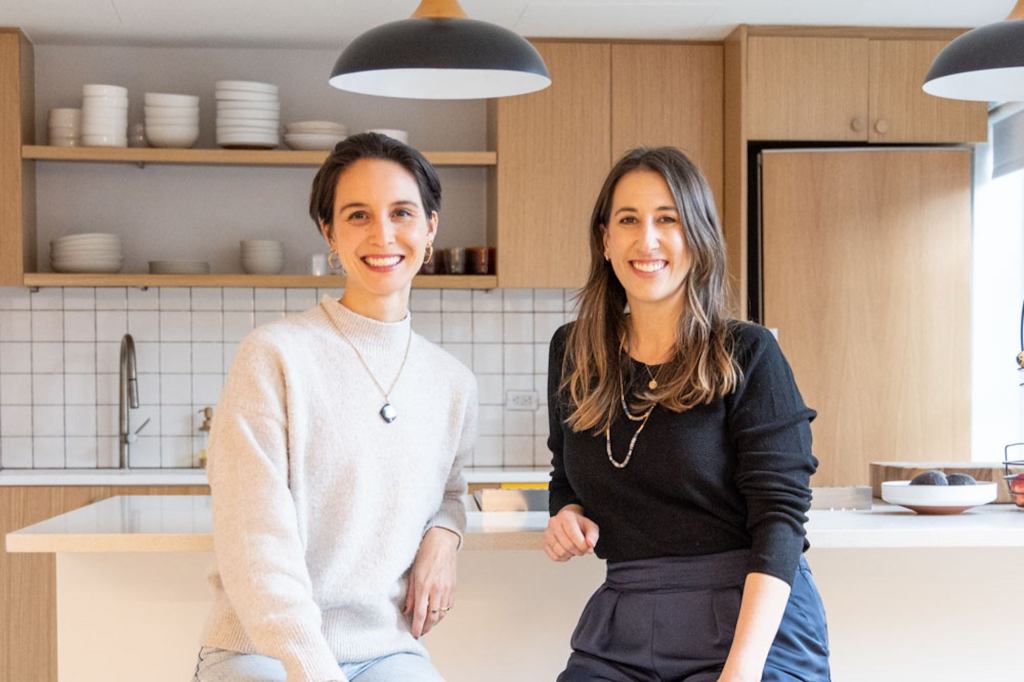
Elise Densborn’s route to Splendid Spoon’s leadership began from the other side of the delivery. She was a customer, then an angel investor, and joined the company in 2018. By 2020 she was co-CEO. It is an elegant progression, but the interesting part is not the title. It is Centeno’s willingness to divide the work.
Centeno has advised founders to recognize both strengths and weaknesses, then recruit people who share the vision and excel where they do not. It sounds obvious until one remembers how frequently a founder’s identity becomes knotted around being the person who can do everything. Centeno had already tried that. In Splendid Spoon’s first year, she managed ingredients, sales, recipes and the website, with temporary cooks helping make the food. Omnicompetence is impressive for about a week. After that it is an operations problem.
The co-CEO model faced a severe test almost immediately. Splendid Spoon paused a planned Series B process in 2020 and concentrated on the underlying business. Centeno and Densborn narrowed priorities, attended to the team and introduced products suited to customers ordering differently. When the company returned to the capital market, it closed a $12 million round in February 2022 led by Swedish food-tech investor Nicoya. Danone Manifesto Ventures, Torch Capital, Alexis Ohanian, Jennifer Fleiss and others participated.
Centeno’s fundraising advice is notably free of mist. Ask a trusted mentor to identify what is weak in the metrics, she has said, and be ready to explain the context. Candor, in this formulation, is not confession. It is evidence that management can see the same company an investor sees.
From borrowed burners to a factory floor
In January 2026, Splendid Spoon acquired Mosaic Foods alongside an undisclosed investment from Gather Ventures. The pairing gave a tidy answer to a question that had followed Centeno since Greenpoint: how do you make more food without misplacing the care that made the first batch worth eating?
Splendid Spoon brought product development, branding and years of direct customer feedback. Mosaic brought in-house commercialization and manufacturing at a hub in Woodland Park, New Jersey, about 20 miles from New York City. Together, the companies reported more than 200 plant-based and vegetarian meals, snacks and beverages, plus over $190 million in cumulative direct-to-consumer revenue.
Catalog figures describe different stages and scopes: Splendid Spoon alone in 2013 and 2022, then the combined Splendid Spoon and Mosaic portfolio in 2026.
The new operation also opens a second line of work: helping restaurants and emerging food brands develop and manufacture products. For Centeno, the consequential stage is the awkward early production run, below roughly 4,000 units, when a product discovers whether it can retain quality outside the test kitchen. Automation helps, but she insists on a balance with human touch. A factory, viewed this way, is not the opposite of the borrowed kitchen. It is the borrowed kitchen’s problem with several extra zeroes.
Centeno’s latest writing also returns to her first discipline. In February 2026 she published an essay on four women whose work shaped her thinking about food systems, praising their willingness to keep science connected to politics, ecology and culture. Biology never disappeared from her career. Nor did publishing, cooking or the family table. They simply stopped living in separate paragraphs of her résumé.
The perfect bite, saved for last
Centeno once offered a compact piece of personal trivia: in every meal, she looks for the perfect bite and saves it for last. It is funny, exact and revealing. The perfect bite is designed, but not overdesigned. It needs contrast. It needs timing. It may need a spoon.
Her company has grown by arranging contrasts of its own: science with appetite, convenience with attention, a founder’s vision with a partner’s authority, small-batch judgment with industrial equipment. None of these tensions vanishes when a business scales. They merely require larger utensils.
The bicycle route, the rejected wholesale pitches and the pizza kitchen now belong to company lore. Their value is more than picturesque. They show Centeno’s recurring habit: begin with the day as people actually live it, find the work that can be removed, then protect the part that gives the product character. Lunch is still coming. The question is whether it arrives as another task or as the one good thing on the calendar that requires almost nothing in return.