At 5:12 p.m., a normal oven is a dumb black box. It does not know the salmon is still cold, the broccoli needs less heat, or the person responsible for dinner is stuck in traffic. Suvie’s founding idea was to make the box understand time. Load food in the morning, leave it safely refrigerated, and tell the machine when dinner should finish. The appliance calculates backward, switches from cold to hot, and cooks two trays so they land together. No robot arm. No theatrical onion chopping. Just a fridge and an oven agreeing on the calendar.
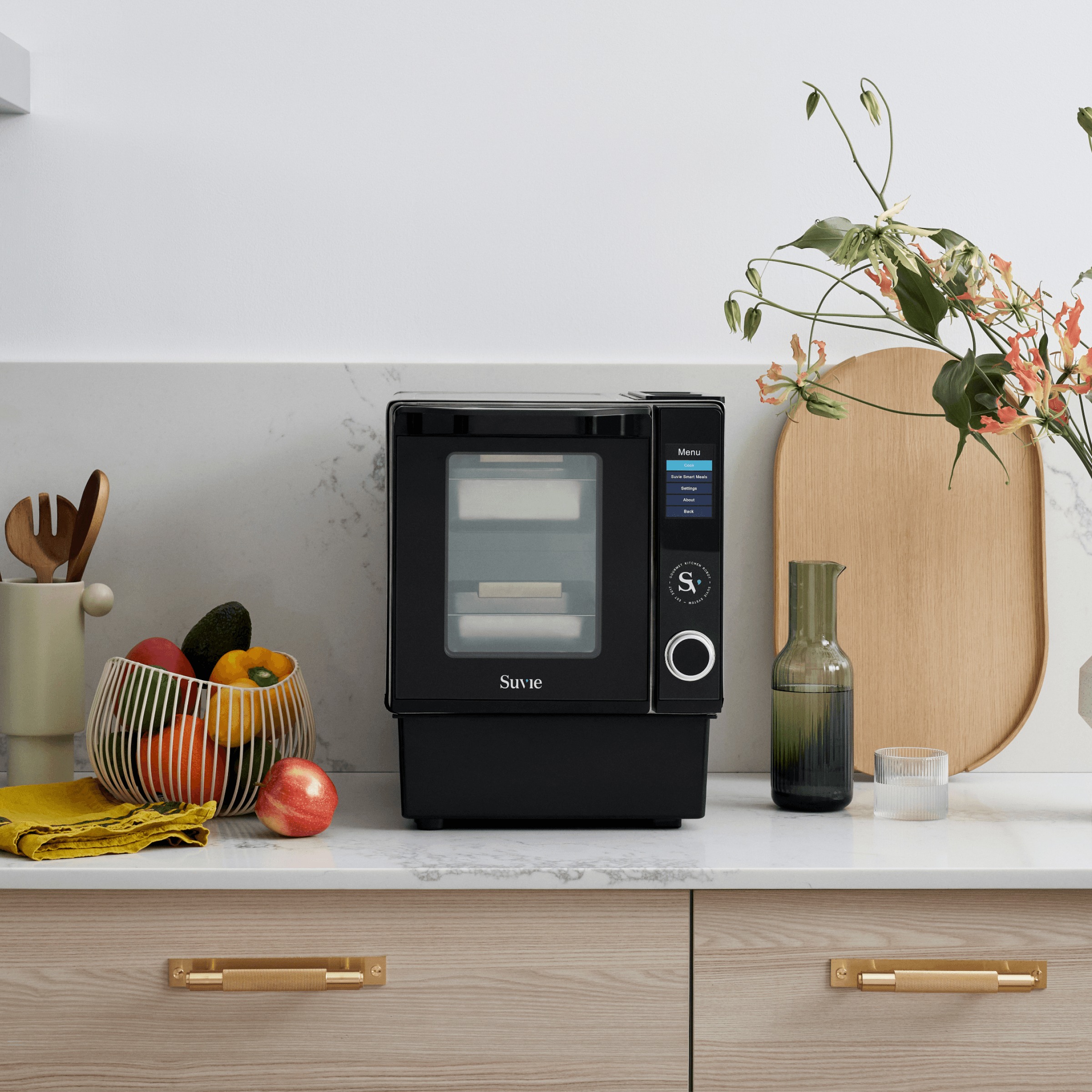
That distinction matters. Cambridge-based Suvie calls its product a Kitchen Robot, but its talent is closer to air-traffic control. The current 3.0+ has two independent cooking zones, an 11.2-quart total capacity, a water reservoir, quartz broilers, bottom heaters, Wi-Fi and more than 15 modes. It can refrigerate, sous vide, slow cook, roast, bake, broil, steam, reheat, proof and air fry. A printed meal or recipe card taps against the machine and loads the program. The app can move dinner time while the owner is elsewhere.
A robot designed around the school pickup
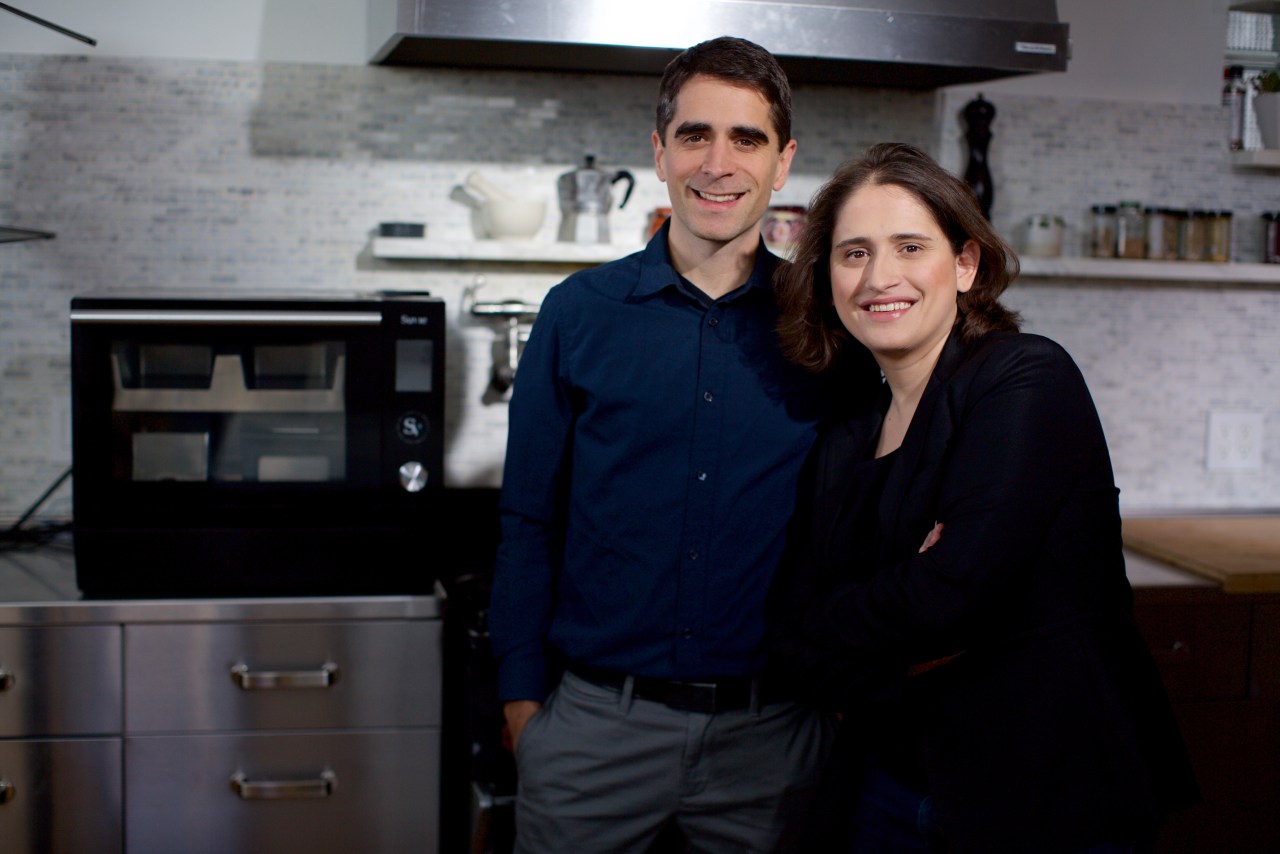
Robin Liss and Kevin Incorvia started Suvie in 2015 after confronting a common household mismatch: wholesome cooking demands attention precisely when working parents have the least to spare. Liss had founded product-review site Reviewed.com and sold it to Gannett. Incorvia, Suvie’s chief technology officer, had worked as an Apple engineer and built software at Reviewed. Their stated mission is pleasantly modest - make life easier, one delicious meal at a time.
The customer is not someone who hates food. It is someone who likes a home-cooked dinner but dislikes the daily 5 p.m. negotiation required to produce it. Suvie can take its own frozen meals or groceries from any store. With the company’s meal service, the steps are aggressively short: open packages, put components into pans, tap the card, choose now or later. More than 50 choices rotate through the advertised weekly catalog, from ribs and cornbread to teriyaki salmon, vegetarian ravioli and kids’ chicken tenders.
“The key benefit of Suvie is the ability to time-shift dinner.”Robin Liss, co-founder and CEO
That “time-shift” is Suvie’s cleanest defense against Tovala, Brava, ordinary countertop ovens and a battalion of cheaper air fryers. Many can cook quickly. Suvie can safely hold raw ingredients before cooking begins. Its water system operates from refrigeration temperatures around 40°F up to roughly 205°F for precision cooking; its quartz broilers reach far hotter for browning. Two zones can run different programs, and the separate Starch Cooker handles pasta, rice, grains and potatoes.
What failed first: the beautiful, expensive everything-machine
The original Suvie was more ambitious and less polite to countertops. It had four dedicated chambers for protein, vegetables, starch and sauce. A 2018 Kickstarter campaign raised more than $720,000 from 1,085 backers, and early machines began shipping in 2019. The eventual retail price was about $1,200 - roughly double the figure discussed around the crowdfunding launch.
Liss gave the useful answer founders rarely print on a launch poster: components and technologies cost more than the team expected. Refrigeration, steaming, sous vide, slow cooking and oven hardware do not become cheap merely because they share a shell. “We were probably too optimistic on the price,” she said at the time. The company also faced shipment delays, while early owners publicly reported connectivity, quality-control and support problems.
Independent testing later captured both sides of the proposition. Consumer Reports praised some cooking results, including sous-vide steak, but its evaluation crossed two generations after a 2.0 malfunction and a Starch Cooker that would not connect to Wi-Fi led to warranty replacements. The publication also calculated its four-meal order closer to $15 per serving, plus weekly shipping, rather than the lowest advertised meal price. Customer reviews remain split between people who value the scheduling freedom and people frustrated by food cost, deliveries, hardware faults or service.
Selected price points - promotions and bundles differ
*Advertised with a commitment to six meal boxes in the first year. Appliance-only pricing is higher.The change of mind was visible in the sheet metal
Suvie 2.0, announced in 2021, was an argument for subtraction. Four chambers became two larger multifunction zones. Roast and bake joined the menu. Starch moved into an optional companion appliance nicknamed “Starchie” inside the company. The main unit pre-sold for $399, with the starch device another $300. Less architectural purity produced a product that was smaller, cheaper and more flexible.
The 3.0 pushed the lesson further. It was four inches shorter than 2.0 while its pans grew 36 percent. More importantly, Suvie worked with safety reviewers so every major cooking mode - including bake, roast and broil - could be scheduled ahead or started remotely. The 3.0+ added air frying in 2024. The company did not abandon the original promise. It kept removing the machinery that made the promise expensive.
Its business model changed the sticker, too. The current system is advertised from $149, down from a displayed $649, if a buyer orders six meal boxes during the first year. Meals begin at $11.49 per serving, with premium ingredients costing more. Buyers can pause, skip or cancel deliveries, but the hardware discount depends on follow-through. An active meal subscription can also extend the appliance to a limited lifetime warranty, provided the customer meets order requirements.
The financing record is less tidy than the product timeline. Public databases disagree on Suvie’s total capital, although they consistently identify Koa Labs around a 2020 Series A and U.S. Boston Capital Growth in a 2023 transaction; Dealroom records a $700,000 seed round, while CB Insights estimates $8.09 million across three financings. No dependable public valuation exists. The discrepancy is worth preserving rather than polishing away: private-company databases routinely mix equity, debt, crowdfunding and regulatory filings.
Whatever the exact total, Suvie chose an operationally heavy company. Its team must coordinate appliance safety, firmware, mobile software, contract manufacturing, cold-chain food delivery, customer support and a culinary calendar that keeps 50-plus options from feeling like the same green beans in different costumes. The company publicly lists specialists across engineering, product design, food safety, finance, supply chain and kitchen operations. This is not software wearing an apron. Each new customer can generate both a meal relationship and a 56-pound warranty problem.
The stealable playbook
Sell the first successful outcome, not merely the machine. Suvie’s card, frozen food, presets and hardware form one onboarding loop. The appliance subsidy reduces adoption friction; recurring meals can repay it; standardized inputs make the novel machine look competent on night one. A founder building durable hardware with consumables can copy that architecture without copying a single heating element.
Where the model works - and where it wilts
Suvie sits in an awkward but defensible market pocket. A meal kit still leaves cooking to the customer. Restaurant delivery arrives cooked but expensive and increasingly limp. A smart oven waits empty until someone loads it at dinner time. Suvie combines the appliance, prepared input and delayed start. Its expertise is the seam between cold storage, food safety, thermal control and menu design.
Predictable dinner time, busy household, room for a 56-pound appliance, appreciation for low-touch meals, and enough recurring use to justify the counter space.
Tiny kitchen, spontaneous cooking, aversion to subscriptions or frozen meals, unreliable Wi-Fi expectations, or satisfaction with a $100 air fryer and ordinary freezer.
There is also a naming tax. “Kitchen robot” suggests a mechanical chef. Suvie does not prep ingredients, season by taste or wash its pans. It automates temperature and timing, which is more bounded and arguably more useful, but the customer must understand the boundary. The machine works best when dinner can be reduced to two trays and a schedule. A crunchy salad, a last-minute substitution or five diners with competing requests can bring the humans rapidly back into service.
The company’s decade is therefore not a story of total kitchen autonomy. It is the slower, more credible story of narrowing an invention until it earns a habit. Suvie learned that four purpose-built zones were less valuable than two flexible ones; that a startling hardware price could be softened by repeat food revenue; and that the defensible magic was not “robotics” in general. It was the moment an unattended raw dinner safely becomes a cooked one.
For the right household, that moment is not science fiction. It is Tuesday.