For about five hours in early 2020, David Rabie was ready to stop. Tovala, the company he had spent five years turning from a graduate-school notion into an oven, an app, a food operation and a delivery network, had watched a promised financing disintegrate. The term sheet had come together after an earlier year of polite investor enthusiasm and actual investor refusal. It was meant to close on February 28. On February 27, it fell apart. The company had roughly three weeks of cash. The stock market had just begun its pandemic plunge. Dinner, in every sense, was not assured.
Panic is an emotion with terrible manners but excellent punctuality. Rabie gave it a few hours. Then he called an emergency meeting with his executive team and the company’s largest backer. He started working the phones. By Monday morning, Tovala had assembled $2 million in bridge financing, enough time to try the round again. No grand speech made the payroll. Relationships did.
This narrow escape is the hinge in Rabie’s story because it strips the romance from the founder’s job. The glamorous version features a countertop oven that recognizes a code and cooks dinner on its own. The real version features unit economics, factory schedules, cold-chain shipping and a chief executive calculating how many Fridays remain. Tovala’s consumer promise was ease. Rabie’s occupation became the absorption of difficulty.
The avocado in the backpack
The clues arrived long before the crisis. Rabie was raised by Iranian immigrant parents and grew up watching his father work for himself. Entrepreneurship was therefore less an abstraction than an available occupation. From childhood, he imagined owning a business of his own. The missing piece was the business itself, a question he would carry through several jobs, one abandoned startup idea and graduate school.
After UC Santa Barbara, where he studied history, Rabie collected practical lessons in other people’s businesses. He worked with a co-founder of Veggie Grill and ran Groovy Spoon, a frozen-yogurt chain with shops on both coasts. He spent time in China. He co-founded a sports-reference app called Draftpedia. During his MBA at the University of Chicago Booth School of Business, he interned at Google and spent time at Foundation Capital, peering at company-building from both the celebrated operator’s campus and the investor’s side of the table.
At Booth he was the student with avocados in his backpack and homemade brown rice, steamed vegetables and curry in a paper bag. One Sunday, preparing food for the week, he found himself using several appliances. Each ingredient wanted a different treatment. Why could one machine not steam, bake and broil on command? The irritation was ordinary. His response was lavishly complicated.
A machine becomes a system
Rabie entered Booth thinking about entrepreneurship, initially with another sports-app idea. The oven concept took hold after his Google summer. Customer interviews widened it. A clever appliance might save cooking time, but dinner also involved choosing, shopping, chopping and washing up. The better answer was not merely a machine. It was an end-to-end system: food designed for the appliance, software telling it what to do and a service getting the meal to the door.
The idea, first called Maestro, won Booth’s 2015 New Venture Challenge and $70,000 in combined prize money. More important, it acquired a deadline and witnesses. Rabie knew he needed a technical counterpart. Outsourcing the essential hardware and software of a technology company was unconvincing to investors and, eventually, to him. Mechanical engineer Bryan Wilcox joined as co-founder. With an engineer finishing a PhD added to the team, they could build rather than commission prototypes.
Y Combinator accepted Tovala into its winter 2016 batch. A Kickstarter campaign followed. The team set a $100,000 goal and passed it within 24 hours, eventually raising $255,603 from more than 1,000 backers. They had aimed a camera at themselves to catch the day-one crossing. Early applause is delightful, and it can also be expensive. Rabie later wished they had priced the oven lower to move more units.
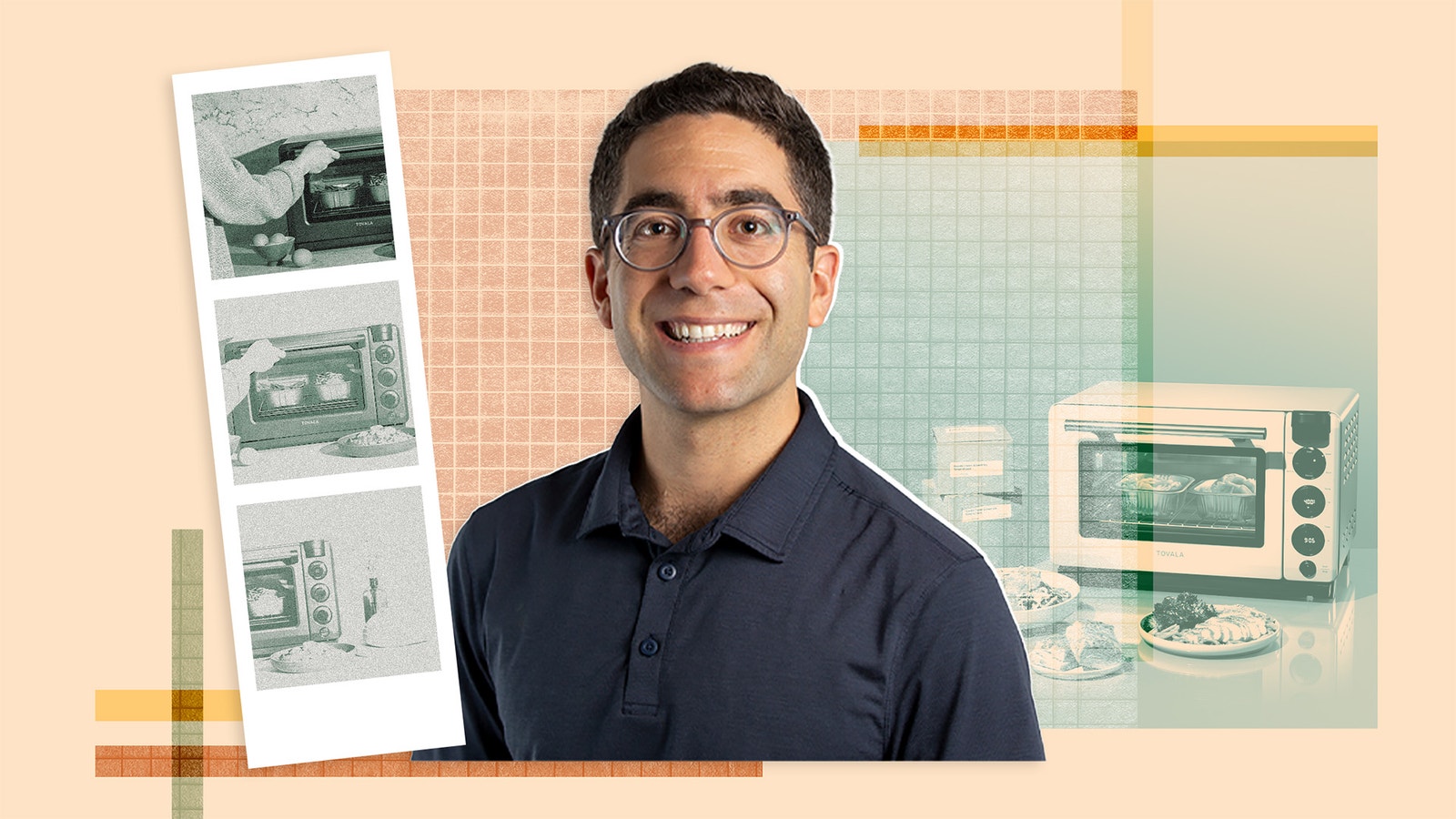
The company began shipping in 2017. What arrived on a customer’s counter looked modest beside the operation behind it. A hardware group designed the oven. Software engineers built its controls and back end. Culinary teams created recipes around sequences of heat and steam. Production teams assembled food. Logistics carried perishables across the continental United States. Rabie once described the company as three businesses in one. The phrase is accurate, though it may be unfair to the fourth business: persuading a household to give an unfamiliar appliance permanent counter space.
The inconvenient arithmetic
By 2019, admiration had not yet become confidence. Tovala tried to raise a Series B. Investors liked the pitch, advanced it through meetings and declined at the end. Rabie’s diagnosis was blunt: growth was too slow, product-market fit was incomplete and margins needed work. The company cut costs, altered the way it bundled oven and meal commitments, and kept going. Revenue and margins improved enough to reopen conversations.
Then came the term sheet that vanished on the eve of closing. The bridge bought months, not serenity. Tovala raised the $20 million round soon afterward as people suddenly spent far more time eating at home. The pandemic accelerated demand, but it did not invent the changes already underway. Pricing had become clearer. Retention was strengthening. The product’s peculiar marriage of appliance and subscription was beginning to look less peculiar.
A $30 million Series C arrived in 2021. Later, Rabie described the company’s route to profitability as a slowing rather than a stopping. Growth that had once run at 100 or 200 percent settled nearer 20 or 25 percent while revenue, retention and margin improvements allowed the business to support itself. He is wary of profitability achieved by shrinking into irrelevance. A company can stop burning cash and still become, in his phrase, a zombie. Tovala continued to grow.
Never miss a Monday
Rabie’s most revealing operating habit contains no steam setting. Nearly every Monday for close to a decade, he has sent an email to the entire company. In the beginning, five people could read intimate notes about fundraising and investor conversations. As Tovala expanded into the hundreds, the emails grew more considered but did not disappear. Some run two paragraphs, others several pages. They include priorities, experiments, new hires and promotions. When Rabie is away, another executive writes one.
The ritual makes leadership submit to a weekly test: what matters now, and can it be stated plainly? Rabie writes most of it himself. He believes trust is usually returned, while acknowledging that several hundred recipients require judgment that five people around a table did not. The note is both management tool and corporate sediment, one layer for every week the company remained alive.
That preference helps explain Tovala’s Chicago return after Y Combinator. The Bay Area supplied acceleration; Chicago supplied a place to build the actual machine, kitchen operation and team. Rabie talks about promoting talent from within and about culture as something that must evolve with scale. The chief executive who needed a technical co-founder also learned that good leadership is not the performance of knowing everything. It is the assembly of people who know different things and can still share one table.
Fifty million small proofs
In 2026, Tovala announced its 50 millionth meal. The company translated the abstraction into domestic trivia: one million chicken parmesans, more than 16.4 million hours of oven runtime and a customer with a 360-day cooking streak. The figures are amusing because they are really measurements of habit. Hardware can be purchased from curiosity. Fifty million meals require people to return.
Rabie’s original ambition was grand: a place on every countertop. His public shorthand now is gentler - make it easier for people to eat better. The two ideas meet in repetition. A useful kitchen object does not demand applause after the first week. It quietly earns tomorrow’s dinner.
The hardest stretch of the Tovala story lasted five hours and three weeks, depending on the clock. The longer stretch has lasted more than a decade. It begins with an avocado in a backpack, passes through a camera trained on a Kickstarter total, stops at a term sheet that turned to dust, and resumes with Monday morning calls. Rabie’s oven automates dinner. Nothing about building it was automatic.