The pitch fits on a fridge magnet. You get a countertop oven and a weekly box of fresh meals. You scan the barcode on tonight's dinner, press one button, and about 20 minutes later you eat. No dial to turn, no temperature to guess, no recipe card to squint at. That is Tovala, a Chicago food-tech company that spent a decade proving one idea: the hardest part of cooking dinner is not the cooking. It is the deciding.
Tovala sits in an odd spot on the org chart of American food. It is not quite a meal-kit company like HelloFresh, which mails you raw ingredients and a chore. It is not quite an appliance brand like June or Brava, which sell you a clever box and wish you luck. It is both at once - hardware and food, welded together by software - and that combination is exactly why it survived a stretch that buried most of its competitors.
01 / The ProductThe oven that reads its own instructions
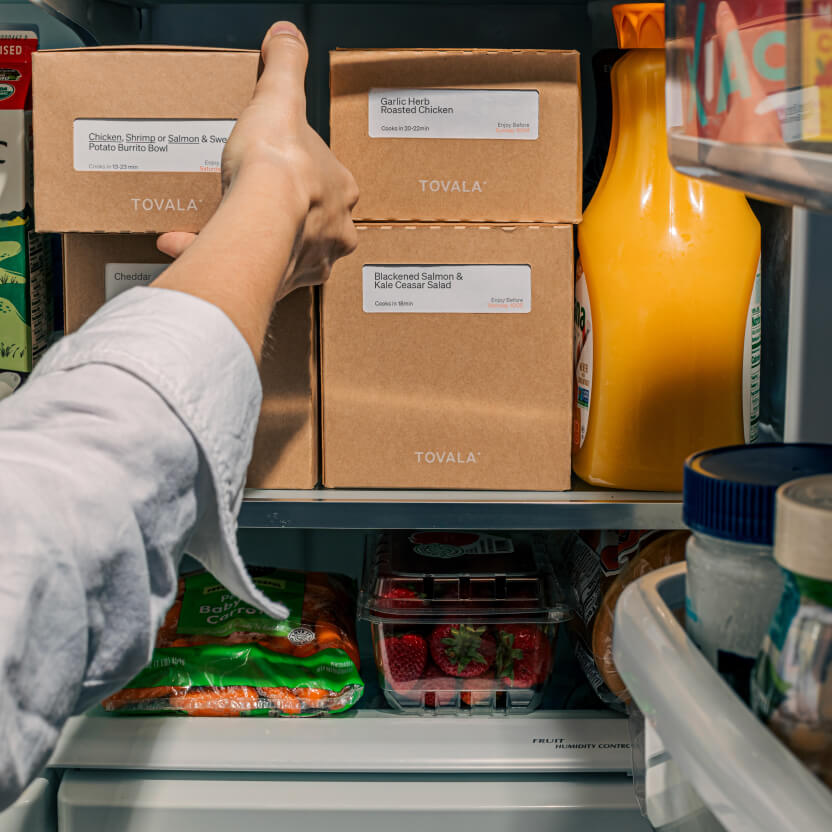
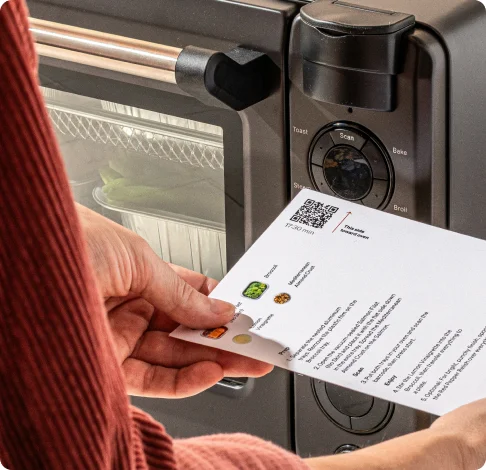
The Tovala Smart Oven is a Wi-Fi-connected countertop unit that can steam, bake, broil, toast and air-fry. What makes it more than a fancy toaster oven is the barcode. Every Tovala meal arrives with a code printed on the sleeve. Scan it and the oven pulls a cook program from the cloud - the right sequence of heat, steam and time for that specific dish - and runs it automatically. Prep time is roughly a minute. The rest is the machine's problem.
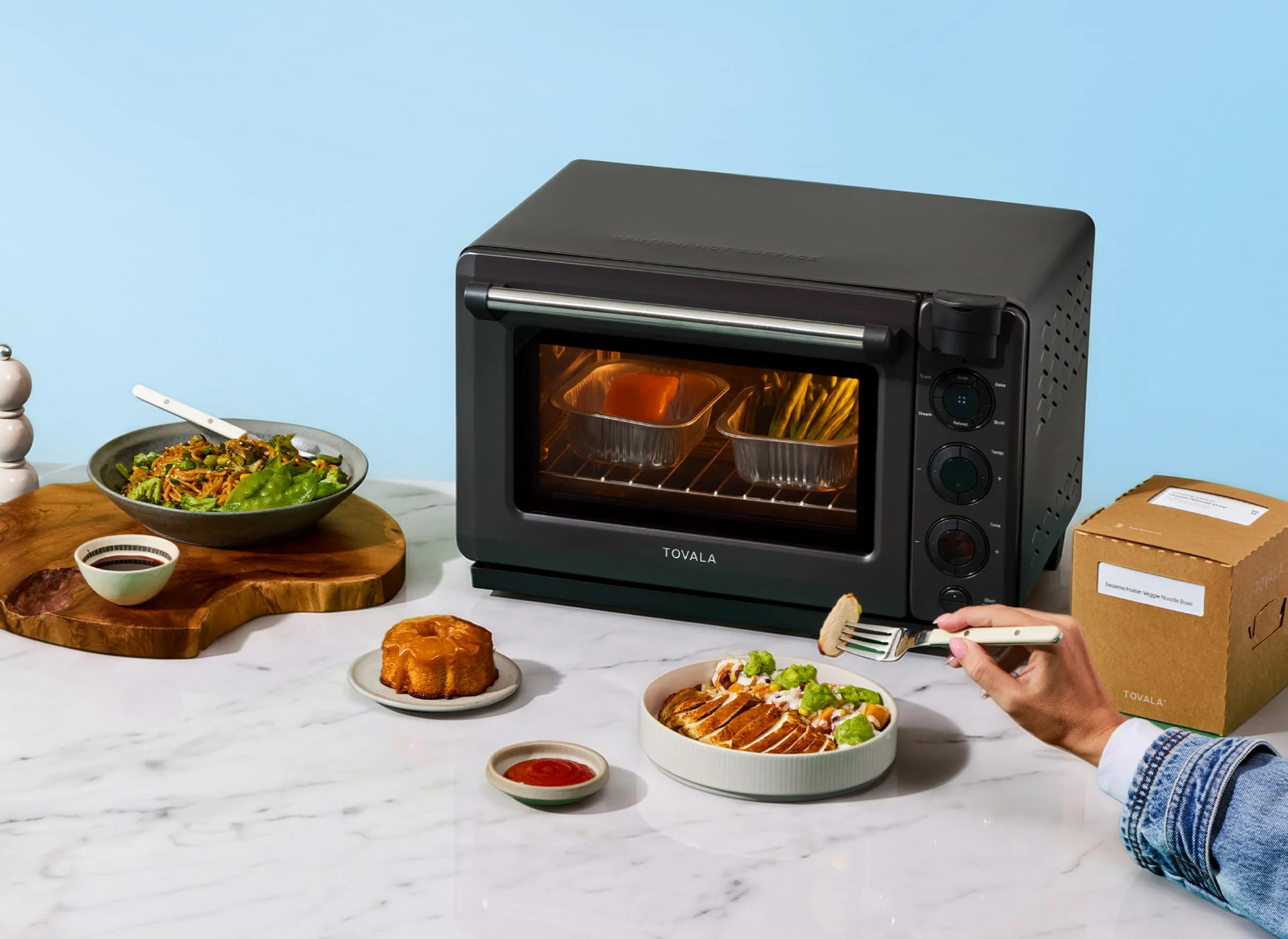
That scan-to-cook trick is not limited to Tovala's own kitchen. The oven recognizes barcodes on hundreds of brand-name grocery items too, so a frozen pizza or a bag of fries can also cook itself. The hardware has evolved across generations - the original shipped in 2017 at about $399, a redesigned Gen 2 followed in 2018 at $349, and in 2023 the company added a Smart Oven Air Fryer, its first new hardware line in five years. The current lineup includes a six-in-one Smart Oven Pro.
Meals arrive
Fresh, chef-crafted, never frozen - shipped weekly to your door.
Scan the code
The barcode tells the oven exactly how to cook that dish.
Press start
Steam, bake, broil or air-fry runs on its own. About a minute of prep.
Eat in ~20 min
Restaurant-style dinner, no planning and no cleanup marathon.
02 / The OriginA class project with a $70,000 prize
Tovala began in 2015 as an idea from David Rabie, then an MBA student at the University of Chicago's Booth School, and his technical co-founder Bryan Wilcox. The concept - originally named "Maestro" - won a campus venture challenge and roughly $70,000 in prize money. In January 2016 they renamed it Tovala and took it to Kickstarter, where more than 1,000 backers pre-ordered about $256,000 worth of a product that did not yet exist. Y Combinator's winter batch followed the same year.
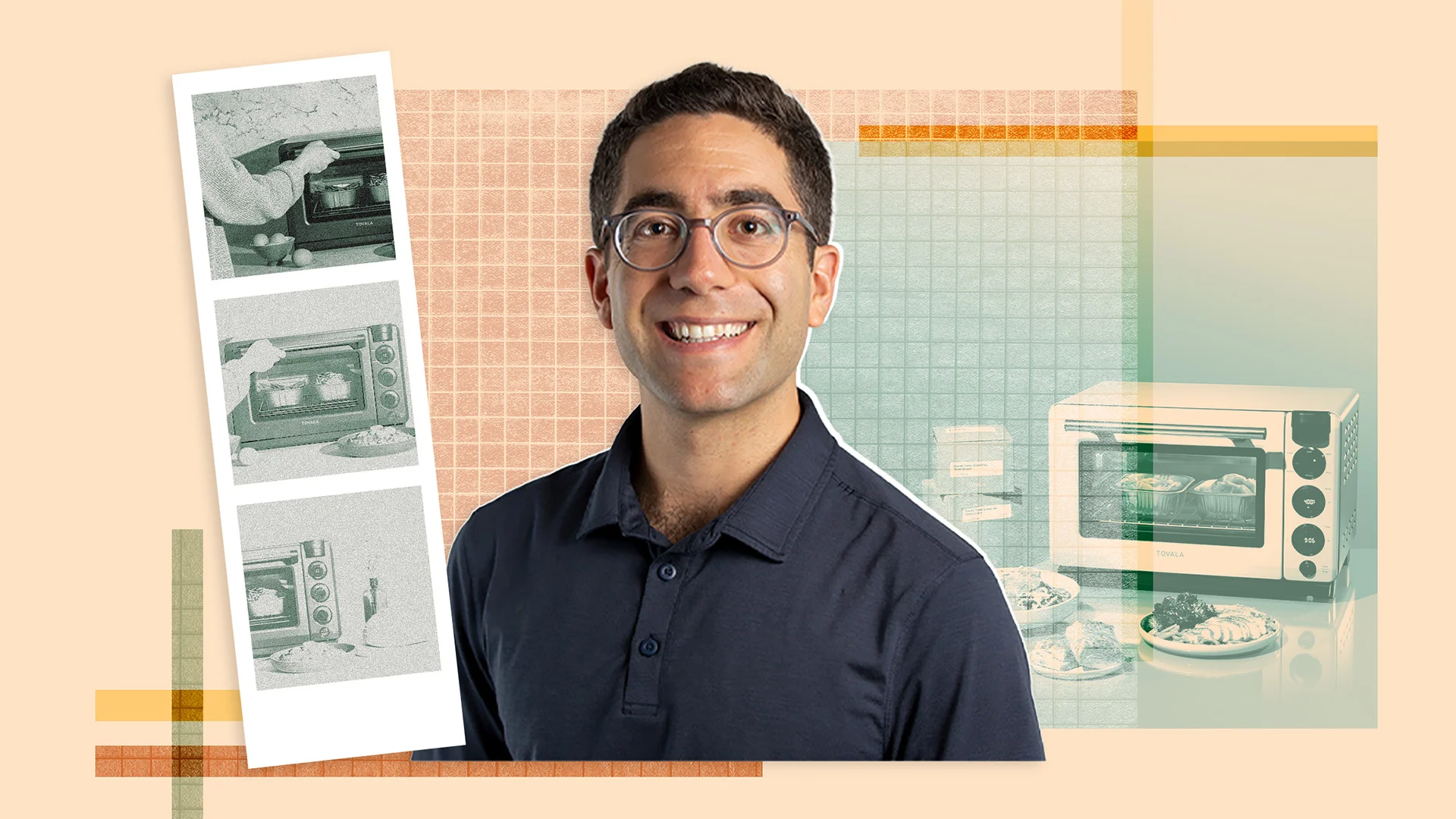
The path was not smooth. By 2020, after a term sheet collapsed, Rabie has said the company came within roughly three weeks of running out of cash. Then the pandemic hit, demand for cook-at-home options surged, and Tovala raised a $20 million Series B. It is the kind of near-death chapter that gets retold as company lore - the part where a food-tech startup with thin margins turns into a business.
03 / The MoneySell the razor, keep the blades
The reason Tovala outlasted a graveyard of meal-kit brands is its business model, not its recipes. The oven is sold at or near cost - discounted to as little as roughly $69 for customers who commit to weekly meals - and the real money is the recurring meal subscription. Plans run from 4 to 16 meals a week, at roughly $10 to $13 per serving. It is the classic razor-and-blades setup, which is why observers keep reaching for two nicknames: the "Keurig for food" and "the Peloton of home cooking."
The Razor
Sold near cost, sometimes ~$69 with a meal commitment. Its job is not profit - it is lock-in.
The Blades
Weekly, recurring, higher margin. Once the oven is on your counter, this is where the business lives.
That structure is what produces the retention numbers people compare to Peloton. Once the oven is on your counter, the switching cost is real: leaving means giving up the appliance you already paid to install in your kitchen and re-learning how to feed yourself on a Tuesday. Tovala reached profitability in 2024, has said it is growing around 20% a year, and has not raised outside capital since 2022.
04 / The CustomersWho actually buys this
Tovala's buyer is the time-pressed U.S. household - working professionals and families who want something fresher than takeout and easier than a recipe. The value proposition is not "learn to cook." It is "stop having to." That framing is narrower than a general meal-kit pitch, and narrower on purpose: the people who want a shortcut, not a hobby, tend to stay. The company has delivered more than 40 million meals to date, though it does not publish active-subscriber counts.
05 / The FieldWhy it beat the meal-kit graveyard
The competition splits into two camps, and Tovala's edge is that it refuses to pick one. On the food side sit HelloFresh, Blue Apron, Home Chef, Factor and Freshly - services that either hand you a cooking chore or a microwave tray. On the hardware side sit smart ovens like June, Brava and Suvie - clever machines with no food pipeline behind them. Tovala is one of the few companies to bundle proprietary oven hardware with a fresh, chef-crafted meal service, so the appliance and the menu reinforce each other instead of competing.
The company has also spread its bets through partnerships. Tyson Foods took a strategic stake in 2018. LG Electronics agreed to embed Tovala's scan-to-cook software into select smart ovens and ranges, turning the software into a licensable asset. Menu collaborations have brought in chefs and brands - from Christine Ha and Graham Elliot to Beyond Meat and, in 2025, chili-crisp maker Fly By Jing. Early on, Tovala also acquired Chicago delivery startup Radish and folded its popular dishes into the menu.
The menu itself is the other half of the moat. A rotating weekly lineup, built by an in-house culinary team, keeps the subscription from feeling like a fixed rations plan - the reason people churn out of prepared-food services is boredom, and variety is the cheapest defense against it. The dishes lean toward the kind of thing you would order out rather than the beige-tray fare that sank earlier frozen-meal players. Because the oven, not the customer, controls the cook, the kitchen can design around steam-then-broil sequences that a distracted person at home would never nail by hand.
06 / What's NextOwning more of the kitchen
Tovala's recent moves point at a company settling in for the long build rather than chasing a quick exit. In 2026 it announced a new food-processing facility in Winfield, Illinois - a bet on owning more of its own supply chain - and hired Scott Braun, a veteran of SimpliSafe, Drizly and Procter & Gamble, as Chief Marketing Officer to push customer and brand growth. For a business that once had three weeks of cash, building a factory is a statement about where it thinks the next decade goes.
Inside, the company describes itself as culture-centric and food-focused, organized around a short list of blunt values - put the team first, embrace the obstacles, be direct, and "get s#!t done (well)." The Chicago headquarters keeps hardware engineers, software developers, food-production staff and chefs under one roof, which is unusual: most food brands outsource the appliance and most appliance brands outsource the food. Running both is expensive and slow, and it is also the thing no single competitor can easily copy.
The lesson worth stealing is not the oven. It is the shape of the thing: find a recurring purchase people already make with friction, remove the decision entirely, and use a piece of hardware to make leaving inconvenient. Where it would not work is where the friction is low or the habit is weak - if dinner were already easy, no one would pay to install an appliance to fix it. Tovala's whole company is a bet that, for a lot of households, it is not.