There is a particular hunger that arrives after a workout. It is urgent, mildly self-righteous and entirely capable of being defeated by the first pizza sign on the walk home. Kettlebell Kitchen built a company around that short interval. The New York startup put prepared meals in gym refrigerators, so that the person who had just finished a class could leave with dinner already decided.
- Three founders started in a Bronx kitchen with five gyms signed up before launch.
- Meals were chosen around goals such as weight loss, muscle gain and sports performance.
- The company expanded to home delivery, nationwide shipping and a $26.7 million funding round.
- It stopped serving meals in November 2019. The public record establishes the closure, but gives no single proven cause.
The company was founded in 2013 by brothers Joe and Andy Lopez-Gallego, both former Army officers, and chef Greg Grossman. Their premise was practical. Customers with firm opinions about training often had far less time to shop, cook and count out a week's meals. Kettlebell Kitchen offered ready-to-heat food shaped by a customer's dietary preferences, activity and goals. The service sold single meals and recurring plans, with nutrition guidance attached to the latter.
It occupied an awkward but interesting spot in food commerce. A meal kit delivers a task. Restaurant delivery offers almost any craving. Kettlebell Kitchen delivered a decision made in advance: lunch and dinner that fit a plan. Its range included paleo, ketogenic, vegetarian, low-carb and protein-forward choices. The menu could be muscular; it also had to taste like lunch.
01 / The first turnFive gyms before the first kitchen
The founders initially considered how to serve high-quality, tailored meals in New York, where restaurant space and labor were costly. Grossman understood food production. Together they worked out that one central kitchen could cook at volume while gyms could act as pickup points. The first kitchen opened in the Bronx after five local gyms had agreed to take part. That order matters. They secured places to meet customers before they cooked at scale.
A gym refrigerator was more than a cheap shelf. It sat inside a repeated habit. The customer who trained on Tuesday could pick up Tuesday's dinner at the same stop; the studio gained an amenity; the meal company avoided asking people to make an entirely separate trip. The business borrowed the gym's trust, traffic and timing. It gave the customer's good intention a physical address.
By November 2016, the company said its meals were available in more than 300 gyms and fitness studios around the Tri-State area. It then announced home delivery for that December. The order of expansion again tells a story. Gym pickup proved there was an audience; home delivery could reach people whose exercise routine, postcode or schedule did not pass one of those refrigerators.
02 / The meal planWhat a customer actually bought
A customer supplied demographic information, activity level and dietary preferences. The company used those details to recommend a meal plan for a stated goal: losing weight, gaining muscle or improving performance. Chefs, dietitians and nutritionists helped design the dishes. One-off orders were available, while recurring plans supplied repeated meals and support from in-house nutritionists. It was food sold with a framework around it.
That framework distinguished Kettlebell Kitchen from a generic takeout menu. The customer did not need to hunt for a protein count among dozens of restaurants each night. It also widened the audience beyond CrossFit. The company spoke to athletes, certainly, but also to office workers, people trying to manage weight and anyone tired of improvising dinner at 9 p.m. Its own description included homes and offices as well as gyms.
Contemporary reports placed meals at roughly $10 and up, depending on the plan and delivery. That price bought ingredient selection, cooking, portioning, packaging, cold-chain handling and convenience. It was easier to compare with takeout than with groceries, but customers still made the comparison. A reviewer for The Spoon liked the taste and variety yet found the cost too high to keep using the service. There is no broader churn figure in that single experience. There is, however, a familiar pressure point for any prepared-meal business: the customer gets a few minutes back, and someone has to pay for every operation that made those minutes possible.
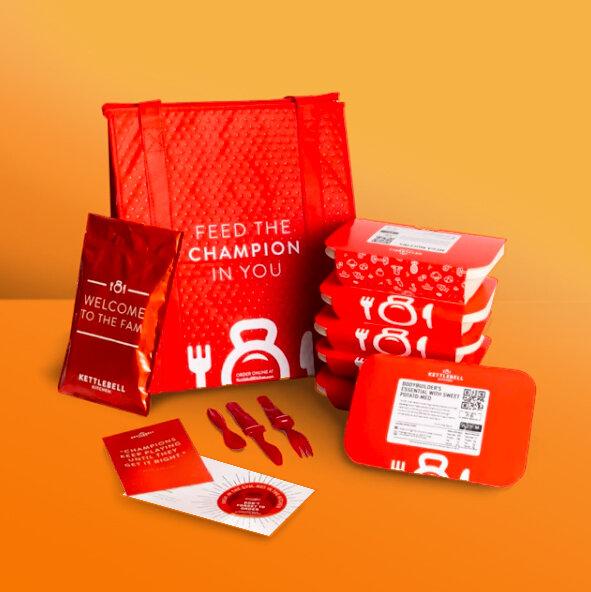
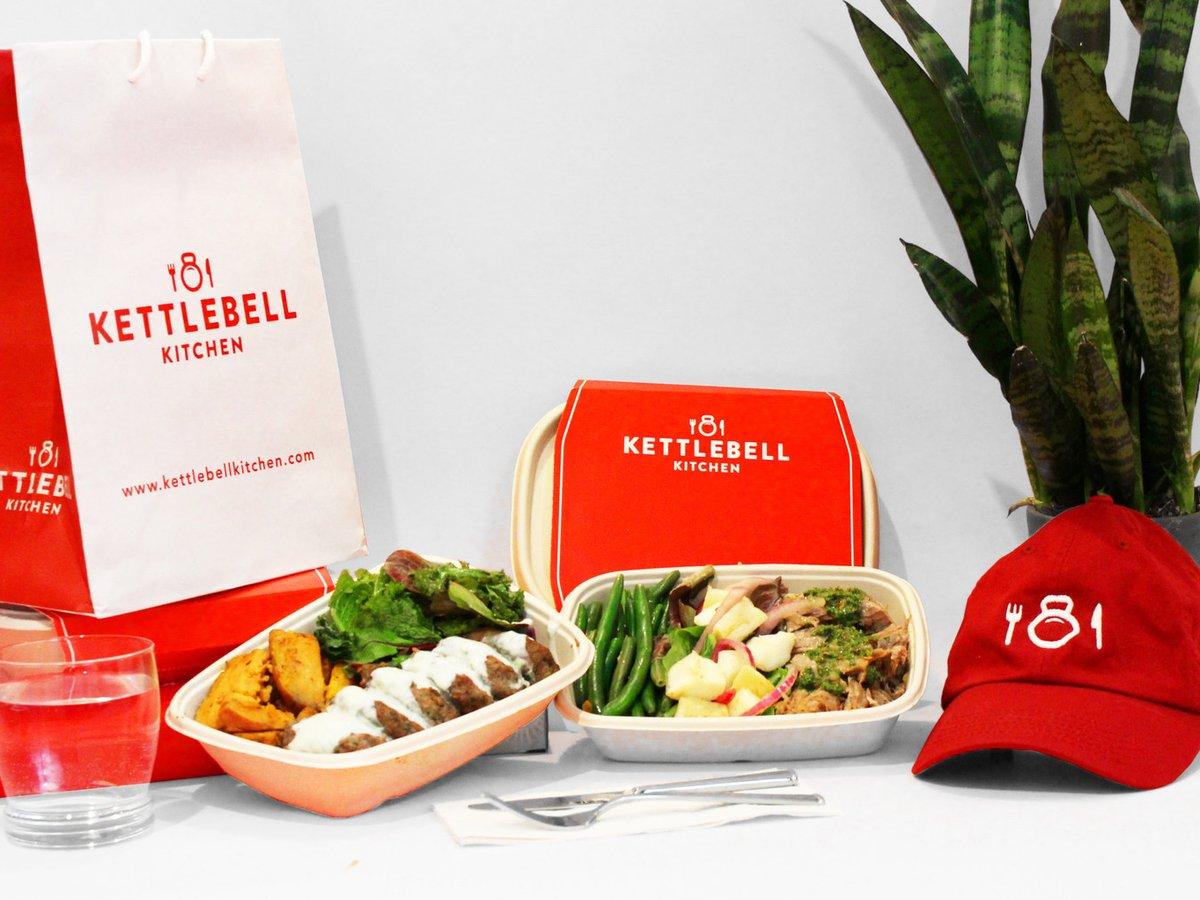
The team also knew that food is a visual product. Designer Jon Hsu's account of the brand refresh shows custom sleeves, fitted plant-fiber trays, meal-plan guides and a home-delivery box designed to hold six meals. Sponsored athletes anchored campaigns for CrossFit, running and mixed martial arts. Hsu reported taking the company's Instagram audience from 15,000 to 46,000 organically. The red bag and stacked trays gave the transaction a small sense of ceremony, even when the ceremony ended at a microwave.
03 / The scale-upWhen the pickup route became a national route
Kettlebell Kitchen launched nationwide delivery in 2017 and opened a facility in the Los Angeles area as it expanded. Shipping widened the map dramatically. It also changed the job. A meal collected from a gym refrigerator and a meal sent across the country share a recipe, but they do not share the same packaging, transit time or customer experience. The operation had to become as capable at moving cold food as it was at cooking it.
The company's October 2018 announcements captured both the opportunity and the appetite for it. Munchery, another prepared-meal company, had suspended East Coast deliveries; it arranged to redirect customers in that region to Kettlebell Kitchen. A week later, Kettlebell Kitchen and North Castle Partners announced a $26.7 million Series B round. North Castle praised the combination of nutrient-dense meals, a gym-based channel and goal-driven positioning. The capital could fund expansion. It could not make a perishable package less perishable.
“We have a family meal every day.”Joe Lopez-Gallego on the company's staff ritual, 2019
Even the internal culture had a food ritual. Joe and Andy described a daily family meal at headquarters: one chef cooked something to share, and staff ate together. It is a revealing detail because this company sold the same promise outward. Food could organize a working day, give it structure and bring people to the same table. The proposition sounded human in a category full of shipping labels.
04 / The bill comes dueWhat the shutdown does and does not tell us
On November 7, 2019, the company told customers it was closing its kitchens and would no longer serve meals. It pointed them toward Territory Foods, while saying the two had no affiliation. The operating company, High Quality Nutrition Company LLC, filed a Chapter 7 bankruptcy petition on November 16. Those are the documented endpoints. The public record does not isolate one first failure in the operating model or one moment that changed the founders' minds.
There are clues about the category's difficulty, but clues are not an autopsy. Prepared meals require procurement, kitchen capacity, food safety, delivery coordination and a price customers will pay again next week. A Fortune writer who tried a month of Kettlebell Kitchen meals described an accumulating supply of insulated bags and ice packs. The Spoon's reviewer liked the food but thought it too expensive to continue. Both accounts show where convenience can become visible as cost, waste or clutter, even when dinner itself succeeds.
From the October 2018 Series B announcement to the November 2019 kitchen closure. The round was real; so was the closing notice.
It would be too easy to turn this into a morality play about venture capital or a verdict on the menu. The better lesson is narrower and more useful. Kettlebell Kitchen found a strong first channel by asking where its customer already went. It paired the product with a moment of need and got five partners before opening the first kitchen. Anyone building a physical service can copy that sequence: secure a repeat destination, test the handoff, measure repeat purchases, then see whether the economics survive the trip beyond that first channel.
The condition is equally plain. A gym refrigerator works best when customers reliably pass it, pickup density is high and the meals earn their premium over a cheaper lunch. When the model depends on scattered home deliveries, expensive chilled packaging or customers who see prepared meals as an occasional treat, the same promise becomes harder to keep. Kettlebell Kitchen's sharpest idea remains sharp. Its ending reminds us that an excellent place to meet a customer is only the beginning of the journey.