At a friend's birthday party in New York, Elise Densborn met one of the people building a young food company called Splendid Spoon. She was living in the Midwest, working full time and spending her weekends in business school. The conversation began with the ordinary little ceremony of strangers asking what each other did. It ended with Densborn asking how she could sign up. Before she was an executive, she was a customer. Before the company had her judgment, it had her credit card.
The detail is charming because it refuses to behave like a corporate origin story. There was no garage, no napkin sketch, no thunderclap under a Californian moon. There was a party. There was a product that solved an immediate problem. Densborn liked the proposition enough to invest. Then, in 2018, when she was leaving a career among middle-market industrial businesses, the company called with something less glamorous and more useful: a purchasing snag in its new smoothie line.
Smoothies had a shorter shelf life than the company's other food. Forecasting and buying had become awkward. Densborn agreed to parachute in as a part-time consultant. She had spent years doing much the same thing in Indianapolis, entering operating companies held by a family office, sorting financial or operational trouble and occasionally joining the leadership team long enough to steady it. The containers were now more colorful. The disciplines remained stubbornly familiar.
“The funniest part of my journey with Splendid Spoon is that it actually started at a birthday party.”Elise Densborn
The temporary assignment that refused to end
Densborn fixed the purchasing problem. Splendid Spoon hired a vice president of operations, and she traveled to New York to train him. This should have been the neat ending: consultant completes task, hands over notes, submits invoice, catches flight. Founder Nicole Centeno had another idea. Why not stay? Why not move to New York and join the team?
The company had just raised a Series A and employed about seven people. It needed financial structure, operating systems and someone inclined to connect the unruly dots of an early business. Densborn joined in finance and strategy, often described as vice president of finance and insights. The brief widened quickly. Marketing and technology needed leadership; operations kept insisting on being operated. By early 2019 she was COO, working opposite Centeno's strengths as chef, communicator and brand builder.
Her preparation had been almost comically industrious. She was a CPA, had worked in finance including at PwC, and attended Northwestern's Kellogg School of Management on weekends while keeping her weekday job. At Kellogg she added marketing, organizational behavior and entrepreneurship to the hard edges of accounting. Consumer brands and food interested her, but interest is an unreliable map. Splendid Spoon supplied a destination by first supplying a mess.
There is a popular theory of career change in which one follows a passion and the practicalities politely arrange themselves. Densborn's route was more credible. She carried old tools into a new room. Manufacturing, working capital, purchasing, distribution and systems integration do not cease to matter merely because lunch arrives in handsome packaging. Food may be sensuous; getting it to thousands of doorsteps is gloriously unromantic.
Two chairs, one difficult conversation at a time
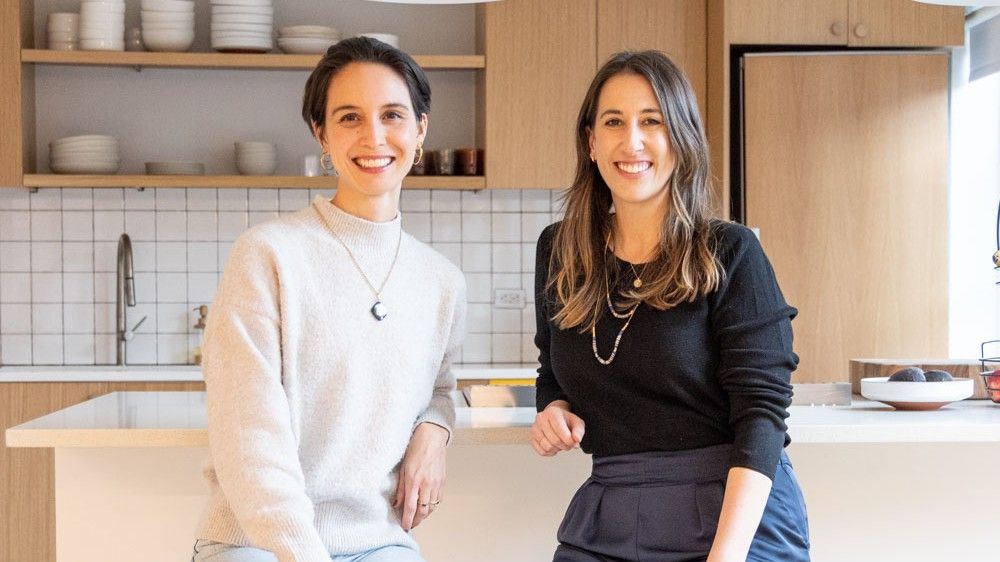
The COO-CEO arrangement became a rehearsal for something rarer. During the turbulence of 2020, Centeno had a newborn as the company entered overdrive. The pair learned to tag-team, to move authority according to circumstance and to leave room for life without pretending work had stopped. In January 2021 they formalized what daily practice had already made plain: Splendid Spoon would have two CEOs.
Densborn's defense of the model is not misty talk about harmony. It is about sharper thought. A co-CEO can challenge an assumption before it hardens into strategy, listen while the other speaks in a fundraise and notice what ambition has edited from the picture. “Having a Co-CEO is like having a Board of Directors you talk to every day,” she has said. The line lands because boards are usually quarterly occasions. This one drinks coffee nearby.
Trust came partly from candor. In one early discussion, Densborn told Centeno that something needed to change immediately or the viability of the business would be in question. Centeno respected the directness. A partnership took root in that unfashionable soil: one person willing to say the unnerving thing, the other willing to hear it without reaching for the ornamental shield of rank.
Their division of labor has shifted with the company's seasons. During fundraising, Centeno might face outward while Densborn managed the day-to-day. During product cycles, Centeno could lean into food and brand philosophy while Densborn joined functions across the business and led website technology. Strategy stayed shared; execution acquired clear owners. The arrangement depended not on permanent borders but on noticing when the border ought to move.
When the roadmap went in the bin
The pandemic tested whether flexibility was a slogan or a working method. Splendid Spoon paused a planned capital raise and turned toward profitability. The team built a Shopify store in a weekend so customers could buy beyond the usual subscription. They sent food to hospitals and put smoothies in nurses' break rooms. For months, quarterly roadmaps gave way to decisions made week by week.
Densborn later remembered that period without adding a heroic soundtrack. Children and pets appeared on calls. People said when the day had become too much. During one team evening they drew animals with hot sauce, because even operators are entitled to a little nonsense. The work mattered; so did giving colleagues enough space to remain recognizable as people.
By the time Splendid Spoon announced a $12 million Series B in February 2022, the company said it had more than 20,000 subscribers and had doubled its growth rate since 2020. Densborn offered an operator's preferred boast: for every dollar invested in recent years, the business had generated $15 in revenue. Capital was useful. Efficient capital was more interesting.
Her view of competitive advantage is similarly unfussy. Timing helps, but consumers do not award permanent custody of their affections to whoever arrived first. Brands can win later if they become more relevant and make a better product. In her telling, the defensible ground lies with the customer, the brand and the food itself. The technology between them is a bridge, not a magic trick.
The operator returns to the factory
In January 2026, Splendid Spoon acquired Mosaic Foods with backing from Gather Ventures. The combination joined Splendid Spoon's brand and product-development experience with Mosaic's in-house commercialization and manufacturing. Together, the companies said they had generated more than $190 million in cumulative direct-to-consumer revenue and assembled more than 200 plant-based and vegetarian products.
For Densborn, the deal forms an elegant loop. She left industrial businesses to pursue the intersection of food and technology. Years later, the strategic frontier turned out to be manufacturing: early production runs, product consistency, automation applied without sanding away quality. The accountant had returned to the factory floor, only now the machinery was surrounded by bowls, beverages and a freezer's worth of consumer expectations.
“If food brands are forced to choose between product integrity and scale, then consumers lose.”Elise Densborn
Scale also sits inside a harder question: access. Densborn has acknowledged plainly that the company's prices have not placed its meals within everyone's reach. Her long view is that more volume, different channels and more efficient production can lower costs without sacrificing the product. It is neither a completed answer nor a convenient dodge. It is an operating problem, which may be precisely why it holds her attention.
A ledger for intuition
For all her fondness for systems, Densborn's advice to her younger self is surprisingly soft-edged. She spent the first decade of her career accumulating hard skills, reading cases and collecting experience. She would now give equal time to intuition. Leadership, as she sees it, requires separating signal from noise, and no spreadsheet can perform the whole separation.
Her creative practice is writing. She journals, reflects on weeks and days, and uses sentences to connect observations gathered from different corners of life. She sets aside time in New York for an “artist date” with herself and has said she would like to take a creative-writing class. The ambition suits her. Good operating is a form of revision: see what is actually there, strike what does not work, preserve the essential thing.
Asked at Stanford to name an indulgence, she answered French fries at once. It is a perfect footnote to a career crowded with smoothies, soups and operational diagrams. The woman who entered Splendid Spoon by asking how to sign up has stayed interested in appetite, both literal and professional. She did not found the company. She did something less celebrated and, in its way, just as difficult: she learned it from the customer's end, fixed what was breaking and earned the right to help decide what came next.